Award-Winning Middle School Math Tutors
serving North Las Vegas, NV
Middle School Math
Tutors in North Las Vegas
Private 1-on-1 tutoring, weekly live classes for academic support, test prep & enrichment, practice tests and diagnostics, and more to elevate grades and test scores.
Based on 3.4M Learner Ratings
UniversitiesSchools & Universities
DeliveredHours Delivered
ProficiencyGrowth in Proficiency
Who needs tutoring?
No obligation. Takes ~1 minute.

I'm a 2016 graduate of Pepperdine University with my Bachelor of Arts in Chemistry. Currently I'm preparing to apply to optometry school; I hope to be accepted for the 2018-19 academic year. During my time in college, I was involved as a teaching assistant for General Chemistry I and II laboratory, as a tutor for General Chemistry I, as a member of the Regents Scholar Student Board, and as a "small group" leader through multiple organizations. I am a member of the sorority Pi Beta Phi and held the positions of Historian, Senior Transition Leader, and member of the Leadership and Nominating Committee during my undergraduate years. As far as tutoring goes, I offer my services to students of all ages and in numerous subjects. I particularly enjoy tutoring the STEM subjects. I also thoroughly enjoy working with female STEM students, which allows me to serve as a role model and to offer additional encouragement for my female students to not lose interest in STEM subjects. A large part of my tutoring style focuses on logical thinking for how to tackle new and difficult problems using previous knoledge and educated hypotheses; I have found that my students find both success and a boost in confidence using my methodology. Aside from my academic interests, I love cooking and baking, my cat, photography, and National Parks.
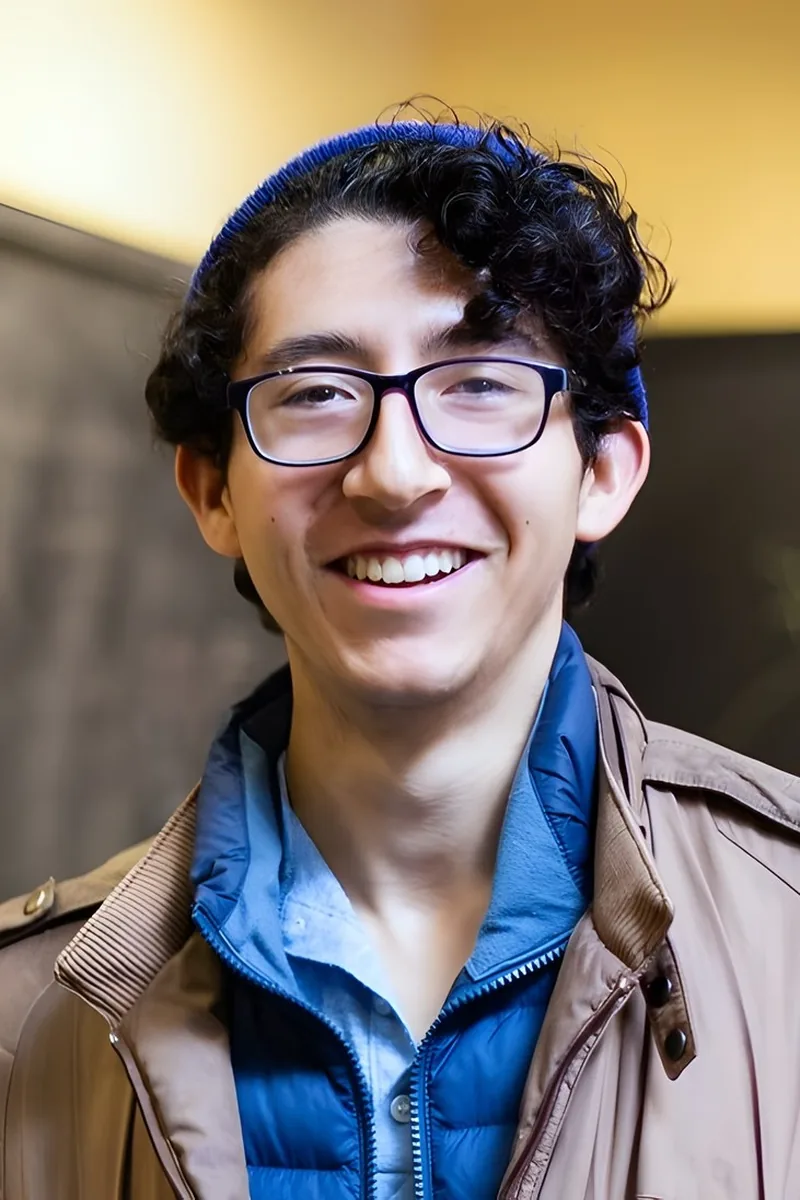
Teaching math to 6th–9th graders at a STEM summer camp taught Tim something most tutors miss: middle schoolers don't just need the right answer explained — they need to see why a strategy makes sense before they'll trust it. He tackles topics like ratios, expressions, and basic geometry by grounding each one in problems students actually find interesting. Rated 4.9 by students and families.
Fractions, ratios, proportions, and early geometry can feel like a pile of disconnected rules to a middle schooler. Daniel's strength is that he never learned math by just "getting it" instantly — he built his understanding piece by piece, which means he explains concepts like fraction operations or solving for unknowns in language that actually makes sense to younger students.
Whether it's fraction operations, decimal conversions, or early work with variables, middle school math sets the trajectory for everything that follows in high school. Shawn adapts his explanations to each student's learning style, often presenting the same problem three different ways until one approach makes it intuitive.
The jump from arithmetic to proportional reasoning, integer operations, and basic equation-solving is one of the biggest shifts in a student's math life. As a former middle school and high school math teacher, Gabriela knows how to bridge that gap — she connects new ideas like ratios and linear relationships back to the number sense students already have.
From fractions and ratios in sixth grade to linear equations in eighth, middle school math covers a huge range of skills in a short time. Michelle spent four years volunteering with middle schoolers at a local Boys and Girls' Club while attending boarding school in Massachusetts, so she understands how to match pacing and explanation style to this age group. She's especially good at catching the specific gap — whether it's decimal operations or proportional reasoning — that's causing a student to fall behind.
The jump from elementary arithmetic to middle school math catches students off guard when ratios, proportional reasoning, and negative numbers suddenly appear everywhere. Serena tackles these topics by building number sense first — making sure a student actually understands why dividing by a fraction flips the operation before moving on to the procedure. Her experience tutoring both university peers and younger learners at UNLV gives her a sharp sense of where middle schoolers typically get stuck.
Cornell's genetics labs run on quantitative reasoning — ratios, probability, data analysis — so Molly has spent years applying the exact mathematical thinking that middle schoolers are just starting to formalize. She's especially sharp at connecting fraction and ratio work to concrete scenarios students can picture, making the leap from arithmetic into pre-algebraic reasoning feel less abstract. Her education minor at Cornell means she also studied how kids actually learn, not just the content itself.
From ratios and proportions to coordinate graphing, middle school math piles on new concepts fast, and gaps from earlier years tend to surface right here. Megan's economics training at St. John's keeps her immersed in applied math daily, and she uses that practical lens to show students why skills like solving for unknowns or interpreting data actually matter beyond the worksheet.
The jump from fifth-grade arithmetic to middle school math — ratios, proportional reasoning, negative numbers, basic equation solving — trips up more students than most parents realize. Elizabeth breaks each new concept into concrete steps, connecting unfamiliar ideas back to the number sense students already have.
The jump from elementary arithmetic to middle school math — ratios, proportions, coordinate graphing, intro to negative numbers — can feel overwhelming without the right support. Phonemany's experience creating individualized learning plans for young people means each session targets exactly the skill a student is struggling with, not a one-size-fits-all review.
Every concept a student meets in high school math — from slope to solving systems — traces back to what they learn in middle school. Justin is pursuing his Nevada teaching certification specifically to work with middle and high school students, and he brings that same intentionality to tutoring ratios, proportions, expressions, and early equation solving. His background as a coach also means he knows how to keep younger students engaged and building confidence.
Karen's accounting and finance training means she lives in the world of ratios, percentages, and equations daily — and she can show a sixth or seventh grader exactly how decimal operations or proportional reasoning connect to real financial problems like budgeting or calculating discounts. Her MBA-level quantitative skills let her anticipate where middle school concepts are heading, so she builds each skill with an eye toward what algebra will demand next. Rated 4.5 by students.
At the middle school level, math starts asking students to think abstractly for the first time: variables replace specific numbers, and proportional reasoning replaces simple multiplication. Katherine makes that transition less intimidating by anchoring every new concept in problems students can visualize. Her experience across subjects from Pre-Algebra through Calculus 3 means she always knows exactly where a topic is heading.
Sanda's English and ESOL background might seem unrelated to math, but it's a real advantage when a middle schooler reads a word problem and can't figure out what it's actually asking. She unpacks the language of math — phrases like "less than," "per," or "of" in fraction and percent problems — so students can translate sentences into equations with confidence. Rated 4.8 by students.
At the middle school level, the jump from arithmetic to algebraic thinking is one of the biggest cognitive shifts students face. Adriana tackles that transition head-on, using proportional reasoning and simple equation-solving to show students that variables aren't scary — they're just a shorthand for patterns they already recognize.
Between fractions, decimals, percents, and the first taste of algebraic thinking, middle school math piles on new concepts fast. Elizabeth breaks each topic into concrete steps and connects them back to skills students already have, drawing on her experience in curriculum supervision to sequence lessons so that one idea builds naturally into the next.
The jump from fifth-grade math to pre-algebra-level thinking — proportional reasoning, negative numbers, basic geometry — is one of the steepest in a student's academic life. Aaron tackles each of these transitions by tying new ideas back to arithmetic students already trust. His approach turns middle school math from a source of anxiety into a subject where confidence actually grows.
The jump from elementary to middle school math catches a lot of students off guard — suddenly they're dealing with proportional reasoning, negative numbers, and basic geometry proofs. Vishaal tackles each of these by tying them back to intuitive examples, building the kind of number sense that carries into algebra. He holds a 5.0 rating from past students.
From fractions and ratios in sixth grade to linear equations in eighth, middle school math covers a huge range in a short time. Mackenzie identifies exactly where a student's understanding breaks down and tackles that gap directly, whether it's proportional reasoning, decimal operations, or interpreting graphs.
Ratios, proportional reasoning, and early equation-solving are the backbone of middle school math — and they're also where many students quietly start losing confidence. Nathaniel identifies exactly where a concept breaks down and reteaches it with different representations, whether that's a number line, a visual model, or a real-world scenario that makes the math tangible.
From ratios and proportions to basic geometry and early equation-solving, middle school math covers a huge range of skills in a short time. Erika's approach is to identify exactly where a student's understanding breaks down — whether it's fractions, decimals, or translating word problems into expressions — and rebuild confidence from that specific point. Rated 5.0 by students.
Biology majors do more math than most people realize — Joseph spent his UCLA undergrad calculating dilution ratios, analyzing statistical datasets, and working through quantitative models, all of which map directly onto the proportional reasoning and equation-solving middle schoolers are tackling for the first time. His public health master's at Yale keeps him knee-deep in data interpretation daily, so he teaches these concepts as practical skills with real stakes rather than abstract exercises. Rated 4.9 by families.
Ratios, proportions, and pre-algebraic thinking click faster when students can see them — and Mimi's background in visual and object-based learning means she naturally turns abstract middle school math concepts into something concrete. Her Harvard Ed.M. trained her to design lessons around how each learner actually thinks, not just how the textbook is organized.
As a biomedical engineering major at Brown, Phillip uses middle school math concepts — ratios, proportions, basic statistics — in his coursework daily, which means he can answer the classic 'when will I ever use this?' question with real examples. He's especially effective at building the problem-solving habits that carry students through pre-algebra and into high school math.
The jump from elementary math to middle school math means juggling ratios, proportions, and introductory geometry all at once. Daniel keeps each topic grounded in practical scenarios — splitting a bill, scaling a recipe, measuring a room — so the reasoning clicks before the formulas pile up.
At the middle school level, math starts asking students to think abstractly for the first time — ratios, proportional reasoning, and early equation work can feel like a completely different subject than what came before. Alex has tutored students across a wide range of ages and adjusts his language and pacing to match each learner. His knack is making concepts like fractions, decimals, and basic geometry feel concrete and logical rather than arbitrary.
The jump from arithmetic to algebraic thinking is where middle school math gets genuinely hard — variables, proportional reasoning, and negative numbers all arrive at once. Talia has spent three years tutoring middle schoolers through exactly this transition, and she's skilled at spotting the specific conceptual gap that's causing a student to struggle rather than just re-explaining the procedure.
Most of Samuel's tutoring centers on writing and language arts, but his math roster runs from elementary through calculus — and middle school is where those subjects quietly overlap, since word problems and multi-step equations demand the same careful reading skills he teaches in English. He's especially effective at slowing students down to decode what a problem is actually asking before they start computing. Rated 5.0 by students.
The middle school math years — ratios, proportions, integer operations, intro to linear equations — set the trajectory for everything that comes after. Sugi approaches these topics by building the reasoning behind each procedure, so a student doesn't just cross-multiply but understands why it works. Rated 5.0 by her students, she keeps sessions structured without making them feel like a lecture.
Fractions, ratios, and proportional reasoning click differently when a student sees how each concept builds on the last — and Sabira's Applied Mathematics training at Johns Hopkins gives her multiple ways to explain that progression. She's taught students of all ages since her years as a taekwondo instructor, so she knows how to adjust her approach on the fly when something isn't landing. Rated 5.0 by students.
The jump from arithmetic to pre-algebra is where a lot of middle schoolers start feeling lost — variables show up, fractions get more complex, and word problems demand new problem-solving strategies. Allen makes that transition smoother by building each new idea off what a student already knows, whether they're tackling proportional reasoning, integer operations, or their first taste of linear equations.
Fractions, ratios, and proportional reasoning trip up more middle schoolers than almost any other topic — and they're the exact foundation that makes or breaks success in algebra later. Michelle breaks these concepts into concrete, visual steps so students actually understand the logic behind each operation. Rated 4.9 by her students, she keeps sessions focused and practical.
Testimonials
Because the right Middle School Math tutor makes all the difference.
Average Session Rating – Based on 3.4M Learner Ratings
Other North Las Vegas Tutors
Related Math Tutors in North Las Vegas
Frequently Asked Questions
Varsity Tutors matches North Las Vegas students with expert Middle School Math tutors for 1-on-1 instruction. We pair each student with a tutor based on their specific needs, learning style, and goals.
Whether you need homework help, exam prep, or want to get ahead, our Middle School Math tutors are ready to help.
Common challenges include gaps from earlier material, difficulty with specific concepts, and trouble applying learning to new problems. These issues can snowball quickly in Middle School Math.
A tutor identifies where you're stuck, fills in gaps, and provides targeted practice. The 1-on-1 format means you get help exactly where you need it.
Tutors work with your student's actual coursework—homework assignments, class notes, and upcoming tests. This keeps tutoring directly relevant to what's happening in the classroom.
When you share information about your student's school and curriculum, we can match you with a tutor who has relevant experience.
All tutors complete background checks, credential verification, and teaching evaluation. Many of our Middle School Math tutors hold advanced degrees or have years of teaching experience.
You can review tutor profiles to find someone with the right background for your student's level and needs.
Many students see improved grades within a few weeks, along with better understanding of Middle School Math concepts and more confidence tackling challenging material.
Tutors track progress and adjust their approach to ensure continued improvement.
Most students benefit from 1-2 sessions per week. More frequent sessions help if your student is significantly behind or has an important exam coming up.
Your tutor can recommend a schedule based on your student's specific situation and goals.
Tutoring is purchased in packages of hours, with rates varying by tutor experience. Varsity Tutors offers several options to fit different budgets and needs.
You can discuss pricing during your consultation to find what works best.
Your tutor will assess where your student is, discuss goals, and start working on priority areas. Most students bring current homework or upcoming test material to focus on.
By the end, you'll have a clear sense of how the tutor can help and a plan for moving forward.
Let’s find your perfect tutor
Answer a few quick questions. We’ll recommend the right plan and match you with a top 5% tutor.