Award-Winning Middle School Math Tutors
serving Reno, NV
Middle School Math
Tutors in Reno
Private 1-on-1 tutoring, weekly live classes for academic support, test prep & enrichment, practice tests and diagnostics, and more to elevate grades and test scores.
Based on 3.4M Learner Ratings
UniversitiesSchools & Universities
DeliveredHours Delivered
ProficiencyGrowth in Proficiency
Who needs tutoring?
No obligation. Takes ~1 minute.
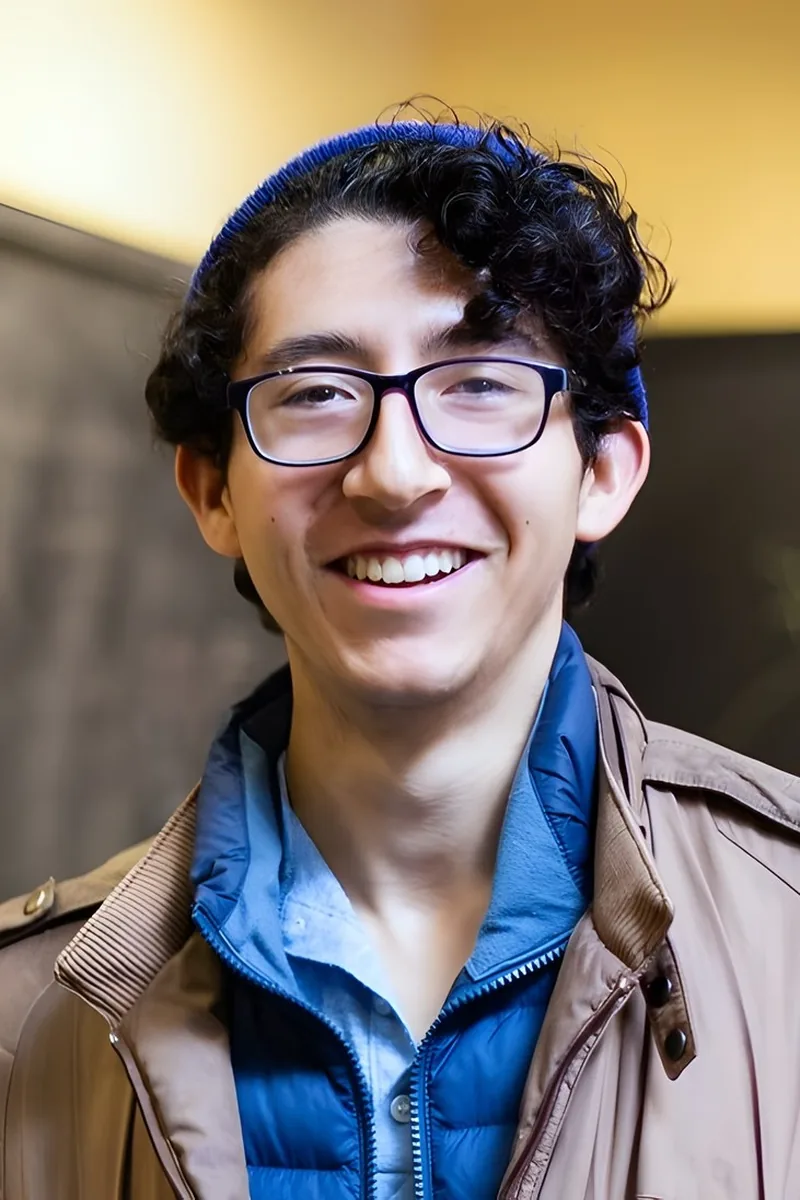
Teaching math to 6th–9th graders at a STEM summer camp taught Tim something most tutors miss: middle schoolers don't just need the right answer explained — they need to see why a strategy makes sense before they'll trust it. He tackles topics like ratios, expressions, and basic geometry by grounding each one in problems students actually find interesting. Rated 4.9 by students and families.

Fractions, ratios, proportions, and early geometry can feel like a pile of disconnected rules to a middle schooler. Daniel's strength is that he never learned math by just "getting it" instantly — he built his understanding piece by piece, which means he explains concepts like fraction operations or solving for unknowns in language that actually makes sense to younger students.
Whether it's fraction operations, decimal conversions, or early work with variables, middle school math sets the trajectory for everything that follows in high school. Shawn adapts his explanations to each student's learning style, often presenting the same problem three different ways until one approach makes it intuitive.
The jump from arithmetic to proportional reasoning, integer operations, and basic equation-solving is one of the biggest shifts in a student's math life. As a former middle school and high school math teacher, Gabriela knows how to bridge that gap — she connects new ideas like ratios and linear relationships back to the number sense students already have.
From fractions and ratios in sixth grade to linear equations in eighth, middle school math covers a huge range of skills in a short time. Michelle spent four years volunteering with middle schoolers at a local Boys and Girls' Club while attending boarding school in Massachusetts, so she understands how to match pacing and explanation style to this age group. She's especially good at catching the specific gap — whether it's decimal operations or proportional reasoning — that's causing a student to fall behind.
The jump from elementary arithmetic to middle school math catches students off guard when ratios, proportional reasoning, and negative numbers suddenly appear everywhere. Serena tackles these topics by building number sense first — making sure a student actually understands why dividing by a fraction flips the operation before moving on to the procedure. Her experience tutoring both university peers and younger learners at UNLV gives her a sharp sense of where middle schoolers typically get stuck.
Cornell's genetics labs run on quantitative reasoning — ratios, probability, data analysis — so Molly has spent years applying the exact mathematical thinking that middle schoolers are just starting to formalize. She's especially sharp at connecting fraction and ratio work to concrete scenarios students can picture, making the leap from arithmetic into pre-algebraic reasoning feel less abstract. Her education minor at Cornell means she also studied how kids actually learn, not just the content itself.
I'm a 2016 graduate of Pepperdine University with my Bachelor of Arts in Chemistry. Currently I'm preparing to apply to optometry school; I hope to be accepted for the 2018-19 academic year. During my time in college, I was involved as a teaching assistant for General Chemistry I and II laboratory, as a tutor for General Chemistry I, as a member of the Regents Scholar Student Board, and as a "small group" leader through multiple organizations. I am a member of the sorority Pi Beta Phi and held the positions of Historian, Senior Transition Leader, and member of the Leadership and Nominating Committee during my undergraduate years. As far as tutoring goes, I offer my services to students of all ages and in numerous subjects. I particularly enjoy tutoring the STEM subjects. I also thoroughly enjoy working with female STEM students, which allows me to serve as a role model and to offer additional encouragement for my female students to not lose interest in STEM subjects. A large part of my tutoring style focuses on logical thinking for how to tackle new and difficult problems using previous knoledge and educated hypotheses; I have found that my students find both success and a boost in confidence using my methodology. Aside from my academic interests, I love cooking and baking, my cat, photography, and National Parks.
From ratios and proportions to coordinate graphing, middle school math piles on new concepts fast, and gaps from earlier years tend to surface right here. Megan's economics training at St. John's keeps her immersed in applied math daily, and she uses that practical lens to show students why skills like solving for unknowns or interpreting data actually matter beyond the worksheet.
The jump from elementary arithmetic to middle school math — ratios, proportions, coordinate graphing, intro to negative numbers — can feel overwhelming without the right support. Phonemany's experience creating individualized learning plans for young people means each session targets exactly the skill a student is struggling with, not a one-size-fits-all review.
Every concept a student meets in high school math — from slope to solving systems — traces back to what they learn in middle school. Justin is pursuing his Nevada teaching certification specifically to work with middle and high school students, and he brings that same intentionality to tutoring ratios, proportions, expressions, and early equation solving. His background as a coach also means he knows how to keep younger students engaged and building confidence.
The jump from fifth-grade arithmetic to middle school math — ratios, proportional reasoning, negative numbers, basic equation solving — trips up more students than most parents realize. Elizabeth breaks each new concept into concrete steps, connecting unfamiliar ideas back to the number sense students already have.
Karen's accounting and finance training means she lives in the world of ratios, percentages, and equations daily — and she can show a sixth or seventh grader exactly how decimal operations or proportional reasoning connect to real financial problems like budgeting or calculating discounts. Her MBA-level quantitative skills let her anticipate where middle school concepts are heading, so she builds each skill with an eye toward what algebra will demand next. Rated 4.5 by students.
At the middle school level, math starts asking students to think abstractly for the first time: variables replace specific numbers, and proportional reasoning replaces simple multiplication. Katherine makes that transition less intimidating by anchoring every new concept in problems students can visualize. Her experience across subjects from Pre-Algebra through Calculus 3 means she always knows exactly where a topic is heading.
Sanda's English and ESOL background might seem unrelated to math, but it's a real advantage when a middle schooler reads a word problem and can't figure out what it's actually asking. She unpacks the language of math — phrases like "less than," "per," or "of" in fraction and percent problems — so students can translate sentences into equations with confidence. Rated 4.8 by students.
At the middle school level, the jump from arithmetic to algebraic thinking is one of the biggest cognitive shifts students face. Adriana tackles that transition head-on, using proportional reasoning and simple equation-solving to show students that variables aren't scary — they're just a shorthand for patterns they already recognize.
Between fractions, decimals, percents, and the first taste of algebraic thinking, middle school math piles on new concepts fast. Elizabeth breaks each topic into concrete steps and connects them back to skills students already have, drawing on her experience in curriculum supervision to sequence lessons so that one idea builds naturally into the next.
The jump from fifth-grade math to pre-algebra-level thinking — proportional reasoning, negative numbers, basic geometry — is one of the steepest in a student's academic life. Aaron tackles each of these transitions by tying new ideas back to arithmetic students already trust. His approach turns middle school math from a source of anxiety into a subject where confidence actually grows.
The jump from elementary to middle school math catches a lot of students off guard — suddenly they're dealing with proportional reasoning, negative numbers, and basic geometry proofs. Vishaal tackles each of these by tying them back to intuitive examples, building the kind of number sense that carries into algebra. He holds a 5.0 rating from past students.
From fractions and ratios in sixth grade to linear equations in eighth, middle school math covers a huge range in a short time. Mackenzie identifies exactly where a student's understanding breaks down and tackles that gap directly, whether it's proportional reasoning, decimal operations, or interpreting graphs.
Ratios, proportional reasoning, and early equation-solving are the backbone of middle school math — and they're also where many students quietly start losing confidence. Nathaniel identifies exactly where a concept breaks down and reteaches it with different representations, whether that's a number line, a visual model, or a real-world scenario that makes the math tangible.
Fractions, proportions, and early equation-solving are the concepts that shape whether a student feels confident or anxious about math for years to come. Kathleen is especially good at diagnosing the specific gap — maybe it's place value, maybe it's negative numbers — and addressing that root issue rather than just re-explaining the current homework problem. Her four years of tutoring students across all ages give her a sharp sense of how younger learners think.
Ratios, proportions, and early equation-solving can feel abstract to middle schoolers who've only ever worked with straightforward arithmetic. Marisa bridges that gap by connecting each new concept to something concrete — turning word problems into stories and fractions into visual models that actually click.
Scoring a 35 on the ACT and a 1550 on the SAT means Vansh didn't just survive middle school math — he built the kind of fluency with fractions, decimals, and early algebraic reasoning that carries through standardized testing years later. His finance studies at WashU in St. Louis keep that quantitative thinking sharp, and he's particularly good at showing students how to organize their scratch work so careless mistakes stop eating into their grades. Rated 4.8 by students.
At the middle school level, math starts asking students to think abstractly for the first time — proportional reasoning, negative numbers, introductory geometry, and basic equation solving. Brian brings a calm, structured style to these topics, breaking each problem into small logical steps so younger students build genuine confidence instead of just copying procedures.
Every concept in middle school math — ratios, proportional reasoning, negative numbers, basic geometry — becomes a building block for high school. Tracy pinpoints exactly which block is wobbly before stacking more on top, whether that means revisiting fraction operations or pushing ahead into linear equations. She's been tutoring students at this level since she was in middle school herself, so she understands where confusion typically hides.
The jump from arithmetic to pre-algebra is where a lot of middle schoolers start feeling lost — variables show up, fractions get more complex, and word problems demand new problem-solving strategies. Allen makes that transition smoother by building each new idea off what a student already knows, whether they're tackling proportional reasoning, integer operations, or their first taste of linear equations.
The jump from elementary arithmetic to middle school math — ratios, proportional reasoning, negative numbers, intro to linear equations — is one of the steepest in a student's entire math career. Vinay tackles these topics by anchoring abstract ideas in concrete examples before moving to symbolic notation. Ten years of tutoring K-12 students means he's seen every version of where kids get stuck and knows how to get them unstuck.
Building number sense in middle school — whether it's fraction operations, proportional reasoning, or early work with variables — sets the trajectory for every math class that follows. JF has been tutoring students as young as third grade since high school and knows how to make concepts like ratios and integer arithmetic click before they become obstacles in algebra.
Fractions, ratios, and proportional reasoning trip up more middle schoolers than almost any other topic — and they're the exact foundation that makes or breaks success in algebra later. Michelle breaks these concepts into concrete, visual steps so students actually understand the logic behind each operation. Rated 4.9 by her students, she keeps sessions focused and practical.
Sixth and seventh graders often don't realize that the ratios, proportions, and basic geometry they're learning now are the scaffolding for every math class that follows. Margaret makes those connections explicit — showing a student why cross-multiplication works, for instance, instead of just drilling the procedure. Her psychology background informs how she adapts explanations to match the way each student actually processes new ideas.
The jump from elementary math to middle school math means juggling ratios, proportions, and introductory geometry all at once. Daniel keeps each topic grounded in practical scenarios — splitting a bill, scaling a recipe, measuring a room — so the reasoning clicks before the formulas pile up.
A year as a course assistant in Harvard's math department — teaching introductory calculus to undergraduates — gave Richard an unusual vantage point on middle school math: he knows exactly which arithmetic and pre-algebraic habits (especially around fractions, negative numbers, and variable expressions) need to be rock-solid before higher math stops making sense. He scored a 36 ACT and 1600 SAT, but more relevantly, he's spent time volunteering to teach a weekly course to middle schoolers through Harvard's Leadership Institute, so he's comfortable matching his explanations to how younger students actually think.
Testimonials
Because the right Middle School Math tutor makes all the difference.
Average Session Rating – Based on 3.4M Learner Ratings
Other Reno Tutors
Related Math Tutors in Reno
Frequently Asked Questions
Tutors work with you to understand your child's specific textbook, course sequence, and teaching approach—whether that's through Washoe County Schools or other local districts. They review your child's assignments and tests to match their instruction style, ensuring concepts build on what's already been taught in class rather than creating confusion with different methods.
Procedural understanding means knowing the steps to solve a problem (like the algorithm for long division), while conceptual understanding means knowing *why* those steps work and when to use them. Middle school is when students transition from "follow the steps" to "understand the reasoning," which is critical for success in algebra and beyond. Personalized tutoring helps students build both—they learn the process and the deeper logic behind it.
Word problems require students to translate language into mathematical operations—a skill that takes practice and confidence. Tutors work through problems step-by-step, teaching strategies like identifying what's given, what's being asked, and which operations apply. With personalized instruction, students learn to break problems into manageable pieces and build the confidence to tackle unfamiliar scenarios.
Showing work reveals your child's thinking process, making it easier to spot where understanding breaks down—whether it's a careless error or a conceptual misunderstanding. Tutors help students develop clear, organized work habits that not only earn full credit but also help them catch their own mistakes and learn from them, which builds independence and problem-solving skills.
Math anxiety often stems from past struggles or pressure to be fast and perfect. Personalized tutoring creates a low-pressure environment where students can ask questions, make mistakes safely, and see themselves succeed on manageable challenges. As students build competence and understand the "why" behind concepts, anxiety naturally decreases and confidence grows.
Multi-step equations require students to hold multiple operations in mind, work backwards (inverse operations), and maintain equation balance—all abstract skills that are new to middle school. Tutors break this down using visual strategies, real-world contexts, and guided practice to help students see the logic and develop fluency without memorizing disconnected rules.
Rather than treating graphing as a mechanical task, tutors help students explore how equations, tables, and graphs tell the same story about relationships. By connecting these representations and asking "what does this slope mean?" or "why does this graph look this way?", students develop intuition about how changes in an equation affect the graph—skills essential for algebra and beyond.
Varsity Tutors connects you with expert tutors in Reno who specialize in middle school math and understand local curriculum standards. You can discuss your child's specific challenges, learning style, and goals—whether that's catching up, building confidence, or getting ahead—and get matched with someone experienced in helping students like yours succeed.
Let’s find your perfect tutor
Answer a few quick questions. We’ll recommend the right plan and match you with a top 5% tutor.