Award-Winning AP Calculus BC Tutors
serving North Las Vegas, NV
AP Calculus BC
Tutors in North Las Vegas
Private 1-on-1 tutoring, weekly live classes for academic support, test prep & enrichment, practice tests and diagnostics, and more to elevate grades and test scores.
Based on 3.4M Learner Ratings
UniversitiesSchools & Universities
DeliveredHours Delivered
ProficiencyGrowth in Proficiency
Who needs tutoring?
No obligation. Takes ~1 minute.
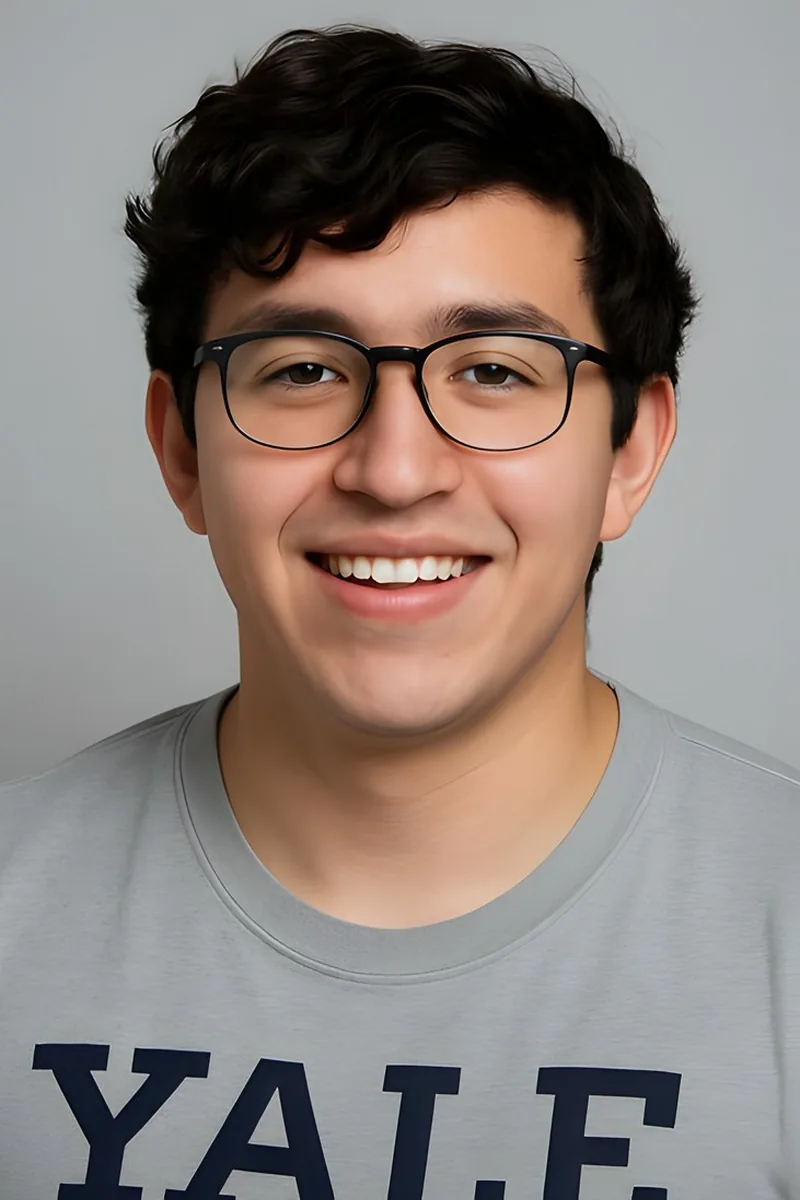
Most people who breeze through math can't explain it — Daniel learned BC Calculus by grinding through the logic of every convergence test, every parametric derivative, every series expansion until it genuinely made sense, and that's exactly how he teaches it. As an applied mathematics undergrad, he's currently using these tools in upper-level coursework, so he knows which BC concepts tend to feel arbitrary and how to make the reasoning behind them stick.
Three years teaching the full Algebra-through-Precalculus sequence at Chaparral High School means Zelalem knows exactly which gaps in earlier math trip students up when BC introduces series convergence, parametric derivatives, or Taylor polynomial construction — because he's the one who taught those foundational layers. His chemical engineering graduate work reinforced that calculus knowledge from the applied side, using integration techniques and differential equations to model real systems like heat transfer and fluid flow. Rated 4.9 by students.
Most BC students can memorize the list of convergence tests but freeze when asked which one to actually use on a given series — Deepal tackles that decision-making process by teaching the reasoning behind each test rather than just its formula. Biomedical engineering coursework at USC keeps him actively using Taylor expansions, integration techniques, and parametric equations, so he brings a 1570 SAT scorer's precision to problems that trip students up at the AB-to-BC transition.
I consider mathematics as an essential skill for success in life regardless of one's chosen career. It is a beautiful application of human reasoning to create an understanding of the universe we live in and to admire the incredible technical achievements of mankind. I hope to instill this appreciation for the subject in my students as they build the skills necessary to not only master the techniques and skills of math, but to enjoy and admire how math is used and the geniuses who developed the methods.
Kyle has completed Calculus 2 at the university level, which means he's already worked through the full range of BC topics — Taylor series, parametric equations, polar curves, and advanced integration techniques. He breaks down multi-step problems by connecting each new concept back to the foundational ideas students already know from AB.
Series convergence tests, parametric equations, and polar curves make BC the course where strong calculus students suddenly feel lost. Henry tackles these topics by connecting each new BC concept back to the AB foundations students already know, building intuition for why Taylor series approximate functions or how integration techniques extend into new coordinate systems. His 5.0 rating speaks to how well that approach lands.
Environmental engineering graduate work is essentially applied calculus — Kate's thesis work required series approximations for modeling fluid dynamics and integration techniques for analyzing pollutant transport, so BC topics like Taylor polynomials and improper integrals are tools she's used professionally, not just academically. She's particularly good at showing how convergence tests follow a logical decision tree rather than feeling like a random grab bag of techniques. Rated 4.9 by students.
Molecular biology at Yale means Maxwell lives in calculus-heavy territory — modeling gene expression rates, quantifying cell growth curves, analyzing reaction kinetics — so BC topics like differential equations and series approximations aren't abstract exercises for him but tools he actually reaches for in research. He's especially good at walking through the logic of integration techniques and parametric problems by grounding them in the AB concepts students already trust. Holds a 5.0 rating.
Studying applied mathematics at Stanford means Alex isn't just recalling BC topics from a past exam — he's actively using series, parametric equations, and advanced integration in his current coursework, which keeps his explanations sharp and grounded in how the math actually behaves. He's especially good at tracing a tricky convergence test or Lagrange error bound back to the core AB reasoning that makes it click. Rated 4.8 by students.
Most BC students can mechanically apply a ratio test or crank out a Taylor expansion — where they get stuck is understanding *when* each tool is the right one and *why* it works. Alexander, an applied math major at Rice with a 1580 SAT, approaches BC as a problem-solving course rather than a formula catalog, building each new concept from the reasoning students already developed in AB. That mindset is especially useful for the trickier BC territory — convergence arguments, error bounds, and parametric integration — where intuition matters more than memorization.
Biomedical engineering eats BC Calculus for breakfast — Spencer's coursework has him building models with differential equations, approximating functions with series, and integrating across complex domains before he even opens his calc textbook. That real-time immersion means he can walk through something like the Lagrange error bound or a tricky polar area setup with the fluency of someone who just used it in a lab report, not someone dusting off old notes. His 1550 SAT and 35 ACT speak to the test-taking precision he pairs with that technical depth.
I am a graduate of Cornell University's College of Arts and Sciences. I received my Bachelor of Arts in Chemistry with Distinction in 2015. Since graduation, I was a physics/chemistry teacher and soccer coach at a private school in Virginia for a year, where I led the soccer team to an undefeated season. Before teaching and coaching professionally, I was a Teaching Assistant for the Cornell Math and Physics Departments, where I taught many subjects including calculus, mechanics, electromagnetism. Throughout my time at Cornell and as a teacher, I tutored subjects ranging from the SAT to AP Physics and Algebra II, which is where my true talents lie: in small group or one-on-one settings where I can give students the full attention they deserve and tailor my approach specifically to their learning styles. This is why I am now pursuing tutoring as a part-time occupation at Varsity Tutors. I embrace teaching all math and science subjects, especially physics and calculus, at both the college and high school level and will go above and beyond to make sure all of my students succeed, according to their definition of success. In my spare time, I enjoy playing league soccer, basketball, tennis and guitar, and also like to travel and see as much of the world as I can.
Biochemistry lab work at Columbia demands comfort with the calculus that models reaction kinetics and molecular behavior — Andrew has spent years using integration techniques and series approximations in that context, which gives his BC teaching a practical edge when students ask "why does this matter?" He's especially effective at breaking down the transition from AB to BC, tracing topics like Taylor polynomial construction and convergence criteria back to the derivative and integral logic students already trust. Rated 4.9 by students.
Notre Dame's Science-Computing program front-loads calculus-heavy coursework — Aidan moved through multivariable calc and differential equations while simultaneously applying integration techniques and series in his science courses, so BC topics like Taylor polynomials and convergence tests landed as tools he actually needed, not just exam hurdles. He's especially sharp at tracing where a BC struggle — say, setting up an integral in polar coordinates or choosing the right convergence test — traces back to an AB concept that needs reinforcing. His 35 ACT and premed science background keep explanations precise and grounded.
Electrical engineering at Duke means Brooke is actively using series expansions to analyze circuits and integration techniques to model signal behavior — so when she teaches convergence tests or Taylor polynomial construction, she knows exactly which conceptual gaps trip students up because she's recently closed those gaps herself. Her 1550 SAT and 5.0 tutoring rating back up what her coursework suggests: she can break down the leap from AB to BC in precise, concrete terms that make parametric curves and polar integrals feel like logical next steps rather than foreign territory.
Series convergence tests, parametric equations, polar curves — BC Calculus piles on topics fast, and falling behind on even one unit can snowball. JF scored a perfect 1600 SAT and is studying mathematical and computational science at Stanford, where the calculus concepts from BC are the everyday language of coursework. That recent fluency means explanations stay intuitive rather than overly formal.
Studying applied physics at Cornell, Ritesh encounters BC-level calculus constantly — parametric motion in mechanics, series approximations in wave theory, integration techniques in electromagnetism — so he teaches these topics as interconnected tools rather than isolated chapters. He's especially sharp at walking through the logic of convergence tests, where students often memorize steps without understanding which test to reach for and why. His 1440 SAT and 4.6 rating speak to that clarity.
Physics majors don't just take BC Calculus — they breathe it, using series expansions to model wave behavior, integration techniques to solve equations of motion, and parametric equations to describe trajectories. Kiran is finishing a physics and computer science double major at Stony Brook, which means topics like Taylor polynomials and convergence aren't abstract to him; they're tools he reaches for in his own coursework daily. His 34 ACT and 4.7 rating speak to an ability to make that applied intuition accessible to students still building their BC toolkit.
Testimonials
Because the right AP Calculus BC tutor makes all the difference.
Average Session Rating – Based on 3.4M Learner Ratings
Practice AP Calculus BC
Free practice tests, flashcards, and AI tutoring for AP Calculus BC
Other North Las Vegas Tutors
Related Math Tutors in North Las Vegas
Frequently Asked Questions
Varsity Tutors matches North Las Vegas students with expert AP Calculus BC tutors for 1-on-1 instruction. We pair each student with a tutor based on their specific needs, learning style, and goals.
Whether you need homework help, exam prep, or want to get ahead, our AP Calculus BC tutors are ready to help.
Common challenges include gaps from earlier material, difficulty with specific concepts, and trouble applying learning to new problems. These issues can snowball quickly in AP Calculus BC.
A tutor identifies where you're stuck, fills in gaps, and provides targeted practice. The 1-on-1 format means you get help exactly where you need it.
Tutors work with your student's actual coursework—homework assignments, class notes, and upcoming tests. This keeps tutoring directly relevant to what's happening in the classroom.
When you share information about your student's school and curriculum, we can match you with a tutor who has relevant experience.
All tutors complete background checks, credential verification, and teaching evaluation. Many of our AP Calculus BC tutors hold advanced degrees or have years of teaching experience.
You can review tutor profiles to find someone with the right background for your student's level and needs.
Many students see improved grades within a few weeks, along with better understanding of AP Calculus BC concepts and more confidence tackling challenging material.
Tutors track progress and adjust their approach to ensure continued improvement.
Most students benefit from 1-2 sessions per week. More frequent sessions help if your student is significantly behind or has an important exam coming up.
Your tutor can recommend a schedule based on your student's specific situation and goals.
Tutoring is purchased in packages of hours, with rates varying by tutor experience. Varsity Tutors offers several options to fit different budgets and needs.
You can discuss pricing during your consultation to find what works best.
Your tutor will assess where your student is, discuss goals, and start working on priority areas. Most students bring current homework or upcoming test material to focus on.
By the end, you'll have a clear sense of how the tutor can help and a plan for moving forward.
Let’s find your perfect tutor
Answer a few quick questions. We’ll recommend the right plan and match you with a top 5% tutor.