Award-Winning Geometry Tutors
serving Minneapolis, MN
Geometry
Tutors in Minneapolis
Private 1-on-1 tutoring, weekly live classes for academic support, test prep & enrichment, practice tests and diagnostics, and more to elevate grades and test scores.
Based on 3.4M Learner Ratings
UniversitiesSchools & Universities
DeliveredHours Delivered
ProficiencyGrowth in Proficiency
Who needs tutoring?
No obligation. Takes ~1 minute.
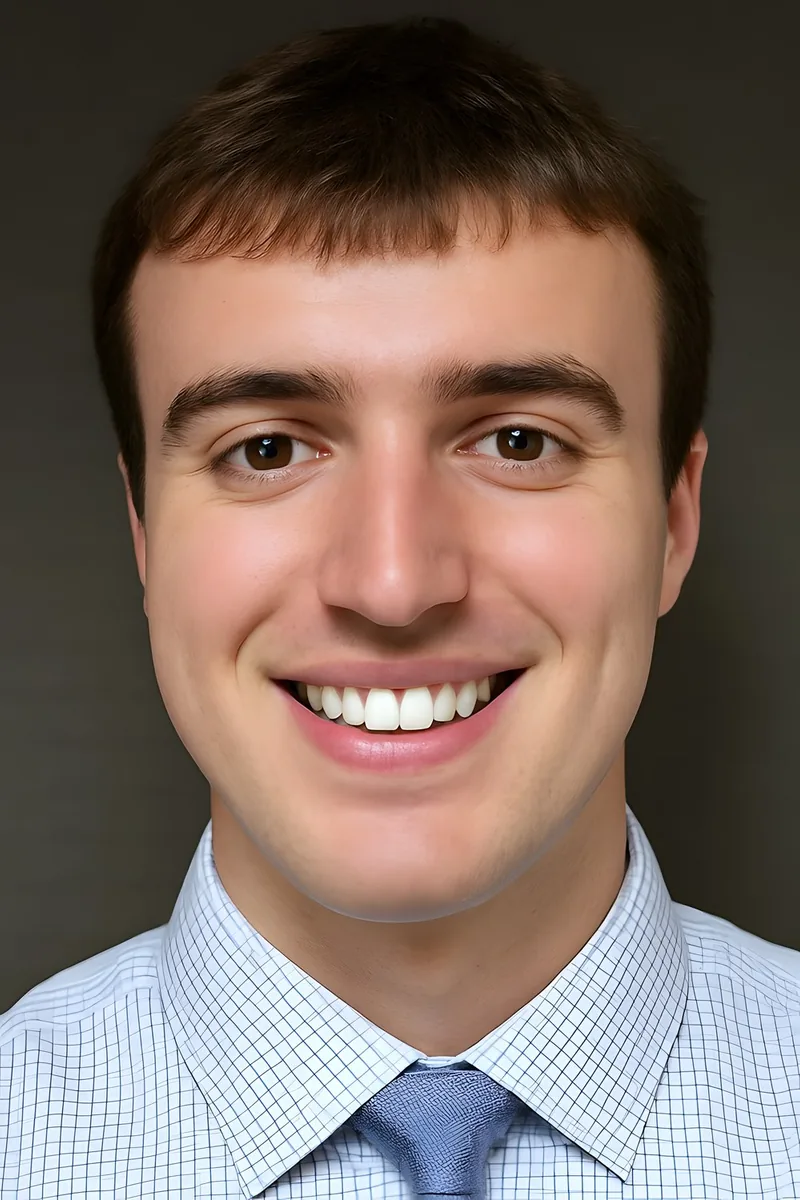
Proofs are usually the first time a math student has to build a logical argument instead of just computing an answer, and that's where most geometry frustration lives. Reed spent his time at Carleton College constructing economic arguments from axioms and data — a surprisingly similar skill set. He teaches students to treat each proof like a chain of reasoning, identifying what they know, what they need, and how postulates and theorems bridge the gap.
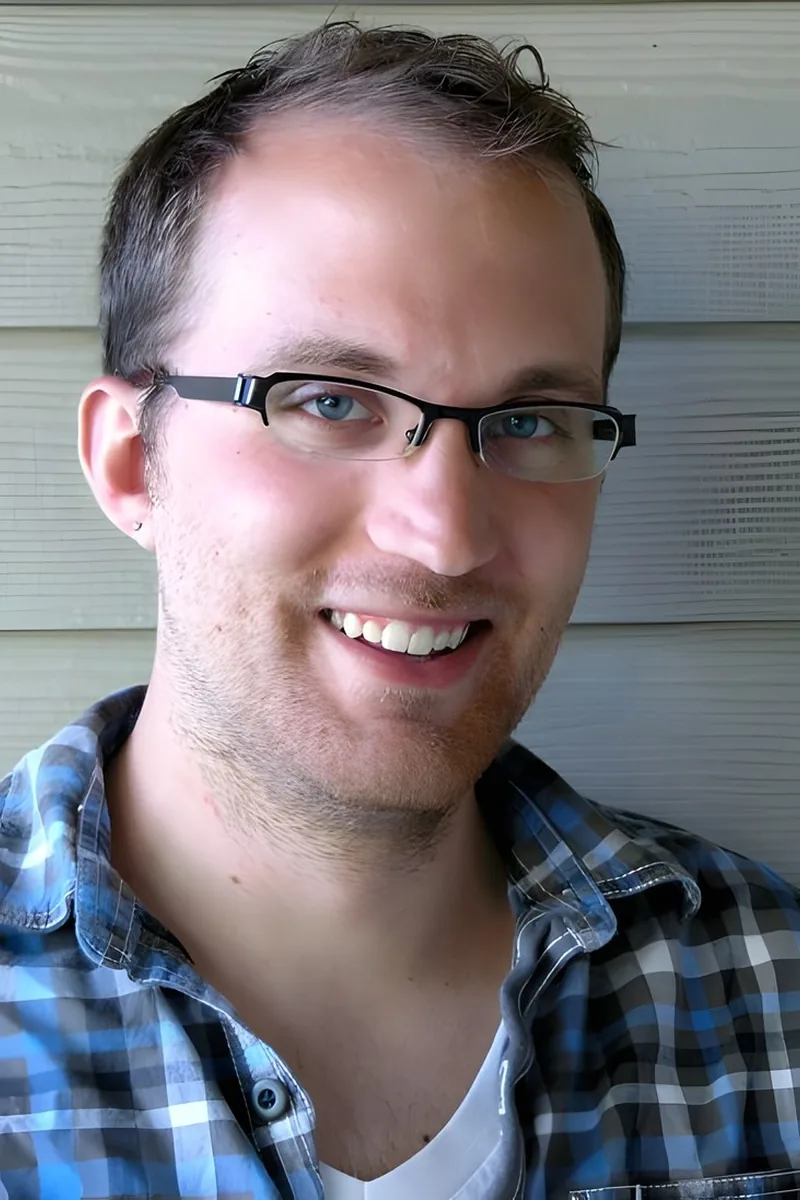
Teaching music theory for years gave Danny an unexpected edge in geometry — both subjects demand reading a formal notation system, following strict rules of structure, and building one logical step on top of another. He applies that same sequential thinking to two-column proofs and triangle congruence arguments, breaking each problem into a clear chain of statements and reasons. His 1450 SAT speaks to broader math fluency that keeps the computational side sharp too.
Computer science taught David to think in logical sequences — if this condition holds, then this follows — which is exactly the muscle geometry proofs demand. He unpacks two-column and paragraph proofs by treating each step like a line of code that has to logically depend on the one before it, making the structure feel less arbitrary and more like debugging a program. Holds a 5.0 rating from students.
Proofs are usually the first place geometry students feel lost, because suddenly math requires written logical arguments instead of just calculations. Anna breaks down two-column and paragraph proofs into a repeatable structure, connecting each theorem about parallel lines, congruent triangles, or circle arcs back to the reasoning that makes it click.
Proofs are where most Geometry students lose confidence — the leap from calculating angles to constructing logical arguments feels unfamiliar. Steve's English background actually sharpens his proof instruction, since he treats each one like building a persuasive paragraph: claim, evidence, reasoning, conclusion.
Proofs are usually the sticking point in Geometry: students can calculate an angle but freeze when asked to justify why it's congruent. Matt tackles this by teaching proof-writing as a form of logical storytelling, connecting each theorem back to a visual intuition that makes the reasoning feel natural. His 5.0 rating speaks to how well that approach lands.
An architecture degree is essentially a geometry degree in disguise — Bridget spent years in studio calculating sight lines, modeling three-dimensional forms, and reasoning through how flat drawings become built structures. That training makes her especially effective at teaching constructions, spatial visualization, and the relationship between two-dimensional nets and three-dimensional solids. Rated 5.0 by students.
Cross-curricular studies means Tully is constantly switching between disciplines — and that flexibility is exactly what geometry rewards, since a single problem can demand algebraic setup, spatial visualization, and logical argument all at once. He unpacks the proof-writing process by treating each step like building a persuasive essay: claim, evidence, reasoning, which clicks especially well for students who are stronger with words than diagrams. Rated 4.8 by students.
Proofs are usually the first place geometry students feel stuck — the logic feels completely different from anything they've done in math before. Sarah approaches proofs as structured arguments, teaching students to identify given information, map out a logical chain, and justify each step rather than guessing at the next statement.
Cory's dual background in mathematics and computer science means he thinks about geometry the way a programmer thinks about logic — every theorem is an if-then statement, every proof is a sequence of operations that has to compile cleanly. He's especially sharp on transformations and coordinate geometry, where algebraic fluency and spatial reasoning overlap. Rated 5.0 by students.
Proofs are usually the first place geometry students get stuck, because suddenly math requires written logical arguments instead of just calculations. Kushal tackles this by teaching students to map out each proof's reasoning before writing a single statement, turning what feels like guesswork into a repeatable process. He applies the same structured thinking to triangle congruence, circle theorems, and coordinate geometry problems.
Completing an IB diploma in Switzerland — where the math curriculum leans heavily on formal reasoning and international problem-solving styles — gave Sarah early fluency with the kind of structured geometric thinking that American geometry courses build toward. She's especially good at breaking down proof logic for students who understand shapes visually but freeze when asked to write a formal argument about congruence or angle relationships. Rated 5.0 by students.
Proofs are usually the sticking point in geometry: students can memorize angle relationships and triangle congruence criteria but freeze when asked to construct a logical argument. Nicholas's dual background in mathematics and computer science means he thinks in structured logic daily, and he teaches students to build geometric proofs the same way — one airtight step at a time.
Proofs are usually where geometry goes from manageable to intimidating — suddenly students need to justify every claim in a logical chain. Richard approaches proof-writing as a skill that can be practiced systematically, teaching students to identify given information, spot congruence shortcuts like SAS and ASA, and build arguments step by step. He covers everything from angle relationships through circle theorems with the same structured clarity.
Proofs are usually the first thing that scares geometry students, but they're also the first time math asks students to build a logical argument rather than just compute an answer. Michelle treats proof-writing as a learnable skill: she walks through how to identify given information, choose the right theorems about parallel lines or congruent triangles, and assemble each step with clear reasoning.
Civil engineering runs on geometry — from calculating load-bearing angles to designing site layouts — so Ethan brings real applications into lessons on proofs, triangle congruence, and area-volume relationships. He teaches students to sketch problems out and identify given information before jumping to theorems, which builds the spatial reasoning that makes geometry click.
Daniel's graduate work in GIS technology is essentially applied geometry — calculating areas from irregular polygons, working with coordinate systems, and reasoning about spatial relationships on maps. That real-world fluency carries directly into tutoring topics like triangle congruence proofs, circle theorems, and coordinate geometry, where he can show students why these ideas matter outside the textbook.
Proofs are usually the first place geometry students get stuck — the shift from computing answers to constructing logical arguments feels completely foreign. Josephine approaches proofs as a skill in structured reasoning, walking through each theorem and postulate so students learn to build arguments step by step. Her 5.0 rating speaks to how well that methodical style lands.
Proofs are usually the first place geometry students get stuck, because suddenly math requires written arguments instead of just calculations. Tony approaches proofs as logical storytelling — each statement follows from the last — and applies that same structured thinking to angle relationships, triangle congruence, and coordinate geometry problems.
Actuarial science is built on quantifying risk in precise mathematical terms, and Ingy's specialization in it means she approaches geometry with the same rigor — particularly when problems demand careful reasoning through circle theorems, arc lengths, and sector areas where one misstep cascades through the whole solution. She's especially effective at showing students how to read a dense diagram and extract exactly which relationships matter before writing anything down. Rated 4.9 by students.
Proofs are usually the first place geometry students feel lost, because the subject suddenly demands logical reasoning instead of just computation. Alexander teaches proof structure as a skill — identifying givens, choosing postulates, building an argument step by step — drawing on the same rigorous thinking his aerospace coursework required. He also covers coordinate geometry, triangle congruence, and circle theorems with an emphasis on understanding over memorization.
Proofs are usually the first place geometry students panic — the logic feels completely different from arithmetic or algebra. Amy approaches them as structured arguments, teaching students to identify given information, choose the right theorem, and build each step deliberately. Her experience as a math TA gives her a knack for making spatial reasoning click on paper.
Physics is geometry in motion — every free-body diagram, projectile path, and wave interference pattern Ella worked through in her physics degree required fluent spatial reasoning about angles, vectors, and shapes. She brings that same intuition to teaching geometry, unpacking how circle theorems and triangle properties connect to real physical situations rather than existing as isolated rules. Rated 5.0 by students.
Proofs are usually where geometry students panic, so Samantha teaches them as structured arguments rather than mysterious rituals — each statement earns its place with a reason. She also digs into the spatial reasoning behind congruence, similarity, and circle theorems, connecting diagrams to the algebra students already know. Her Duke science background means she's comfortable making abstract relationships concrete.
Proofs are usually where geometry stops feeling intuitive and starts feeling intimidating. Allen tackles that head-on by teaching students to read a diagram like a puzzle — identifying congruent triangles, parallel-line angle relationships, or circle theorems before writing a single line of formal reasoning. His Yale-trained analytical rigor translates well to the logical structure geometry demands.
Holding dual degrees from UCLA in biology and mathematics-economics, Vinay brings an unusual ability to toggle between abstract reasoning and concrete problem-solving — exactly what geometry demands when a student has to move from reading a diagram to constructing a formal proof. He unpacks circle theorems and polygon properties by tying them back to the algebraic foundations students already have, closing gaps before they compound. Rated 5.0 by students.
A biology major from Rice with a 1570 SAT, Perry approaches geometry problems the way he approaches lab work — by breaking complex diagrams into discrete, manageable pieces and reasoning through each relationship step by step. He's especially effective at teaching circle theorems and polygon properties, where students often know the individual rules but freeze when a problem layers several together. Rated 5.0 by students.
Proofs are where most geometry students get stuck — the leap from calculating angles to constructing logical arguments feels like a different subject entirely. Jonathan breaks that transition down by teaching students to identify given information, spot congruence relationships, and build each proof step by step. His 4.9 rating speaks to how well that structured approach clicks.
Proofs are usually the first time a geometry student has to explain *why* something is true, not just calculate an answer. Vansh teaches proof-writing as a logical argument rather than a mysterious format, walking through triangle congruence, parallel-line theorems, and circle properties with enough patience to make the reasoning feel natural.
Proofs are usually where geometry students panic — the logic feels nothing like the computation they're used to. Rachel spent her Dartmouth engineering program constructing logical arguments from axioms and constraints, so she's comfortable walking students through how to set up two-column and paragraph proofs while also tackling area, volume, and triangle congruence.
Proofs are usually the sticking point in geometry — students can calculate angles and areas but freeze when asked to construct a logical argument from postulates. Kevin tackles this by teaching proof strategy as a skill: identifying what's given, what's needed, and which theorems connect the two. His background in computational geometry and algorithmic thinking at Stanford gives him a structured approach that clicks for students who think logically.
A year as a course assistant in Harvard's math department taught Richard how to break abstract reasoning into concrete steps — a skill that pays off in geometry when students need to connect definitions, postulates, and theorems into a coherent proof. His government major, which is essentially an exercise in building airtight arguments from messy evidence, reinforces the same logical sequencing that two-column and paragraph proofs demand.
Proofs are usually where geometry students hit a wall — the shift from calculating answers to constructing logical arguments feels like a completely different subject. Tom's background in American Studies, which is essentially built on evidence-based argumentation, gives him a unique angle on teaching students to chain geometric theorems into airtight reasoning. He also covers the computational side, from triangle congruence to circle theorems, with the same step-by-step precision.
A political science degree from the University of Chicago means Asta spent four years constructing airtight arguments from premises to conclusions — exactly the skill that makes geometric proofs click. She applies that structured reasoning to two-column proofs and logical chains involving congruence, triangle properties, and circle theorems, treating each one like a case to be built rather than a formula to memorize. Rated 5.0 by students.
Proofs are usually the moment geometry stops feeling intuitive and starts feeling impossible. Noah approaches them as logical arguments rather than memorization exercises, drawing on the same analytical reasoning he sharpened through his political science training at Penn. He also tackles coordinate geometry and triangle congruence by emphasizing the visual logic behind each theorem.
Testimonials
Because the right Geometry tutor makes all the difference.
Average Session Rating – Based on 3.4M Learner Ratings
Practice Geometry
Free practice tests, flashcards, and AI tutoring for Geometry
Nearby Geometry Tutors
Other Minneapolis Tutors
Related Math Tutors in Minneapolis
Frequently Asked Questions
Many students struggle with the shift from algebra's computational focus to geometry's emphasis on visual reasoning and logical proof. Common pain points include understanding why geometric relationships work (not just memorizing formulas), writing formal proofs with proper justification, and applying concepts to word problems involving real-world shapes and angles. Students often find it helpful to work with tutors who can break down the "why" behind theorems and help them see the patterns connecting different concepts.
Writing proofs requires both logical thinking and clear communication—skills that benefit greatly from personalized feedback. Tutors can help you understand the reasoning behind each step, teach you how to identify which theorems apply in different situations, and guide you through the process of structuring arguments clearly. With practice and guidance, students develop confidence in approaching unfamiliar proof problems and learn to see the logical connections that make proofs click.
Absolutely—geometry is inherently visual, making personalized tutoring particularly effective for visual learners. Tutors can use diagrams, coordinate planes, and spatial reasoning activities to help you see relationships between angles, sides, and shapes. This approach helps you move beyond memorizing formulas to truly understanding how geometric concepts connect, which makes solving problems and writing proofs much more intuitive.
Your first session is about understanding your learning style, identifying specific challenges, and building a personalized plan. Tutors will likely review your current coursework, discuss topics that feel confusing (whether it's proofs, coordinate geometry, or word problems), and assess how you approach problem-solving. This foundation helps tutors tailor their teaching strategy to match how you learn best and focus on the concepts that will have the biggest impact on your progress.
Yes. Minneapolis schools use various geometry curricula and textbooks, and tutors are experienced working with different approaches and pacing guides. Whether your course emphasizes transformational geometry, coordinate geometry, or traditional Euclidean methods, tutors can align their instruction with your specific curriculum while also helping you understand the underlying concepts that connect across different approaches.
Word problems require translating language into geometric relationships—a skill that improves with guided practice. Tutors help you develop a systematic approach: identifying what you're given, visualizing the situation with a diagram, and connecting it to relevant theorems or formulas. By working through problems with feedback and learning to ask yourself the right questions, you build the confidence and strategies to tackle unfamiliar problems independently.
Personalized tutoring is particularly effective for building math confidence because it creates a judgment-free space to ask questions and work through challenging concepts at your own pace. As you experience success with guided practice and see how concepts connect logically, anxiety typically decreases. Many students find that understanding the "why" behind geometry—rather than just following procedures—transforms their relationship with math from stressful to engaging.
Varsity Tutors connects you with geometry tutors who understand Minneapolis curricula and can provide personalized instruction tailored to your needs. Simply share your current geometry course, specific challenges, and learning goals, and you'll get matched with a tutor experienced in helping students master the concepts you're working on. Your first session is designed to build a customized plan that addresses your unique needs.
Let’s find your perfect tutor
Answer a few quick questions. We’ll recommend the right plan and match you with a top 5% tutor.