Award-Winning Anatomy Tutors
serving Detroit, MI
Anatomy
Tutors in Detroit
Private 1-on-1 tutoring, weekly live classes for academic support, test prep & enrichment, practice tests and diagnostics, and more to elevate grades and test scores.
Based on 3.4M Learner Ratings
UniversitiesSchools & Universities
DeliveredHours Delivered
ProficiencyGrowth in Proficiency
Who needs tutoring?
No obligation. Takes ~1 minute.
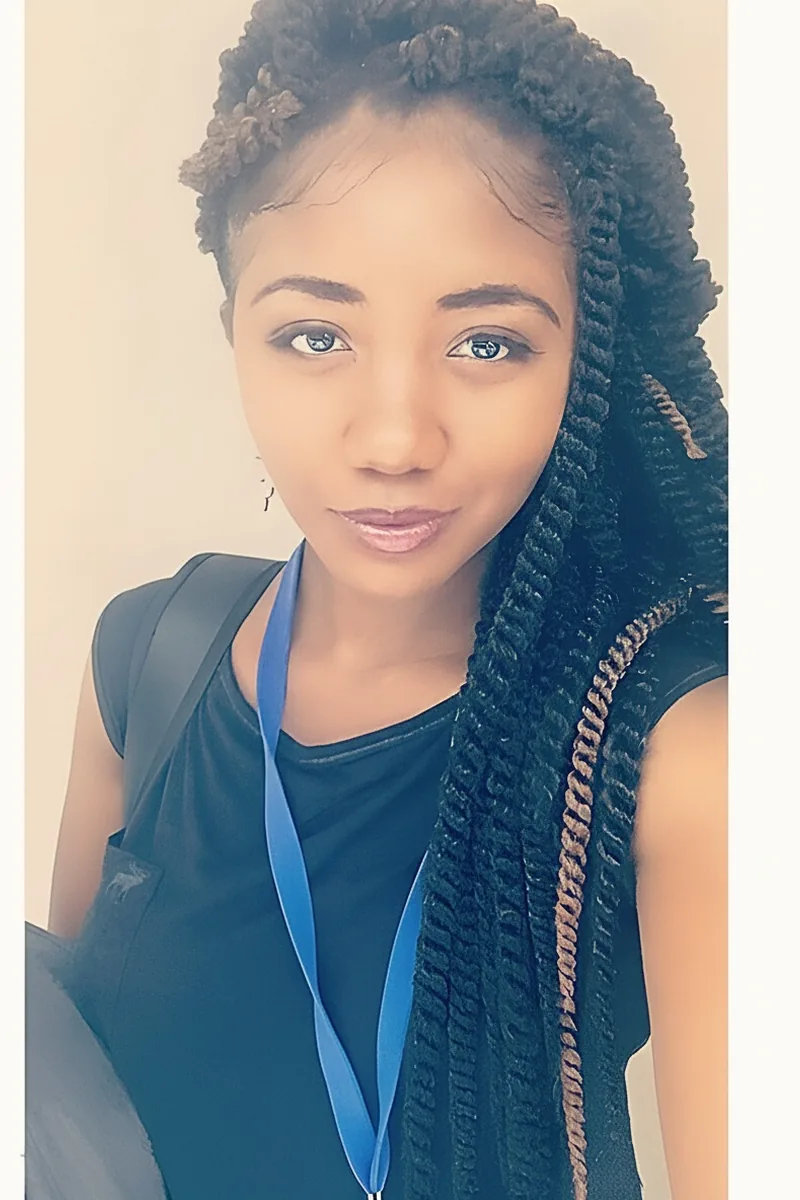
I am a Dartmouth graduate. I am currently working on my med and business endeavors. I have not only an interest, but a motivation to help others. I have helped students get into Ivy League schools as well as other top universities across the country with top scholarships. I tutor in all subjects from French to Essay Writing and Algebra to Chemistry! I want my students and tutees to see the value in themselves and know that they can accomplish anything with determination and hard work! Realizing you can do it is half the battle and working hard to bring that dream to fruition is the other half!
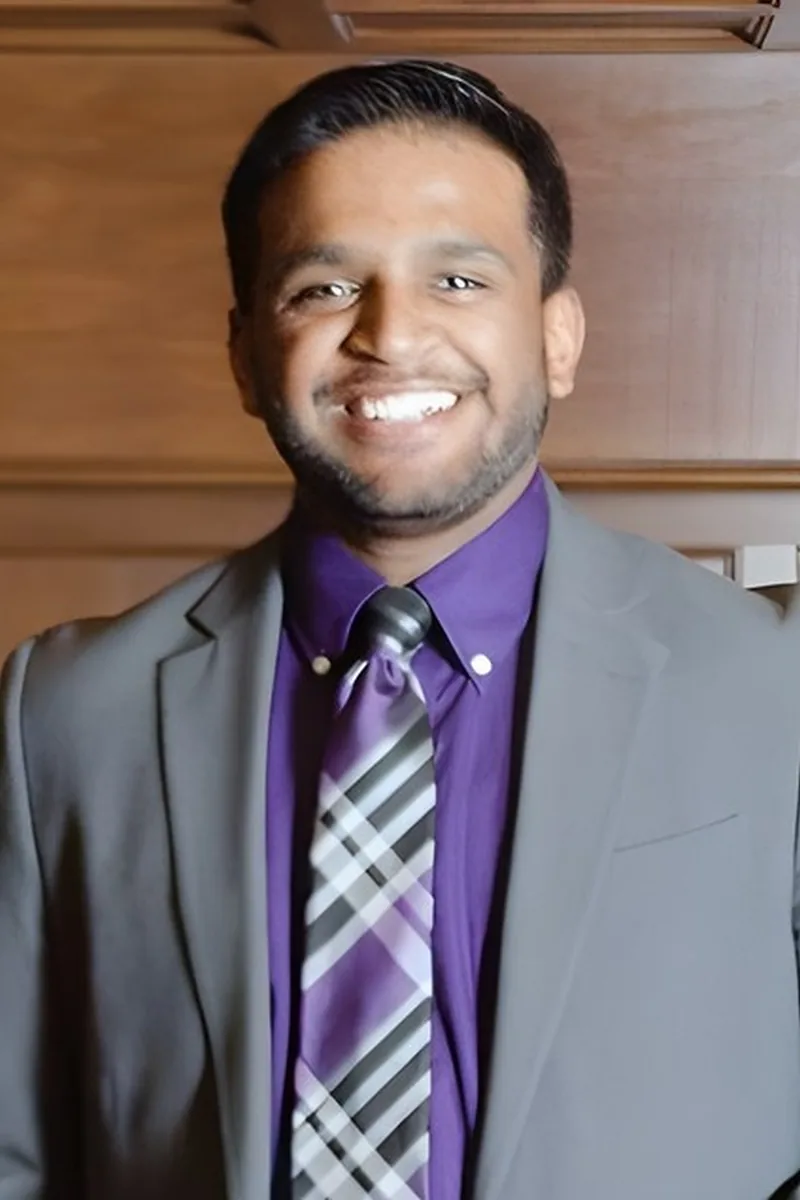
I am currently a second year medical student at Wayne State University School of Medicine. Tutoring is something I have always been involved with. Throughout high-school, I tutored students in Algebra and Calculus. In college, I had an opportunity to work with younger students while also tutoring in organic chemistry. I love being able to help students succeed in all aspects. I am also adaptable to many different learning styles.
I am currently a fourth year dental student at University of Michigan. I graduated from Barrett, the Honors College at Arizona State University with a double Bachelor of Science degree in Microbiology and Psychology. I have been tutoring for approximately eleven years, and have worked with students ranging from third grade to college students. I began tutoring as a way to give back to the community, help students become interested in the world around them and grasp the knowledge just waiting at their fingertips. I have tutored a variety of subjects including Math, Reading, Writing, and Science classes, as well as standardized tests such as the SAT and assisted with college admission essays. I really enjoy tutoring Math, because it was one of the subjects I struggled with the most while going through Middle School and High School. It taught me how essential it is to have a strong foundation not just in Math, but in any and every subject. Having struggled in certain courses before, I understand how frustrated students might get if they are struggling to understand something that is not "sticking," and I try to make tutoring more interactive and fun to counteract that. Also, I focus on making sure students truly understand the concepts we are learning, rather than just memorizing facts in the moment. In my spare time, I enjoy reading, playing badminton, singing, and traveling to new cities around the World.
I am 26 years old born and raised in Seattle Washington, University of British Columbia graduate and current 3rd year medical student. You may look at my accomplishments and assume I must have had a very consistent successful education process. This is not necessarily true, I struggled throughout high school with coursework and was slowly falling behind my peers. I was working very hard but was not getting the academic results that I wanted. I also reached out to academic tutors to help me understand core concepts in various subjects that my peers were not having any trouble with. Even during my undergraduate degree, I reached out to various academic tutors to give me an extra viewpoint on various difficult subjects and concepts. I understand what it is like to need extra help with coursework, I understand growing curious minds and the concepts that give many trouble because I have been through it. I am now a dean's list student at the top of my class in Medical school, and I can truly see how possible it is for any student to reach their academic goals no matter where you have come from. I believe the most intelligent individuals are the ones who can identify their weakness and seek help from others to succeed.
I'm Uchenna! I'm from Beltsville, MD and I currently am taking a year off between my third and fourth years at the University of Michigan Medical School to do biomedical research at the NIH. I also graduated magna cum laude from the University of Maryland, Baltimore County (UMBC) with a B.S. in Biochemistry and a minor in Psychology. I have quite a few years of tutoring under my belt as I tutored for about 3 years when I was at UMBC. And although I had no formal tutoring positions in medical school, my classmates and I constantly taught each other our material and various concepts. I love tutoring because I know trying to be successful in your coursework can be difficult and when you can help someone throughout that journey, it truly is beneficial for both tutee and tutor seeing the mutual satisfaction in that person's progress.
I am currently a pre-candidate in a chemistry doctoral program at the Univeristy of Michigan, receiving my Bachelor's of Science in chemistry from Truman State University. Having completed many science and math courses in my academic career, I understand how daunting such courses can be. With that in mind, I make it a personal goal to provide students that I instruct with tools to help them understand complex material and to also personalize material so that they are engaged in the subject matter (especially in the areas of math and science). Each student has a different learning style and it is important to help students find theirs so that they may become confident and, more importantly, independent. It is my belief that good tutors "teach themselves out of a job" as we should help students learn how to tackle hard concepts with their own skill-set and in so-doing students become less reliant on tutors. I have tutored for 3 years at the undergraduate level and taught swimming lessons for ages 3-18 for 7 years. Through these experiences I have garnered an immense passion for assisting others and I cannot wait to continue with this passion with you!
I am a full-time Master's student, and I enjoy Harry Potter, Doctor Who, and the Chilling Adventures of Sabrina.
I am eternally grateful! I minored in Chemistry after getting interested in the inner workings of organic chemistry. While going to college I earned money by tutoring classes I had already taken. I also offered "supplemental instruction" which were informal classroom question and answer sessions. I worked in a research lab after earning an undergraduate research fellowship and explored Physiology at the School of Medicine. Then went on to study Toxicology at the University of Wisconsin, Madison. While there a decision appeared clear between focusing on research or teaching. I like teaching better. I truly enjoy spreading knowledge about Biology and Chemistry and finding fun ways to introduce people to these (often difficult) subjects.
Four years of medical school at Harvard meant Jean didn't just study anatomy from a textbook — she learned it through cadaver dissection, clinical rotations, and diagnostic reasoning. She teaches students to think spatially about structures like the brachial plexus or the abdominal vasculature, building the kind of three-dimensional understanding that makes identification and relationships between structures click.
Prateek's medical training at Drexel built on a neuroscience foundation at Johns Hopkins, which means he learned anatomy twice — first as undergraduate neuroanatomy, then as the full-body systems approach required for clinical medicine. That double exposure is especially useful for topics like cranial nerve pathways and CNS structures, where understanding the neuroscience behind the anatomy makes spatial relationships click instead of requiring brute memorization.
Memorizing the names of 206 bones or every branch of the brachial plexus doesn't stick without a framework for why structures are shaped and positioned the way they are. Albina breaks anatomy down by linking form to function — explaining how the architecture of a joint or the layout of the vasculature serves a specific physiological purpose.
Physical therapy graduate students live in anatomy — Ken's current PT program means he's working with musculoskeletal structures, nerve pathways, and organ systems on a daily basis. That clinical context makes it easier to teach concepts like brachial plexus innervation or joint articulation because he can tie each structure to its real function in the body.
Medical school gave Marc a clinical lens on anatomy that most tutors don't have — he connects each muscle origin, nerve pathway, or organ relationship to how it actually matters in a living body. He also teaches efficient memorization strategies for the sheer volume of structures students need to retain.
Learning anatomy is as much about spatial reasoning as it is about vocabulary — you need to picture where the brachial plexus runs or how the heart's chambers connect to the great vessels. Amir, currently finishing medical school, teaches anatomy through detailed visual cues and diagrams that map structures in three dimensions, turning rote memorization into genuine understanding.
Learning anatomy means building a mental map of the body where every structure has a reason for its location and shape. Nicholas's biology degree gave him deep exposure to human systems, and he teaches anatomical relationships — like why the recurrent laryngeal nerve takes its peculiar path — in ways that make spatial memorization far more intuitive.
Memorizing every bone, muscle, and organ system in anatomy can feel overwhelming without a strategy. Karishma's psychology background gives her insight into how memory actually works, and she teaches students to use spatial relationships and functional groupings — like linking muscle attachments to their actions — so the material organizes itself rather than piling up.
Preparing for medical school meant Enstin had to internalize body systems, organ relationships, and musculoskeletal structures at a level that went well beyond introductory coursework — and his psychology training adds a practical edge when it comes to teaching effective study and retention strategies for terminology-heavy material. He breaks anatomy down by connecting Latin and Greek roots to the structures they describe, so students can reason through unfamiliar terms instead of memorizing each one cold.
Memorizing bones, muscles, and organ systems can feel overwhelming without a framework to hang it all on. Benjamin approaches anatomy by teaching students to think in terms of structure-function relationships — why the femur is shaped the way it is, how alveoli maximize gas exchange — so the details stick. His psychology training gives him a sharp sense of how memory and recall actually work, which he applies directly to study strategies.
Medical school anatomy is relentless — cadaver labs, spatial reasoning, thousands of structures with Latin names. Felix went through that gauntlet and developed memorization strategies tied to clinical relevance: knowing the brachial plexus not just as a diagram but as the reason a patient can't extend their wrist. He walks students through regional and systems-based anatomy with that same emphasis on function over rote labeling.
Andrew doesn't have a clinical or lab science background, but his history training at Northwestern built the kind of systematic categorization skills that translate surprisingly well to anatomy — organizing body systems, tracing relationships between structures, and retaining dense terminology. He approaches the subject by turning anatomical vocabulary into logical groupings, connecting muscle origins and insertions to their actions so students can reason through questions rather than relying on flashcard recall alone.
Testimonials
Because the right Anatomy tutor makes all the difference.
Average Session Rating – Based on 3.4M Learner Ratings
Practice Anatomy
Free practice tests, flashcards, and AI tutoring for Anatomy
Other Detroit Tutors
Related Science Tutors in Detroit
Frequently Asked Questions
Memorizing bone names and muscle origins is only the first step—true anatomy understanding comes from seeing how structures relate to function. Personalized tutoring helps you connect the 'what' (terminology) with the 'why' (how systems work together), using visualization techniques, real-world examples, and guided practice that builds conceptual frameworks rather than isolated facts. This approach makes anatomy stick longer and transfers better to exams, lab practicals, and future coursework.
Lab practicals require both anatomical knowledge and spatial reasoning—you need to identify structures from different angles and understand their relationships in 3D space. Expert tutors can help you develop effective study strategies for lab practicals, including how to use models and diagrams to build mental maps, practice identification techniques, and understand the functional significance of what you're observing during dissections. This preparation translates directly to confident performance when you're at the lab station.
Visualization is one of the biggest challenges in anatomy, especially when you're learning about organs, blood vessels, and neural pathways you can't see directly. Personalized instruction focuses on building your spatial reasoning through systematic approaches: starting with simple structures, layering complexity, using multiple representations (diagrams, models, animations), and practicing from different perspectives. Many students find that guided visualization practice dramatically improves both their understanding and retention.
Anatomy varies significantly depending on whether you're taking high school anatomy, pre-med human anatomy, or advanced anatomy for nursing or physical therapy programs. Varsity Tutors connects you with tutors who have expertise at your specific level and understand the expectations of your course. During the matching process, you can discuss your course focus, textbook, and learning goals to ensure you're working with someone who can address your exact needs.
Comprehensive anatomy exams require different study strategies for each question type: multiple-choice tests conceptual understanding and detail recall, short-answer requires explanation skills, and practicals demand spatial recognition and functional knowledge. Expert tutors help you develop a balanced preparation plan that addresses all three formats, practice with realistic exam questions, and build the confidence that comes from truly understanding material rather than cramming facts. This multi-faceted approach typically leads to stronger performance across all exam components.
Detroit's 54 school districts and 210 schools offer various anatomy courses, from introductory high school anatomy to advanced programs at universities and health professions schools. Many students benefit from combining school resources (lab facilities, textbooks, classroom instruction) with personalized tutoring for targeted support on challenging topics. Varsity Tutors connects you with tutors who understand the Detroit-area curriculum standards and can complement whatever program you're enrolled in.
Your first session focuses on understanding your specific situation: what anatomy course you're taking, which topics are most challenging, your learning style, and your goals (passing exams, improving grades, building understanding for future coursework). The tutor will likely assess your current knowledge level and identify whether your struggles are conceptual (not understanding how systems work), practical (trouble with spatial visualization), or study-strategy related (ineffective memorization approaches). This foundation allows you to move into productive learning immediately in follow-up sessions.
The improvement depends on your starting point and consistency, but students typically see meaningful gains within 3-4 sessions once they're working with a tutor who understands their specific challenges. Many students report that personalized instruction transforms their relationship with anatomy—moving from dreading the subject to actually understanding how the body works. Research on 1-on-1 instruction shows significant benefits for complex, visual subjects like anatomy where spatial reasoning and conceptual connections matter as much as memorization.
Let’s find your perfect tutor
Answer a few quick questions. We’ll recommend the right plan and match you with a top 5% tutor.