Award-Winning Anatomy Tutors
serving Flint, MI
Anatomy
Tutors in Flint
Private 1-on-1 tutoring, weekly live classes for academic support, test prep & enrichment, practice tests and diagnostics, and more to elevate grades and test scores.
Based on 3.4M Learner Ratings
UniversitiesSchools & Universities
DeliveredHours Delivered
ProficiencyGrowth in Proficiency
Who needs tutoring?
No obligation. Takes ~1 minute.
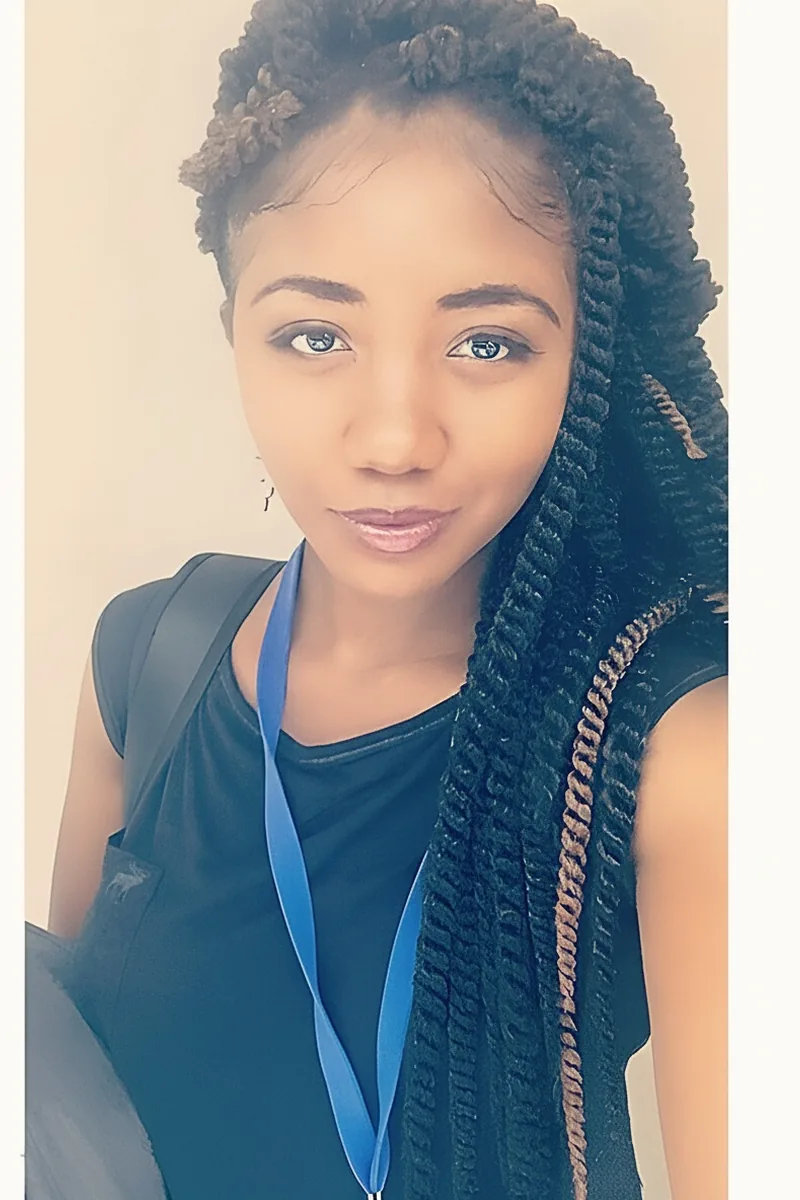
I am a Dartmouth graduate. I am currently working on my med and business endeavors. I have not only an interest, but a motivation to help others. I have helped students get into Ivy League schools as well as other top universities across the country with top scholarships. I tutor in all subjects from French to Essay Writing and Algebra to Chemistry! I want my students and tutees to see the value in themselves and know that they can accomplish anything with determination and hard work! Realizing you can do it is half the battle and working hard to bring that dream to fruition is the other half!
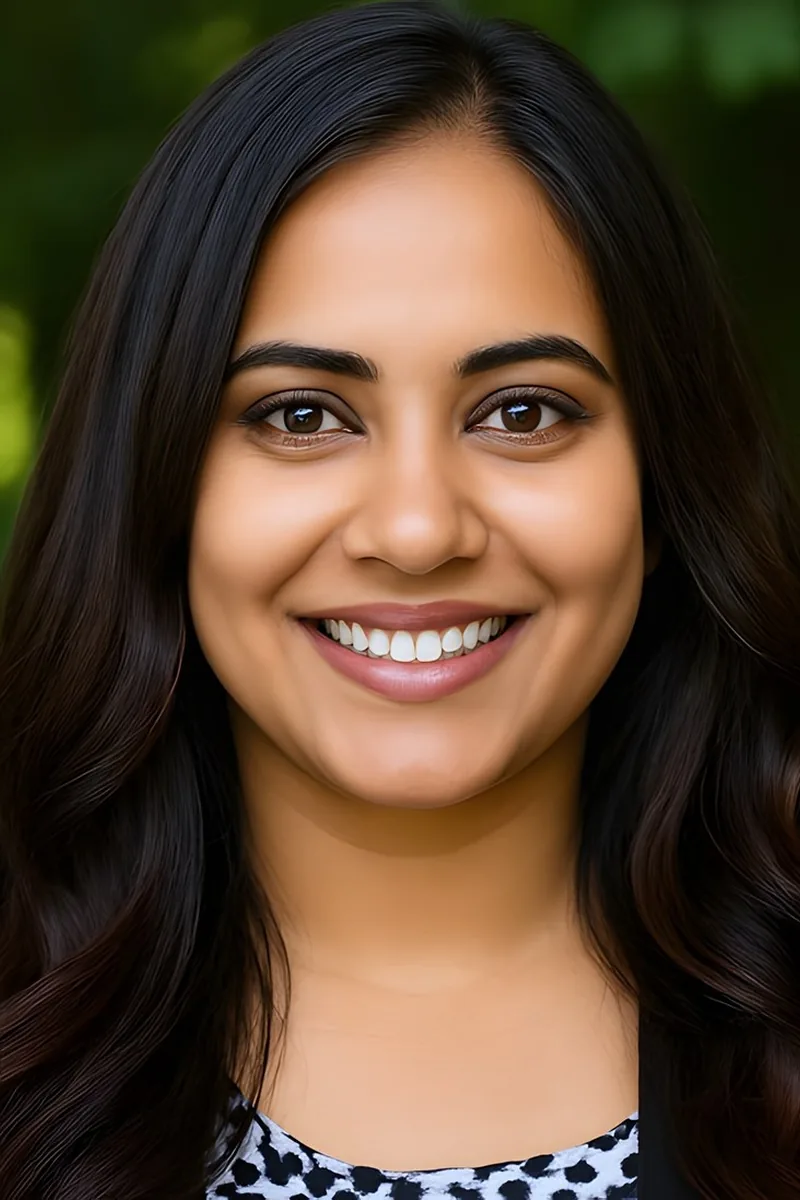
I am currently a fourth year dental student at University of Michigan. I graduated from Barrett, the Honors College at Arizona State University with a double Bachelor of Science degree in Microbiology and Psychology. I have been tutoring for approximately eleven years, and have worked with students ranging from third grade to college students. I began tutoring as a way to give back to the community, help students become interested in the world around them and grasp the knowledge just waiting at their fingertips. I have tutored a variety of subjects including Math, Reading, Writing, and Science classes, as well as standardized tests such as the SAT and assisted with college admission essays. I really enjoy tutoring Math, because it was one of the subjects I struggled with the most while going through Middle School and High School. It taught me how essential it is to have a strong foundation not just in Math, but in any and every subject. Having struggled in certain courses before, I understand how frustrated students might get if they are struggling to understand something that is not "sticking," and I try to make tutoring more interactive and fun to counteract that. Also, I focus on making sure students truly understand the concepts we are learning, rather than just memorizing facts in the moment. In my spare time, I enjoy reading, playing badminton, singing, and traveling to new cities around the World.
I am currently a second year medical student at Wayne State University School of Medicine. Tutoring is something I have always been involved with. Throughout high-school, I tutored students in Algebra and Calculus. In college, I had an opportunity to work with younger students while also tutoring in organic chemistry. I love being able to help students succeed in all aspects. I am also adaptable to many different learning styles.
I am 26 years old born and raised in Seattle Washington, University of British Columbia graduate and current 3rd year medical student. You may look at my accomplishments and assume I must have had a very consistent successful education process. This is not necessarily true, I struggled throughout high school with coursework and was slowly falling behind my peers. I was working very hard but was not getting the academic results that I wanted. I also reached out to academic tutors to help me understand core concepts in various subjects that my peers were not having any trouble with. Even during my undergraduate degree, I reached out to various academic tutors to give me an extra viewpoint on various difficult subjects and concepts. I understand what it is like to need extra help with coursework, I understand growing curious minds and the concepts that give many trouble because I have been through it. I am now a dean's list student at the top of my class in Medical school, and I can truly see how possible it is for any student to reach their academic goals no matter where you have come from. I believe the most intelligent individuals are the ones who can identify their weakness and seek help from others to succeed.
I'm Uchenna! I'm from Beltsville, MD and I currently am taking a year off between my third and fourth years at the University of Michigan Medical School to do biomedical research at the NIH. I also graduated magna cum laude from the University of Maryland, Baltimore County (UMBC) with a B.S. in Biochemistry and a minor in Psychology. I have quite a few years of tutoring under my belt as I tutored for about 3 years when I was at UMBC. And although I had no formal tutoring positions in medical school, my classmates and I constantly taught each other our material and various concepts. I love tutoring because I know trying to be successful in your coursework can be difficult and when you can help someone throughout that journey, it truly is beneficial for both tutee and tutor seeing the mutual satisfaction in that person's progress.
I am currently a pre-candidate in a chemistry doctoral program at the Univeristy of Michigan, receiving my Bachelor's of Science in chemistry from Truman State University. Having completed many science and math courses in my academic career, I understand how daunting such courses can be. With that in mind, I make it a personal goal to provide students that I instruct with tools to help them understand complex material and to also personalize material so that they are engaged in the subject matter (especially in the areas of math and science). Each student has a different learning style and it is important to help students find theirs so that they may become confident and, more importantly, independent. It is my belief that good tutors "teach themselves out of a job" as we should help students learn how to tackle hard concepts with their own skill-set and in so-doing students become less reliant on tutors. I have tutored for 3 years at the undergraduate level and taught swimming lessons for ages 3-18 for 7 years. Through these experiences I have garnered an immense passion for assisting others and I cannot wait to continue with this passion with you!
I am a full-time Master's student, and I enjoy Harry Potter, Doctor Who, and the Chilling Adventures of Sabrina.
I am eternally grateful! I minored in Chemistry after getting interested in the inner workings of organic chemistry. While going to college I earned money by tutoring classes I had already taken. I also offered "supplemental instruction" which were informal classroom question and answer sessions. I worked in a research lab after earning an undergraduate research fellowship and explored Physiology at the School of Medicine. Then went on to study Toxicology at the University of Wisconsin, Madison. While there a decision appeared clear between focusing on research or teaching. I like teaching better. I truly enjoy spreading knowledge about Biology and Chemistry and finding fun ways to introduce people to these (often difficult) subjects.
Having studied anatomy through her nursing education, Sarah knows the subject from the inside — not just labeling structures on a diagram but understanding how organ systems interact functionally. She tackles tough topics like the brachial plexus or cardiac conduction pathways by linking structure to clinical purpose, which makes dense material far easier to retain.
Memorizing every bone, muscle, and nerve feels overwhelming until there's a system behind it. Meghan uses spatial reasoning techniques and functional groupings — like learning forearm muscles by their action on the wrist and fingers — to turn anatomy's massive vocabulary into something organized and retrievable. Her medical training keeps her fluent in exactly the level of detail most anatomy courses demand.
Learning anatomy is often treated as pure memorization — origin, insertion, action, repeat — but Ade tackles it differently by linking structures to their physiological function. When a student understands why the brachial plexus is organized the way it is, or how blood flow through the heart's chambers relates to valve placement, the naming conventions start to make intuitive sense.
Medical school anatomy is relentless — cadaver labs, spatial reasoning, thousands of structures with Latin names. Felix went through that gauntlet and developed memorization strategies tied to clinical relevance: knowing the brachial plexus not just as a diagram but as the reason a patient can't extend their wrist. He walks students through regional and systems-based anatomy with that same emphasis on function over rote labeling.
Nicole's psychology training — specifically her coursework in how people encode and retain dense information — gives her a practical edge when tackling anatomy's enormous vocabulary of bones, muscles, and organ systems. She teaches students to chunk material by body region and build associative links between structures and their functions, turning what feels like an endless list into a connected map. Her Children's Studies minor also means she's skilled at scaling explanations down for younger or introductory-level learners.
Rachel's physiology and microbiology tutoring background means she already thinks in body systems — so when she teaches anatomy, she connects each structure to what it actually does, giving students a functional reason to remember names and locations. Her approach works especially well for topics like the muscular system, where understanding how origin and insertion points relate to movement makes the terminology far less arbitrary.
Learning anatomy is as much about spatial reasoning as it is about vocabulary — you need to picture where the brachial plexus runs or how the heart's chambers connect to the great vessels. Amir, currently finishing medical school, teaches anatomy through detailed visual cues and diagrams that map structures in three dimensions, turning rote memorization into genuine understanding.
From brachial plexus branching patterns to the fascial compartments of the lower limb, anatomy rewards spatial thinking and systematic review. Emad has taught anatomy as an adjunct professor and conducted research at Columbia University, so he approaches each region with the precision of someone who has dissected, diagrammed, and clinically applied this material across two medical programs.
I am a public school teacher (Chemistry and Living Environment) but can tutor most sciences. I truly believe in differentiated learning and once I know the learning style of a student, I tailor my teaching style for optimum time usage. I love to utilize stories from my real life experiences in labs to help students understand the implications of their science education.
Studying both speech and hearing science and medicine means Li has spent years learning the human body at every level — bones, muscles, nerves, and the way they interact as functional systems. She teaches anatomy by connecting structure to function, so students understand why the brachial plexus is organized the way it is, not just its branches.
Medical school gave Rachel the kind of anatomy knowledge that comes from repeated, high-stakes application — not just labeling diagrams but understanding why the celiac trunk branches where it does or how the layers of the thoracic wall protect what's beneath them. Her biology degree and 5.0 rating reflect a teaching style that ties every structure back to its physiological job, turning a memorization marathon into something that actually makes sense.
Memorizing bones, muscles, and organ systems can feel overwhelming without a framework to hang it all on. Benjamin approaches anatomy by teaching students to think in terms of structure-function relationships — why the femur is shaped the way it is, how alveoli maximize gas exchange — so the details stick. His psychology training gives him a sharp sense of how memory and recall actually work, which he applies directly to study strategies.
Testimonials
Because the right Anatomy tutor makes all the difference.
Average Session Rating – Based on 3.4M Learner Ratings
Practice Anatomy
Free practice tests, flashcards, and AI tutoring for Anatomy
Other Flint Tutors
Related Science Tutors in Flint
Frequently Asked Questions
Varsity Tutors matches Flint students with expert Anatomy tutors for 1-on-1 instruction. We pair each student with a tutor based on their specific needs, learning style, and goals.
Whether you need homework help, exam prep, or want to get ahead, our Anatomy tutors are ready to help.
Common challenges include gaps from earlier material, difficulty with specific concepts, and trouble applying learning to new problems. These issues can snowball quickly in Anatomy.
A tutor identifies where you're stuck, fills in gaps, and provides targeted practice. The 1-on-1 format means you get help exactly where you need it.
Tutors work with your student's actual coursework—homework assignments, class notes, and upcoming tests. This keeps tutoring directly relevant to what's happening in the classroom.
When you share information about your student's school and curriculum, we can match you with a tutor who has relevant experience.
All tutors complete background checks, credential verification, and teaching evaluation. Many of our Anatomy tutors hold advanced degrees or have years of teaching experience.
You can review tutor profiles to find someone with the right background for your student's level and needs.
Many students see improved grades within a few weeks, along with better understanding of Anatomy concepts and more confidence tackling challenging material.
Tutors track progress and adjust their approach to ensure continued improvement.
Most students benefit from 1-2 sessions per week. More frequent sessions help if your student is significantly behind or has an important exam coming up.
Your tutor can recommend a schedule based on your student's specific situation and goals.
Tutoring is purchased in packages of hours, with rates varying by tutor experience. Varsity Tutors offers several options to fit different budgets and needs.
You can discuss pricing during your consultation to find what works best.
Your tutor will assess where your student is, discuss goals, and start working on priority areas. Most students bring current homework or upcoming test material to focus on.
By the end, you'll have a clear sense of how the tutor can help and a plan for moving forward.
Let’s find your perfect tutor
Answer a few quick questions. We’ll recommend the right plan and match you with a top 5% tutor.