Award-Winning SAT Math Tutors
serving Detroit, MI
SAT Math
Tutors in Detroit
Private 1-on-1 tutoring, weekly live classes for academic support, test prep & enrichment, practice tests and diagnostics, and more to elevate grades and test scores.
Based on 3.4M Learner Ratings
UniversitiesSchools & Universities
DeliveredHours Delivered
ProficiencyGrowth in Proficiency
Who will be getting tutoring?
No obligation. Takes ~1 minute.
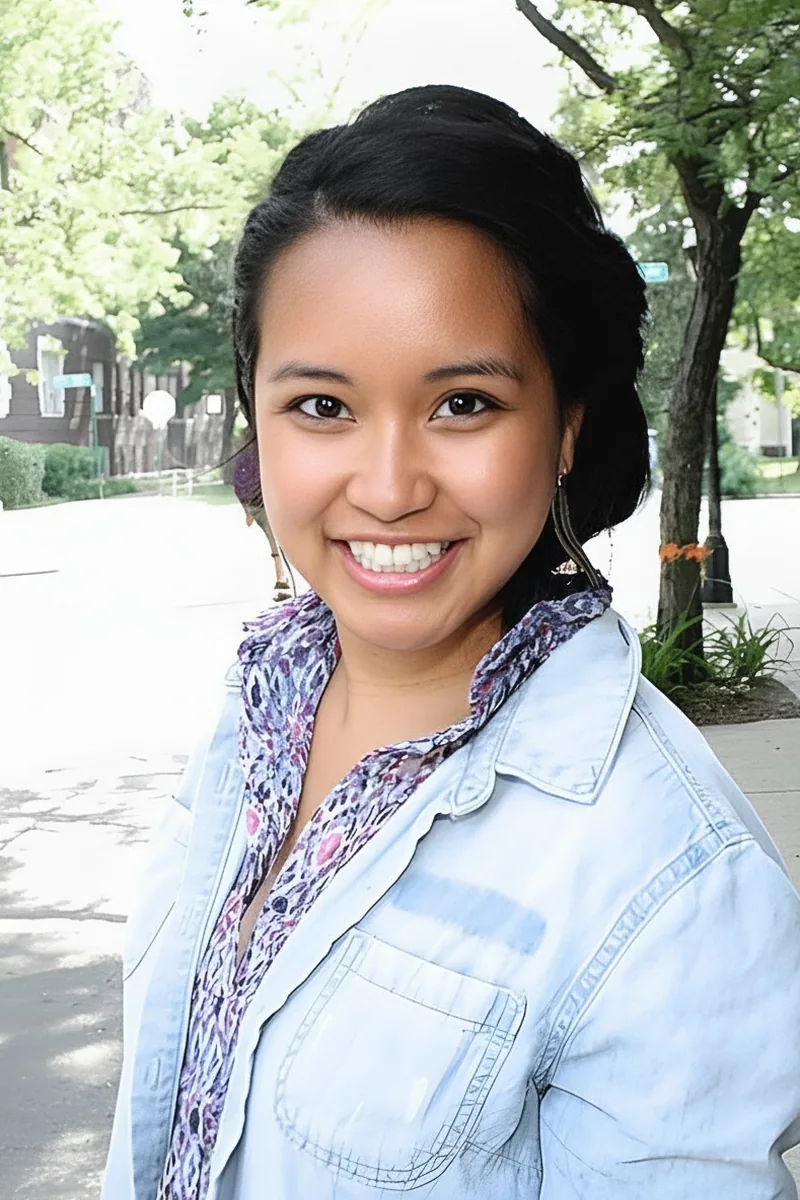
I'm well-versed in teaching students with a wide range of skills and learning styles. I graduated with Honors from Santa Clara University where I received my Bachelor of Arts in English with a specialization in Teaching English. In May 2015, I will graduate with my Masters in Educational Studies from the University of Michigan. I am passionate about teaching students to become critical readers and writers who use their communication skills to reach their goals and connect with others. I have over seven years of tutoring experience and have tutored students in reading and writing from middle school to the graduate level.

I am in my third year of completing my Bachelor's degree in Neuroscience, and as a result have developed a heavy focus in mathematics and science courses. For this reason, when I am not teaching standardized test preparation, I often tutor high school and college level mathematics as well as Biology, Chemistry, and Physics.
Rebecca scored a 1460 on the SAT and brings certified math teaching experience to every section of SAT Math, from linear equations and systems to the passport-to-advanced-math questions involving quadratics and exponential functions. She pinpoints whether a student's mistakes come from conceptual gaps or from rushing through multi-step problems, then builds targeted drills around whichever issue is costing more points.
A semester studying in Madrid and years at a Latin American tech company might seem unrelated to SAT Math, but Jonah's 1440 SAT means he's already cracked the test's particular blend of algebra, proportional reasoning, and data interpretation — and his 5.0 rating shows he can teach others to do the same. He's especially good at demystifying the word-heavy problems where students need to extract a clean equation from a paragraph of context, a skill he honed translating between languages and industries long before he started tutoring.
Scoring 1570 on the SAT means Eric knows exactly where the test tries to trip students up — especially on the math side, where questions about quadratics, systems of equations, and data interpretation are designed to punish rushing. He breaks each problem type into a decision tree so students recognize what's being asked before they start calculating. That pattern-recognition skill is what separates a good math score from a great one.
Scoring high on SAT Math requires knowing when a problem wants algebra and when it wants a shortcut — and the difference often hides in how the question is worded. Nikhil earned a 1540 SAT and an engineering degree, so he teaches students to read each problem strategically, especially on the no-calculator section where efficiency matters most.
Most SAT Math mistakes aren't about not knowing the math — they're about misreading what the problem is setting up. Sreya, who scored 1580 on the SAT and studies chemistry and computer science at Michigan, zeroes in on the algebra and data analysis questions that account for the bulk of the test. She walks through how to spot which tool a problem actually requires, from systems of equations to quadratic modeling.
I am a lifelong learner, teacher, and researcher in the field of physics. I received a PhD in Physics from the University of Michigan and a BS in Physics from Rice University. I have four years of physics teaching experience at the University of Michigan, primarily undergraduate laboratory courses with an emphasis on electromagnetism, circuits, waves, optics, and real-world applications of these and other physical phenomena. Many of these courses, including one I helped design, focused on helping non-STEM students master physics concepts that may be difficult to grasp in a standard classroom setting. I have tutored in a variety of subjects since high school, but most recently I have spent several years helping students understand concepts and succeed in coursework throughout a large variety of college-level physics topics, from basic mechanics to advanced electrodynamics and special relativity.
Rohan scored a 1560 on the SAT and brings an engineer's precision to the Math section — breaking down quadratic and systems-of-equations problems into repeatable steps that save time under pressure. He teaches students to spot which formula or shortcut each question is actually testing, so they stop second-guessing answers and start finishing sections with minutes to spare. Rated 5.0 by students.
I am a student at the University of Michigan studying pre-med. I am majoring in Cognitive Science and minoring in the History of Medicine. Outside of Varsity Tutors, I volunteer as a tutor for the Detroit Educational Society, in which I help underprivileged students in Detroit study for the ACT and SAT. When it comes to the student-tutor relationship, I believe that a tutor's job is to provide a safe place for the student to ask questions and to make mistakes, while the role of the student is to come prepared and be ready to improve.
Scoring 1560 on the SAT, Krisha knows exactly where the math section tries to trip students up — especially on problems involving quadratic modeling, systems of equations, and data analysis that look harder than they are. She breaks down each question type into recognizable patterns so students spend less time second-guessing and more time executing with confidence.
Two years teaching high school science meant Mathew was constantly building algebra and data-interpretation skills into his lessons — the same quantitative reasoning the SAT Math section tests through its graph-reading, linear modeling, and ratio questions. His 1510 SAT score shows he's mastered the test himself, and his neuroscience background gives him a practical grip on how students actually retain problem-solving strategies under timed pressure. He breaks down the section's trickiest multi-step setups by teaching students to sketch the relationship before reaching for an equation.
Scoring a 1570 on the SAT, Megan developed specific strategies for the Math section's blend of algebra, advanced math, and problem-solving with data. She walks students through how to identify what a question is actually asking — especially on the no-calculator portion, where comfort with manipulating expressions and understanding function behavior matters most. Rated 5.0 by students.
I am a chemistry/math tutor with hundreds of hours teaching both subjects. What separates me from other tutors is my fantastic attention to the learning styles of different students, and my ability to attune my teaching style to each individual student. I am a big believer in letting students utilize tutoring time in the way they believe best, and I try to make myself a resource more than an instructor, which reinforces good study habits as well as lets me help the student with subject material. I will be attending the University of Michigan to major in Mathematics in the Fall.
Pratik earned a 1550 SAT and tutors math up through AP Calculus BC, which means the algebra, advanced functions, and data analysis on the SAT fall well within his comfort zone. He zeroes in on the specific question formats the College Board reuses — systems of equations disguised as word problems, quadratic vertex questions, and scatter plot trend lines — so students learn to recognize patterns before they even finish reading the prompt.
I am passionate about children's education and excited to help students learn!
Biomedical engineering at Columbia means Joyce solves math problems daily that are far harder than anything on the SAT — so she knows exactly which algebraic and geometric concepts the test actually requires and which advanced techniques students can safely ignore. Her 1570 SAT score came from a disciplined approach to the section's trickiest question types, particularly the nonlinear function and systems problems where most students burn time on unnecessarily complex solution paths. Rated 5.0 by students.
I am a learner for life and I love sharing my knowledge with others. I have tutored middle-school students for one year and university students for two years. My focus is mainly on mathematics, chemistry, and related fields. I have degrees in both mathematics and biomedical engineering so I cover a lot of ground in the physiological sciences, computer programming, and statistics as well. Taking tests is one of my strong points and I have some killer strategies to share!
Martha scored a 1580 on the SAT and tackles the math section by teaching students to recognize what each question is really testing beneath its surface. Whether it's a systems-of-equations problem disguised as a word problem or a data table that requires percentage reasoning, she shows how to cut through the setup and solve efficiently under time pressure.
I am very excited to be a part of Varsity Tutors because it is my belief that everyone has the capability to succeed in school, even if they need a little extra help to get there. Quality education is absolutely essential in making sure a child is prepared for their future career. I love working with students and seeing them triumph over areas they were once struggling with.
Most SAT Math mistakes aren't actually math mistakes — they're misreads of what the question is asking, especially on the no-calculator section's trickier quadratic and systems problems. Nikitha's computer science training at Michigan built the kind of precise, step-by-step logic that cuts through the SAT's deliberately ambiguous phrasing, and her 1540 SAT means she's proven it on the actual test. Rated 5.0 by students.
I am currently working on a Master of Arts in Philosophy at Georgia State University, where I serve as a teaching assistant and writing consultant. I currently tutor in the areas of test preparation, government, philosophy, and religious studies. My passion for education stems from the joy I find in helping students achieve their goals. My teaching style involves asking lots of strategic questions to help students discover answers for themselves, a process which my students typically find quite empowering. Still, I recognize that each student has unique needs, questions, and learning styles, so I strive to listen first and then craft individualized plans to meet each student's particular objectives. In my spare time I like to get outside hiking, playing soccer, or volunteering at my church's community garden. I also enjoy reading, watching football, and cooking.
I am a sophomore at Yale University studying Mechanical Engineering, and I live in Detroit, Michigan. I specialize in physics and math, especially different levels of calculus.
I am a undergraduate freshman of the University of Michigan, studying business at the Ross School of Business. Working together with students and having a good time while seeing steady improvements has proven to provide me great joy. I believe that communication and relationship building is crucial for students to open up about their struggles and also for me to identify problems they don't realize they can improve on, so this is a key aspect of all of my lessons. During my free time, I enjoy playing sports or snacking on desserts while binge-watching Friends!
I'm a Mechanical Engineer working in the automotive industry. Throughout my high school and college career, I've been tutoring math and physics. I always strive to help my students become the best versions of themselves.
Most SAT Math mistakes aren't about not knowing the content — they're about misreading what the problem wants or skipping a constraint buried in the setup. Surina earned a 1520 SAT composite and tackles practice sets by categorizing questions into algebra, advanced math, and problem-solving buckets so students recognize question types on sight and deploy the right strategy immediately.
The SAT Math section buries straightforward algebra and data analysis inside dense word problems, and the no-calculator portion punishes anyone who relies on button-mashing over number sense. Myna earned a 1520 SAT composite and unpacks each problem type — from passport-to-advanced-math to heart-of-algebra — so the patterns become obvious before test day.
Scoring well on SAT Math is less about knowing advanced topics and more about recognizing which concept a tricky question is really testing. Davis earned a 1510 SAT composite and uses his economics-trained eye for data interpretation to teach the strategic shortcuts — especially on statistics, ratios, and multi-step word problems — that save time and prevent careless errors.
Uchenna earned a 1510 SAT composite, and his biochemistry degree from UMBC required heavy quantitative coursework in statistics, calculus, and algebra — exactly the foundation that makes SAT Math click. He zeroes in on the Heart of Algebra and Passport to Advanced Math sections, teaching students to recognize which tool a problem is really testing before they start solving. His 4.9 rating speaks to how clearly he communicates those strategies.
Scoring a 1540 SAT composite required Suzie to master the exact blend of algebra, data analysis, and advanced math that the SAT tests. She teaches students to recognize which tool a problem is really asking for — whether it's setting up a system of equations, interpreting a scatterplot, or manipulating a quadratic into vertex form. Her chemical engineering training means she can explain the reasoning behind every shortcut.
I'm hoping to be your next tutor! I've worked with kids of all ages and know that every one has a unique learning style and requires patience and attention. I look forward to working with you or your child to meet their goals
I am a junior studying chemical engineering at the University of Michigan. I have experience with preparing for and taking the ACT and SAT, as well as expertise in a variety of high school-level subjects. I am an easygoing person with a lot of patience, and I have experience tutoring peers from my high school, as well as my younger sister. I love helping people understand new concepts and I strive to make material interesting to students, as I believe a vested interest in material can drastically improve a student's understanding and performance.
I am an artist and journalist from Ann Arbor, MI attending Harvard College in Cambridge, MA. I'm excited to work with students in my area and online.
I am a graduate of the University of Michigan where I double majored in Biomolecular Science and Economics on a pre-med track. I enjoy working with students as my past teaching experiences have led me to work with all ages. In my free time, I like to follow and play sports and listen to music.
Haley scored a 1530 on the SAT and was, by her own admission, obsessed with optimizing her score — so she knows the math section's quirks inside and out. She teaches students to spot which problems reward algebraic setup versus back-solving or plugging in, a distinction that saves serious time on test day. Her approach is especially useful for students stuck in the 600s trying to break into the 700s.
Douglas earned a 1470 SAT composite and holds a mechanical engineering degree, which means the math section's trickiest territory — systems of equations, quadratic modeling, and data interpretation — is ground he's covered hundreds of times. He teaches students to recognize which tool a problem is actually asking for, cutting through the wording traps that cost easy points. Rated 5.0 by students.
Thomas's triple major in economics, mathematics, and philosophy means he approaches SAT Math problems from multiple angles — using algebraic fluency for the no-calculator section and quantitative reasoning for the data-heavy questions that trip up students who only drill formulas. With a 1530 SAT composite, he knows which problems reward careful setup over rushing to compute. His 5.0 student rating backs that up.
I am most passionate about Math and Physics, two subjects that are the building blocks of innovation in society. In my free time, I love both watching and playing sports, especially baseball and basketball.
Engineering students learn to treat math as a tool for solving real problems fast — and Sawyer brings that same efficiency to SAT Math, particularly the algebra and geometry questions where setting up the problem correctly matters more than raw computation. His 1510 SAT means he's already proven he can perform under the test's time pressure, and he teaches students the strategic shortcuts that keep them from burning minutes on problems designed to look harder than they are.
Testimonials
Because the right SAT Math tutor makes all the difference.
Average Session Rating – Based on 3.4M Learner Ratings
Practice SAT Math
Free practice tests, flashcards, and AI tutoring for SAT Math
Other Detroit Tutors
Related Test Prep Tutors in Detroit
Frequently Asked Questions
Score improvement depends on your starting point and effort level, but most students see meaningful gains with focused preparation. Students who work with personalized 1-on-1 instruction typically improve 50-100 points or more, especially when they identify weak content areas early and practice consistently. The key is targeted practice on your specific trouble spots—whether that's algebra, geometry, or test-taking strategies—rather than reviewing material you already know well.
The SAT Math section gives you 80 minutes for 58 questions, which means pacing is critical. A smart approach is to tackle easier problems first to build confidence and rack up points, then spend your remaining time on harder questions. Many students benefit from learning which problem types tend to appear at the beginning versus end of the section, and practicing with a timer to identify where they lose time. Tutors for students in Detroit can help you develop a personalized pacing strategy based on which question types slow you down most.
The best way is to take a full-length practice test under timed conditions and score it carefully, breaking down your results by topic (algebra, advanced math, problem-solving, geometry, etc.). This shows you exactly where your points are leaking. You might discover you're strong in algebra but struggle with word problems, or vice versa. Connecting with a tutor can help you analyze your practice tests in depth and create a study plan that prioritizes your weakest areas, so you're not wasting time on topics you've already mastered.
Consistent practice beats cramming. Most students preparing for the SAT benefit from working on math 3-5 times per week, mixing timed practice with untimed problem-solving to build both accuracy and speed. A typical week might include one full-length practice test, two focused sessions on weak topics, and one strategy drill. The timeline depends on your target score and current level—students aiming for significant improvement usually benefit from 2-3 months of steady preparation. Tutors can help you structure a realistic schedule that fits your school workload and test date.
Test anxiety often stems from feeling unprepared or encountering unfamiliar question formats under pressure. The antidote is familiarity—taking practice tests regularly, timing yourself, and reviewing mistakes builds confidence and reduces surprises on test day. Mental strategies help too: when you hit a tough problem, skip it and come back later rather than stalling out and panicking. Tutors for students in Detroit can teach you test-day mindset strategies and help you practice staying calm under pressure, which often makes the difference between a solid score and a great one.
The SAT Math section has two parts: one where calculators are allowed and one where they're not. The no-calculator section tests whether you can do mental math and understand core concepts, so skipping calculator skills entirely will hurt your score there. Smart students use calculators strategically on the calculator section (saving time on tedious arithmetic) but still understand the math conceptually. A tutor can help you decide when to use a calculator versus solve by hand, which is a game-changer for managing time and avoiding careless errors.
Varsity Tutors connects students in Detroit with expert tutors who specialize in SAT Math prep. You can describe your goals, current score range, and preferred schedule, and get matched with a tutor who fits your needs. Look for tutors with strong SAT Math experience, familiarity with the current test format, and a track record helping students reach their target scores. The personalized 1-on-1 format means your tutor tailors every session to your specific weak areas and learning style, rather than following a generic curriculum.
Let’s find your perfect tutor
Answer a few quick questions. We’ll recommend the right plan and match you with a top 5% tutor.