Award-Winning AP Physics C: Mechanics Tutors
serving Detroit, MI
AP Physics C: Mechanics
Tutors in Detroit
Private 1-on-1 tutoring, weekly live classes for academic support, test prep & enrichment, practice tests and diagnostics, and more to elevate grades and test scores.
Based on 3.4M Learner Ratings
UniversitiesSchools & Universities
DeliveredHours Delivered
ProficiencyGrowth in Proficiency
Who needs tutoring?
No obligation. Takes ~1 minute.

I have a Master's degree in Chemical Engineering, with additional graduate studies in Chemical Engineering and Computer Science, and over 10 years of experience teaching and tutoring STEM subjects. I work with students of different ages, backgrounds, and learning styles in mathematics, physics, chemistry, and related subjects. I believe the best tutoring starts with understanding how each student thinks. My goal is to identify where a concept becomes unclear, explain it from the student's perspective, and help them build both understanding and confidence. I want my students to learn not just how to find the right answer, but why it is the right answer and how to approach similar problems independently. I believe there is always learning in teaching, and that is one of the reasons I continue to enjoy working with students after all these years.
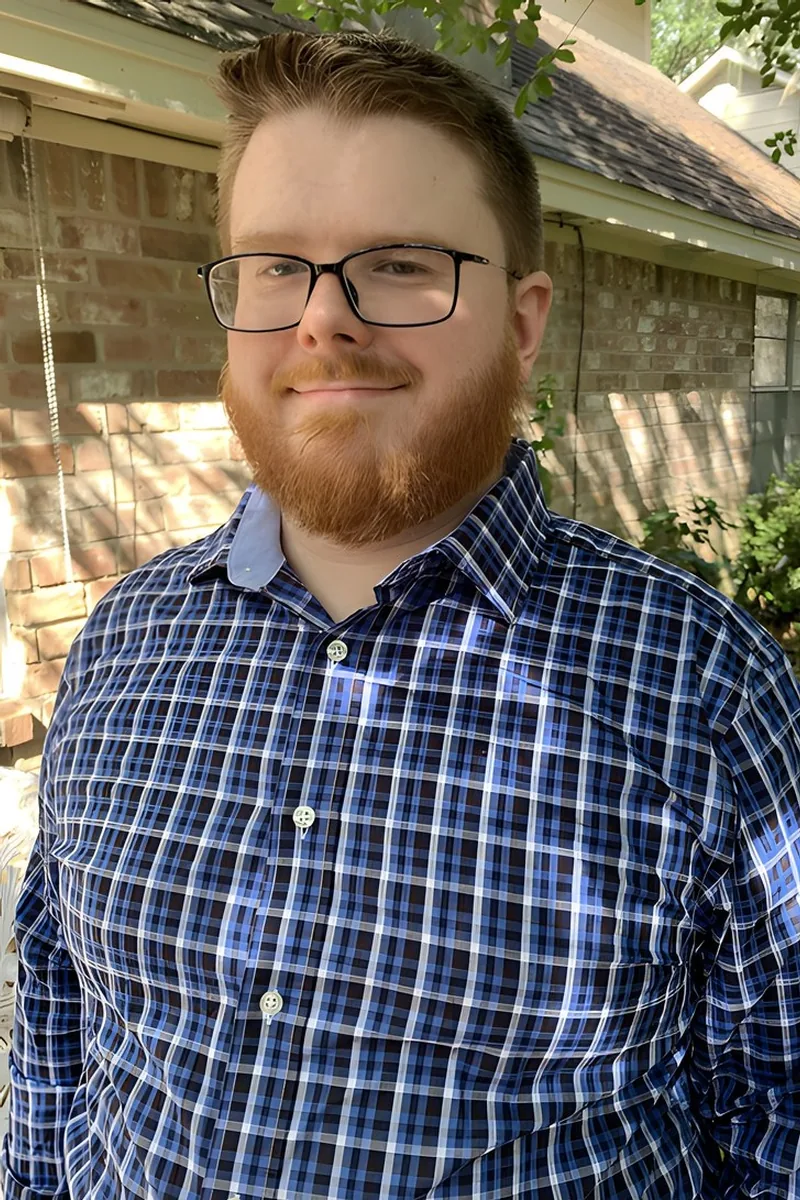
Four years of teaching undergraduate physics labs at the University of Michigan — especially circuits, electromagnetism, and wave mechanics — gave Michael a sharp eye for where students' calculus intuition breaks down inside a physics problem. For AP Physics C: Mechanics, he zeroes in on that breakdown point: translating a physical setup (a block on a spring, a rotating disk with non-uniform mass) into the correct integral or differential equation. His PhD-level fluency means he can explain not just which formula applies, but why the math takes that particular form.
Cornell pre-med students rarely double down on calculus-based physics, but Pratik tutors AP Physics C: Mechanics alongside AP Chemistry and AP Biology — giving him a cross-disciplinary lens that's especially useful when mechanics problems involve biological or chemical systems in free-response scenarios. His 35 ACT confirms the quantitative fluency needed to walk students through setting up torque equations or integrating variable forces without losing sight of the underlying physics.
Data analytics trains you to model systems mathematically and interpret what the numbers actually mean — skills Vishank applies directly when tackling AP Physics C: Mechanics problems that require setting up kinematic equations or integrating variable forces. His coursework in calculus through linear algebra, combined with tutoring across both math and science, means he can diagnose whether a student's struggle on a free-response problem is a physics misunderstanding or a calculus execution error. Rated 4.9 by students.
Dylan's physics major at Vanderbilt means he's working through the same calculus-based Newtonian mechanics — torque integrals, rotational kinematics, differential equations for oscillating systems — that AP Physics C: Mechanics demands, and his 36 ACT reflects the quantitative precision that carries over to exam performance. He leans on graphical and physical intuition to make abstract quantities like angular momentum feel tangible before translating them into the calculus setup the free-response section scores on.
Three physics degrees and a 1570 SAT give Bryan the kind of deep mathematical fluency that AP Physics C: Mechanics rewards — particularly on problems where students need to set up differential equations for non-uniform circular motion or derive momentum impulse through integration. He teaches the course across both high school and college levels, so he knows exactly which conceptual leaps trip students up when the exam shifts from straightforward kinematics to multi-step rotational problems. Rated 5.0 by students.
Biology majors at Cornell don't usually seek out calculus-based physics — but Drishti's 1500 SAT and her comfort across both AP Calculus BC and AP Physics C suggest she genuinely clicks with the quantitative side of science, not just the biological. She's especially useful for students who need someone to slow down on the free-body-diagram-to-integral pipeline, translating the physical setup into the calculus without assuming steps are obvious. Rated 5.0 by students.
Emily's computational biology major at Cornell pairs heavy calculus and physics coursework with programming — a combination that trained her to model real systems mathematically, which is exactly what AP Physics C: Mechanics demands when a problem asks you to integrate a variable force or derive an equation of motion. Her 36 ACT and 1590 SAT reflect the kind of quantitative precision that pays off on the exam's trickiest free-response questions, especially those involving work-energy theorem applications and non-constant acceleration. Rated 4.9 by students.
Computer engineering at Michigan means Jie solves mechanics problems where the physics and the math have to work together — modeling forces on robotic actuators, computing torques in electromechanical systems — so the calculus-based dynamics on the AP Physics C exam map directly to what he already builds and debugs. His 34 ACT confirms the quantitative sharpness, and he's especially effective at teaching students how to read a free-body diagram and translate it into the right differential equation rather than reaching for a memorized formula.
I am a graduate of Cornell University's College of Arts and Sciences. I received my Bachelor of Arts in Chemistry with Distinction in 2015. Since graduation, I was a physics/chemistry teacher and soccer coach at a private school in Virginia for a year, where I led the soccer team to an undefeated season. Before teaching and coaching professionally, I was a Teaching Assistant for the Cornell Math and Physics Departments, where I taught many subjects including calculus, mechanics, electromagnetism. Throughout my time at Cornell and as a teacher, I tutored subjects ranging from the SAT to AP Physics and Algebra II, which is where my true talents lie: in small group or one-on-one settings where I can give students the full attention they deserve and tailor my approach specifically to their learning styles. This is why I am now pursuing tutoring as a part-time occupation at Varsity Tutors. I embrace teaching all math and science subjects, especially physics and calculus, at both the college and high school level and will go above and beyond to make sure all of my students succeed, according to their definition of success. In my spare time, I enjoy playing league soccer, basketball, tennis and guitar, and also like to travel and see as much of the world as I can.
Kimanthi's biomedical engineering degree from Duke required the same calculus-heavy mechanics — torque on prosthetic joints, force integrals through fluid systems, energy methods applied to biomechanical models — that AP Physics C tests in a more abstract form. That background means she can ground rotational dynamics and work-energy problems in tangible physical scenarios, giving students an intuitive hook before the math gets dense. Rated 5.0 by students.
Having scored a 1580 SAT and studied computer science, Rishik brings a programmer's discipline to AP Physics C: Mechanics — treating each problem like an algorithm where you define your variables (forces, constraints, coordinate system) before executing the calculus. He also tutors both AP Physics C exams alongside AP Calculus BC, so he's comfortable moving between the electricity side and the mechanics side while keeping the underlying math sharp. Rated 4.6 by students.
Free-body diagrams, rotational inertia, and conservation of energy problems all require calculus-based reasoning that trips students up when they try to rely on formulas alone. Emily completed the full pre-med physics sequence at Cornell and spent her senior year tutoring calculus — two skills that converge directly in AP Physics C: Mechanics. She breaks multi-step problems into the underlying math so students see why the setup matters as much as the answer.
I'm pursuing a double major in Mathematics and English at Vanderbilt University. I have been tutoring math since High School and have native proficiency in Mandarin Chinese. I am dedicated to helping students explore the study methods that will fit their individual needs.
Computational mathematics at Rice is essentially applied calculus with the volume turned up — Vinson's coursework in differential equations and numerical methods maps directly onto the mechanics problems where students need to set up Newton's second law as a differential equation and solve it, not just memorize kinematic formulas. His 36 ACT and National AP Scholar status (including AP Physics and the full calculus sequence) mean he's been through the exact exam pressure these students face. Rated 4.8 by students.
Testimonials
Because the right AP Physics C: Mechanics tutor makes all the difference.
Average Session Rating – Based on 3.4M Learner Ratings
Practice AP Physics C: Mechanics
Free practice tests, flashcards, and AI tutoring for AP Physics C: Mechanics
Other Detroit Tutors
Related Science Tutors in Detroit
Frequently Asked Questions
AP Physics C: Mechanics focuses on kinematics, Newton's laws, work and energy, momentum, circular motion, and oscillations. The course emphasizes calculus-based problem solving, which distinguishes it from AP Physics 1. Students learn to apply differential and integral calculus to physics concepts, preparing them for both the AP exam and college-level physics coursework.
The biggest challenge is the calculus requirement—students must understand derivatives and integrals to solve problems, not just plug numbers into formulas. Many students also struggle with the conceptual reasoning needed to set up problems correctly before calculating. Time management during the exam is another common pain point, as the free-response section requires detailed, multi-step solutions.
Personalized 1-on-1 instruction allows tutors to identify your specific weak areas—whether that's understanding force diagrams, applying energy conservation, or managing calculus in physics contexts—and target those gaps directly. Tutors can also teach you problem-solving strategies, help you practice with released AP exams under timed conditions, and build confidence in your ability to tackle unfamiliar question formats.
Your first session typically includes a diagnostic assessment to understand your current grasp of mechanics concepts, identify which topics feel comfortable, and pinpoint areas where you need support. You and your tutor will also discuss your AP exam timeline, your target score, and any specific challenges you're facing. This foundation helps your tutor create a personalized study plan tailored to your needs.
Score improvement depends on your starting point, how much you practice, and how consistently you work with your tutor. Students who begin tutoring months before the exam and actively engage with practice problems typically see meaningful gains. Many students move from struggling with conceptual understanding to confidently solving multi-step problems, which directly translates to higher exam performance.
Ideally, you should begin focused exam preparation 3-4 months before the test date in May. This gives you time to review all units, practice with full-length released exams, and address weak areas before test day. If you're starting closer to the exam, intensive tutoring combined with consistent daily practice can still help you make meaningful progress in a shorter timeframe.
Practice tests are essential—they help you understand the exam format, identify which concepts you haven't mastered yet, and build stamina for the 90-minute exam. The College Board releases official AP Physics C exams, and working through these under timed conditions is one of the most effective ways to prepare. Your tutor can review your practice test results to pinpoint exactly where to focus your study efforts.
Varsity Tutors connects you with expert tutors for students in Detroit who specialize in AP Physics C: Mechanics. You can share your goals and timeline, and we match you with a tutor who has strong physics expertise and experience helping students prepare for the AP exam. Whether you need help understanding specific concepts or full exam preparation, we can find the right fit for your needs.
Let’s find your perfect tutor
Answer a few quick questions. We’ll recommend the right plan and match you with a top 5% tutor.