Award-Winning Algebra Tutors
serving Detroit, MI
Algebra
Tutors in Detroit
Private 1-on-1 tutoring, weekly live classes for academic support, test prep & enrichment, practice tests and diagnostics, and more to elevate grades and test scores.
Based on 3.4M Learner Ratings
UniversitiesSchools & Universities
DeliveredHours Delivered
ProficiencyGrowth in Proficiency
Who needs tutoring?
No obligation. Takes ~1 minute.

Most algebra struggles trace back to a specific sticking point — maybe it's distributing negatives, maybe it's setting up word problems, maybe it's graphing lines from slope-intercept form. Rebecca's years teaching secondary math in Detroit classrooms gave her a deep catalog of ways to explain the same concept differently until it lands.
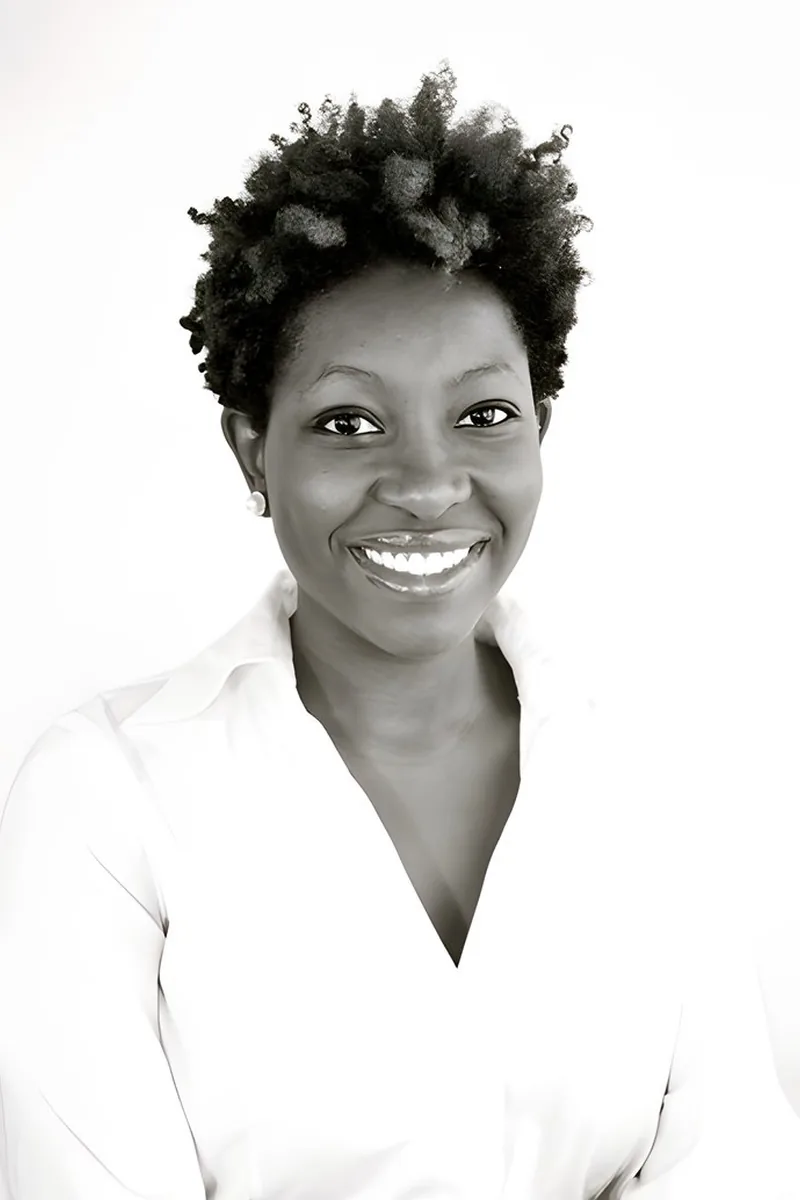
When a student can look at an equation and understand what it represents — not just how to solve it — algebra stops feeling like symbol manipulation and starts making sense. Ashley takes that approach with topics like factoring, inequalities, and linear systems, drawing on the analytical rigor of her Michigan engineering degree and Wharton MBA.
Nicole treats algebra as a language with its own grammar — variables are nouns, operations are verbs, and equations are sentences that need to balance. Her MA in Education and linguistics training give her a knack for breaking down abstract concepts like systems of equations and inequalities into patterns students can actually internalize. Rated 4.9 by students.
Though Joanne's core expertise is in English and writing, she brings the same methodical, step-by-step reasoning to algebra — particularly translating word problems into equations, where strong reading comprehension makes all the difference. Her teaching background from the University of Michigan's Educational Studies program means she adapts quickly to how each student processes abstract concepts.
Sierra approaches algebra by connecting abstract expressions to real-world logic — translating word problems into equations, for instance, or reasoning through why a system of equations has no solution. Her communications background means she's especially skilled at explaining the "why" behind each step in plain language.
Most algebra struggles come down to one thing: students can follow a procedure but can't set up the problem themselves. Arianna teaches equation-building from scratch — translating situations into expressions, choosing variables wisely, and checking solutions for meaning rather than just correctness. Her 4.8 rating speaks to how well that approach lands.
Before med school, before organic chemistry, before calculus — Ishan's first tutoring subject was algebra. He's spent years breaking down the sticking points that trip students up, whether it's distributing negatives, solving systems of equations, or making sense of quadratic functions. His approach builds algebraic reasoning step by step so students trust their own process instead of second-guessing every move.
The jump to algebra is where many students decide they're "not a math person" — and Sheyna's mission is to prevent that. Her Master's in Special Education gave her deep training in scaffolding multi-step processes like solving linear equations or factoring expressions, so each new skill builds logically on the last. She pays close attention to the specific step where confusion starts rather than re-teaching an entire problem from scratch.
Solving equations and simplifying expressions click faster when they're tied to something a student actually cares about — Jonathan makes that connection deliberate, whether it's using sports stats to teach variables or music theory to illustrate ratios. His math and science background at Johns Hopkins gives him a knack for breaking down concepts like factoring and linear systems into steps that feel logical rather than arbitrary. Rated 5.0 by students.
Word problems are where algebra becomes real — and where most students panic. Jonah's approach is to teach translating English into equations as its own skill, walking through how to identify variables, set up relationships, and check whether an answer actually makes sense in context. His 5.0 rating speaks to how well that method lands.
When a student stares at a system of equations or a quadratic and doesn't know where to start, Anthony zeroes in on the reasoning behind each step rather than just drilling procedures. He connects algebraic thinking to practical problem-solving — a skill his film production background, which relies heavily on budgets and logistics, reinforced daily.
The moment algebra stops being about "solve for x" and starts involving systems, inequalities, and abstract expressions, many students lose their footing. Hamid zeros in on translating word problems into equations — the skill that tends to separate students who memorize procedures from those who actually understand what the math is saying.
When a student struggles with algebra, it's rarely because they can't do the steps — it's because they don't see why the steps work. Raha digs into the logic behind solving equations, factoring, and working with inequalities so that procedures make sense rather than just being recipes to follow. Her background teaching everyone from younger students to college-level learners means she can meet an algebra student at whatever level of abstraction they're ready for.
Before students can tackle physics or calculus, they need algebra to feel automatic — manipulating equations, working with functions, and reasoning about unknowns without second-guessing every step. Michael spent four years teaching undergraduates at the University of Michigan, many of them non-STEM majors who needed to rebuild algebraic confidence before engaging with harder material. That experience gave him a clear sense of where algebraic reasoning breaks down and how to fix it.
Skyler tackles algebra by connecting abstract expressions to concrete reasoning, whether that's solving systems of equations or simplifying rational expressions. Her graduate training demanded rigorous analytical thinking, and she applies that same precision to walking students through each algebraic step so they understand the why, not just the how.
A strong algebra foundation matters more than most students realize — it's the engine behind every math and science course that follows. Martha, who earned a 1580 SAT and teaches math across multiple levels, unpacks topics like systems of equations and polynomial manipulation by tying abstract rules to concrete reasoning so the logic sticks long after the homework is done.
The jump from arithmetic to algebra trips students up when variables stop feeling like puzzles and start feeling like mysteries. Megan tackles that transition head-on, building comfort with solving equations, graphing linear relationships, and translating word problems into expressions. Her engineering background means she can always answer the question students actually want to ask: "When would I ever use this?"
Sophia approaches algebra as a language with its own grammar — variables, expressions, and equations follow logical rules that click once a student sees the underlying structure. Her tutoring background with middle and high school students means she's practiced at breaking down everything from systems of equations to quadratic factoring in ways that actually stick.
A lot of algebra frustration comes from skipping the 'why' — students learn to distribute or factor without understanding what those operations actually do to an equation. Israa tackles that gap head-on, rebuilding intuition around variables, expressions, and linear systems so that more advanced topics like quadratics and inequalities click naturally. Her background in secondary education means she's seen every common misconception and knows how to dismantle them.
Engineering coursework lives and dies on algebraic manipulation — Suzie spent her chemical and biological engineering degree relying on variables, expressions, and equations daily to model real systems. That constant applied use means she can show students exactly where skills like factoring and solving inequalities lead, making the abstract feel purposeful. Rated 5.0 by students.
Most algebra struggles come down to one thing: students learn steps without understanding why those steps work, so any unfamiliar problem feels impossible. Andrew unpacks the logic behind factoring, systems of equations, and inequalities so that students can reason through new problems on their own. His engineering background at Yale means he's constantly translating real situations into algebraic models — exactly the skill algebra class is trying to build.
The jump from solving one-step equations to tackling systems of equations or quadratic functions is where many algebra students lose confidence. David approaches each new concept by anchoring it to something the student already understands, building fluency with factoring, slope-intercept form, and inequalities through repetition that actually makes sense. His chemistry and engineering background means he always has a real-world application ready when a student asks "why does this matter?"
A philosophy background might seem unusual for an algebra tutor, but Anthony's training in symbolic logic maps directly onto the structural thinking behind solving equations, manipulating expressions, and working with inequalities. He breaks algebraic problems into logical steps, making the reasoning visible so students can tackle unfamiliar problems on their own.
A strong grasp of algebra underpins everything Lulu did across three graduate and undergraduate programs, from statistical models in psychology to financial equations in accounting. She zeroes in on the logic behind manipulating expressions, solving systems, and working with inequalities so that each step makes sense rather than feeling like a memorized trick.
From solving multi-step equations to graphing linear systems, Ruth approaches algebra by making sure each new concept clicks before moving on. Her experience tutoring math across middle school, high school, and college levels means she's seen exactly where students tend to lose the thread — and she knows how to untangle it quickly.
The jump from pre-algebra to full algebra is where variables stop being placeholders and start doing real work — solving systems, factoring polynomials, manipulating inequalities. Raveena's math minor and years of tutoring mean she can pinpoint exactly where a student's reasoning breaks down and rebuild that specific link in the chain.
Rae approaches algebra through the lens of her economics training, where manipulating equations and interpreting graphs aren't classroom exercises — they're daily tools. She digs into the logic behind solving systems of equations and simplifying rational expressions so students understand the reasoning, not just the steps.
A lot of algebra frustration comes down to one thing: students can follow individual steps but can't decide which approach to use on a new problem. Lane tackles that gap directly, teaching how to read a problem involving factoring, inequalities, or linear systems and choose a strategy before picking up a pencil. It's the kind of flexible thinking his engineering training demanded.
A solid grip on algebra is what separates students who struggle in later math from those who thrive, and Ashley treats it that way. She zeros in on the logic behind manipulating expressions and solving systems of equations, building the kind of fluency with variables that makes every subsequent math course easier.
When a student stalls on Algebra, it's usually one specific skill — distributing, factoring, or setting up equations from word problems — that's creating a chain reaction of confusion. Eric diagnoses that sticking point quickly and walks through it with enough practice problems that the logic clicks. He teaches math at every level from pre-algebra through calculus, so he understands how each algebraic concept feeds into what comes next.
When a student freezes on a word problem, the issue usually isn't algebra — it's translating language into equations. Pratik spends time on that translation step, teaching students to identify variables and relationships before touching any arithmetic. His 1550 SAT and 35 ACT reflect the kind of fluency with algebraic reasoning he brings to every session.
A lot of algebra frustration comes from skipping the "why" behind symbol manipulation — students memorize steps for solving systems or simplifying rational expressions without understanding what the operations actually mean. Sreya breaks down each technique by connecting it to a visual or logical reason, building the kind of algebraic fluency that holds up when problems get less predictable.
A lot of algebra struggles come down to not seeing the logic behind the steps — why you factor a quadratic this way, or what a variable actually represents in a word problem. Ajay breaks down that logic explicitly, drawing on the same structured thinking his biochemistry and philosophy training demand.
I am a learner for life and I love sharing my knowledge with others. I have tutored middle-school students for one year and university students for two years. My focus is mainly on mathematics, chemistry, and related fields. I have degrees in both mathematics and biomedical engineering so I cover a lot of ground in the physiological sciences, computer programming, and statistics as well. Taking tests is one of my strong points and I have some killer strategies to share!
Eric tackles algebra by treating equations like puzzles with internal logic rather than arbitrary rules to memorize. His background in anthropology and history means he's spent years teaching students how to think systematically — a skill that pays off when working through systems of equations or factoring polynomials.
A strong algebra foundation matters for everything from calculus to standardized tests, and Megan approaches it by connecting symbolic manipulation to the reasoning behind it — why you factor a quadratic this way, or what a system of equations actually represents graphically. Her dual background in biology and German at Michigan means she's used to translating complex structures into something intuitive.
Biomedical engineering at Michigan means Nikhil solves algebra problems before breakfast — dosage calculations, signal modeling, and biomechanics equations all demand quick, confident manipulation of variables and expressions. He zeroes in on the logic behind each step when teaching topics like systems of equations, so students internalize the reasoning instead of just memorizing procedures. Holds a 5.0 rating.
The jump from arithmetic to algebra — where numbers become variables and answers become expressions — is one of the biggest conceptual shifts in math. Kerry zeroes in on translating word problems into equations, a skill that trips up even strong math students but becomes second nature with the right approach. Her background in business gives her a deep bench of real-world scenarios to make abstract algebra feel concrete.
When variables start replacing numbers, algebra can feel like a foreign language. Douglas breaks down the logic behind expressions, inequalities, and equations so that solving a multi-step word problem becomes a repeatable process, not guesswork. His mechanical engineering background means he's solved thousands of algebra problems under pressure and knows exactly where students tend to lose the thread.
I am a undergraduate freshman of the University of Michigan, studying business at the Ross School of Business. Working together with students and having a good time while seeing steady improvements has proven to provide me great joy. I believe that communication and relationship building is crucial for students to open up about their struggles and also for me to identify problems they don't realize they can improve on, so this is a key aspect of all of my lessons. During my free time, I enjoy playing sports or snacking on desserts while binge-watching Friends!
Testimonials
Because the right Algebra tutor makes all the difference.
Average Session Rating – Based on 3.4M Learner Ratings
Practice Algebra
Free practice tests, flashcards, and AI tutoring for Algebra
Other Detroit Tutors
Related Math Tutors in Detroit
Frequently Asked Questions
With 54 school districts across the Detroit area, students often encounter different Algebra curricula and teaching methods. Varsity Tutors connects you with expert tutors who understand various approaches—whether your school uses traditional procedural methods or more conceptual, standards-based curricula. Tutors can bridge gaps between what's taught in class and help students build flexible understanding that works across different textbooks and problem formats.
Word problems require students to translate real situations into mathematical equations—a skill that combines reading comprehension with algebraic thinking. A tutor can teach systematic problem-solving strategies: identifying what you know, defining variables clearly, setting up equations step-by-step, and checking answers against the original problem. With personalized 1-on-1 instruction, tutors help students see patterns in problem types and build confidence by working through examples at their own pace.
Showing work in Algebra isn't just about getting the right answer—it reveals thinking process and helps identify where mistakes happen. When students write out each step, they reinforce procedural fluency and make connections between concepts clearer. Varsity Tutors connects you with tutors who emphasize organized, step-by-step problem solving. This builds accountability and helps teachers and tutors spot misconceptions early, making it easier to correct them before they become habits.
Graphing bridges algebraic equations and visual representation—a skill many students find challenging. Expert tutors use personalized instruction to help students understand how equations translate to graphs, why slopes matter, and how to interpret intercepts and other key features. Tutors can use interactive tools, sketch problems multiple ways, and help students see the connections between algebraic and geometric representations, making abstract concepts more concrete.
Math anxiety is common but manageable with the right support. Tutors create low-pressure environments where students can ask questions without judgment and work through problems at their own pace. By breaking complex problems into smaller steps, celebrating progress, and helping students understand concepts rather than just memorize procedures, tutors help shift mindset from "I can't do math" to "I can figure this out." This confidence building is especially powerful in personalized 1-on-1 settings.
Multi-step equations require students to understand the order of operations, inverse operations, and how equations work as balanced statements. Rather than memorizing steps, expert tutors help students see the logic: why you do the same operation to both sides, how to undo operations in reverse order, and how to check answers. With guided practice and feedback, students develop problem-solving strategies that transfer to more complex equations and real-world applications.
Varsity Tutors connects you with expert tutors based on your student's specific needs, learning style, and goals. Whether your student needs help with foundational concepts, test preparation, or tackling specific topics like graphing or proofs, the matching process considers tutor expertise, availability, and teaching approach. This personalized connection ensures your student gets instruction tailored to their pace and learning preferences, which is especially important for building both understanding and confidence in Algebra.
Let’s find your perfect tutor
Answer a few quick questions. We’ll recommend the right plan and match you with a top 5% tutor.