Award-Winning Geometry Tutors
serving Detroit, MI
Geometry
Tutors in Detroit
Private 1-on-1 tutoring, weekly live classes for academic support, test prep & enrichment, practice tests and diagnostics, and more to elevate grades and test scores.
Based on 3.4M Learner Ratings
UniversitiesSchools & Universities
DeliveredHours Delivered
ProficiencyGrowth in Proficiency
Who needs tutoring?
No obligation. Takes ~1 minute.
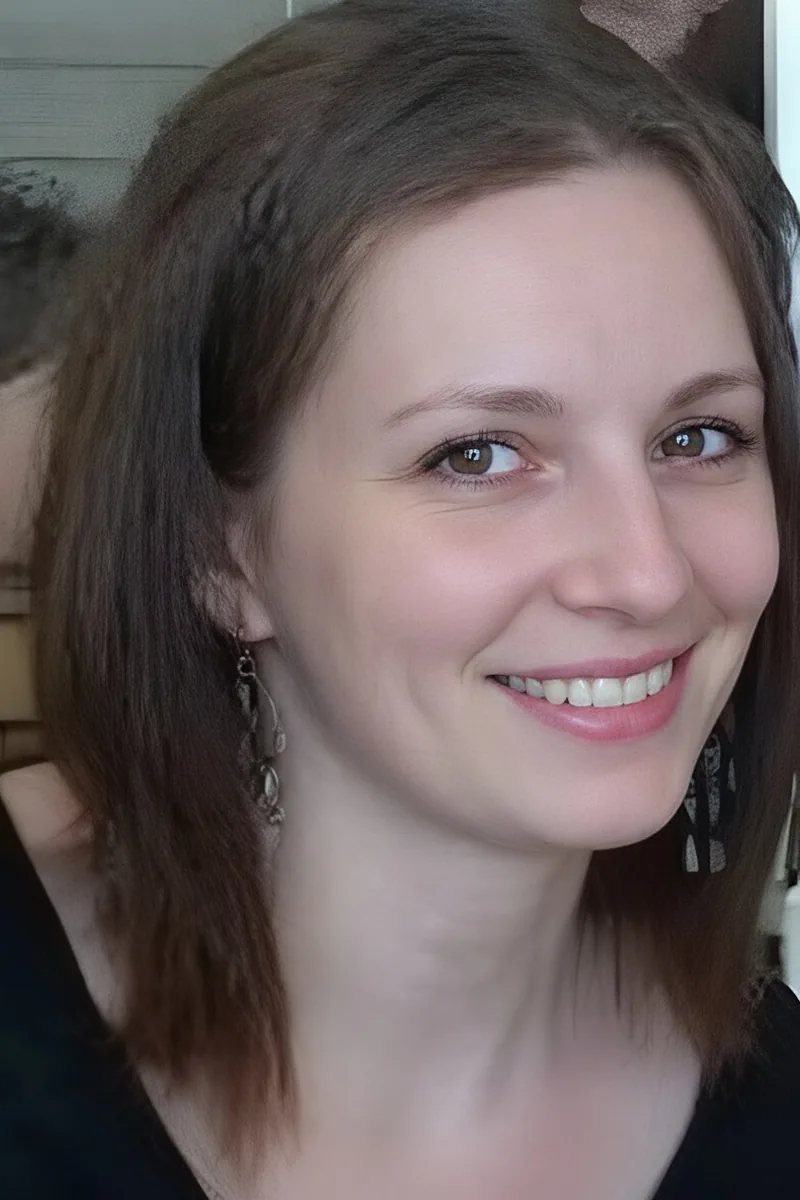
Proofs are usually the first place geometry students panic, but they're really just structured arguments — and Rebecca treats them that way. Her background in architecture and urban studies gives her a spatial intuition she brings to everything from triangle congruence to coordinate geometry, making abstract relationships feel tangible.
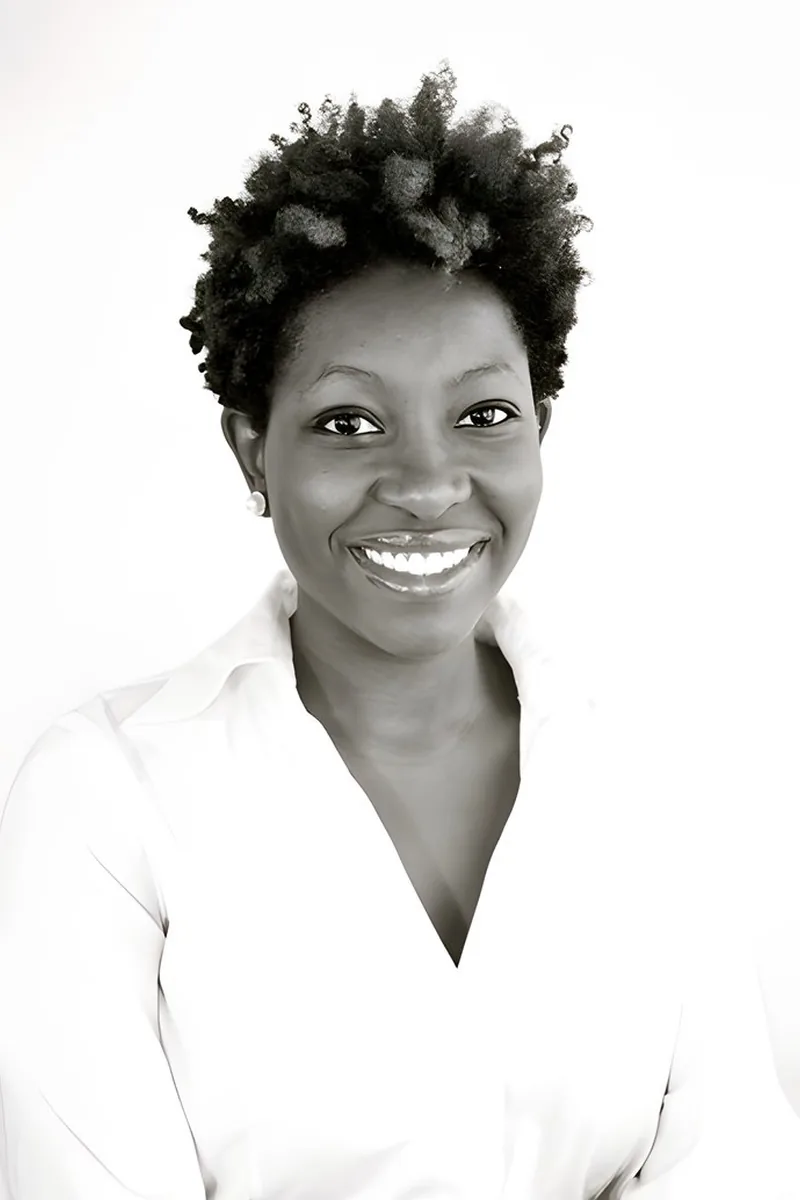
Proofs are where most geometry students stall, unsure how to chain together postulates and theorems into a logical argument. Ashley's civil engineering training at Michigan demanded exactly this kind of spatial and deductive reasoning — calculating angles, areas, and structural dimensions — so she teaches geometry as a way of thinking, not just a set of formulas to memorize.
Proofs and spatial reasoning make geometry feel like a completely different subject from the math students are used to. Sheyna tackles this by connecting geometric logic to real, tangible examples — showing why angle relationships or triangle congruence rules work, not just asking students to memorize postulates. Her background in special education gives her a deep toolkit for making abstract visual concepts click.
Chemical engineering is surprisingly geometry-heavy — reactor design, fluid flow through cross-sections, and heat transfer all depend on understanding shapes, areas, and spatial relationships at a fundamental level. Raha draws on that applied background to teach geometry concepts like circle theorems and properties of polygons in ways that feel grounded and purposeful rather than abstract. Her dual graduate work in engineering and computer science also means she's comfortable bridging geometric reasoning with the algebraic and computational tools students need for coordinate geometry problems.
Proofs are usually where geometry stops feeling intuitive and starts feeling like a foreign language. Jonah teaches students to read diagrams actively — marking congruent angles, identifying parallel lines, spotting similar triangles — so that writing a logical argument about a shape becomes a step-by-step process rather than a guessing game.
Proofs trip up most geometry students because they require a completely different kind of thinking than arithmetic or algebra — you're building logical arguments, not computing answers. Hamid approaches each proof as a puzzle, teaching students to identify what they know, what they need, and which theorems bridge the gap. His 5.0 rating speaks to how well that method clicks.
Proofs are usually the first place Geometry students hit a wall, because suddenly math requires logical argumentation instead of just computation. Suzie walks through each proof type — two-column, paragraph, coordinate — by teaching students to identify what they know, what they need, and which theorem bridges the gap. Her engineering training gave her a knack for spatial reasoning that extends to congruence, similarity, and circle theorems.
Proofs are where most geometry students panic, but they're really just logical arguments built one claim at a time. Andrew approaches them the way he approaches engineering design at Yale: identify what you know, figure out what you need, and connect the two with clear reasoning. He also digs into coordinate geometry and triangle relationships, making sure students see how spatial thinking applies beyond the textbook.
Proofs are usually where geometry students panic, but they're just structured arguments — and Lane teaches them that way. He walks through angle relationships, triangle congruence, and circle theorems by emphasizing logical reasoning over rote memorization. His engineering background gives him a spatial intuition that makes even three-dimensional geometry problems feel approachable.
Proofs trip up most geometry students because they require a completely different kind of thinking than arithmetic or algebra. Raveena breaks down the logic behind angle relationships, triangle congruence, and parallel line theorems so students can construct arguments step by step rather than guessing which postulate to cite.
Proofs are where most geometry students freeze, unsure how to connect givens to conclusions in a logical chain. Douglas approaches them the way an engineer would — breaking each proof into smaller claims, identifying which theorems apply, and building the argument piece by piece. His 5.0 rating speaks to how well that structured method clicks for students.
Proofs are usually the first place geometry students panic, because suddenly math requires written logical arguments instead of just computation. Jack tackles this by teaching proof structure as a skill — identifying givens, choosing postulates, and building a chain of reasoning — before asking students to produce proofs on their own. He also digs into triangle congruence, circle theorems, and coordinate geometry with the same step-by-step clarity.
Proofs are usually the first place geometry students feel lost, because suddenly math requires written logical arguments instead of calculations. Matthew walks through each proof step as a chain of reasoning — identifying given information, choosing the right postulate or theorem, and explaining why each statement follows from the last. His mathematics background at Notre Dame gives him the formal logic training that makes this kind of structured thinking second nature.
Proofs are usually the first place geometry students hit a wall — suddenly math requires logical arguments, not just calculations. Rohan tackles proof-writing by teaching students to map out their reasoning before formalizing it, a skill he sharpened through his engineering training at Michigan. He also digs into triangle congruence, circle theorems, and coordinate geometry with concrete visual approaches.
Proofs trip up most geometry students because they require a completely different kind of thinking than arithmetic or algebra. Pareesa approaches them by teaching students to identify given information, map logical chains, and build arguments about angle relationships and congruence one step at a time. Her 5.0 rating speaks to how well that structured method lands.
In biomedical engineering at Columbia, Joyce constantly works with geometric reasoning — modeling anatomical cross-sections, analyzing shapes of implants, thinking about how structures fit together in three-dimensional space. That training makes her especially sharp on the visualization side of geometry, where she teaches students to see how properties of circles, triangles, and polygons connect before jumping into calculations. Rated 5.0 by students.
Proofs are usually where geometry students get stuck — the jump from calculating angles to constructing logical arguments feels like a different subject entirely. Uchenna approaches proofs as storytelling with rules, teaching students to map out their reasoning before writing a single statement. Her 4.9 rating speaks to how well that structured approach clicks with learners.
Proofs are usually where geometry students panic, because suddenly math asks them to explain *why* something is true instead of just computing an answer. Davis walks through the logical structure of each proof type — two-column, paragraph, coordinate — and teaches students to spot which theorems and postulates apply before they start writing.
Proofs are usually the first place Geometry students hit a wall — the logic feels completely different from anything they've done in algebra. Krisha tackles proofs by teaching students to read diagrams like arguments, identifying given information and building toward conclusions one logical step at a time. Her science training at Michigan reinforces that same structured, evidence-based thinking.
Proofs trip up most geometry students because they require a completely different kind of thinking than computation does. Matthew approaches them the way he approaches engineering design — start with what you know, identify constraints, and reason toward a conclusion. He also connects spatial reasoning concepts like similarity, congruence, and transformations to the CAD work he does daily as a mechanical engineer.
Psychology majors spend a surprising amount of time learning to build airtight logical arguments from evidence — a skill Alexandra now channels into geometric proofs, where each statement about congruent angles or parallel lines has to follow from the last with no gaps. She's especially good at teaching students how to read a diagram and identify which relationships (supplementary angles, triangle inequality, properties of parallelograms) are actually useful before writing a single step. Rated 5.0 by students.
Mechanical engineering runs on geometry — every CAD model, every structural analysis starts with understanding how shapes, angles, and spatial relationships behave. Nikki brings that applied perspective to topics like transformations, area and volume calculations, and coordinate geometry, making abstract diagrams feel more concrete. Rated 5.0 by students.
Proofs are usually the first place geometry students feel lost, because suddenly math requires structured written arguments instead of just computation. Haley approaches them like mini engineering problems: identify what you know, figure out what connects to what, and build toward the conclusion one logical step at a time. She also covers triangle congruence, circle theorems, and coordinate geometry with an emphasis on sketching things out visually.
Proofs are usually the first thing that trips students up in Geometry — suddenly math requires written logical arguments, not just calculations. Carly approaches proofs as a skill you practice like any other, breaking the logic chain into small, manageable steps. She also covers the spatial reasoning side — area, volume, transformations — with the kind of applied perspective her engineering training reinforced.
Proofs are usually the first place geometry students feel lost, because suddenly math requires written logical arguments instead of just calculations. Vazrik teaches proof construction as a step-by-step reasoning chain — identifying given information, selecting the right postulate or theorem, and building toward the conclusion — while reinforcing the angle and triangle relationships that make each step possible.
Proofs are usually the first time a math student has to build a logical argument instead of just computing an answer, and that's exactly where Michael's analytical training in economics kicks in. He walks through two-column and paragraph proofs by treating each statement like a link in a chain — if one is weak, the whole thing falls apart. He also covers the computational side, from triangle congruence shortcuts to circle theorems and area formulas.
Proofs are usually the first place Geometry students feel lost, because the subject suddenly asks them to argue logically instead of just compute. Jack teaches proof structure as a skill — how to identify given information, choose the right theorem, and build a chain of reasoning that holds up. He applies that same structured thinking to coordinate geometry and triangle congruence problems.
Self-studying for the SAT and scoring in the 99th percentile on math meant Timothy had to teach himself geometry cold — working through triangle properties, circle theorems, and coordinate geometry problems without a classroom to fall back on. That experience of figuring out the material from scratch gives him a sharp sense of where concepts actually break down for students, especially when a problem requires pulling together multiple rules at once. His finance studies at Michigan keep that quantitative reasoning sharp on a daily basis.
Biomedical engineering at the undergraduate level means Shreeman spent years working with anatomical models, imaging cross-sections, and thinking in three dimensions — skills that translate directly to tackling geometry problems involving circles, arc lengths, and properties of inscribed figures. He unpacks diagram-heavy problems by teaching students to label what they know and systematically identify which theorems connect the pieces.
CAD work is geometry with consequences — Adam's master's in Computer-Aided Drafting and Design means he spent years defining shapes through precise angle measures, arc lengths, and dimensional constraints before anything could be fabricated. That experience makes him especially effective at teaching constructions and the properties of circles, where understanding exact geometric relationships isn't optional. Rated 4.9 by students.
Proofs trip up most geometry students because they require a style of reasoning that feels nothing like prior math classes. Tiffany taught geometry during her time at the University of Michigan, breaking down angle relationships, congruence theorems, and logical proof structures into steps that actually build on each other. She's particularly skilled at making spatial reasoning feel intuitive rather than intimidating.
I'm working towards a B.S. in Physics at Michigan State University with a minor in Computational Mathematics, Science, and Engineering. I've made the Chancellor's List every semester and am a member of my university's Honors College. I've worked with students as young as 11 and as old as 25 for the past couple of years, both online and in-person. Since I'm still a student myself, I can relate to clients and teach in a way that creates a comfortable and safe space. I tutor a broad range of subjects and would love to help you!
Goutham's pre-med science training at the University of Michigan built the kind of precise, step-by-step reasoning that geometry demands — particularly when working through angle relationships, similarity, and transformations. He breaks down each problem by identifying the geometric properties at play before jumping to any formula, which keeps students from falling into the trap of memorizing without understanding.
I am passionate about. Throughout my education, even in elementary school, I would love helping my friends do better in their schooling, whether that be by just answering a few questions they had, some one-on-one time, or a group study session.
Proofs are where most geometry students freeze up — the leap from calculating angles to constructing logical arguments feels like a different subject entirely. Paula bridges that gap by connecting each theorem back to something visual and concrete, whether it's triangle congruence or parallel line relationships. Her psychology background gives her a sharp read on where a student's reasoning breaks down.
Proofs are usually where geometry stops feeling intuitive and starts feeling arbitrary. Anthony approaches them as logical arguments rather than rote templates, drawing on his background in math and philosophy to teach students how to construct reasoning step by step. His 5.0 rating speaks to how well that approach clicks.
Proofs are usually the first place geometry students get stuck, because suddenly math requires structured argumentation instead of computation. Sami approaches geometric reasoning the way he learned to build logical arguments in computer science at Duke — step by step, with each claim justified before moving to the next. He covers everything from triangle congruence to circle theorems with that same emphasis on clear, connected thinking.
Cognitive science — Sugi's major at Rice — is fundamentally about how people build mental models, and geometry is one of the few math subjects where that matters enormously: students who can't visualize a rotation or mentally decompose a figure into simpler shapes will struggle no matter how many theorems they memorize. Sugi teaches the visualization first, then layers in the formal reasoning for congruence, similarity, and circle properties so that proofs feel like describing something you can already see. Rated 5.0 by students.
Proofs are where most geometry students start to struggle, because suddenly math requires building logical arguments instead of just computing answers. Margaret's background in both computer science and political science at Stanford means she thinks in structured logic all day — and she brings that same rigor to angle relationships, congruence, and circle theorems.
Proofs are usually where geometry stops feeling intuitive and starts feeling intimidating. Allen tackles that head-on by teaching students to read a diagram like a puzzle — identifying congruent triangles, parallel-line angle relationships, or circle theorems before writing a single line of formal reasoning. His Yale-trained analytical rigor translates well to the logical structure geometry demands.
Testimonials
Because the right Geometry tutor makes all the difference.
Average Session Rating – Based on 3.4M Learner Ratings
Practice Geometry
Free practice tests, flashcards, and AI tutoring for Geometry
Other Detroit Tutors
Related Math Tutors in Detroit
Frequently Asked Questions
Proofs represent a shift from computation to logical reasoning—a challenge many geometry students face. A tutor can help by breaking down the proof-writing process into manageable steps: identifying what's given, determining what needs to be proven, and then building a logical chain of statements with supporting reasons.
Rather than memorizing proof templates, expert tutors help students see how each statement connects to the next, building pattern recognition over time. This approach transforms proofs from intimidating exercises into exercises in logical problem-solving, which strengthens both confidence and conceptual understanding.
Word problems require students to translate written descriptions into visual representations—a skill that takes practice. Tutors work with students to develop a systematic approach: carefully reading the problem, sketching or visualizing the scenario, identifying relevant geometric properties, and then solving step-by-step.
By walking through multiple examples and having students explain their thinking aloud, tutors help students recognize patterns and build confidence. This method also teaches students to check whether their answers make geometric sense, strengthening their ability to catch errors independently.
Spatial reasoning—the ability to mentally manipulate and understand shapes in space—develops at different rates for different students. Some students benefit from hands-on tools like manipulatives, dynamic geometry software, or even sketching multiple angles of a problem to build mental models.
Varsity Tutors connects students with expert tutors who use visualization strategies tailored to how each student learns best. Whether through interactive tools, real-world examples, or guided drawing exercises, tutors help students develop the spatial intuition that makes geometry click.
Yes. Detroit's 54 school districts may use different textbooks and approaches—some emphasize coordinate geometry early, others focus on traditional Euclidean proofs first, and some blend both. This variation means curriculum alignment matters.
When you connect with a tutor through Varsity Tutors, you can share your student's specific textbook and curriculum approach. Expert tutors adjust their explanations and examples to match your school's sequence and terminology, ensuring the support reinforces what's being taught in class rather than creating confusion.
Geometry anxiety often stems from feeling lost during proofs or struggling to visualize relationships—experiences that can shake confidence quickly. One-on-one tutoring creates a low-pressure environment where students can ask questions without judgment and work at their own pace.
By breaking concepts into smaller, manageable pieces and celebrating small wins, tutors help students rebuild confidence. When students understand the 'why' behind geometric concepts rather than just memorizing steps, they often discover that geometry is more logical—and less intimidating—than they thought.
Geometry isn't just a collection of isolated theorems and formulas—it's an interconnected system where properties of triangles relate to circle theorems, which connect to coordinate geometry, and so on. Many students learn topics in isolation and miss these patterns, which makes the subject feel fragmented.
Expert tutors help students zoom out and see the big picture. By revisiting earlier concepts when introducing new ones and asking students to make connections themselves, tutors build deeper understanding. This approach transforms geometry from a checklist of topics into a coherent framework—and students retain information better when they understand how it all fits together.
In geometry, showing work serves two purposes: it helps teachers understand your student's reasoning process, and it gives your student a way to catch their own mistakes. Many geometry errors come from skipped steps or unstated assumptions rather than computational mistakes.
Tutors help students develop the habit of documenting their thinking—naming angles, stating which properties justify each step, and organizing work clearly. This practice builds mathematical communication skills while making it easier for students to review and learn from errors. Over time, careful work habits also reinforce conceptual understanding.
Let’s find your perfect tutor
Answer a few quick questions. We’ll recommend the right plan and match you with a top 5% tutor.