Award-Winning AP Physics C: Electricity and Magnetism Tutors
serving Detroit, MI
AP Physics C: Electricity and Magnetism
Tutors in Detroit
Private 1-on-1 tutoring, weekly live classes for academic support, test prep & enrichment, practice tests and diagnostics, and more to elevate grades and test scores.
Based on 3.4M Learner Ratings
UniversitiesSchools & Universities
DeliveredHours Delivered
ProficiencyGrowth in Proficiency
Who needs tutoring?
No obligation. Takes ~1 minute.

I have a Master's degree in Chemical Engineering, with additional graduate studies in Chemical Engineering and Computer Science, and over 10 years of experience teaching and tutoring STEM subjects. I work with students of different ages, backgrounds, and learning styles in mathematics, physics, chemistry, and related subjects. I believe the best tutoring starts with understanding how each student thinks. My goal is to identify where a concept becomes unclear, explain it from the student's perspective, and help them build both understanding and confidence. I want my students to learn not just how to find the right answer, but why it is the right answer and how to approach similar problems independently. I believe there is always learning in teaching, and that is one of the reasons I continue to enjoy working with students after all these years.
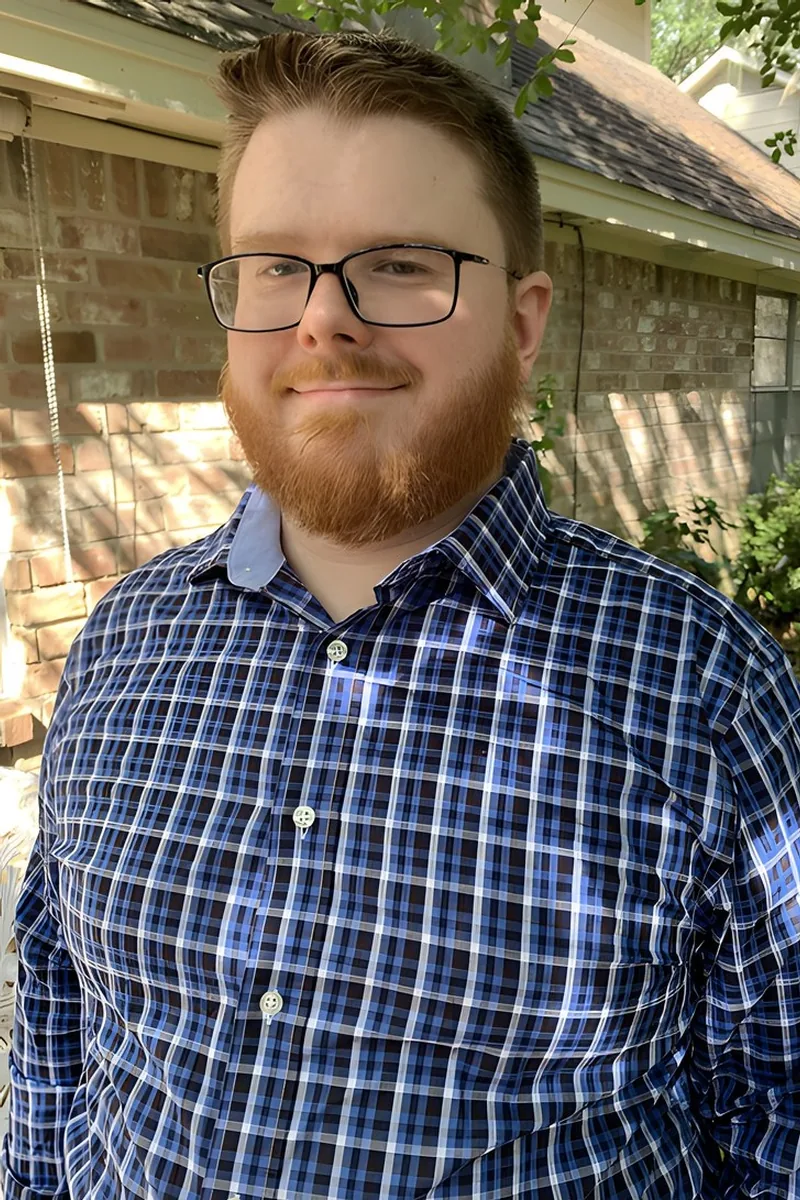
Electromagnetism was the centerpiece of Michael's teaching at the University of Michigan, where he designed and led undergraduate lab courses on circuits, fields, and waves. AP Physics C: E&M demands comfort with Gauss's law, Ampère's law, Faraday's law, and RC/RL circuit analysis — all topics he's taught extensively at the college level. He knows exactly where the conceptual gaps tend to open up, especially around flux integrals and the superposition of electric fields.
Gauss's law, Ampère's law, Faraday's law — E&M demands that students think in three dimensions about invisible fields, which is a fundamentally different skill than anything in Mechanics. Pratik tackles this by teaching students to visualize field lines and flux before jumping into the calculus, building geometric intuition that makes the integral setups feel natural.
I love to teach. I love young minds and fresh brains. Those are just like clean sheets of papers I can draw anything I like. I really like to help young people to achieve their full capacities with my long experience of teaching. I am very patient and good at explaining complex concepts in simple terms. I am looking forward to meeting students who need my help.
Unlock your academic potential with a tutor who bridges the gap between elite performance and foundational mastery. As a National AP Scholar with advanced coursework in Multivariable Calculus and Data Structures, I bring high-level expertise to your studies. Whether you are tackling complex algorithms or advanced math, I provide the precise guidance you need to excel. My experience at Kumon and Mathnasium taught me that even the most complex goals start with strong basics. I believe in both individual learning as well learning through guided practice, so whatever your way to learn I can accomodate to help you do the very best.
E&M is where most AP Physics students hit their ceiling — Gauss's law, Ampère's law, and Faraday's law demand spatial reasoning and calculus fluency at the same time. Bidyut's biomedical engineering curriculum at Johns Hopkins required extensive work with electromagnetic theory, from circuit analysis to field modeling. He unpacks each law by building the physical picture first, then layering in the math so the integrals actually make sense.
AP Physics C: E&M is where calculus and electromagnetism collide — Gauss's law integrals, Ampère's law, RC and RL circuit transients — and Nathan tackles each of these by tying the math directly to the physical intuition behind it. As a computer science and engineering student at UCF who passed 15 AP exams, he knows how to break down vector calculus applications so they feel methodical rather than overwhelming.
Gauss's law, Ampère's law, and Faraday's law each require students to set up integrals over surfaces and paths that feel nothing like standard calculus problems. Vishank's comfort with multivariable math and his experience teaching across physics and calculus let him bridge that gap — showing exactly how to choose a Gaussian surface or an Amperian loop and why the math works the way it does.
This is Michael's home turf. As an electrical and computer engineering major at Northwestern specializing in robotics and control systems, he lives in the world of Gauss's law, Faraday's law, and RC/RL circuits every semester. He unpacks Maxwell's equations and circuit analysis in ways that connect the abstract math to real systems — like the power electronics he builds for Northwestern's solar car.
Gauss's law, Ampère's law, Faraday's law — AP Physics C: E&M asks students to think in vector fields and surface integrals, which is a major leap from mechanics. As an astrophysics and chemistry double major at CU Boulder, Graham works with electromagnetic theory as a core part of his studies and breaks down each law into the physical picture behind the math. He holds a 5.0 rating from students.
I am a graduate of Cornell University's College of Arts and Sciences. I received my Bachelor of Arts in Chemistry with Distinction in 2015. Since graduation, I was a physics/chemistry teacher and soccer coach at a private school in Virginia for a year, where I led the soccer team to an undefeated season. Before teaching and coaching professionally, I was a Teaching Assistant for the Cornell Math and Physics Departments, where I taught many subjects including calculus, mechanics, electromagnetism. Throughout my time at Cornell and as a teacher, I tutored subjects ranging from the SAT to AP Physics and Algebra II, which is where my true talents lie: in small group or one-on-one settings where I can give students the full attention they deserve and tailor my approach specifically to their learning styles. This is why I am now pursuing tutoring as a part-time occupation at Varsity Tutors. I embrace teaching all math and science subjects, especially physics and calculus, at both the college and high school level and will go above and beyond to make sure all of my students succeed, according to their definition of success. In my spare time, I enjoy playing league soccer, basketball, tennis and guitar, and also like to travel and see as much of the world as I can.
Electricity and Magnetism trips students up because it layers vector calculus onto already-abstract concepts like electric flux, Gauss's law, and electromagnetic induction. Rachel's calculus expertise gives her a solid handle on the integral and differential equations that drive E&M problem-solving. She's upfront that this is one of the toughest AP courses offered, and she approaches it by making sure the math never becomes the bottleneck.
Gauss's law, Ampère's law, Faraday's law — AP Physics C: E&M asks students to choose the right symmetry argument and execute a surface or line integral under time pressure. Yurok tackles this by drilling the geometric reasoning behind each law so students can recognize which tool applies before they start calculating. His physics and mathematics background at Emory keeps the vector calculus from becoming a bottleneck.
AP Physics C: E&M is widely considered the hardest AP science exam, and it's also the subject closest to Sabrina's daily life as a Princeton electrical engineering student with an applied physics focus. She digs into Gauss's law, Ampère's law, RC circuits, and Faraday's law with the fluency of someone who uses Maxwell's equations in her own research and coursework. Her physics research at a Max Planck Institute adds another layer of depth to her explanations.
Gauss's law, Ampère's law, Faraday's law — AP Physics C: E&M asks students to wield vector calculus in contexts that feel nothing like their math class. Cory breaks each problem into two layers: the physical picture (what are the charges and fields actually doing?) and the mathematical machinery (which symmetry makes the integral tractable?). That dual-track approach keeps students from drowning in formalism while still earning top scores.
Testimonials
Because the right AP Physics C: Electricity and Magnetism tutor makes all the difference.
Average Session Rating – Based on 3.4M Learner Ratings
Practice AP Physics C: Electricity and Magnetism
Free practice tests, flashcards, and AI tutoring for AP Physics C: Electricity and Magnetism
Nearby AP Physics C: Electricity and Magnetism Tutors
Other Detroit Tutors
Related Science Tutors in Detroit
Frequently Asked Questions
Many students find E&M more conceptually challenging than Mechanics because it requires visualizing invisible fields and forces rather than motion you can see. The math is similarly rigorous, but E&M concepts like Gauss's law, electromagnetic induction, and Maxwell's equations often take longer to internalize. With focused tutoring on these core concepts, students typically gain confidence and improve their problem-solving approach significantly.
The biggest hurdles are understanding field concepts (electric and magnetic fields), applying Gauss's law correctly, and working with Maxwell's equations. Many students also struggle with the relationship between electricity and magnetism, and with multi-step problems that combine several concepts. Personalized tutoring helps break these topics into manageable pieces and builds the conceptual foundation needed for problem-solving.
Most students benefit from starting review 2-3 months before the exam, dedicating 5-7 hours per week to studying and practice problems. If you're struggling with specific topics like circuits or electromagnetic induction, starting earlier or increasing study time helps. A tutor can create a personalized study schedule that targets your weak areas and ensures you're using your time efficiently.
Practice tests are essential—they help you understand the exam format, identify weak topics, and build pacing skills under timed conditions. Taking full-length practice exams every 2-3 weeks during your final months of prep gives you realistic feedback on what to focus on. A tutor can review your practice test results with you, pinpoint where you're losing points, and adjust your study plan accordingly.
Your first session focuses on understanding your background, identifying which topics feel strongest and weakest, and discussing your AP exam goals. Varsity Tutors connects you with tutors who will assess your problem-solving approach and conceptual understanding, then create a personalized plan tailored to your needs. This might include deep dives into foundational concepts, practice problem strategies, or test-taking techniques depending on where you are in your preparation.
Score improvement depends on your starting point and how consistently you apply what you learn. Students who work with tutors typically see 2-4 point improvements on the AP scale (1-5), with stronger gains when they combine tutoring with regular practice problems and full-length exams. The key is identifying your specific weak areas—whether that's conceptual gaps or test-taking strategy—and addressing them systematically.
Look for tutors with strong physics backgrounds—ideally those who've taught AP Physics C, scored well on the exam themselves, or have advanced degrees in physics or engineering. They should understand both the conceptual foundations and the AP exam's specific format and expectations. Varsity Tutors connects you with experienced tutors who can explain complex E&M concepts clearly and guide you through the problem-solving strategies that earn full credit on the exam.
Building confidence through practice tests and mastering problem-solving strategies significantly reduces anxiety—when you know you can solve problems, the pressure feels more manageable. Your tutor can help you develop a pacing strategy for the exam, teach you how to approach unfamiliar problems systematically, and practice timed sections so the format feels familiar. Many students also benefit from reviewing their strongest topics right before the exam to build momentum going in.
Let’s find your perfect tutor
Answer a few quick questions. We’ll recommend the right plan and match you with a top 5% tutor.