Award-Winning Trigonometry Tutors
serving Boston, MA
Trigonometry
Tutors in Boston
Private 1-on-1 tutoring, weekly live classes for academic support, test prep & enrichment, practice tests and diagnostics, and more to elevate grades and test scores.
Based on 3.4M Learner Ratings
UniversitiesSchools & Universities
DeliveredHours Delivered
ProficiencyGrowth in Proficiency
Who needs tutoring?
No obligation. Takes ~1 minute.
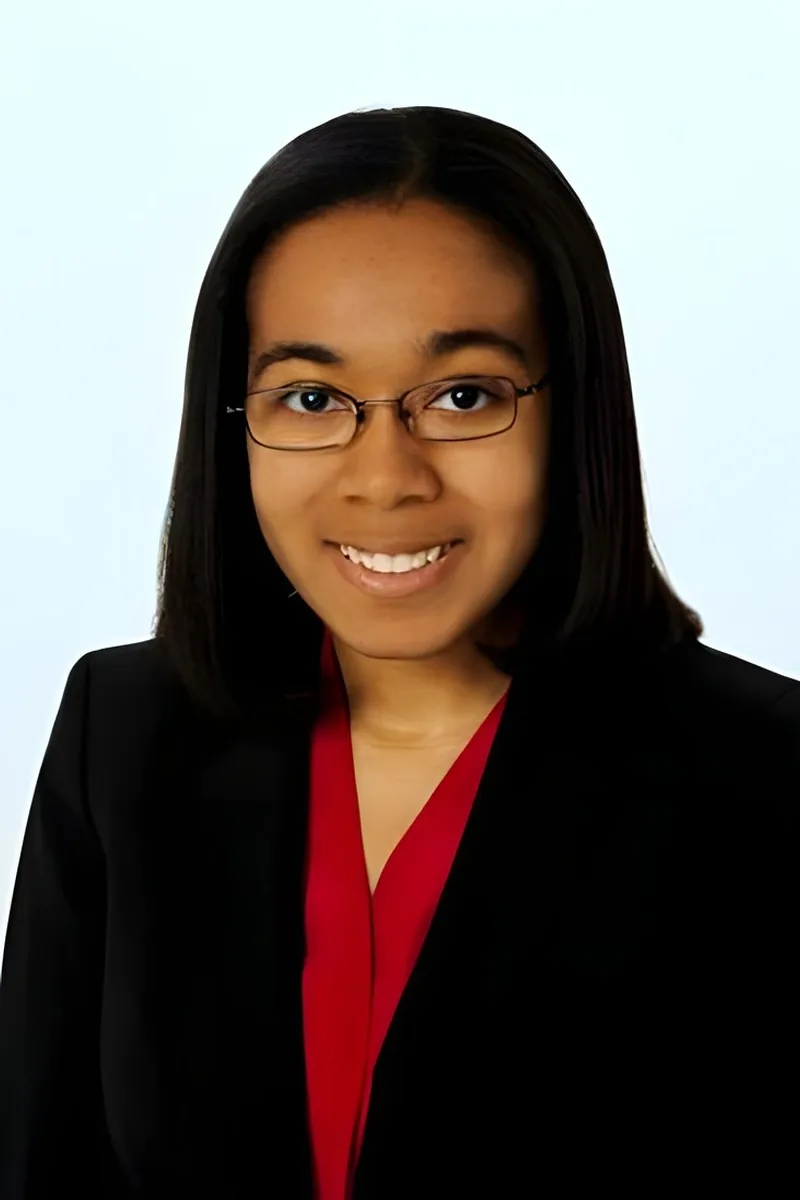
After ten years of teaching subjects from algebra to physics, Jean developed a knack for quickly identifying which approach makes a concept land — visual models, analogies, or breaking a problem into smaller pieces. In trigonometry, that flexibility matters: graphing sinusoidal functions might need a sketch-first strategy, while verifying identities often calls for algebraic pattern-matching. Her medical training at Harvard sharpened the diagnostic thinking she brings to pinpointing exactly where a student's understanding breaks down.

Trig identities and unit circle values feel arbitrary until someone shows you the geometry underneath them. Anthony approaches trigonometry the way he learned it as an engineer — as a practical toolkit for modeling waves, rotations, and periodic behavior, not just a list of formulas to memorize. He's especially sharp on the transition from right-triangle trig to the analytic trigonometry that shows up in pre-calculus and physics.
Trig identities tend to feel like arbitrary formulas until someone shows you the geometry underneath them. Patrick unpacks the unit circle, sinusoidal functions, and inverse trig relationships by tying each concept back to visual and applied reasoning — an approach shaped by years of quantitative problem-solving in biomedical research.
Trig identities stop feeling like random formulas to memorize once you see them on the unit circle. Nikola, a mathematics major at Tufts, teaches students to derive identities from scratch so they can reconstruct anything they forget — whether it's a double-angle formula or a tricky inverse trig problem.
The unit circle trips up nearly everyone the first time around, and trig identities can feel like an endless list of formulas with no logic behind them. Justin, a math minor at Northeastern, unpacks the geometry underneath so that sine, cosine, and tangent relationships make visual sense rather than requiring brute memorization.
Trig identities and unit circle relationships click faster when a student sees why they exist, not just where they appear on a formula sheet. Desiree ties trigonometric concepts back to engineering applications like wave analysis and force decomposition, making the material feel purposeful rather than arbitrary.
Christine's computer science coursework at Northeastern leans heavily on trigonometry — rotation algorithms, graphics transformations, and periodic functions all run on sine, cosine, and their identities. She teaches students to build each identity from scratch using core unit circle geometry, so they can reconstruct what they need mid-exam instead of blanking on a memorized list. Rated 4.9 by students.
Unit circle values, identity proofs, and graphing transformations of sine and cosine — trigonometry asks students to think visually and symbolically at the same time. Kathrine tackles this by linking trig concepts back to the geometric intuition students already have, an approach shaped by her current master's work in Mathematics Secondary Education at Boston University.
Trig identities can feel like arbitrary formulas until someone shows you where they come from geometrically. Zachary leans on the unit circle as an anchor for everything — sine and cosine graphs, inverse functions, Law of Sines and Cosines — and his physics background means he can demonstrate how trig shows up in wave motion, vectors, and force diagrams. That real-world grounding tends to make the identities far easier to internalize.
Trig identities can feel like arbitrary formulas until someone shows you the geometry underneath them — why sine and cosine behave the way they do on the unit circle, and how that unlocks everything from sum-angle formulas to inverse trig functions. Vania applies trigonometry constantly in her MIT engineering and physics work, which means she teaches it as a toolkit with real purpose, not just a list of equations to memorize.
Trig identities and unit circle values can feel like an endless list to memorize, but Cindy teaches students to see the geometric logic underneath — why sine and cosine behave the way they do, and how identities actually derive from a few core relationships. Her 1580 SAT and 36 ACT reflect the kind of precise mathematical thinking she brings to every session.
Most trig students get lost somewhere between memorizing SOH-CAH-TOA and suddenly being asked to prove identities or graph transformations — Brice bridges that gap by teaching the underlying patterns that make each new topic feel like a natural extension of the last. His computer science work at MIT means he's constantly using trig functions in applied settings like rotation, projection, and periodic modeling, so he can show students what these concepts actually do beyond the textbook. Rated 4.9 by students.
Trig identities can feel like an endless list to memorize until someone shows you the underlying geometry that ties them together. Natasha walks through the unit circle, law of sines, and inverse trig functions by connecting each concept back to visual and physical intuition — a natural instinct from her engineering training at MIT.
Trig identities and unit circle values can feel like an endless list to memorize, but Adriana teaches them as patterns that connect back to right triangles and circular motion. Studying urban planning at MIT, she uses trig regularly in spatial analysis and brings that practical grounding into her sessions.
Trig identities can feel like an endless list to memorize until someone shows you the handful of core relationships everything else derives from. Kristen teaches students to derive identities on the fly and apply the unit circle to solve equations, which builds the kind of fluency that Pre-Calculus and Calculus demand later.
Trig identities often feel like arbitrary formulas until someone shows you the unit circle logic behind them. Ken ties trigonometric functions back to wave behavior and rotational motion from his years teaching physics, giving students a concrete mental model for everything from law of sines to inverse trig.
Trig identities can look like an endless list of formulas to memorize, but they're really just a handful of relationships viewed from different angles — literally. Valerie teaches students to derive identities from the unit circle and see how sine, cosine, and tangent behave geometrically, which makes proving identities and solving equations far more manageable. Her applied math background means she also connects trig to real modeling problems, giving the material purpose.
Trig identities and the unit circle tend to feel like arbitrary rules until someone shows you the geometry underneath them. Jacques connects sine, cosine, and tangent to the wave behavior and rotational motion he teaches in his physics classes, turning memorization into understanding. His 25-plus years in the classroom mean he's seen — and solved — every common trig stumbling block.
Trig identities and unit-circle values tend to feel like pure memorization until someone shows you the geometric reasoning underneath them. Afton connects sine, cosine, and tangent back to triangles and circles in ways that make identities derivable instead of just memorizable — an approach shaped by the rigorous math curriculum at MIT.
The unit circle, identities, and inverse trig functions tend to feel like arbitrary rules until someone explains the geometry underneath them. Marika's physics background means she's spent years applying sine, cosine, and tangent to real wave behavior and vector problems, so she teaches trig as a toolkit with visible purpose rather than a set of formulas to memorize.
I am a very experienced high school and middle school teacher/tutor, as I have been tutoring or teaching in some capacity since August of 2010. I have always loved making personal connections with students and helping them make daunting studies (such as math or test preparation) more approachable. My favorite part of my job is empowering students to be more independent learners and helping them develop confidence in their abilities.
The unit circle is where most trig students either lock in or lose the thread — and Will makes sure it's the former by connecting sine, cosine, and tangent back to the geometric intuition students already have from earlier math. His approach treats identities and angle relationships as logical patterns to understand, not formulas to cram before an exam.
Trig identities and the unit circle tend to feel like a wall of memorization until someone shows you the geometry underneath them. Sarah connects sine, cosine, and tangent back to the triangles and circles students already understand, turning formulas into relationships that actually make visual sense.
Trig identities can feel like an endless list of formulas until someone shows you the handful of relationships everything else derives from. Charlotte unpacks the unit circle, sine and cosine graphs, and identity proofs by building each concept visually, drawing on the rigorous approach she developed through her Colgate mathematics program.
The jump from memorizing the unit circle to actually applying sine, cosine, and tangent in identities and equations is where most trig students get stuck. Albert approaches it by connecting each identity back to its geometric meaning, so students can derive relationships instead of relying on rote recall. He holds a 5.0 rating from his students.
The unit circle tends to feel like arbitrary memorization until someone shows you the geometry underneath it. Connor connects trig identities and sinusoidal functions back to visual, intuitive reasoning, drawing on the quantitative rigor he developed studying economics and neurobiology at Harvard.
Trig identities and unit circle values tend to feel like arbitrary things to memorize until someone shows you the geometry behind them. John teaches trigonometry by building each identity from its visual roots — showing why sin²θ + cos²θ = 1 is a statement about a right triangle inscribed in a circle, not just a formula to recall. Once students see that underlying logic, solving equations and graphing transformations becomes far more intuitive.
The unit circle, identities, and inverse trig functions all click faster when a student understands *why* sine and cosine behave the way they do — not just where to plug in values. Ryan teaches trig by grounding each identity in geometric intuition, so that proving equations and solving triangles becomes a logical process rather than a memorization exercise. His background spans math and music, two fields where periodic patterns are everywhere.
The unit circle is where most trigonometry frustration starts, and it only compounds once identities and inverse functions enter the picture. Hope tackles trig by grounding every identity in the geometry it came from — showing students why sin²θ + cos²θ = 1 rather than asking them to memorize it cold. That geometric anchor makes solving equations and graphing transformations far more intuitive.
The unit circle tends to be the make-or-break moment in trigonometry, and most confusion traces back to not seeing how sine, cosine, and tangent relate geometrically. Andy approaches trig identities and angle relationships by tying them to visual intuition first, then building toward the algebraic fluency needed for verifying identities and solving equations.
Trig identities and the unit circle tend to feel like arbitrary memorization until someone shows you the geometry underneath them. Vaibhav breaks down sine, cosine, and tangent relationships visually, connecting them to triangles and circular motion so that identities become logical rather than random. His molecular biology coursework keeps him fluent in the applied trig that shows up in wave functions and periodic models.
Trig identities and unit circle values tend to feel like arbitrary lists until someone shows you the geometry underneath them. Claire's chemistry background required heavy use of trigonometric functions in spectroscopy and wave mechanics, so she teaches sine, cosine, and tangent as tools with real physical meaning. That context makes even inverse trig and law of sines problems click faster.
Trig identities, the unit circle, and sinusoidal graphs tend to feel like a wall of memorization until someone shows you the geometry underneath them. Leonid's Mechanical Engineering program at UMass Amherst runs on trigonometry — from force decomposition in statics to waveform analysis — so he teaches these concepts with the fluency of someone who applies them constantly. He's especially good at connecting the visual (what the graph looks like) to the algebraic (why the equation works).
The unit circle tends to be where trigonometry either clicks or collapses for students. Nathaniel approaches trig identities and angle relationships by building from that single visual framework, tying sine, cosine, and tangent back to geometric reasoning rather than a list of formulas to memorize. His math degree gives him the depth to connect trig concepts forward to calculus and physics applications.
Trig identities and the unit circle click faster when a student sees them applied to real problems — like calculating force components or analyzing wave motion. Zina's engineering degree from TCU required heavy use of trigonometric functions in structural and mechanical analysis, so she teaches the subject with concrete, visual examples that stick.
Trig identities tend to feel like arbitrary formulas until someone shows you the geometry behind them — why the unit circle generates sine and cosine, or how the angle addition formulas actually derive from rotation. Benjamin's combined study of mathematics and science at UMass Amherst gives him a knack for connecting trig to the visual and applied contexts that make it click.
The unit circle, identities, and inverse trig functions stop being mysterious once a student sees the geometry underneath them. Adriano teaches trig by connecting each identity back to what's actually happening on the coordinate plane, building intuition that makes solving equations and proving identities feel logical rather than like guesswork. His proof-oriented math training at MIT keeps his explanations precise and grounded.
Trig identities can feel like an endless list of formulas to memorize, but Judah breaks them down by showing how each one derives from the unit circle. His strong math background — including a 1580 SAT — means he can walk through everything from law of sines applications to graphing phase shifts with clarity and precision.
The unit circle, identities, and inverse trig functions all start making sense once a student sees them as tools rather than formulas to memorize. June's electrical engineering work at Brown relies heavily on trigonometry — from signal analysis to circuit phasors — so she can show exactly why sine and cosine behave the way they do. She walks through each identity derivation so students understand the geometry behind it.
The unit circle tends to be the make-or-break moment in trigonometry, and everything after it — identities, inverse functions, the law of cosines — depends on actually understanding why it works. Mackenzie unpacks the geometry behind each trig ratio so that memorizing special angles becomes unnecessary. Rated 4.8 by her students, she covers the subject from foundational definitions through applications in physics and calculus prep.
Testimonials
Because the right Trigonometry tutor makes all the difference.
Average Session Rating – Based on 3.4M Learner Ratings
Practice Trigonometry
Free practice tests, flashcards, and AI tutoring for Trigonometry
Nearby Trigonometry Tutors
Other Boston Tutors
Related Math Tutors in Boston
Frequently Asked Questions
Many students struggle with the transition from memorizing formulas to understanding why trigonometry works. Common pain points include visualizing angles and their relationships, applying trig functions to word problems, and connecting the unit circle to real-world applications. Additionally, students often find it difficult to see how sine, cosine, and tangent relate to each other and to the geometry they've already learned. A tutor can help you move beyond memorization to build genuine conceptual understanding of these core relationships.
Word problems require you to translate real-world scenarios into trigonometric equations—a skill that takes practice and strategic thinking. The key is learning to identify which trig function applies to the situation, draw accurate diagrams, and work through multi-step solutions systematically. Personalized tutoring helps you develop problem-solving strategies, learn to check your work at each step, and build confidence tackling unfamiliar problem types. With targeted practice and feedback, you'll start recognizing patterns and approaching word problems with clarity instead of anxiety.
Your first session is about building a foundation for success. A tutor will assess your current understanding of trigonometry concepts, identify specific areas where you're struggling, and learn about your learning style and goals. Whether you're working on mastering the unit circle, improving your graphing skills, or preparing for an exam, the tutor will create a personalized plan tailored to your needs. This session sets the direction for all future work together.
Showing your work in trigonometry does more than earn partial credit—it reveals your thinking process and helps you catch errors before they compound. When you write out each step, you're reinforcing the logical flow of solving a problem and building connections between concepts. A tutor can review your work to identify where your reasoning breaks down, whether it's in setting up an equation, applying an identity, or simplifying an expression. This feedback accelerates your learning far more than just getting the right answer.
The unit circle is the foundation of trigonometry, but it's often taught as something to memorize rather than understand. The key is seeing it as a visual representation of how sine and cosine values change as you move around the circle. A tutor can help you understand why certain angles have specific values, how to derive identities from the unit circle, and how to apply these concepts to solve problems. With this deeper understanding, identities become tools you can use flexibly rather than formulas to memorize.
Graphing sine, cosine, and tangent functions requires understanding amplitude, period, phase shift, and vertical shift—concepts that are easier to grasp when you see them visually and connect them to the unit circle. Many students try to memorize the shapes without understanding how changes to the equation affect the graph. A tutor can guide you through the process of transforming parent functions, help you predict graph behavior before plotting, and teach you to verify your graphs make sense. This conceptual approach makes graphing problems much more manageable.
Math anxiety often stems from feeling lost or unsupported when concepts don't click immediately. Personalized 1-on-1 instruction creates a judgment-free space where you can ask questions, work through problems at your own pace, and build confidence through small wins. A tutor can break complex concepts into manageable pieces, celebrate your progress, and help you see that struggle is part of learning, not a sign you can't do math. Over time, understanding replaces confusion, and confidence replaces anxiety.
Boston's 32 schools across 6 districts may use different textbooks and approaches to teaching trigonometry, from traditional sequences to integrated curricula. Varsity Tutors connects you with tutors who understand these various frameworks and can adapt their instruction to match your specific course and teacher's expectations. Whether your class emphasizes proofs, applications, or a balance of both, a tutor familiar with your curriculum can help you succeed within that context while building deeper conceptual understanding.
Let’s find your perfect tutor
Answer a few quick questions. We’ll recommend the right plan and match you with a top 5% tutor.