Award-Winning College Physics Tutors
serving Boston, MA
College Physics
Tutors in Boston
Private 1-on-1 tutoring, weekly live classes for academic support, test prep & enrichment, practice tests and diagnostics, and more to elevate grades and test scores.
Based on 3.4M Learner Ratings
UniversitiesSchools & Universities
DeliveredHours Delivered
ProficiencyGrowth in Proficiency
Who needs tutoring?
No obligation. Takes ~1 minute.

Predentistry requires a deep pass through college physics — optics, fluid dynamics, mechanics of materials — and Erica tackled that coursework at Harvard alongside a History of Science degree that gave her an unusual ability to explain *where* physical concepts come from and how they evolved into the frameworks students use today. She breaks down problem-solving by connecting the conceptual narrative to the math, so students aren't just plugging into formulas but understanding the physics driving each step. Rated 4.9 by students.
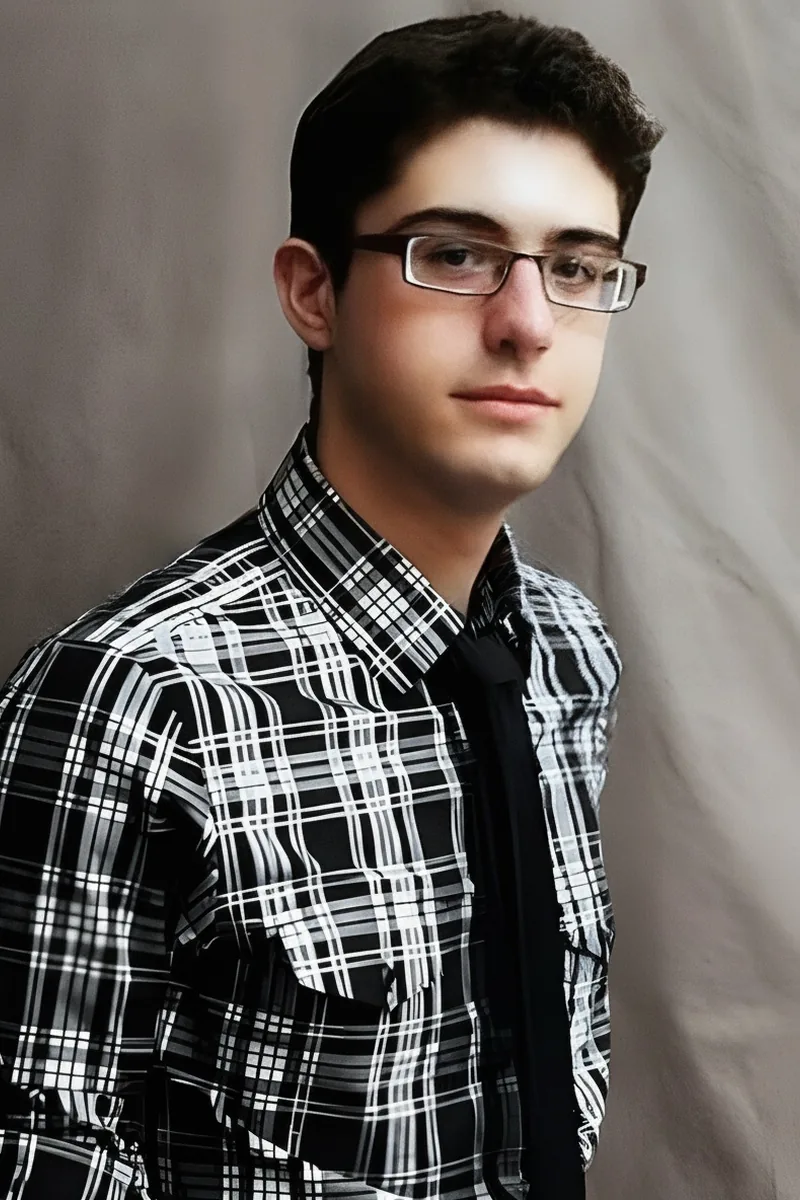
I am also a first year medical student at the Tufts University School of Medicine in Boston. I have extensive experience with premedical classes and have taken and tutored the MCAT exam. I placed in the 97th percentile of the MCAT exam and I understand what the test takers want students to know and how to bridge the gap between knowing the material and doing well on the test. I am always excited when a student finally has that "ah-ha" moment and declares that they now can see how all of these seemingly separate scientific topics are actually all related. The MCAT no longer seems scary, but turns into a means of truly learning this material and providing a strong foundation for the future.
Dual degrees in biomedical and mechanical engineering mean Jennifer has taken college physics from both angles — the biological systems side (fluid flow in vessels, pressure in the body, electrical signaling in tissue) and the classical mechanics side (statics, dynamics, material properties). She breaks down force diagrams and energy conservation problems by tying them back to the engineered and biological systems where those principles actually matter, which makes abstract problem sets click faster.
Alzheimer's and Parkinson's research requires Anthony to live in the space where physics meets biology every day — fluid dynamics in vascular models, electromagnetic principles in imaging equipment, and mechanics in tissue deformation studies. That biomedical engineering background (B.S. from BU, M.S. from Tufts) means he teaches college physics concepts like kinematics, wave phenomena, and electrostatics with a constant eye toward how they actually behave in complex systems. Rated 4.9 by students.
Biomedical engineering at the undergraduate level and biophysics research at Harvard mean Fernando has tackled college physics from both the applied and theoretical sides — designing systems that depend on fluid dynamics and biomechanics, then digging into the quantitative models that explain why those systems behave as they do. He's particularly sharp on the mechanics and waves material that forms the backbone of most introductory sequences, since his biophysics work demands constant fluency with force analysis, energy methods, and oscillatory behavior. Rated 4.9 by students.
Biochemistry lives at the crossroads of biology, chemistry, and physics — and Katharine's biochemistry degree means she's spent years applying thermodynamic principles, energy transfer models, and kinetic theory to molecular systems. That cross-disciplinary lens is especially useful in college physics, where she can ground abstract topics like work-energy relationships and wave behavior in the biological and chemical contexts that make them click.
Five years as a working engineer means Desiree has applied the physics from textbooks to actual systems — force balances, heat transfer, fluid behavior — and can explain where those classroom equations show up in practice. Her chemical and biomolecular engineering degree covered the full calculus-based physics sequence, so she's comfortable walking through everything from free-body diagrams in mechanics to pressure and flow problems in thermodynamics. Rated 5.0 by students.
Working as an electronics tester and designer at Draper Labs meant Zachary wasn't just solving physics problems on paper — he was applying mechanics, circuit theory, and electromagnetic principles to real hardware under real constraints. That hands-on engineering experience, paired with his physics degree from Northeastern, makes him especially effective at teaching students how to set up free-body diagrams and energy conservation problems from scratch rather than reverse-engineering solutions from an answer key. Rated 4.7 by students.
Studying computer science at MIT means Brice lives inside the math and physics that most students only encounter on problem sets — his coursework regularly demands fluency in mechanics, wave behavior, and electromagnetism as foundations for everything from signal processing to computational modeling. He breaks physics problems into the same kind of step-by-step logical structure he'd use to debug code, which makes tangled multi-concept questions feel systematic rather than overwhelming. Rated 4.9 by students.
TA-ing MIT's Physics II course gave Cori front-row experience with the stumbling blocks college students face — from applying Maxwell's equations to navigating multi-step problems in mechanics and thermodynamics. She approaches each topic by building physical intuition first, then layering on the math. Her engineering background means she can also show how these principles appear in real material systems and design problems.
MIT's core physics sequence is calculus-heavy and fast — Vania not only survived it but tutored other students through it via the university's Seminar XL program, which means she's seen firsthand where classmates stall on topics like rotational motion, wave mechanics, and Gauss's law. Her mechanical engineering major keeps her applying those physics principles daily in coursework on statics, dynamics, and thermodynamic systems, so her explanations stay rooted in how the concepts actually get used. Rated 5.0 by students.
Adam studied physics as an undergrad, so the core sequence — Newtonian mechanics, energy methods, electrostatics, circuits — is material he learned formally rather than picked up sideways from an adjacent field. That direct training shows when he walks through problems: he catches the subtle sign errors in free-body diagrams and the unit-conversion traps in electromagnetic calculations that students often miss until an exam.
Introductory college physics ramps up fast, especially when vectors, rotational dynamics, and electric fields all land in the same semester. Ken taught high school physics for 17 years and has additional experience teaching at the community college level, so he knows exactly where the gap between high school prep and university expectations tends to open up. He walks through problem-solving strategies that make multi-step calculations feel manageable.
Twenty-five years teaching physics in Massachusetts public schools means Jacques has watched thousands of students hit the same stumbling blocks in mechanics, thermodynamics, and electromagnetism — and he's refined how he explains each one. His Princeton chemical engineering degree grounds that teaching instinct in serious quantitative depth, particularly when college physics problems demand fluency with differential equations and multi-variable modeling. Rated 4.8 by students.
A year spent doing full-time climate change research at the University of Helsinki — including two PhD-level atmospheric science courses — means Marika has applied thermodynamics, fluid dynamics, and wave mechanics to real systems under serious academic pressure. She brings that research-grade fluency back to college physics problem sets, connecting the math to the physical phenomena it describes. Holds a 5.0 rating.
Christine's computational policy degree from UChicago means she spends her days building quantitative models and working through the kind of applied math — differential equations, statistical mechanics, optimization — that underpins college physics problem sets. She's particularly good at teaching students how to translate a word problem into a mathematical setup, which is usually where the real confusion lives. Holds a 5.0 rating.
My expertise is in classroom, small group, and one-on-one instruction in physics of the first year. I have, however, taught at all levels from non-science major courses through the graduate physics curriculum. My education includes a bachelor's degree in physics from Amherst College and a doctorate from Stanford University. During my career I spent time at the University of Illinois, Urbana-Champaign, the University of California, San Diego, the Massachusetts Institute of Technology, the California Institute of Technology, and Brandeis University, where I worked for nearly 40 years. I am a firm believer that students learn in STEM fields only by doing, not by merely listening. Thus the core of any tutoring experience with me is working on problems. The most formative experience a student can have is to work through a problem, explaining each step to the tutor as he or she goes through it. Only by explaining the concepts and skills to someone else can one be sure of his or her own understanding. My goal in any tutoring interaction is to assist the student in gaining the necessary skills, knowledge, and confidence to attack any conceivable problem set to him or her by a classroom teacher.
An astrophysics student at Harvard, Ander lives inside the material covered in college physics sequences — from rotational dynamics and wave mechanics to Maxwell's equations and quantum fundamentals. He approaches tough problem sets by mapping the physics first and letting the math follow, which is the habit that separates students who survive upper-division courses from those who don't. His tutoring background stretches back years through high school programs and City Year.
A chemical physics degree from Tufts means Thomas didn't just take college physics — he lived in the space where physics and chemistry collide, studying molecular dynamics, quantum behavior, and thermodynamic systems at a level that makes introductory mechanics and electromagnetism feel like familiar territory. He breaks problems down to their physical intuition first, making sure the reasoning clicks before any equations get written. Holds a 5.0 rating.
A math degree gives Hope the calculus fluency that separates students who can follow a college physics lecture from those who can actually solve the problems — setting up integrals for center-of-mass calculations, differentiating position functions for kinematics, or working through the vector calculus in electromagnetic fields. She also teaches AP Physics C: Mechanics, so she's comfortable translating between the conceptual reasoning and the mathematical machinery. Rated 4.8 by students.
College-level physics ramps up fast, layering calculus-based mechanics, electromagnetism, and thermodynamics into dense problem sets. Leonid is deep in this material as a mechanical engineering major at UMass Amherst, which means he can walk through torque, rotational dynamics, or circuit analysis with the fluency of someone who just worked through it himself. He also teaches statics, so students in introductory engineering sequences get especially targeted support.
College-level physics problems — rotational dynamics, electromagnetic induction, wave optics — require comfort with calculus and a willingness to reason through multi-step setups. Eric pairs his strong quantitative background in economics with the applied physics knowledge he uses in medical school at Tufts, breaking complex problems into manageable physical arguments before diving into the math.
Mechanical engineering at TCU meant Zina lived inside calculus-based physics for years — statics, dynamics, thermodynamics, material behavior — and she tutored classmates through the toughest parts of that sequence with a perfect pass rate. She's particularly strong at teaching students how to set up free-body diagrams and energy equations correctly before crunching numbers, since that's where most college physics mistakes actually happen. Holds a 5.0 rating.
Statics, dynamics, and structural loading aren't textbook abstractions for Louis — they're the core of his civil engineering master's work, where getting the physics wrong means a bridge doesn't stand. He brings that applied perspective to college physics topics like force equilibrium, torque, and energy methods, walking students through how to set up problems from physical intuition before touching an equation. Rated 4.9 by students.
Operations research at the Air Force Academy is essentially applied physics dressed in optimization — David spent years modeling systems governed by the same force, energy, and motion principles that show up in college physics problem sets. His economics training adds a second layer of quantitative fluency, particularly when courses move into thermodynamics and statistical mechanics where graph interpretation and systems thinking matter as much as raw calculation. Rated 4.7 by students.
College physics ramps up fast — suddenly there's calculus-based mechanics, electromagnetic fields described by Maxwell's equations, and thermodynamic cycles that demand both conceptual clarity and mathematical precision. Stephen bridges the gap between lecture theory and problem sets by walking through derivations step by step, making sure students understand where each equation comes from before applying it under exam pressure.
Two physics degrees — a B.S. and a PhD — mean Zhengdong has worked through every layer of the college physics sequence, from introductory Newtonian mechanics all the way to quantum theory and advanced electrodynamics. He's particularly effective at teaching students to translate a physical scenario into the right mathematical framework, whether that's setting up free-body diagrams in mechanics or applying Gauss's law to symmetric charge distributions. Rated 4.8 by students.
Between simulating supernova shock fronts at Princeton and building optical filters at Norfolk State, Dennis has applied college-level physics across mechanics, electromagnetism, thermodynamics, and wave optics in real research settings. He unpacks difficult problem sets by connecting each concept to the physical scenario it describes — an approach that's especially effective for students transitioning from plug-and-chug to genuine problem-solving.
A computer science degree from UCLA means Michael spent semesters deep in the physics that underpins simulation and graphics — kinematics, force modeling, energy systems — and his 1560 SAT confirms the quantitative chops to handle calculus-based problem solving. He teaches students to treat each physics problem like debugging code: isolate what you know, identify the governing principle, then execute step by step until the answer falls out.
Between earning a mechanical engineering bachelor's and pursuing his master's, Aaron has taken calculus-based physics from every angle — statics, dynamics, thermodynamics, fluid mechanics — and now applies those principles daily in graduate-level research and coursework. He breaks down problems by teaching students to sketch the physical situation first, identify constraints, and only then select the right conservation law or force equation. Holds a 5.0 rating.
Three years of tutoring introductory physics while completing dual bachelor's degrees in physics and mathematics gave Justin a detailed map of exactly where students lose the thread — the jump from one-dimensional kinematics to rotational analogs, the shift from intuitive force reasoning to formal energy methods. His PhD in Computational Mathematics at the University of Chicago deepened that foundation, adding fluency with the differential equations and vector calculus that make the leap from algebra-based to calculus-based physics so steep. Rated 5.0 by students.
Chemical engineering at Vanderbilt means Greg solves physics problems daily — fluid mechanics, heat transfer, thermodynamics, and force balances are baked into every core course, so his explanations come from repeated, hands-on application rather than textbook summaries. His math double major gives him the calculus fluency to walk through derivations cleanly, especially when problems involve integration over continuous systems or solving second-order differential equations of motion. Rated 5.0 by students.
Studying applied mathematics at Caltech means Samuel encounters physics constantly — from classical mechanics and energy conservation to electromagnetism and wave behavior. He breaks down the math behind physical systems so that equations like Maxwell's or Newton's second law feel like tools rather than obstacles.
Bidyut's biomedical engineering coursework at Johns Hopkins means he tackles college physics problems — from rotational dynamics to electromagnetic induction — with the applied perspective of someone who uses these principles in lab and design work daily. He connects abstract force diagrams and circuit analyses to real engineering scenarios so the physics actually clicks. Rated 5.0 by students.
Ava's strength in college physics isn't a deep engineering background — it's her ability to teach students how to actually study the material. She breaks down problem-solving into structured steps, emphasizing how to read a force diagram or energy scenario before jumping to equations, and builds note-taking systems tailored to physics courses where lecture moves fast and notation piles up quickly.
Studying civil engineering at Cornell means Ryan solves physics problems for a living — calculating load distributions, analyzing force vectors in structural systems, and applying fluid mechanics principles that come straight out of college physics coursework. He scored a 35 ACT, which speaks to the quantitative precision he brings when breaking down mechanics or electromagnetism problems step by step. Rated 4.7 by students.
College-level physics demands more than plug-and-chug — problems in electrodynamics, rotational mechanics, or thermodynamics often require combining multiple principles in a single solution. Pranav digs into these multi-step problems as a Biomedical Engineering student at Johns Hopkins, where physics underpins much of his coursework. He walks through derivations and problem-solving strategies that build real fluency with the material rather than surface-level familiarity.
Thermodynamics is where Rahul lights up — it was his favorite corner of Cornell's chemical engineering program, and that enthusiasm shows when he's walking someone through heat engines, entropy, or the first and second laws in a college physics context. His engineering training means he treats every problem as a physical system first and an equation second, pushing for the conceptual reasoning behind each step rather than formula-matching. Rated 4.9 by students.
Testimonials
Because the right College Physics tutor makes all the difference.
Average Session Rating – Based on 3.4M Learner Ratings
Nearby College Physics Tutors
Other Boston Tutors
Related Science Tutors in Boston
Frequently Asked Questions
College Physics courses generally cover mechanics (motion, forces, energy, momentum), waves and sound, thermodynamics, electricity and magnetism, and often light and optics. The specific emphasis depends on your institution—engineering-focused programs may dive deeper into mechanics and electromagnetism, while general science tracks often balance conceptual understanding across all topics. A tutor can help you understand how these topics connect and prepare you for both exams and laboratory work, which is a crucial component of most College Physics courses.
Many College Physics students struggle with visualizing invisible forces and fields. Effective learning involves connecting abstract concepts to real-world applications—for example, understanding how gravitational fields work by analyzing satellite motion, or visualizing electric fields through particle behavior. Personalized tutoring helps you build these mental models through targeted explanations, diagrams, and problem-solving that goes beyond memorizing formulas. Tutors can also guide you through laboratory experiments and simulations that make abstract ideas tangible.
College Physics labs are essential for developing experimental skills and understanding how theory applies to real measurements. Tutors can help you design experiments, analyze data, troubleshoot equipment issues, and write clear lab reports that demonstrate your understanding. They can also help you think critically about experimental uncertainty, error analysis, and how to draw meaningful conclusions from your results—skills that go far beyond just completing the assignment.
Unit conversions and mathematical reasoning are fundamental to College Physics success, and many students find these skills challenging. The key is developing systematic approaches rather than relying on memorization. Tutors can teach you dimensional analysis techniques, help you build confidence with algebraic manipulation, and show you how to check your work for reasonableness. With consistent practice and personalized feedback, these skills become automatic, allowing you to focus on the physics concepts themselves.
Effective exam preparation requires more than reviewing notes—it involves practice testing, working through problems under timed conditions, and identifying your specific weak areas. A tutor can create a targeted study plan based on your instructor's exam format, help you understand why you're getting problems wrong, and teach you strategies for tackling unfamiliar problem types. They can also help you develop strong conceptual foundations so you're not just memorizing solutions but truly understanding the physics principles being tested.
Varsity Tutors connects you with expert physics tutors in Boston who have deep knowledge of College Physics curricula and can tailor instruction to your course's specific focus. Whether you're in an introductory physics course, a physics for engineers program, or a physics for health sciences track, you can find a tutor who understands your course requirements. The matching process considers your schedule, learning style, and specific challenges—whether that's conceptual understanding, problem-solving, lab work, or exam preparation.
Starting tutoring early—ideally in the first few weeks of your course—allows you to build a strong foundation and prevent concepts from piling up. However, tutoring helps at any point: if you're struggling after an exam, preparing for midterms, or working through particularly challenging units like electromagnetism or thermodynamics. Even strong students benefit from tutoring to deepen their understanding and develop problem-solving strategies. The sooner you identify where you need support, the more time you have to master the material.
Let’s find your perfect tutor
Answer a few quick questions. We’ll recommend the right plan and match you with a top 5% tutor.