Award-Winning SAT Math Tutors
serving Boston, MA
SAT Math
Tutors in Boston
Private 1-on-1 tutoring, weekly live classes for academic support, test prep & enrichment, practice tests and diagnostics, and more to elevate grades and test scores.
Based on 3.4M Learner Ratings
UniversitiesSchools & Universities
DeliveredHours Delivered
ProficiencyGrowth in Proficiency
Who will be getting tutoring?
No obligation. Takes ~1 minute.
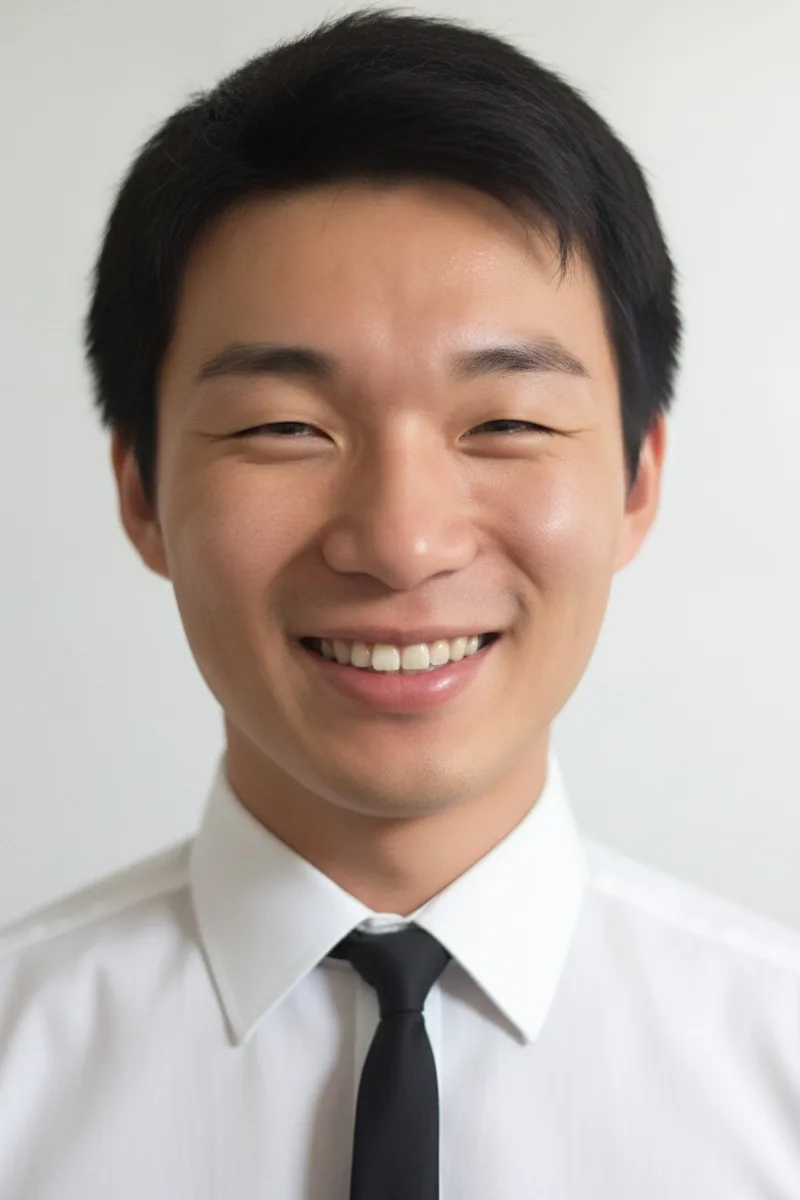
A chemistry degree means Won spent years converting word problems into equations — balancing reactions, calculating concentrations, working through stoichiometry — which is exactly the skill the SAT Math section's algebra and problem-solving questions demand under time pressure. His 1560 SAT confirms he knows how to execute that skill quickly on test day, and he zeroes in on the geometry and passport-to-advanced-math questions where students most often second-guess themselves.
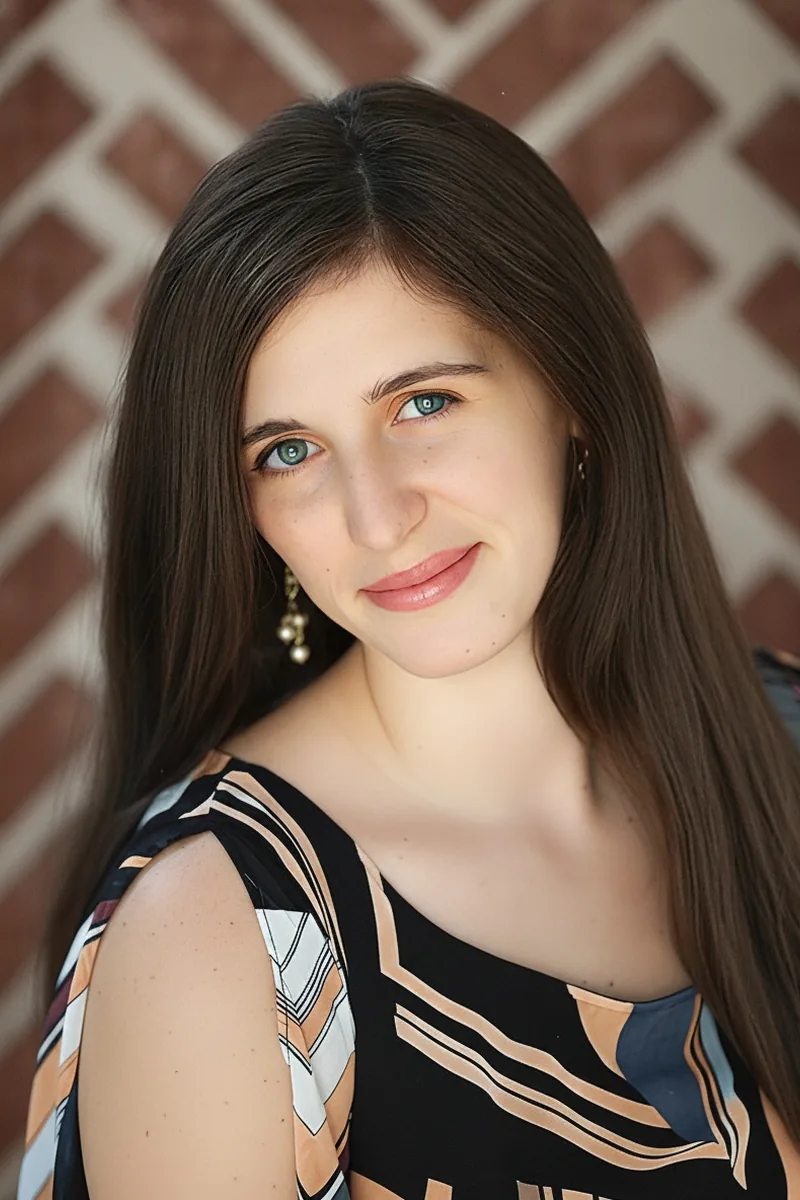
Creative writing might seem unrelated to SAT Math, but Sydney's 1600 SAT score speaks for itself — and her approach to the math section mirrors how she tackles a draft: strip every problem down to what it's actually asking, then build the solution step by step. She's especially sharp on the algebra-heavy word problems where students who can do the math still lose points because they misread the setup, a reading-comprehension trap her writing background makes her uniquely good at catching. Rated 4.9 by students.
Scoring a 1550 on the SAT gave Rebecca firsthand insight into the pacing and problem-solving strategies that make the math section manageable, from no-calculator algebra to data analysis and passport-to-advanced-math questions. Her approach breaks each problem type into recognizable patterns so students spend less time second-guessing and more time executing.
The SAT Math section's trickiest questions aren't the hardest math — they're the ones that bury a straightforward algebra or geometry concept inside misleading phrasing. Maedeh, who scored 1560 on the SAT, teaches students to strip each problem down to its actual ask before solving, particularly on the "Heart of Algebra" and "Passport to Advanced Math" questions where rushing past a key word costs easy points. Her neuroscience background gives her a practical understanding of how test anxiety hijacks working memory, and she builds timed drills that keep students thinking clearly under pressure.
I am current student at Harvard Medical School. I attended Vassar College as an undergraduate where I studied Science, Technology and Society. I am a patient teacher and eager to work with students of all ages.
Scoring a 1550 on the SAT means Noel knows exactly where the tricky points hide — from quadratic word problems to data interpretation questions that test reasoning more than computation. He developed standardized test prep curricula at his former high school and brings that same structured, strategic approach to breaking down each math section. Rated 4.9 by students.
I'm a proud graduate of Cornell University (B.A. in Psychology, 2011) and William James College (M.A. in Psychology, 2014). I have founded my own business as a Productivity Coach, specializing in executive functioning and motivation. I also enjoy helping students learn with tutoring! My background means I am well suited to clients with test anxiety, and other psychological factors that interfere with academic potential. I have experience working with clients with ADD/ADHD and Autism Spectrum Disorder.
A 1560 SAT means Priyanka tackled the Math section at near-perfect levels, particularly the no-calculator portion where algebraic fluency and number sense can't be faked. She digs into the specific question types students struggle with most — systems of equations with no solution, quadratic modeling, and data-inference problems — rather than reteaching content they already know.
I am a current undergraduate student at Northeastern University working towards a pharmacy degree, while minoring in Biology and Chinese. I first started tutoring in high school through peer tutoring, working with students younger than me and tutoring them in subjects that I had excelled in. Besides helping them in purely academic subjects like Chemistry or Math, I also gave them tips to study better and other organizational skills, which help in daily life as well. I really enjoy working with students and working with them towards their goals, both academically and personally. I believe anyone can succeed as long as they are interested and are willing to put in the time and effort. When I work with students, I try to break down different problems into smaller chunks, and work through these smaller bits to understand the big picture. I know how frustrating it is to not understand something, and I try to work with each student to figure out their strengths and weaknesses. I think the most rewarding thing is when you see the student go "aha!" and understand something they have been struggling with, it really gives both of you a feeling of satisfaction and relief. Outside of school, I like to do ballroom dancing while drinking way too much coffee.
The SAT Math section rewards students who can read precisely — and Anthony's literary arts training makes him unusually good at untangling the exam's deliberately tricky wording on geometry and algebra problems before a single calculation happens. His 1550 SAT backs up the approach, and his 5.0 rating suggests students notice the difference when someone teaches them to treat math questions as close-reading exercises first.
I am a senior at MIT majoring in Writing with a specialization in Digital Media. I have also completed a minor in Business Management. As one of ten writing majors at a school full of people pursuing science and technology rather than humanities subjects, I have taken a default position as tutor for anyone struggling with any writing assignments. I have helped fellow college students on a wide variety assignments ranging from analytic papers on race in the media, to papers on scientific theories, to scholarship essays. In high school I was a Link Crew tutor for three years, making myself available for tutoring sessions after school for whatever subject students required help in.
The SAT Math section rewards students who can spot the fastest path to an answer, not just the correct one. Peter scored a 1550 composite and teaches strategies for the trickiest question formats — passport-to-advanced-math problems, scatterplot analysis, and multi-step word problems that bury the real question in context. He turns each practice set into a diagnostic, pinpointing exactly which content gaps cost the most points.
I am currently working on my PhD in English Literature at Southern Methodist University. I specialize in the intersection between ancient texts and Christianity as it is evident in Renaissance literature. During my MA I worked as a teacher's assistant, learning teaching strategies from many distinguished professors. Students met with me one on one to discuss assignments, work on papers, and review for tests. During these years I had the opportunity to work with several ESL students and students with disabilities. Being deaf in my right ear gives me a unique perspective when working with students struggling with disabilities because I have fought those battles myself, albeit to a smaller degree than some. I firmly believe that disabilities should never stand in the way of learning.
I am an avid skier and outdoorswoman, and a passionate fan of Boston sports. As a tutor, I offer a broad range of scientific subjects, including Physics, Chemistry and Biology, and I am particularly passionate about Biochemistry and Microbiology. I also offer and enjoy test prep, including the SAT and independent school entrance exams such as the ISEE and SSAT. As an educator, I am passionate about helping every student, because I believe that everyone has the potential to succeed in Science and excel on standardized tests. I love the subjects I tutor and I strive to help my students appreciate the value of knowledge so they understand not only the material, but why it is relevant and important in their lives.
I am confident that I can help ease the process for other students and even make it fun along the way!
I am also a fan of Super Smash Bros. Melee if you're into that.
Between the no-calculator section's emphasis on algebraic fluency and the calculator section's data-interpretation problems, SAT Math demands two different mindsets in one sitting. John, a biomedical sciences student comfortable with everything from quadratic modeling to statistical analysis, walks students through the specific algebra and advanced math concepts that account for the majority of scored questions. He earned a 1570 SAT composite using exactly these priorities.
I am a college student looking to help fellow students who are in middle school through high school get to the next stages of their lives. School can get rough, and having someone there to help with any particular subjects or go over and review topics is helpful, and I want to be a part of that process.
Greetings, my name is Karthik! I studied at Northeastern University and earned a BS in math and physics, and I started tutoring formally in undergrad via a mix of online tutoring and university sponsored peer tutoring later taking on responsibilities as a student grader and TA. But well before I started formal tutoring, it was not uncommon for peers to remark that I explained things better than our teachers. While at first I was prone to lecturing due to my assumption that others found theory as elucidating as I did, my sessions are now dominated by working through problems provided by either the student or me. Also software visualization is a boon whenever my drawing skills don't pass muster. Ultimately, my purpose is to cultivate disciplined learning and excellence in STEM, whether that be for a class or purely out of curiosity/passion, so please do not hesitate to reach out if you think I can help you achieve your goals.
I am a recent graduate from Emerson College. I received my Bachelor of Fine Arts in Creative Writing with a focus on fiction. In addition, I minored in psychology and photography. I am experienced in academic and personal essay writing as well as fiction and poetry.
I am a freshman at Northeastern University. I am currently studying Psychology on a Pre-Med track. Even though my studies are heavily science-based, I enjoy all other subjects, as well. I tutored in high school as Vice-President of the National Honor Society and I am looking forward to continuing my passion for helping others through tutoring.
I'm a patient and results-driven Computer Science student at Northeastern University with years of experience tutoring students in math and computer science. I specialize in breaking down complex topics, such as calculus, algebra, geometry, and programming, into manageable, step-by-step lessons that meet each student's unique learning style. My goal is to not only help students improve their grades but also build confidence in their academic abilities. Whether you're preparing for an exam or need help staying on top of your classwork, I'm here to support your success.
I'm majoring in Computer Science and Biology at Northeastern University, I like to dance, and my main goal is to help you achieve your goals.
I am excited to return to this work during my upcoming senior year.
I am very dedicated to being patient and working with each student to make sure they understand what they are doing and so they are able to be less stressed. I have been tutoring math for many years and am looking forward to meeting you and/or your student. (Just a heads up - I recently got a hair cut so my photo doesn't reflect my current hairstyle)
Most biology PhDs don't think of themselves as math tutors, but Patrick's cellular and molecular biology research at Harvard Medical School runs on the same quantitative reasoning the SAT tests — statistical analysis, proportional thinking, and translating experimental setups into equations. He's especially useful for students who can do the math but stumble on the section's data-interpretation and scatterplot questions, since reading graphs under pressure is literally what he does in the lab every day. Holds a 5.0 rating.
I am willing to tutor in specific topics tested there as well (all the topics mentioned above, but also Physics, and psychology and sociology).
Scoring a 1470 on the SAT, Allie developed a systematic approach to SAT Math that she now teaches to others — particularly the art of translating word problems into clean algebraic setups and knowing when to use the calculator strategically versus when it slows you down. Her science background means she's especially sharp on data interpretation and graph-based questions that many math-only tutors gloss over.
Behavioral neuroscience at Northeastern means Jeremiah spends his coursework buried in statistics, data interpretation, and quantitative reasoning — all of which overlap heavily with the SAT Math section's problem-solving and data-analysis questions. He scored a 1430 on the SAT and uses that recent familiarity to teach students how to manage pacing on the no-calculator portion, where rushing through algebra setups causes more lost points than any gap in content knowledge. Rated 4.8 by students.
I'm currently a graduate student at Boston University getting my master's in Mathematics Secondary Education. I did my undergrad at West Virginia University, where I majored in History and minored in German and Math.
The SAT Math section rewards students who can translate word problems into clean algebraic setups — a skill Desiree has been sharpening in students for years. With a 1400 SAT score and an engineering degree, she breaks down data analysis and advanced math questions into repeatable strategies that cut through the test's intentionally tricky wording.
I am available to tutor in a broad range of subjects, though I am most passionate about Economics, History, and Civics. Please feel free to contact me and I would be happy to arrange a session.
Comparative literature might seem unrelated to SAT Math, but Cassandra's 1600 SAT speaks for itself — and her lit-trained habit of close reading turns out to be a real advantage on the section's deliberately tricky word problems, where misreading the setup costs more points than any algebra mistake. She teaches students to slow down on problem translation, locking in what's actually being asked before touching any arithmetic, especially on the ratio and percent questions that bury key details mid-sentence.
Scoring a 1560 on the SAT gave Diana firsthand knowledge of what the Math section actually rewards — not just computational skill but the ability to translate word problems into algebraic setups quickly. She zeroes in on the high-yield topics like linear and quadratic modeling, ratios, and data analysis that make up the bulk of the test. Students walk away with specific strategies for both the no-calculator and calculator sections.
Every SAT Math question has a fast path and a slow path — Hope's 1600 SAT and mathematics degree mean she's mapped both for virtually every problem type, from Heart of Algebra setups to passport-to-advanced-math quadratics. She teaches students to recognize which approach a question is designed to reward, so they stop burning time on brute-force solving when a structural shortcut exists. Rated 4.8 by students.
Rob earned a 1580 on the SAT and approaches the Math section by categorizing every question into one of roughly a dozen problem archetypes — heart-of-algebra setups, passport-to-advanced-math manipulations, and data-analysis traps. Once a student recognizes the archetype, the solving strategy clicks into place almost automatically. That pattern-recognition method is especially effective for students who understand the math but lose points to pacing or misreads.
Cindy scored a 1580 on the SAT and breaks the Math section down into its core question types — passport to advanced math, heart of algebra, and problem-solving with data analysis — so students know exactly what to expect. She teaches the pacing and elimination strategies that turn careless mistakes into confident answers. Rated 5.0 by students.
I'm Emma. I'm a 2016 Northwestern University graduate currently working as an ESL classroom teacher. I'm a tutor because I love working individually with students, helping them understand material and grow more confident as learners! I majored in History and French at Northwestern and have worked for over a year as a classroom and private English teacher. I am qualified to teach English as a second language, French language, and all levels of academic writing. I'm also a \*huge\* standardized test geek--I'm here to help you prepare for tests like the SAT, LSAT, and GRE by helping you understand the logic of the test and the similarities among question types. My LSAT score puts me in the top half of one percent of all test takers--I have the skills to get you in the same range!
Cole's dual background in English and computer science means he reads SAT Math problems like code — isolating variables, parsing conditional logic, and spotting exactly where the test buries its trick in the phrasing of a word problem. That 1590 SAT wasn't an accident; he treats the math section's algebra and data questions as puzzles with predictable structure, and he teaches students to see that structure too.
I am a current sophomore at Tufts pursuing a double major in Computer Science and Physics, both of which I draw from in my tutoring philosophy. While I am a firm believer that each student requires a strategy specifically tailored to them, I have found that there are a few general strategies that students respond well to. I make it a point to ensure that students understand the conceptual jump from material they are comfortable with to the material they are currently learning. This makes it possible for them to both understand the material on a deeper as well as have a better idea of the direction they are going. I also subscribe to the theory that a relaxed environment is critical for a students learning, so I prioritize creating this environment in my tutoring sessions. Outside of academia, I am passionate about playing/performing/composing music (singing, piano guitar etc) and am a member of both the Ballroom Dance Team and the Table Tennis Club at Tufts.
Testimonials
Because the right SAT Math tutor makes all the difference.
Average Session Rating – Based on 3.4M Learner Ratings
Practice SAT Math
Free practice tests, flashcards, and AI tutoring for SAT Math
Nearby SAT Math Tutors
Other Boston Tutors
Related Test Prep Tutors in Boston
Frequently Asked Questions
Score improvement varies based on your starting point and study commitment, but research shows personalized 1-on-1 instruction produces significant gains. Most students see meaningful improvements within 8-12 weeks of consistent practice, with many jumping 100-200 points when working with an expert tutor who identifies and targets their specific weak areas. The key is focusing on your unique challenges—whether that's algebra fundamentals, geometry reasoning, or test-taking pacing—rather than generic test prep.
The SAT Math sections (Calculator and No-Calculator) require different pacing strategies. Most students benefit from spending 30-45 seconds per question initially, then returning to harder problems if time allows. A tutor can help you identify which question types consistently slow you down and teach you to recognize patterns that signal quick vs. time-intensive problems. Practice with full-length tests under timed conditions is essential—this builds the automaticity needed to pace yourself on test day without sacrificing accuracy.
Boston students typically struggle with: word problems requiring careful reading and setup, algebra manipulation under time pressure, and geometry/trigonometry concepts that haven't been reinforced since earlier grades. Personalized tutoring works because a tutor can pinpoint whether you're missing conceptual understanding, making careless errors, or simply running out of time. They'll focus your study sessions on your specific trouble areas rather than having you re-learn topics you've already mastered.
Most test prep experts recommend taking a full practice test every 1-2 weeks during active preparation. This frequency gives you enough time to study targeted skills between tests while keeping your pace and stamina sharp. Varsity Tutors connects you with tutors who use your practice test results to identify patterns—like consistently missing geometry questions or rushing through algebra—then design lesson plans around those insights. Quality matters more than quantity; a tutor helps you learn from each test rather than just accumulating scores.
SAT Math mixes multiple-choice, student-produced response (grid-in), and word problems, each with slightly different strategy needs. Many students lose points simply because they're unfamiliar with how to approach each format rather than lacking math skills. A tutor can walk you through the specific nuances—like why grid-in questions require different checking strategies or how to read multi-step word problems efficiently. Practicing with authentic SAT questions under guidance helps you recognize patterns and build confidence with the exact format you'll see on test day.
Review your practice test results by topic—most SAT prep platforms break down performance by algebra, advanced math, problem-solving, geometry, and trigonometry. Look for patterns: Are you missing questions across all topics, or are geometry and advanced math your weak spots? A tutor can interpret this data more deeply, distinguishing between conceptual gaps (you don't understand the topic), careless errors (you know it but rushed), and strategy gaps (you're not using the most efficient approach). This diagnosis guides exactly where to spend your study time for maximum improvement.
Test anxiety often stems from uncertainty—not knowing if you'll recognize question types, doubting your problem-solving process, or fearing you'll run out of time. Personalized tutoring builds confidence through familiarity and mastery. A tutor helps you develop reliable strategies, practice under realistic test conditions, and learn what to do when you encounter an unfamiliar problem. Over time, this reduces anxiety because you know you have tools to handle whatever appears. Additionally, your tutor can teach you specific techniques like mindfulness or strategic time management that calm your mind on test day.
Let’s find your perfect tutor
Answer a few quick questions. We’ll recommend the right plan and match you with a top 5% tutor.