Award-Winning AP Calculus BC Tutors
serving Boston, MA
AP Calculus BC
Tutors in Boston
Private 1-on-1 tutoring, weekly live classes for academic support, test prep & enrichment, practice tests and diagnostics, and more to elevate grades and test scores.
Based on 3.4M Learner Ratings
UniversitiesSchools & Universities
DeliveredHours Delivered
ProficiencyGrowth in Proficiency
Who needs tutoring?
No obligation. Takes ~1 minute.
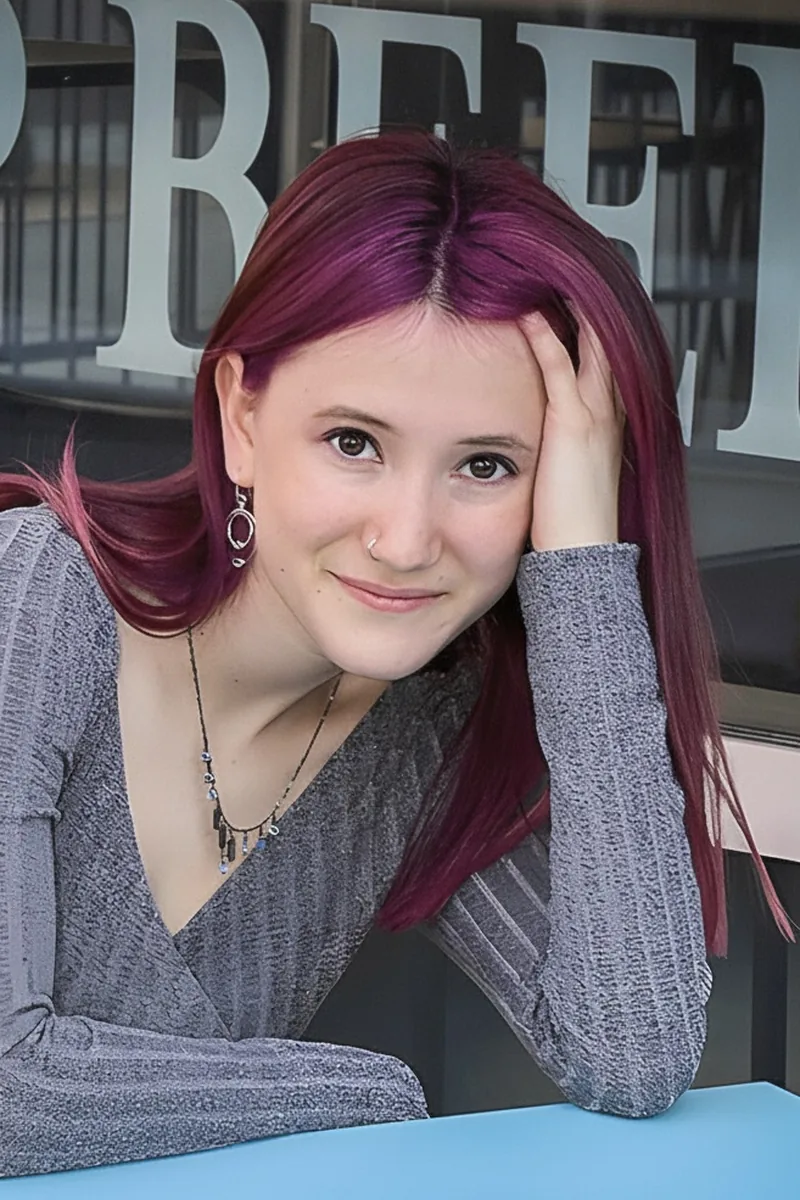
Tackling series convergence tests, parametric equations, and polar curves requires more than memorizing formulas — it demands knowing when and why each technique applies. Talia approaches BC-specific topics by building intuition around each concept before drilling the mechanics, so students can handle the free-response questions that reward deep understanding over rote calculation.
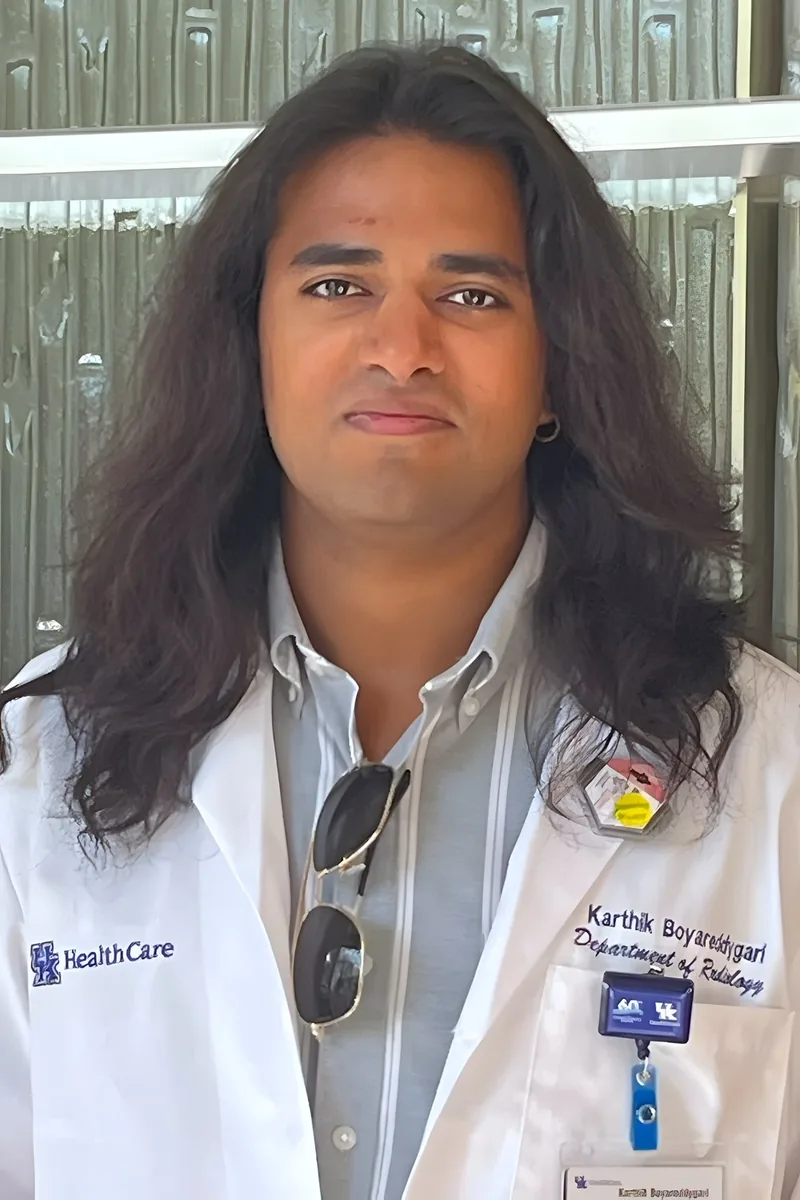
Greetings, my name is Karthik! I studied at Northeastern University and earned a BS in math and physics, and I started tutoring formally in undergrad via a mix of online tutoring and university sponsored peer tutoring later taking on responsibilities as a student grader and TA. But well before I started formal tutoring, it was not uncommon for peers to remark that I explained things better than our teachers. While at first I was prone to lecturing due to my assumption that others found theory as elucidating as I did, my sessions are now dominated by working through problems provided by either the student or me. Also software visualization is a boon whenever my drawing skills don't pass muster. Ultimately, my purpose is to cultivate disciplined learning and excellence in STEM, whether that be for a class or purely out of curiosity/passion, so please do not hesitate to reach out if you think I can help you achieve your goals.
Biomedical engineering at Boston University means Peter is actively using integration techniques and series approximations in courses like biomechanics and signal analysis — the same topics that make the AB-to-BC jump feel so steep. His 1550 SAT reflects the kind of precise, methodical reasoning he brings to breaking down convergence tests and parametric problems into steps that actually make sense.
Pursuing a math degree at Tufts means Nikola is actively working with the theoretical underpinnings of BC topics — building proofs around convergence, wrestling with series representations in analysis courses — not just recalling them from a high school class. He's especially sharp at demystifying the leap from AB to BC, walking through how something like a Taylor series is really just the logical next step from the local linear approximations students already trust. Holds a 5.0 rating and scored a 35 on the ACT.
Calculus BC piles on convergence tests, parametric equations, and polar curves right when students think they've mastered AB material. Kathrine's graduate work in Mathematics Secondary Education at BU means she's studied how students actually learn these layered concepts — not just the math itself, but the sequencing and scaffolding that makes series and integration techniques click.
I have recently finished my BSc in chemical biology and MM from UBC, and masters in medical sciences from Boston University, and starting medical school this fall. Therefore, I have scientific knowledge at a fourth-year level. I have also taken AP chem, physics, and calculus AB in high school, so I can also help with those and provide tips for the AP exam. I have expertise in all fields of science and math at the university level. I am willing to go through any concept that you are struggling with and come up with some practice questions to help you better understand the concept. I am very passionate about the subjects I'm learning and I want to help younger students also fulfill their potential and be more successful in the future. I can use different methods in order to make the concepts as easy as possible.
Hi, I'm Lucas, a Boston-based Tutor and TA specializing in math and physics. I help students tackle complex topics by breaking problems into clear, generalized, step-by-step approaches, so they can focus on understanding rather than navigating confusing language or organization. I have experience working with students with Dyslexia, ADHD, Dyscalculia, and other learning disorders, tailoring my approach to each student.
Scoring a perfect 1600 on the SAT while studying computer science at MIT suggests Brice isn't just comfortable with calculus — he's fluent in it, and BC's extension into series, parametric equations, and advanced integration techniques sits squarely in his daily coursework. He breaks down topics like convergence tests by tracing each one back to the limit reasoning students already built in AB, turning what feels like a grab bag of rules into a coherent decision-making process. Rated 4.9 by students.
Physics majors don't just take BC Calculus — they breathe it, using series expansions to model wave behavior, integration techniques to derive equations of motion, and parametric equations to describe projectile paths. Adam's physics degree means he teaches topics like Taylor polynomials and convergence not as abstract procedures but as tools he's actually wielded to solve real problems. He's especially attentive to whether a concept has genuinely landed or a student is just nodding along, which makes a real difference when the material gets dense.
Chemical-biological engineering coursework is where BC Calculus stops being theoretical — Kristen uses series expansions to model reaction kinetics and integration techniques to solve mass balance equations as part of her actual degree work. That daily application sharpens how she teaches topics like convergence tests and parametric derivatives, because she can trace each procedure back to the underlying logic instead of just drilling formulas. Her 36 ACT and 4.9 rating speak for themselves.
Series convergence, parametric equations, polar coordinates — BC Calculus piles on topics that demand both conceptual clarity and speed under exam pressure. Jacques has taught math and science in Massachusetts public schools for over 25 years and completed graduate coursework in differential equations, so the connections between BC topics and their applications in physics and engineering come naturally to him. Rated 4.8 by students.
BC Calculus layers on series convergence, parametric equations, and polar coordinates on top of an already demanding AB curriculum, so gaps in foundational reasoning compound fast. Valerie's applied math background means she can trace a student's confusion on Taylor series or integration by parts back to the specific earlier concept that isn't solid yet. She teaches the logic behind each technique so students can adapt on exam day, not just reproduce memorized solutions.
Most BC students can memorize which convergence test to apply but freeze when a series doesn't match a textbook pattern — Marika, a physics major who scored a 1590 on the SAT, teaches the underlying logic so students can reason through unfamiliar series on the fly. Her physics coursework means she's used Taylor expansions and parametric equations to model real systems, which gives her a concrete vocabulary for explaining why these tools exist, not just how to execute them on an exam.
Hope's mathematics degree means she didn't just pass through BC topics like series convergence and parametric integration — she studied the underlying theory that makes them cohere, from epsilon-delta foundations to formal power series. That background is especially useful when a student can mechanically apply the ratio test but can't articulate why it works or when to reach for it instead of the comparison test. She holds a 4.8 rating and a perfect 1600 SAT.
Problem-solving competitions from elementary school through high school graduation gave John years of practice attacking unfamiliar math problems under pressure — exactly the mindset BC Calculus rewards when students face series convergence questions or parametric setups they haven't seen before. His actuarial mathematics degree from WPI means he lived in the world of infinite series, probability models, and rigorous proofs well beyond the AP level. Rated 4.9 by students.
Most BC students can follow a Taylor series procedure on the board but freeze when an FRQ asks them to justify convergence or bound the error — that's the gap Jing zeros in on. Her broad math background, spanning algebra through Calc 2, means she can trace a shaky BC concept like improper integrals or series tests back to the specific earlier skill that needs reinforcing, then rebuild from there.
BC Calculus topics like Taylor series, parametric equations, and polar curves click faster when a tutor can connect them to real applications. Amber's physics minor means she regularly uses these tools — modeling oscillations with series expansions or describing particle motion with parametric functions — and she teaches the reasoning behind each technique, not just the formulas.
Pursuing a math minor alongside his biology degree at UMass Amherst means Benjamin is actively working through the rigorous proof-based side of calculus — not just computing series or evaluating integrals, but understanding the logic that holds them together. That dual perspective makes him especially effective at breaking down BC's trickier leaps, like moving from basic integration to convergence criteria or constructing Taylor polynomials from scratch. Rated 5.0 by students.
Proof-based math is where Adriano thrives — his computer science studies at MIT lean heavily on the kind of rigorous reasoning that makes BC topics like convergence tests and series constructions actually make sense instead of feeling like arbitrary rules. He digs into the logic behind techniques like the ratio test or Taylor polynomial error bounds, building each argument step by step so the reasoning holds up long after the exam. That conceptual emphasis is especially useful for students who can compute answers but can't explain why a method works.
Princeton's public policy program is surprisingly calculus-heavy — Gianna's coursework in economic modeling and quantitative analysis means she's applied integration techniques and series approximations to real policy questions, not just problem sets. She's especially sharp at walking through the logic of convergence tests and parametric curves, connecting each BC topic back to the AB reasoning that makes it click.
Studying both mathematics and computer science at Rice, William is taking the courses that treat BC topics like series convergence and parametric integration as foundational tools rather than standalone exam material. His 1540 SAT reflects the kind of precise, structured reasoning he brings to breaking down the jump from AB to BC — especially when Taylor polynomial construction or convergence tests start feeling like they came out of nowhere.
Series convergence is where most BC students start to feel lost — ratio tests, Taylor expansions, error bounds all hit at once. Matthew's Harvard math coursework goes well beyond the AP curriculum, which means he can explain not just how to apply these tools but why they work. He connects BC-specific topics like parametric equations and polar curves back to the core calculus intuitions students already have.
Penn's economics program leans heavily on calculus-driven modeling, and Mandy is working through that curriculum right now — which means BC topics like series approximations and integration techniques show up in her coursework as tools for analyzing economic behavior, not just abstract exercises. She's especially clear at walking through the logic of convergence tests and connecting new BC material back to the AB foundations underneath it. Holds a 5.0 rating.
Most people who breeze through math can't explain it — Daniel learned BC Calculus by grinding through the logic of every convergence test, every parametric derivative, every series expansion until it genuinely made sense, and that's exactly how he teaches it. As an applied mathematics undergrad, he's currently using these tools in upper-level coursework, so he knows which BC concepts tend to feel arbitrary and how to make the reasoning behind them stick.
BC Calculus throws students into deep water fast — Taylor and Maclaurin series, parametric equations, and convergence tests all pile up in a single semester. Rahi's applied mathematics engineering background means he can unpack these topics by connecting them to the real-world modeling problems they were designed to solve. He builds each concept from its AB foundation so students see how the BC extensions actually work.
I am a graduate of Cornell University's College of Arts and Sciences. I received my Bachelor of Arts in Chemistry with Distinction in 2015. Since graduation, I was a physics/chemistry teacher and soccer coach at a private school in Virginia for a year, where I led the soccer team to an undefeated season. Before teaching and coaching professionally, I was a Teaching Assistant for the Cornell Math and Physics Departments, where I taught many subjects including calculus, mechanics, electromagnetism. Throughout my time at Cornell and as a teacher, I tutored subjects ranging from the SAT to AP Physics and Algebra II, which is where my true talents lie: in small group or one-on-one settings where I can give students the full attention they deserve and tailor my approach specifically to their learning styles. This is why I am now pursuing tutoring as a part-time occupation at Varsity Tutors. I embrace teaching all math and science subjects, especially physics and calculus, at both the college and high school level and will go above and beyond to make sure all of my students succeed, according to their definition of success. In my spare time, I enjoy playing league soccer, basketball, tennis and guitar, and also like to travel and see as much of the world as I can.
A year as a course assistant in Harvard's math department teaching introductory calculus gave Richard a close-up view of exactly where students' AB foundations crack under the weight of BC material — particularly when series convergence and parametric functions demand a more flexible kind of reasoning. He breaks down topics like interval of convergence arguments and integration techniques by rebuilding the underlying logic rather than layering on new formulas. His perfect 1600 SAT and 36 ACT suggest the kind of precision he brings to each explanation.
Having TA'd Calculus I and II at Rice while pursuing a graduate degree in computational and applied mathematics, Sakibul knows exactly where the AB-to-BC transition trips students up — particularly when series convergence and parametric differentiation demand a sharper kind of reasoning than anything before. He breaks down topics like interval of convergence arguments and integration techniques by rebuilding the logic from scratch rather than handing over shortcuts. His applied math background means he treats Taylor approximations and error bounds as precision tools, not abstract busywork.
Series convergence, parametric equations, and polar curves make BC the course where strong calculus students finally have to slow down and think carefully. Anthony earned his BS in physics and math from Yale, where these concepts weren't just exercises — they were the language of electromagnetism and classical mechanics. He teaches BC topics by connecting each technique to why it exists and when it matters.
Series convergence tests, parametric equations, polar curves — BC Calculus piles on topics fast, and falling behind on even one unit can snowball. JF scored a perfect 1600 SAT and is studying mathematical and computational science at Stanford, where the calculus concepts from BC are the everyday language of coursework. That recent fluency means explanations stay intuitive rather than overly formal.
Biomedical engineering eats BC Calculus for breakfast — Spencer's coursework has him building models with differential equations, approximating functions with series, and integrating across complex domains before he even opens his calc textbook. That real-time immersion means he can walk through something like the Lagrange error bound or a tricky polar area setup with the fluency of someone who just used it in a lab report, not someone dusting off old notes. His 1550 SAT and 35 ACT speak to the test-taking precision he pairs with that technical depth.
Testimonials
Because the right AP Calculus BC tutor makes all the difference.
Average Session Rating – Based on 3.4M Learner Ratings
Practice AP Calculus BC
Free practice tests, flashcards, and AI tutoring for AP Calculus BC
Nearby AP Calculus BC Tutors
Other Boston Tutors
Related Math Tutors in Boston
Frequently Asked Questions
AP Calculus BC covers all topics from AP Calculus AB plus additional material including parametric equations, polar coordinates, and infinite series. The course focuses on limits, derivatives, integrals, differential equations, and applications of calculus. For students in Boston, understanding the full scope of these topics is essential since the BC exam is more comprehensive than the AB exam and requires mastery of both foundational and advanced concepts.
AP Calculus AB covers differential and integral calculus, while BC includes everything in AB plus parametric equations, polar coordinates, and infinite series. BC is typically a full-year course, whereas some schools teach AB in one semester and BC in another. If you're deciding between the two, BC is the more advanced option and opens more doors for college credit and STEM pathways.
Students in Boston often struggle most with infinite series, parametric and polar calculus, and integration techniques like integration by parts and partial fractions. Many also find the transition from concrete AB concepts to the abstract nature of series convergence tests challenging. Personalized 1-on-1 instruction can help you identify which specific topics are holding you back and build targeted strategies to master them before the exam.
AP Calculus BC scores range from 1-5, with a 3 or higher typically earning college credit. Most colleges grant credit for a 4 or 5. Your target score depends on your college goals and major—STEM fields often require a 5, while other programs accept a 3 or 4. Working with a tutor can help you understand your current level and create a realistic study plan to reach your goal score.
Most students benefit from taking 4-6 full-length practice tests spaced throughout their study period, with at least 2-3 completed in the final month before the exam. Practice tests help you understand the exam format, improve pacing, and identify weak areas. A tutor can review your practice test results with you, pinpoint patterns in your mistakes, and help you develop targeted strategies to address them.
The AP Calculus BC exam has two sections: 45 minutes for multiple choice and 1 hour 30 minutes for free response. Many students struggle with allocating time between easier and harder problems. A key strategy is to work through problems you're confident about first, then return to challenging ones. Tutors can help you practice timing strategies during mock exams and develop habits that prevent you from getting stuck on a single problem.
Varsity Tutors connects you with expert tutors who specialize in AP Calculus BC and understand the specific challenges students face with this course. When you get matched with a tutor, you can discuss your current level, target score, and timeline so they can create a personalized study plan. Many tutors in the Boston area have experience helping students at the 32 schools across the city's 6 districts prepare for the exam.
Test anxiety often stems from feeling unprepared or unsure about specific concepts. Regular practice with full-length exams, building confidence through targeted review of weak areas, and developing a consistent study routine can all help. A tutor can also teach you test-taking strategies and help you practice under timed conditions, which builds familiarity with the exam format and reduces anxiety on test day.
Let’s find your perfect tutor
Answer a few quick questions. We’ll recommend the right plan and match you with a top 5% tutor.