Award-Winning SAT Reading and Writing Tutors
serving Boston, MA
SAT Reading and Writing
Tutors in Boston
Private 1-on-1 tutoring, weekly live classes for academic support, test prep & enrichment, practice tests and diagnostics, and more to elevate grades and test scores.
Based on 3.4M Learner Ratings
UniversitiesSchools & Universities
DeliveredHours Delivered
ProficiencyGrowth in Proficiency
Who needs tutoring?
No obligation. Takes ~1 minute.

The SAT Reading passages that trip students up most — the science excerpts loaded with technical jargon — play to Won's strengths as a chemistry major who's been accepted to medical school and reads dense scientific literature daily. With a 1560 composite, he teaches students to stop treating those passages as science problems and start treating them as argument maps, tracking where the author's claim lives and which lines actually support it. That same structural approach carries over to the history and social science passages, where he shows how to strip away unfamiliar language and zero in on what the text states versus what it implies.
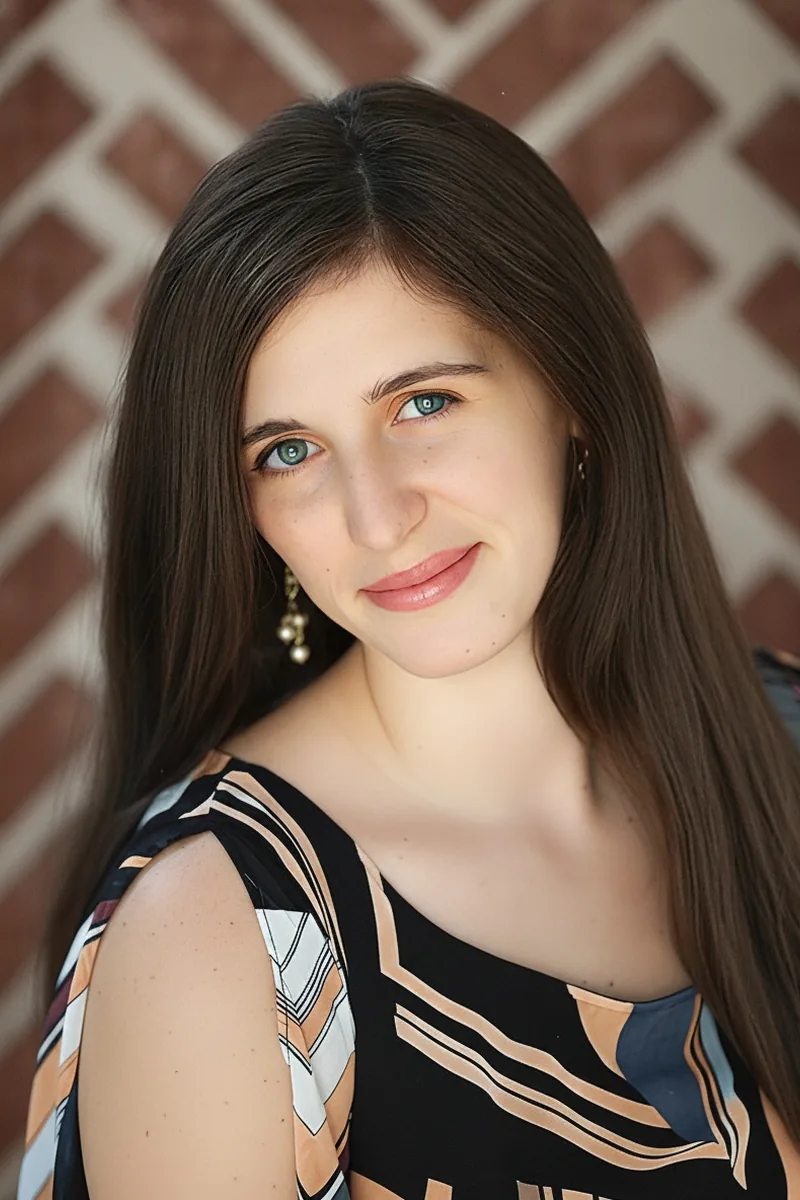
Creative writing workshops at Carnegie Mellon — where Sydney earned induction into Sigma Tau Delta, the English honors society — are essentially reverse-engineering exercises: you learn to build arguments and narratives by first learning to take them apart at the sentence level. That skill transfers directly to SAT Reading's command-of-evidence and author-purpose questions, where spotting how a passage is constructed matters more than speed-reading it. Her 1600 SAT composite backs up the close-reading instincts she brings to every passage type.
The SAT Reading section buries correct answers in subtle phrasing, and most points are lost not from misunderstanding the passage but from misreading the question. Rebecca's English degree from Notre Dame trained her to dissect arguments in dense literary and informational texts, and she teaches students to locate textual evidence efficiently rather than relying on gut feelings. Her 1550 SAT score speaks to how well that analytical approach translates to test day.
The SAT Reading section rewards a very specific skill: finding the answer that's directly supported by the passage, not the one that sounds right. Zoe scored a 1550 on the SAT and teaches students to identify evidence lines quickly, handle paired-passage questions strategically, and avoid the traps built into almost every answer set.
The SAT Reading section rewards a specific kind of discipline: answering from the text, not from instinct. Maedeh scored 1560 on the SAT and teaches a passage-mapping approach that pins down the author's argument structure before tackling questions, which is especially useful on the paired-passage and evidence-support formats. She's held a 5.0 rating working with students on exactly this kind of strategic reading.
As a productivity coach specializing in executive functioning, Kerry knows that SAT Reading mistakes often aren't about comprehension at all — they're about anxiety-driven rushing, attention drift, and second-guessing under time pressure. Her psychology training at Cornell and a 1500 composite give her both the content knowledge and the behavioral toolkit to tackle the mental side of the test alongside the analytical one. She's particularly effective with students whose practice scores don't match their timed performance.
Evidence-based questions on the SAT Reading section trip up strong readers who pick answers that "sound right" without tracing back to the passage. Priyanka, who scored a 1560 SAT, teaches a line-reference method that forces students to anchor every answer in specific text — especially on the paired-passage and data-interpretation sets that carry the most weight. Her science and humanities background also means she's comfortable unpacking passages across every subject the test throws at students.
Running a college admissions seminar program at UChicago meant Noel spent years teaching underrepresented students to read critically under pressure — breaking down prompts, evaluating arguments, and pulling meaning from unfamiliar texts, which is essentially SAT Reading in miniature. With a 1550 composite and a public policy background that demands constant close reading of dense source material, he zeroes in on the evidence-pairing questions and social science passages where students lose points by drifting from what the text actually states. Rated 4.9 by students.
I am a current undergraduate student at Northeastern University working towards a pharmacy degree, while minoring in Biology and Chinese. I first started tutoring in high school through peer tutoring, working with students younger than me and tutoring them in subjects that I had excelled in. Besides helping them in purely academic subjects like Chemistry or Math, I also gave them tips to study better and other organizational skills, which help in daily life as well. I really enjoy working with students and working with them towards their goals, both academically and personally. I believe anyone can succeed as long as they are interested and are willing to put in the time and effort. When I work with students, I try to break down different problems into smaller chunks, and work through these smaller bits to understand the big picture. I know how frustrating it is to not understand something, and I try to work with each student to figure out their strengths and weaknesses. I think the most rewarding thing is when you see the student go "aha!" and understand something they have been struggling with, it really gives both of you a feeling of satisfaction and relief. Outside of school, I like to do ballroom dancing while drinking way too much coffee.
Literary arts training teaches you to read like a writer — noticing how an author's sentence structure, tone shifts, and word choices do argumentative work beneath the surface, which is exactly what SAT Reading's author-purpose and inference questions are testing. Anthony brings that instinct from his Brown-style dual background in psychology and literary arts, giving him a particular edge on the social science passages where psychological framing and rhetorical strategy overlap. His 1550 composite and 5.0 student rating back it up.
Scoring 1540 on the SAT means Marisa already knows how the Reading section tries to trip students up — paired passages, evidence-support questions, and vocabulary-in-context items that reward careful reading over speed. As a Writing major at MIT, she teaches students to identify an author's argument and tone before even looking at the answer choices, which cuts down on second-guessing dramatically.
I am currently working on my PhD in English Literature at Southern Methodist University. I specialize in the intersection between ancient texts and Christianity as it is evident in Renaissance literature. During my MA I worked as a teacher's assistant, learning teaching strategies from many distinguished professors. Students met with me one on one to discuss assignments, work on papers, and review for tests. During these years I had the opportunity to work with several ESL students and students with disabilities. Being deaf in my right ear gives me a unique perspective when working with students struggling with disabilities because I have fought those battles myself, albeit to a smaller degree than some. I firmly believe that disabilities should never stand in the way of learning.
I am currently majoring in Biomedical Engineering at Boston University, under the Presidential Scholars Distinction Program. My hobbies include playing sports such as Soccer, Basketball, Football, Tennis and Track and Field. I also love playing the guitar in my spare time and love spending time with my family and friends. Further, I love learning about new cultures and languages; I am able to speak three languages fluently.
Scoring 1550 on the SAT gave Katharine a precise sense of how the Reading section tests inference, evidence pairing, and vocabulary in context — skills that feel subjective but actually follow predictable patterns. She teaches students to identify what each question is really asking and eliminate answer choices systematically, turning a section that many science-minded students dread into a reliable score source.
I am confident that I can help ease the process for other students and even make it fun along the way!
The SAT Reading section rewards students who can distinguish between what a passage says and what it implies — a skill that trips up even strong readers. John teaches a systematic approach to evidence-based questions, showing how to pair each answer with the specific lines that support it. His 1570 SAT composite speaks to how well that method works in practice.
I am also a fan of Super Smash Bros. Melee if you're into that.
Scoring 1470 on the SAT gave Christine firsthand insight into how the Reading section tests inference, tone, and evidence-based reasoning — skills she sharpened through years of close literary analysis at Emerson College. She teaches students to read passages strategically, identifying the author's argument and anticipating what the questions will ask before looking at answer choices.
Greetings, my name is Karthik! I studied at Northeastern University and earned a BS in math and physics, and I started tutoring formally in undergrad via a mix of online tutoring and university sponsored peer tutoring later taking on responsibilities as a student grader and TA. But well before I started formal tutoring, it was not uncommon for peers to remark that I explained things better than our teachers. While at first I was prone to lecturing due to my assumption that others found theory as elucidating as I did, my sessions are now dominated by working through problems provided by either the student or me. Also software visualization is a boon whenever my drawing skills don't pass muster. Ultimately, my purpose is to cultivate disciplined learning and excellence in STEM, whether that be for a class or purely out of curiosity/passion, so please do not hesitate to reach out if you think I can help you achieve your goals.
I am a college student looking to help fellow students who are in middle school through high school get to the next stages of their lives. School can get rough, and having someone there to help with any particular subjects or go over and review topics is helpful, and I want to be a part of that process.
I am a freshman at Northeastern University. I am currently studying Psychology on a Pre-Med track. Even though my studies are heavily science-based, I enjoy all other subjects, as well. I tutored in high school as Vice-President of the National Honor Society and I am looking forward to continuing my passion for helping others through tutoring.
I'm a patient and results-driven Computer Science student at Northeastern University with years of experience tutoring students in math and computer science. I specialize in breaking down complex topics, such as calculus, algebra, geometry, and programming, into manageable, step-by-step lessons that meet each student's unique learning style. My goal is to not only help students improve their grades but also build confidence in their academic abilities. Whether you're preparing for an exam or need help staying on top of your classwork, I'm here to support your success.
I'm majoring in Computer Science and Biology at Northeastern University, I like to dance, and my main goal is to help you achieve your goals.
I am excited to return to this work during my upcoming senior year.
The SAT Reading section rewards a specific kind of discipline: answering based on what the passage actually says, not what seems reasonable. Patrick, who scored 1410 on the SAT, teaches students to locate textual evidence efficiently and eliminate answer choices that subtly distort the author's argument — skills that become automatic with the right practice strategy.
I am very dedicated to being patient and working with each student to make sure they understand what they are doing and so they are able to be less stressed. I have been tutoring math for many years and am looking forward to meeting you and/or your student. (Just a heads up - I recently got a hair cut so my photo doesn't reflect my current hairstyle)
The SAT Reading section rewards students who can quickly distinguish an author's central argument from supporting detail — a skill that sounds simple but breaks down under time pressure. Darian scored a 1470 SAT composite and teaches a passage-mapping technique that cuts through dense literary and scientific texts so students spend less time re-reading and more time answering.
I am a very outgoing and friendly person, which translates well to working with students. I do my best to understand where the student is coming from and work from there. Currently, I am a student at Northeastern University, but I also work with people with disabilities in a marketing setting. I can tutor Math, Science and English, and I would love to help you anyway that I can!
I am a tutor who primarily operates with math and science. I am currently a freshman at Northeastern University, majoring in Behavioral Neuroscience. I have been a tutor for about two years, tutoring in an eclectic range of subjects in the math and sciences field. Please feel free to contact me if you would like. I look forward to working with you!
The SAT Reading section rewards a specific kind of close reading: tracking how an author builds an argument across paired passages or interpreting data in a science-related excerpt. Kathrine scored a 1440 composite on the SAT and brings an analytical mindset shaped by her history degree, where evaluating written sources was a daily exercise. She teaches students to identify what each question is actually asking before hunting for evidence in the text.
I am a research engineer and have 5 years of work experience as an engineer. In addition, I have worked with students throughout high school, college and post-college as a tutor. While I tutor a variety of math and science subjects, I prefer to tutor math. Algebra has always been my favorite subject with chemistry as my second favorite and is what I am most passionate about. I find that it is easiest for students to understand the subject when it is related to something they are interested in outside of the classroom. In my free time, I enjoy playing sports, especially soccer, as well as reading and occasionally running. I am also an avid NY Giants fan.
I am available to tutor in a broad range of subjects, though I am most passionate about Economics, History, and Civics. Please feel free to contact me and I would be happy to arrange a session.
Comparative literature programs train you to do one thing relentlessly — read a passage, figure out exactly what the author is doing with language, and defend that reading with textual evidence. Cassandra's degree in comp lit from that tradition, paired with a perfect 1600 SAT composite, means she tackles the Reading section the way she'd tackle a close reading of Borges or Calvino: tracking structure, tone shifts, and how an author's word choices quietly steer the argument. She's especially sharp on the literature and paired-passage sets, where students who read casually get punished for missing subtle moves in the text.
Scoring a 1560 on the SAT required Diana to master the Reading section's particular brand of evidence-based reasoning — pairing passages, identifying authorial purpose, and choosing answers supported by specific lines rather than general impressions. Her TESOL and linguistics degrees mean she can unpack dense vocabulary and complex sentence structures in a way that makes even 18th-century source texts accessible.
Rob's triple major in English, Philosophy, and History at Fordham — where he graduated Phi Beta Kappa — means he's spent thousands of hours doing exactly what every SAT Reading passage type demands: parsing literary rhetoric, evaluating logical arguments, and decoding historical documents written in unfamiliar registers. With a 1580 composite and a 5.0 student rating, he teaches students to treat each question as a claim that needs textual proof, eliminating answer choices that editorialize beyond what the passage actually states. His philosophy training is especially visible on inference questions, where distinguishing what an author implies from what a reader assumes is the whole battle.
Scoring a 1580 SAT composite while majoring in English at Harvard means Cindy lives in the overlap between literary close-reading and standardized test strategy — she knows how to parse a passage for pleasure and how to parse it under a 65-minute clock. She's especially sharp on the paired-evidence questions, teaching students to lock onto the specific lines that justify an inference before even looking at the answer choices. Rated 5.0 by students.
Most SAT Reading mistakes come from answering based on what a passage seems to say instead of what it actually states — Hope's math training makes her unusually disciplined about sticking to textual evidence, treating each question like a proof where every claim needs line-level support. She scored a perfect 1600 composite and applies that same precision to the command-of-evidence and inference questions where sloppy reading costs the most points. Rated 4.8 by students.
I'm Emma. I'm a 2016 Northwestern University graduate currently working as an ESL classroom teacher. I'm a tutor because I love working individually with students, helping them understand material and grow more confident as learners! I majored in History and French at Northwestern and have worked for over a year as a classroom and private English teacher. I am qualified to teach English as a second language, French language, and all levels of academic writing. I'm also a \*huge\* standardized test geek--I'm here to help you prepare for tests like the SAT, LSAT, and GRE by helping you understand the logic of the test and the similarities among question types. My LSAT score puts me in the top half of one percent of all test takers--I have the skills to get you in the same range!
Most students treat SAT Reading as a speed test, but Brice approaches it as an exercise in structured reasoning — identifying the author's argument, locating evidence pairs, and eliminating answers that subtly distort the passage's meaning. His 1600 SAT composite and love of reading give him a sharp eye for the specific traps the College Board builds into history and science passages.
I'm still learning myself but bring years of experience helping students with a variety of goals in all kinds of academic subjects. I look forward to learning with you!
Testimonials
Because the right SAT Reading and Writing tutor makes all the difference.
Average Session Rating – Based on 3.4M Learner Ratings
Practice SAT Reading and Writing
Free practice tests, flashcards, and AI tutoring for SAT Reading and Writing
Nearby SAT Reading and Writing Tutors
Other Boston Tutors
Related Test Prep Tutors in Boston
Frequently Asked Questions
Varsity Tutors matches Boston students with expert SAT Reading and Writing tutors for 1-on-1 instruction. We pair each student with a tutor based on their specific needs, learning style, and goals.
Whether you need homework help, exam prep, or want to get ahead, our SAT Reading and Writing tutors are ready to help.
Common challenges include gaps from earlier material, difficulty with specific concepts, and trouble applying learning to new problems. These issues can snowball quickly in SAT Reading and Writing.
A tutor identifies where you're stuck, fills in gaps, and provides targeted practice. The 1-on-1 format means you get help exactly where you need it.
Tutors work with your student's actual coursework—homework assignments, class notes, and upcoming tests. This keeps tutoring directly relevant to what's happening in the classroom.
When you share information about your student's school and curriculum, we can match you with a tutor who has relevant experience.
All tutors complete background checks, credential verification, and teaching evaluation. Many of our SAT Reading and Writing tutors hold advanced degrees or have years of teaching experience.
You can review tutor profiles to find someone with the right background for your student's level and needs.
Many students see improved grades within a few weeks, along with better understanding of SAT Reading and Writing concepts and more confidence tackling challenging material.
Tutors track progress and adjust their approach to ensure continued improvement.
Most students benefit from 1-2 sessions per week. More frequent sessions help if your student is significantly behind or has an important exam coming up.
Your tutor can recommend a schedule based on your student's specific situation and goals.
Tutoring is purchased in packages of hours, with rates varying by tutor experience. Varsity Tutors offers several options to fit different budgets and needs.
You can discuss pricing during your consultation to find what works best.
Your tutor will assess where your student is, discuss goals, and start working on priority areas. Most students bring current homework or upcoming test material to focus on.
By the end, you'll have a clear sense of how the tutor can help and a plan for moving forward.
Let’s find your perfect tutor
Answer a few quick questions. We’ll recommend the right plan and match you with a top 5% tutor.