Award-Winning SAT Reading and Writing Tutors
serving Barnstable, MA
SAT Reading and Writing
Tutors in Barnstable
Private 1-on-1 tutoring, weekly live classes for academic support, test prep & enrichment, practice tests and diagnostics, and more to elevate grades and test scores.
Based on 3.4M Learner Ratings
UniversitiesSchools & Universities
DeliveredHours Delivered
ProficiencyGrowth in Proficiency
Who needs tutoring?
No obligation. Takes ~1 minute.

I am available to tutor in a broad range of subjects, though I am most passionate about Economics, History, and Civics. Please feel free to contact me and I would be happy to arrange a session.
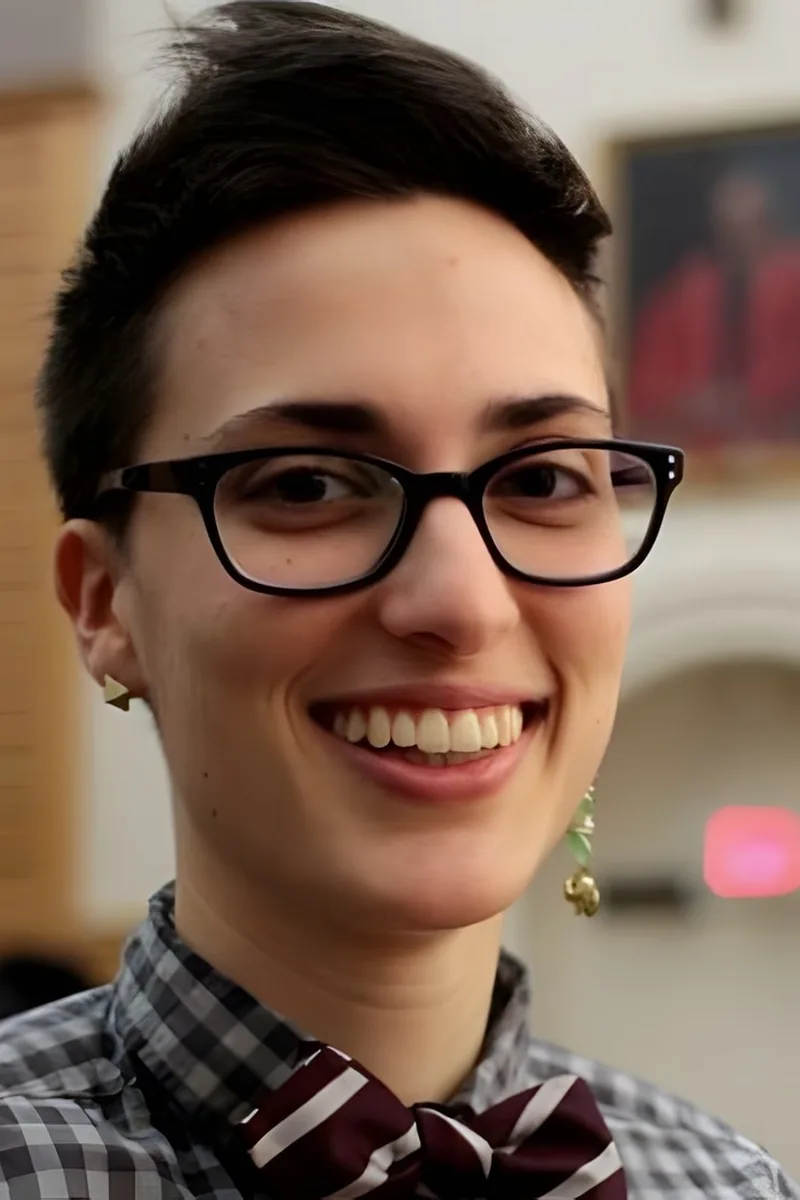
Comparative literature programs train you to do one thing relentlessly — read a passage, figure out exactly what the author is doing with language, and defend that reading with textual evidence. Cassandra's degree in comp lit from that tradition, paired with a perfect 1600 SAT composite, means she tackles the Reading section the way she'd tackle a close reading of Borges or Calvino: tracking structure, tone shifts, and how an author's word choices quietly steer the argument. She's especially sharp on the literature and paired-passage sets, where students who read casually get punished for missing subtle moves in the text.
Creative writing workshops at Carnegie Mellon — where Sydney earned induction into Sigma Tau Delta, the English honors society — are essentially reverse-engineering exercises: you learn to build arguments and narratives by first learning to take them apart at the sentence level. That skill transfers directly to SAT Reading's command-of-evidence and author-purpose questions, where spotting how a passage is constructed matters more than speed-reading it. Her 1600 SAT composite backs up the close-reading instincts she brings to every passage type.
The SAT Reading passages that trip students up most — the science excerpts loaded with technical jargon — play to Won's strengths as a chemistry major who's been accepted to medical school and reads dense scientific literature daily. With a 1560 composite, he teaches students to stop treating those passages as science problems and start treating them as argument maps, tracking where the author's claim lives and which lines actually support it. That same structural approach carries over to the history and social science passages, where he shows how to strip away unfamiliar language and zero in on what the text states versus what it implies.
Scoring a 1580 SAT composite while majoring in English at Harvard means Cindy lives in the overlap between literary close-reading and standardized test strategy — she knows how to parse a passage for pleasure and how to parse it under a 65-minute clock. She's especially sharp on the paired-evidence questions, teaching students to lock onto the specific lines that justify an inference before even looking at the answer choices. Rated 5.0 by students.
Scoring a 1560 on the SAT required Diana to master the Reading section's particular brand of evidence-based reasoning — pairing passages, identifying authorial purpose, and choosing answers supported by specific lines rather than general impressions. Her TESOL and linguistics degrees mean she can unpack dense vocabulary and complex sentence structures in a way that makes even 18th-century source texts accessible.
Rob's triple major in English, Philosophy, and History at Fordham — where he graduated Phi Beta Kappa — means he's spent thousands of hours doing exactly what every SAT Reading passage type demands: parsing literary rhetoric, evaluating logical arguments, and decoding historical documents written in unfamiliar registers. With a 1580 composite and a 5.0 student rating, he teaches students to treat each question as a claim that needs textual proof, eliminating answer choices that editorialize beyond what the passage actually states. His philosophy training is especially visible on inference questions, where distinguishing what an author implies from what a reader assumes is the whole battle.
Most SAT Reading mistakes come from answering based on what a passage seems to say instead of what it actually states — Hope's math training makes her unusually disciplined about sticking to textual evidence, treating each question like a proof where every claim needs line-level support. She scored a perfect 1600 composite and applies that same precision to the command-of-evidence and inference questions where sloppy reading costs the most points. Rated 4.8 by students.
I'm excited to work with you or your child either on standardized test preparation or on generally improving performance in history, English, and social studies!
I am currently a senior working towards my B.A. in physics, and I just returned from a year of study in Europe, during which I worked full time as a climate change researcher at the University of Helsinki in Finland and passed two intensive PhD level atmospheric science courses. This subject is my passion and I love passing that on!
I'm Emma. I'm a 2016 Northwestern University graduate currently working as an ESL classroom teacher. I'm a tutor because I love working individually with students, helping them understand material and grow more confident as learners! I majored in History and French at Northwestern and have worked for over a year as a classroom and private English teacher. I am qualified to teach English as a second language, French language, and all levels of academic writing. I'm also a \*huge\* standardized test geek--I'm here to help you prepare for tests like the SAT, LSAT, and GRE by helping you understand the logic of the test and the similarities among question types. My LSAT score puts me in the top half of one percent of all test takers--I have the skills to get you in the same range!
The SAT Reading section rewards a specific kind of discipline: answering from the text, not from instinct. Maedeh scored 1560 on the SAT and teaches a passage-mapping approach that pins down the author's argument structure before tackling questions, which is especially useful on the paired-passage and evidence-support formats. She's held a 5.0 rating working with students on exactly this kind of strategic reading.
The SAT Reading section buries correct answers in subtle phrasing, and most points are lost not from misunderstanding the passage but from misreading the question. Rebecca's English degree from Notre Dame trained her to dissect arguments in dense literary and informational texts, and she teaches students to locate textual evidence efficiently rather than relying on gut feelings. Her 1550 SAT score speaks to how well that analytical approach translates to test day.
I am a current sophomore at Tufts pursuing a double major in Computer Science and Physics, both of which I draw from in my tutoring philosophy. While I am a firm believer that each student requires a strategy specifically tailored to them, I have found that there are a few general strategies that students respond well to. I make it a point to ensure that students understand the conceptual jump from material they are comfortable with to the material they are currently learning. This makes it possible for them to both understand the material on a deeper as well as have a better idea of the direction they are going. I also subscribe to the theory that a relaxed environment is critical for a students learning, so I prioritize creating this environment in my tutoring sessions. Outside of academia, I am passionate about playing/performing/composing music (singing, piano guitar etc) and am a member of both the Ballroom Dance Team and the Table Tennis Club at Tufts.
I'm still learning myself but bring years of experience helping students with a variety of goals in all kinds of academic subjects. I look forward to learning with you!
I'm a current senior at Harvard University earning a double major in Environmental Science and Public Policy and Studies of Women, Gender, and Sexuality. During my time at Harvard, I've done a wide variety of education-related work. I've taught my own self-designed course on Feminism, Intersectionality, and Queer Theory to high school students in both the US and Vietnam, and I currently design and lead customized inclusivity trainings with Harvard's Office of Equity, Diversity, and Inclusion.
I am currently a Nursing student at St. Joseph School of Nursing in Nashua NH. I studied Biomedical Sciences with a major in Medicine from the University of Buea in Cameroon, West Africa. I travelled around Cameroon, working for a non-governmental organization called "Let Children Learn" tutoring students in rural areas of the country. These included students who could not afford to go to school and worked on their own in small groups in order to achieve their educational goals. Since moving to the United States, I have also had the opportunity to work with students in my school as a tutor. This has offered me a wide diversity as I have worked with students from several countries and from different backgrounds. Because I come from a bilingual country, I am fluent in French and English, and I am passionate about science and math. I strongly believe that hard work and determination can lead any student to achieve success. I enjoy playing soccer, table tennis, football, and I also love singing.
Most students treat SAT Reading as a speed test, but Brice approaches it as an exercise in structured reasoning — identifying the author's argument, locating evidence pairs, and eliminating answers that subtly distort the passage's meaning. His 1600 SAT composite and love of reading give him a sharp eye for the specific traps the College Board builds into history and science passages.
The SAT Reading section rewards a very specific skill: finding the answer that's directly supported by the passage, not the one that sounds right. Zoe scored a 1550 on the SAT and teaches students to identify evidence lines quickly, handle paired-passage questions strategically, and avoid the traps built into almost every answer set.
Running a college admissions seminar program at UChicago meant Noel spent years teaching underrepresented students to read critically under pressure — breaking down prompts, evaluating arguments, and pulling meaning from unfamiliar texts, which is essentially SAT Reading in miniature. With a 1550 composite and a public policy background that demands constant close reading of dense source material, he zeroes in on the evidence-pairing questions and social science passages where students lose points by drifting from what the text actually states. Rated 4.9 by students.
Reading comprehension on the SAT rewards a specific kind of discipline: finding the line reference that proves your answer, not the one that merely sounds right. Kristen, who scored a 1590 SAT, teaches students to treat each question as an evidence-matching exercise and to eliminate answer choices methodically. That structured approach turns a section many students find subjective into something predictable.
As a productivity coach specializing in executive functioning, Kerry knows that SAT Reading mistakes often aren't about comprehension at all — they're about anxiety-driven rushing, attention drift, and second-guessing under time pressure. Her psychology training at Cornell and a 1500 composite give her both the content knowledge and the behavioral toolkit to tackle the mental side of the test alongside the analytical one. She's particularly effective with students whose practice scores don't match their timed performance.
I am a current undergraduate student at Northeastern University working towards a pharmacy degree, while minoring in Biology and Chinese. I first started tutoring in high school through peer tutoring, working with students younger than me and tutoring them in subjects that I had excelled in. Besides helping them in purely academic subjects like Chemistry or Math, I also gave them tips to study better and other organizational skills, which help in daily life as well. I really enjoy working with students and working with them towards their goals, both academically and personally. I believe anyone can succeed as long as they are interested and are willing to put in the time and effort. When I work with students, I try to break down different problems into smaller chunks, and work through these smaller bits to understand the big picture. I know how frustrating it is to not understand something, and I try to work with each student to figure out their strengths and weaknesses. I think the most rewarding thing is when you see the student go "aha!" and understand something they have been struggling with, it really gives both of you a feeling of satisfaction and relief. Outside of school, I like to do ballroom dancing while drinking way too much coffee.
Scoring 1550 on the SAT, Caroline knows the Reading section inside out — from identifying the author's purpose in a historical passage to parsing data in paired science excerpts. She teaches students to eliminate wrong answers systematically rather than relying on gut instinct, which shaves time and boosts accuracy.
Evidence-based questions on the SAT Reading section trip up strong readers who pick answers that "sound right" without tracing back to the passage. Priyanka, who scored a 1560 SAT, teaches a line-reference method that forces students to anchor every answer in specific text — especially on the paired-passage and data-interpretation sets that carry the most weight. Her science and humanities background also means she's comfortable unpacking passages across every subject the test throws at students.
I am a master's student in computer science at the University of Massachusetts Amherst. I graduated from UMass with a bachelor's in computer science in 2020, and have been studying computer science since before college. I have prior experience as a tutor in my university's tutoring center for 3 years, and I am available to tutor basic math and most levels of computer science.
I am personable and open with my students because I believe that forging an honest and mutually respectful relationship is fundamental for us to be successful in learning together. I hope to bring my experience, dedication and eagerness to work with a variety of students to Varsity Tutors.
The SAT Reading section rewards a specific kind of discipline: finding the answer the passage supports, not the one that sounds right. Parita earned a 1580 composite and developed a systematic method for tackling paired passages, evidence-based questions, and vocabulary-in-context items that keeps students grounded in the text. Her love of psychological thrillers means she's practiced at close reading and picking up on authorial intent.
Policy debate coaching sharpens a very specific skill — reading an opponent's argument and identifying exactly where their evidence does and doesn't support their claim — which is essentially what every SAT Reading question asks. Ryan brings that trained instinct to the paired-evidence and author-purpose questions, where his 1560 composite and dual English/Political Science background at Tufts keep him fluent across every passage type the test uses. Rated 5.0 by students.
I am a strong believer that anyone can learn anything! I attended the University of Pennsylvania as an undergraduate and recently finished my Master's in Education at the Harvard Graduate School of Education. As a tutor, I create a space where my learners can feel empowered and safe to take on the sometimes difficult, yet often fulfilling and fun, challenge of learning new things. I practice a growth mindset philosophy, and I often say that it is okay to be wrong, it just means you haven't learned the material... yet. With patience and effective pedagogy, I strive to give my students confidence that they can learn anything they set their mind to. I take my students' desires, motivations, goals, and interests seriously. Fun fact: I am an international student from Malaysia!
I am currently a medical resident at Brockton Hospital and will be continuing my training in Dermatology at Mount Sinai Hospital next summer. I received my medical degree from Boston University School of Medicine and completed my undergraduate training at Northwestern University with a Bachelor's degree in Biology.
The SAT Reading section rewards a specific kind of discipline: finding answers rooted in the text rather than inferring beyond it. Vania, who scored a 1590 composite and has prepped students for three years, walks through passage types — from historical documents to paired science excerpts — and teaches a consistent method for eliminating wrong answer choices. Her 5.0 rating speaks to how well that approach clicks.
I am a graduate from Suffolk University with a BS in Computer Science. I am currently beginning a career in software design with a focus on mobile applications. My main passions are Mathematics and Computer Science, although I have a strong academic background in several areas including English and the physical sciences. I have been tutoring since high school and have experience working with all ages in a number of subjects. I have the most experience working with high school and middle school students in mathematics. My other teaching experiences include tutoring in English and computer skills in an ESOL classroom for refugees, as well as private and group violin instruction for children of all ages.
The SAT Reading section rewards students who can quickly identify an author's central argument and trace how evidence supports it across paired passages. Margaret scored a 1530 on the SAT and brings a Princeton-trained eye for close reading — she teaches students to decode tone shifts, eliminate trap answers, and manage pacing so they're not rushing the final passage.
I'm a student at Clark University and I can help you with whatever you need. Whatever your learning style, whatever your difficulties, I will help you through it. Together, we can solve any problem you have. I can teach you how to study, I can edit your papers, I can teach you memory tricks and organizational skills and I guarantee that after a little while with me, your grades WILL improve.
I am currently majoring in Biomedical Engineering at Boston University, under the Presidential Scholars Distinction Program. My hobbies include playing sports such as Soccer, Basketball, Football, Tennis and Track and Field. I also love playing the guitar in my spare time and love spending time with my family and friends. Further, I love learning about new cultures and languages; I am able to speak three languages fluently.
Reading comprehension on the SAT rewards a specific skill — identifying what the passage actually says versus what it seems to imply. Charlotte's literature background and her degree in French Language and Literature trained her to dissect arguments and track an author's purpose across dense texts. She teaches students to eliminate answer choices methodically rather than relying on gut feelings.
I am a good "fit" for that student, so that we are able to work together to reach the student's goal.
Scoring well on SAT Reading is less about being a fast reader and more about knowing how the test constructs its wrong answers — paraphrases that subtly distort, choices that are true but don't answer the question asked. Grace earned a 1570 SAT composite and teaches students to use evidence-based elimination, matching every answer back to specific lines in the passage. That systematic approach turns even dense historical passages into manageable puzzles.
The SAT Reading section is really a test of how precisely you can match answer choices to textual evidence, and Maggie teaches a systematic method for eliminating distractors on paired-passage and evidence-support questions. Her 1590 SAT score came from disciplined strategies across every section, not just the math side. She walks students through passage annotation techniques that make even dense historical excerpts manageable under time pressure.
Testimonials
Because the right SAT Reading and Writing tutor makes all the difference.
Average Session Rating – Based on 3.4M Learner Ratings
Practice SAT Reading and Writing
Free practice tests, flashcards, and AI tutoring for SAT Reading and Writing
Nearby SAT Reading and Writing Tutors
Other Barnstable Tutors
Related Test Prep Tutors in Barnstable
Frequently Asked Questions
Varsity Tutors matches Barnstable students with expert SAT Reading and Writing tutors for 1-on-1 instruction. We pair each student with a tutor based on their specific needs, learning style, and goals.
Whether you need homework help, exam prep, or want to get ahead, our SAT Reading and Writing tutors are ready to help.
Common challenges include gaps from earlier material, difficulty with specific concepts, and trouble applying learning to new problems. These issues can snowball quickly in SAT Reading and Writing.
A tutor identifies where you're stuck, fills in gaps, and provides targeted practice. The 1-on-1 format means you get help exactly where you need it.
Tutors work with your student's actual coursework—homework assignments, class notes, and upcoming tests. This keeps tutoring directly relevant to what's happening in the classroom.
When you share information about your student's school and curriculum, we can match you with a tutor who has relevant experience.
All tutors complete background checks, credential verification, and teaching evaluation. Many of our SAT Reading and Writing tutors hold advanced degrees or have years of teaching experience.
You can review tutor profiles to find someone with the right background for your student's level and needs.
Many students see improved grades within a few weeks, along with better understanding of SAT Reading and Writing concepts and more confidence tackling challenging material.
Tutors track progress and adjust their approach to ensure continued improvement.
Most students benefit from 1-2 sessions per week. More frequent sessions help if your student is significantly behind or has an important exam coming up.
Your tutor can recommend a schedule based on your student's specific situation and goals.
Tutoring is purchased in packages of hours, with rates varying by tutor experience. Varsity Tutors offers several options to fit different budgets and needs.
You can discuss pricing during your consultation to find what works best.
Your tutor will assess where your student is, discuss goals, and start working on priority areas. Most students bring current homework or upcoming test material to focus on.
By the end, you'll have a clear sense of how the tutor can help and a plan for moving forward.
Let’s find your perfect tutor
Answer a few quick questions. We’ll recommend the right plan and match you with a top 5% tutor.