Award-Winning Math Tutors
serving New Orleans, LA
Math
Tutors in New Orleans
Private 1-on-1 tutoring, weekly live classes for academic support, test prep & enrichment, practice tests and diagnostics, and more to elevate grades and test scores.
Based on 3.4M Learner Ratings
UniversitiesSchools & Universities
DeliveredHours Delivered
ProficiencyGrowth in Proficiency
Who needs tutoring?
No obligation. Takes ~1 minute.
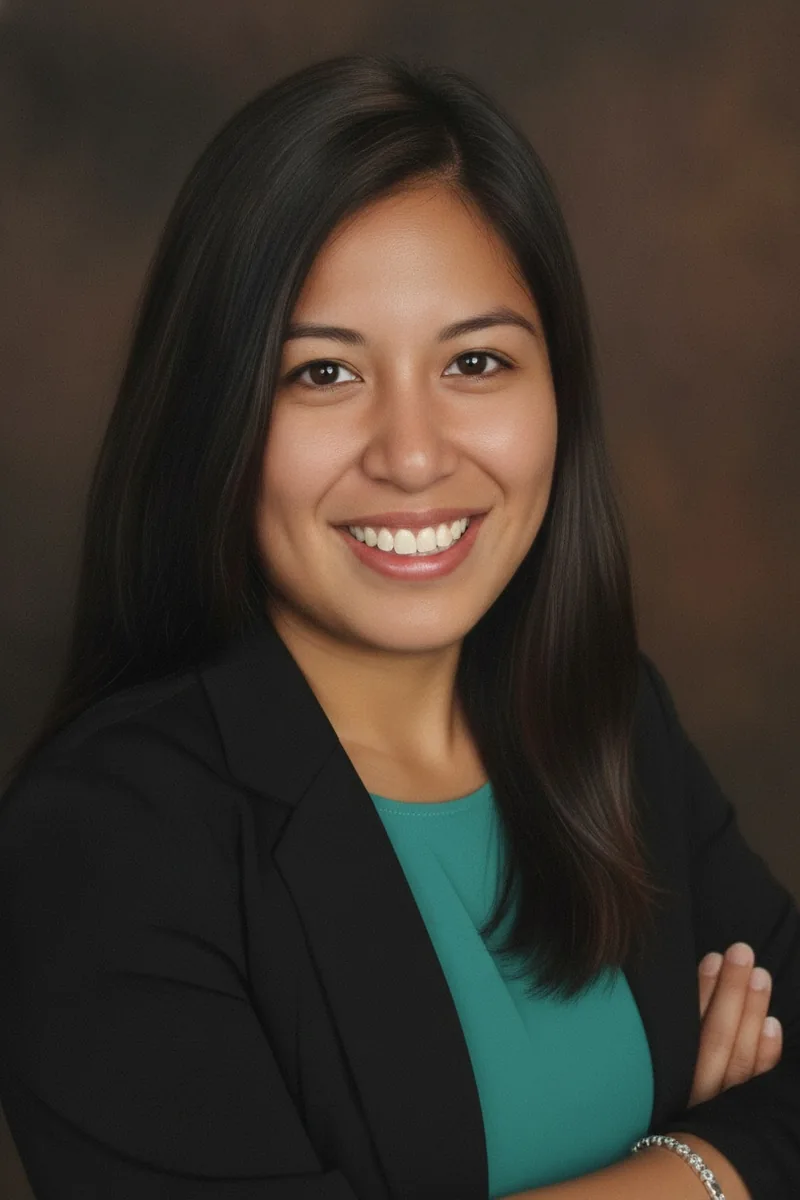
Robin's background spans pre-algebra through calculus, so she can pinpoint exactly where a math concept starts to fall apart for a student — whether it's place value, long division, or early fraction work. She connects each new skill to something concrete, building number sense that carries forward instead of relying on rote steps. Rated 5.0 by students.

From fractions and ratios up through early algebra concepts, Daniel pinpoints exactly where a student's understanding breaks down and rebuilds from that spot. His approach leans heavily on having students explain their reasoning out loud, which catches the small misunderstandings that otherwise snowball into bigger problems later.
As a dedicated tutor with over 5 years of experience, I hold a Bachelor's degree in Psychology and Sociology from Tulane University, which informs my approach to understanding student needs. I specialize in subjects such as Algebra, Psychology, and American History, and I am passionate about fostering a supportive learning environment where students can thrive. My teaching philosophy centers on building strong relationships with my students, using tailored strategies that cater to their unique learning styles. I find great joy in helping students develop their executive functioning skills and confidence, enabling them to achieve academic success. Outside of tutoring, I enjoy reading and exploring new educational resources, which keeps my methods fresh and engaging.
Helping students has always felt deeply personal to me. I know what it's like to struggle with a subject and how much of a difference the right guidance can make. That's what drives me, not just to explain the material, but to meet students where they are, and help them build confidence along the way. My teaching philosophy is centered around a low-pressure, high-engagement environment where students feel comfortable asking questions and exploring ideas. I use real-world examples, visual breakdowns, and active recall to reinforce understanding and make learning stick. I'm currently in my 4th year of medical school, so I have a certain love for Biology and other life sciences. It can be complex, but when taught the right way, it becomes incredibly intuitive and logical. I also thoroughly enjoy teaching SAT/ACT prep, as it also can be tricky for students to see through its complexity, but becomes much easier to find the objective when taught the right way, with the right tools.
I am an educator of the sciences. I have taught Life Science, Biology, Physical and Earth Sciences for fourteen years in grades 7-12. I trained with the Keystone Science School of Denver, Colorado, the LSU Coastal Roots Program and have earned over six hundred hours in science literacy training in many areas. Science has a very strong mathematical component and that is why I also specialize in Math tutoring.
My life's work has been and continues to be assisting students in building confidence while exploring the wonders of language and mathematics. Whether it be Algebra, ACT preparation, or English for non-native speakers, I have enjoyed my 20+ years working with students both in the U.S. and abroad (China & India). I have tutored students as young as Pre-K, but most of my experience lies with high school, university & adult students. For those seeking assistance with the ACT, I have several years of experience tutoring all subjects - content & strategies. With the changes in the ACT last year (science optional, shorter subject tests with differing times), I decided to take the new Enhanced ACT with hundreds of high school students to gain first-hand experience with how the alterations might affect test strategy and gauge any changes in content. My split focus affected the science score most (:D), but I look forward to sharing my newly gained insights with my students.
Doctoral work in clinical psychology at Duke means Shelley spends her days immersed in statistics, data analysis, and quantitative reasoning — skills she brings directly into tutoring everything from arithmetic through calculus. Her specialty in executive functioning also gives her a practical edge: she teaches students how to organize multi-step problems, manage their scratch work, and catch their own errors before they snowball. Rated 5.0 by students.
A perfect 36 on the ACT means Emily is comfortable across the full math spectrum, from fraction operations and proportional reasoning up through functions and basic trigonometry. She connects each concept to the reasoning behind it so students can solve unfamiliar problems, not just repeat practiced ones.
Frances graduated magna cum laude from Duke with a psychology degree, which means she spent years working with statistics, research design, and data analysis — the kind of applied math that makes abstract concepts feel grounded in something real. Her 35 ACT score confirms she's sharp across the full range of math content, and her background as a full-time educator means she knows how to spot exactly where a student's reasoning goes off track and rework the explanation until it lands.
Logic is the backbone of both philosophy and mathematics, and Justin leans on that connection when tackling everything from algebraic manipulation to introductory calculus concepts. He's especially effective at translating word problems into mathematical expressions — a skill sharpened by years of breaking down complex arguments into formal structures at the University of Chicago.
From pre-algebra fundamentals through calculus, Akarsh covers a wide range of math — and his science background means he constantly ties abstract procedures to real applications. Whether a student is stuck on fraction operations or working through integration by parts, he breaks each problem into logical steps that build genuine number sense.
An MIT math graduate now pursuing a PhD in Operations Research at Georgia Tech, Isabella has spent years inside the subject from every angle — teaching it, studying it, and applying it. Whether a student is wrestling with fraction operations in sixth grade or limits in early calculus, she connects each concept to the bigger mathematical picture so the next topic feels like a natural extension, not a surprise.
Not every math student needs calculus-level intensity — sometimes the gap is in foundational skills like fraction operations, proportional reasoning, or translating word problems into equations. Connor identifies exactly where the disconnect is and rebuilds confidence from that point, drawing on the quantitative rigor his dual science degrees required.
Elena's approach to math leans on her test-prep background, where she learned that most students don't struggle with the concepts themselves — they struggle with translating word problems into equations or recognizing which technique a question is really asking for. She teaches pattern recognition and strategic problem-solving across arithmetic, pre-algebra, and foundational algebra, turning vague confusion into a clear decision tree. Her style is quirky and joke-filled, which tends to lower the anxiety that makes math feel harder than it is.
A chemistry degree from Yale means Zosia has lived inside calculus, algebra, and applied math problems far beyond the textbook — calculating reaction rates, modeling physical systems, and working with logarithmic relationships daily. She connects abstract math concepts to tangible applications so that topics like functions, proportional reasoning, and equation-solving feel purposeful rather than arbitrary. Students who need both procedural fluency and conceptual understanding get both.
Solange approaches math as a subject that rewards structured thinking over speed, breaking problems into logical steps students can follow and eventually internalize. Her 34 ACT composite reflects sharp quantitative reasoning, and she applies that same methodical approach to arithmetic, pre-algebra, and foundational concepts that younger or struggling students need to build confidence.
A biology major at Penn, Shayan brings a scientist's precision to math — breaking down word problems into variables, teaching proportional reasoning through real-world dosage calculations, and making algebra feel like a tool rather than an abstract exercise. His tutoring spans everything from fractions and ratios up through calculus, and he's rated 5.0 by students.
A triple Bachelor of Science holder, Sung has spent years working through math at every level — from proportional reasoning and equation-solving in middle school to the limit definitions and derivative rules of calculus. He breaks problems into smaller logical steps so students can see the reasoning behind each move, not just follow a memorized procedure.
Testimonials
Because the right Math tutor makes all the difference.
Average Session Rating – Based on 3.4M Learner Ratings
Practice Math
Free practice tests, flashcards, and AI tutoring for Math
Nearby Math Tutors
Other New Orleans Tutors
Related Math Tutors in New Orleans
Frequently Asked Questions
Tutors work with your student's current textbooks, assignments, and curriculum to provide personalized instruction that complements classroom learning. During an initial session, a tutor will review your student's coursework and discuss their teacher's approach, ensuring tutoring reinforces what's being taught in class rather than introducing conflicting methods.
Procedural understanding means knowing the steps to solve a problem, while conceptual understanding means grasping *why* those steps work and when to use them. Personalized tutoring helps students move beyond "plug and chug" by exploring the reasoning behind formulas and methods, which makes it easier to tackle unfamiliar problems and builds genuine confidence in math.
Word problems require students to translate language into mathematical operations—a skill that benefits from guided practice and explicit strategy instruction. Tutors help students break down complex problems into manageable steps, identify key information, and recognize patterns across different problem types, making the transition from reading to solving much smoother.
Yes. Math anxiety often stems from past struggles or pressure, and personalized 1-on-1 instruction creates a low-stakes environment where students can ask questions freely and learn at their own pace. When students experience success on problems they previously found intimidating, their confidence naturally grows, and the anxiety diminishes.
Showing work demonstrates reasoning, helps identify where errors occur, and is essential for earning partial credit on tests. Tutors model clear problem-solving strategies, explain why each step matters, and guide students to organize their work in ways that reflect their thinking—habits that improve both grades and understanding.
With an average ratio of about 24.8 students per teacher across New Orleans schools, individual students often don't receive the personalized attention needed to address specific gaps or learning styles in math. Personalized tutoring fills that gap by providing dedicated, one-on-one instruction tailored to your student's pace and needs.
During the first session, a tutor will assess your student's current math level, discuss specific challenges (like multi-step equations or graphing), and learn about their learning style and goals. This foundation allows the tutor to create a customized plan that addresses gaps while building on your student's strengths.
Personalized instruction allows tutors to highlight how concepts like fractions, decimals, and percentages are interconnected, or how algebraic thinking builds on arithmetic foundations. When students understand these relationships, math becomes less like isolated procedures and more like a coherent system, making new topics easier to learn.
Let’s find your perfect tutor
Answer a few quick questions. We’ll recommend the right plan and match you with a top 5% tutor.