Award-Winning College Physics Tutors
serving New Orleans, LA
College Physics
Tutors in New Orleans
Private 1-on-1 tutoring, weekly live classes for academic support, test prep & enrichment, practice tests and diagnostics, and more to elevate grades and test scores.
Based on 3.4M Learner Ratings
UniversitiesSchools & Universities
DeliveredHours Delivered
ProficiencyGrowth in Proficiency
Who needs tutoring?
No obligation. Takes ~1 minute.

Let me tell you a little bit about myself. I have a Bachelors degree and two Masters degrees in Mathematics from the United States Naval Academy, the University of Pennsylvania, and the University of Georgia. All of my degrees were earned with at least a 3.9 GPA and I earned the honor of being named the top math major from my undergraduate institution when I graduated. I have also had the pleasure of teaching mathematics at two different colleges and started tutoring math and physics over 20 years ago. Please allow me to accompany you on the exciting journey of exploration into math and physics!
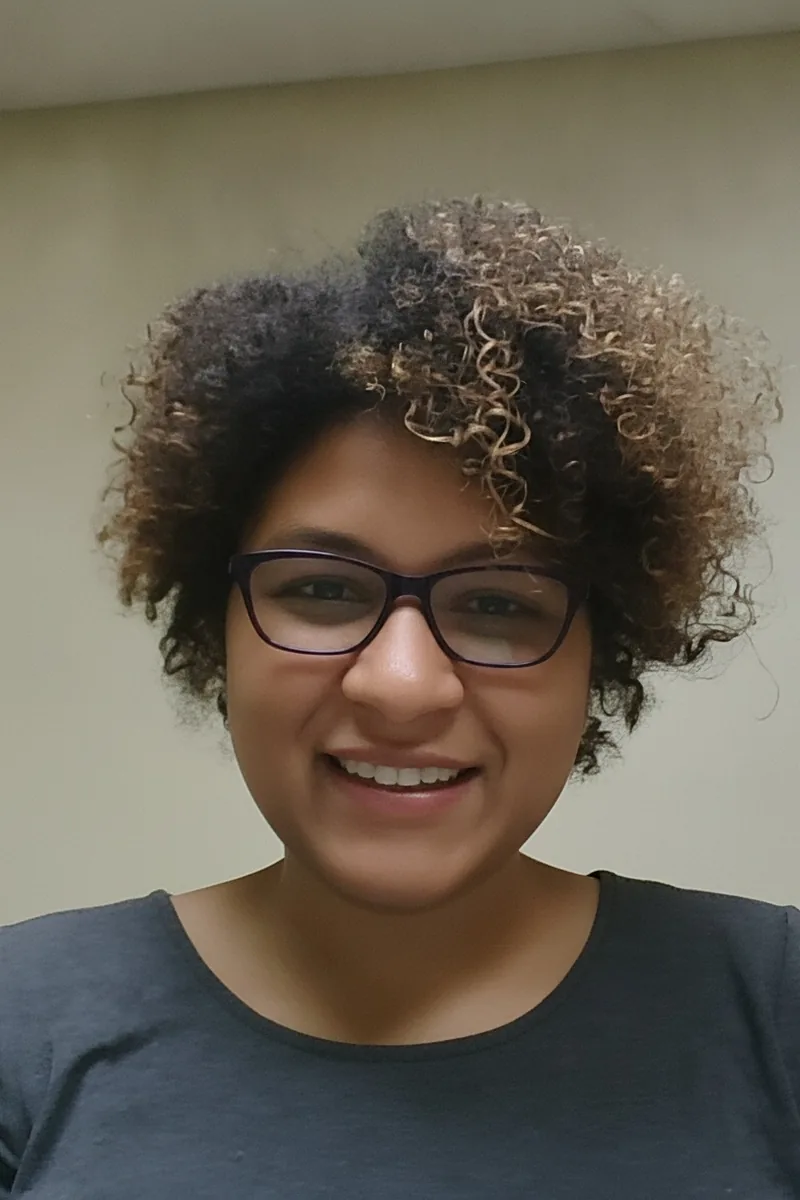
Chemical engineering at Georgia Tech means Aimee's spent years solving problems that blend thermodynamics, fluid mechanics, and energy balances — the same physics concepts that make college-level courses demanding, except she's applied them to reactor design and process optimization. Her biosystems engineering graduate work adds another layer, connecting classical mechanics and heat transfer to biological systems in ways that make abstract problem sets feel more concrete. Rated 4.9 by students.
Studying computer science and applied math at Harvard means Derek uses physics constantly — from electromagnetism in circuit design to mechanics in computational modeling. He tackles college-level topics like Lagrangian dynamics and wave equations by connecting the math to physical intuition, making dense derivations feel less abstract.
Statics, dynamics, circuits, electromagnetics — Steve didn't just take these courses, he took them twice over, earning degrees in both mechanical and electrical engineering before working as a practicing engineer. That dual perspective is especially useful in college physics, where a problem about induced EMF or stress in a beam benefits from someone who's designed real systems around those principles. Rated 4.9 by students.
Molecular biology might seem like a different world from physics, but Annabel's coursework lives in the overlap — understanding diffusion requires thermodynamics, membrane potentials are voltage problems, and imaging techniques depend on wave optics and electromagnetism. She brings that life-sciences lens to college physics topics like energy conservation and fluid dynamics, making the material click for pre-med students who need to see why these concepts matter beyond the problem set.
Studying applied mathematics at Caltech means Samuel encounters physics constantly — from classical mechanics and energy conservation to electromagnetism and wave behavior. He breaks down the math behind physical systems so that equations like Maxwell's or Newton's second law feel like tools rather than obstacles.
Graduate work in Chemical and Physical Biology at Vanderbilt meant Dennis spent years applying thermodynamics, fluid dynamics, and electromagnetism to biological systems — the same core physics concepts that fill college problem sets, just in a research context where getting the physics wrong meant failed experiments. He breaks down force, energy, and field problems by connecting them to the physical intuition behind the math, which is especially useful for pre-med and life science students navigating calculus-based physics for the first time. Holds a 5.0 rating.
Three years of tutoring introductory physics while completing dual bachelor's degrees in physics and mathematics gave Justin a detailed map of exactly where students lose the thread — the jump from one-dimensional kinematics to rotational analogs, the shift from intuitive force reasoning to formal energy methods. His PhD in Computational Mathematics at the University of Chicago deepened that foundation, adding fluency with the differential equations and vector calculus that make the leap from algebra-based to calculus-based physics so steep. Rated 5.0 by students.
Pursuing an MD at Stanford after a double major in economics and molecular/cellular biology, Maggie brings a pre-med perspective to college physics that makes topics like optics, fluid dynamics, and wave mechanics feel immediately relevant rather than abstract. She's especially sharp at teaching students to set up problems cleanly — translating a physical scenario into the right free-body diagram or energy equation before doing any math. Rated 5.0 by students.
Dylan has taken both college mechanics and electricity/magnetism at Northwestern's engineering school, so he's worked through the exact problem sets — free-body diagrams, circuit analysis, wave optics — that trip up most college physics students. His computer science background also means he's comfortable walking through the math-heavy derivations that make physics click rather than feel like guesswork. Rated 5.0 by students.
College-level physics demands comfort with calculus-based reasoning — deriving equations of motion, integrating force over a path for work, or applying differential equations to oscillations. Kathleen's math degree from Washington University and her experience teaching through multivariable calculus mean she can unpack both the physics intuition and the mathematical machinery simultaneously.
A dual BS in physics and math from Yale means Anthony didn't just take college physics — he took the honors sequence and then kept going through differential equations, multivariable calculus, and upper-division mechanics. His PhD work in economics at Yale still draws on that training daily, since building economic models requires the same setup-and-solve discipline as a multi-step Newton's law problem. Rated 5.0 by students.
Studying molecular biophysics at Brown means Srini lives at the intersection of physics and biology — applying thermodynamics, electromagnetism, and wave mechanics to understand how molecules actually behave in living systems. That dual perspective makes him especially effective at unpacking the conceptual reasoning behind problems in mechanics, circuits, and optics that trip up so many college students.
Testimonials
Because the right College Physics tutor makes all the difference.
Average Session Rating – Based on 3.4M Learner Ratings
Nearby College Physics Tutors
Other New Orleans Tutors
Related Science Tutors in New Orleans
Frequently Asked Questions
College Physics usually covers mechanics (motion, forces, energy), waves and sound, thermodynamics, electricity and magnetism, and often includes introductory modern physics. The course emphasizes both conceptual understanding and mathematical problem-solving, requiring you to apply physics principles to real-world scenarios. If you're preparing for this course or struggling with specific units, a tutor can help you build a strong foundation in each topic area.
Yes. Tutors can help you understand the scientific method, design experiments, analyze data, and write lab reports—skills that are just as important as the theory itself. They can also help you visualize what's happening in experiments and connect lab observations back to the physics concepts you're learning in lecture. This bridges the gap between hands-on work and theoretical understanding.
Many students struggle with translating word problems into equations, managing unit conversions, and understanding abstract concepts like electric fields or wave behavior. Others find the jump from high school physics to college-level rigor challenging, especially when calculus is involved. A tutor can break down these problem-solving strategies and help you develop the reasoning skills needed to tackle unfamiliar problems confidently.
Understanding concepts is far more valuable. While you do need to know key formulas, College Physics is really about learning how to apply physics principles to new situations—something memorization alone won't help with. A tutor can help you develop deep conceptual understanding so you can solve novel problems and see how different topics connect, rather than just plugging numbers into equations.
During an initial session, a tutor will assess your current understanding of physics concepts, identify specific areas where you're struggling (whether it's problem-solving, lab work, or particular topics), and learn about your course goals. They'll then create a personalized plan to address your needs, whether that's building foundational skills, preparing for exams, or deepening your understanding of complex topics. This personalized approach means you're not spending time on material you already know.
Varsity Tutors connects you with expert tutors who have strong backgrounds in physics and experience teaching at the college level. When you reach out, you can specify your course, current challenges, and learning goals, and you'll be matched with a tutor whose expertise fits your needs. This personalized matching ensures you get instruction tailored to your situation, whether you're taking introductory College Physics or a more advanced course.
Tutors use diagrams, analogies, demonstrations, and step-by-step explanations to make abstract ideas like electromagnetic fields, wave propagation, or quantum behavior more concrete and understandable. They can also help you develop mental models and intuition about how physical systems work, which is crucial for solving problems and understanding why equations take the form they do. This visual and conceptual foundation makes the math much more meaningful.
Absolutely. Tutors can help you review key concepts, practice problem-solving strategies, work through past exams or practice problems, and identify gaps in your understanding before test day. They can also teach you how to approach different types of problems efficiently and manage test anxiety. With targeted preparation, you'll feel more confident and prepared to demonstrate your understanding on the actual exam.
Let’s find your perfect tutor
Answer a few quick questions. We’ll recommend the right plan and match you with a top 5% tutor.