Award-Winning IB Mathematics: Analysis and Approaches Tutors
serving New Orleans, LA
IB Mathematics: Analysis and Approaches
Tutors in New Orleans
Private 1-on-1 tutoring, weekly live classes for academic support, test prep & enrichment, practice tests and diagnostics, and more to elevate grades and test scores.
Based on 3.4M Learner Ratings
UniversitiesSchools & Universities
DeliveredHours Delivered
ProficiencyGrowth in Proficiency
Who needs tutoring?
No obligation. Takes ~1 minute.

I am graduated from Penn State University in Industrial Engineering in 2017. I've tutored ever since I was in high school, and I love helping people! I like to help my students understand math (and other topics) instead of just doing it blindly. My goal is to help my students improve their math (and other topics) and build skills that will help them find learning easier in the future! Fun fact, I used to work for Disney and I like to salsa dance!
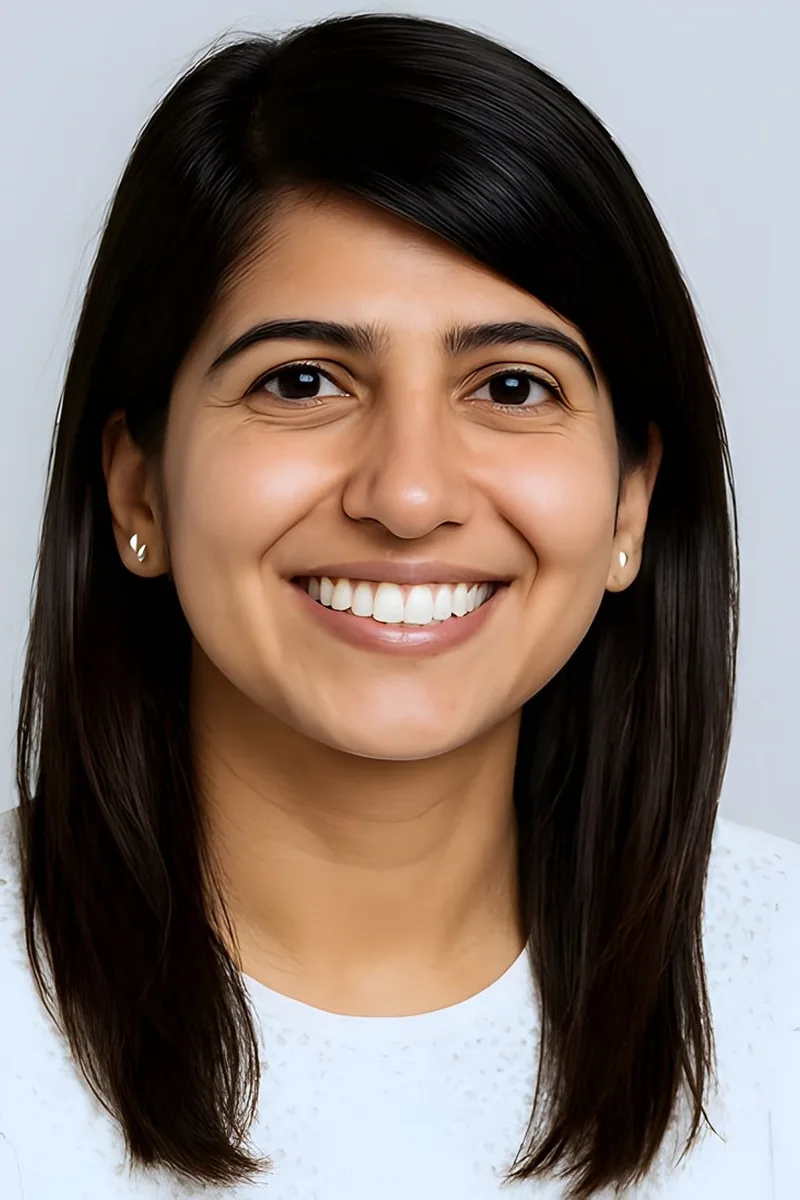
Analysis and Approaches is the IB's most proof-heavy math course, demanding comfort with algebraic manipulation, calculus, and formal reasoning all at once. Eshita zeroes in on the areas that tend to sink exam scores — series convergence, optimization problems, and the Paper 3 investigation — and teaches students to structure their written solutions the way examiners want to read them.
IB Analysis and Approaches moves fast through proof-based reasoning, differential calculus, and probability distributions — and the exam rewards conceptual depth over rote calculation. Mingee's science degree required exactly this kind of mathematical fluency, and she knows how to unpack the long-form problems the IB loves to throw at students. She holds a 5.0 client rating.
IB Analysis and Approaches leans heavily on proof-style reasoning and formal calculus — topics that reward deep understanding over formula memorization. Carmen teaches across the full IB math lineup, so she knows exactly where AA diverges from Applications and Interpretation and can tailor sessions to the specific paper formats and internal assessment expectations. She's especially sharp on the connections between functions, derivatives, and their graphical interpretations that Paper 2 loves to test.
IB Analysis and Approaches demands comfort with proof-style reasoning and abstract thinking, especially in the HL calculus and algebra units. Yu teaches both IB math courses and understands how the IA's exploration component differs from standard problem sets — she coaches students on selecting a topic, structuring their write-up, and connecting mathematical concepts to a genuine line of inquiry.
IB Analysis and Approaches demands comfort with both proof-based reasoning and applied problem-solving across calculus, algebra, and statistics. Omar's computer science background at UT Austin gives him a natural edge with the course's emphasis on mathematical modeling and algorithmic thinking, especially in Paper 3's extended problems where structured logic is everything.
Having earned his own IB Diploma, Dalton knows firsthand how Analysis and Approaches blends proof-style reasoning with demanding problem sets covering sequences, differential calculus, and probability distributions. He's particularly sharp on the internal assessment component, coaching students to choose a viable math exploration topic and develop it with the rigor IB examiners expect.
IB Analysis and Approaches leans heavily on proof-based reasoning and formal calculus, which is exactly the terrain Ellyn covers as a college mathematics instructor. She digs into the trickier HL content like complex numbers, differential equations, and series convergence with the rigor the exam demands. Her 5.0 rating speaks to how clearly she breaks down that rigor for students.
IB Analysis and Approaches demands fluency in calculus, proof-based reasoning, and statistical analysis — all areas Jacques has used professionally as a Princeton-trained chemical engineer. Over 25 years of teaching math and physics in Massachusetts public schools means he knows exactly where students stumble on topics like optimization, differential equations, and the internal assessment's exploration paper.
IB Analysis and Approaches demands comfort with proof-style reasoning and multi-step problem solving that goes well beyond standard coursework. Stephen's experience across abstract and applied math lets him walk students through the program's trickier territory, from differential calculus to probability distributions, while keeping the IB's emphasis on mathematical communication front and center.
IB Analysis and Approaches leans heavily on proof-style thinking and formal calculus, which can overwhelm students used to procedural math. Wesley's dual-degree engineering training at UC Irvine required exactly this kind of rigorous mathematical reasoning, and he unpacks topics like convergence tests, complex differentiation, and vector geometry with the precision the HL exams demand.
Having gone through the IB program herself and earned top marks in mathematics, Zofia knows exactly how Analysis and Approaches is structured — from the internal assessment expectations to the way Paper 2 weaves calculus and statistics into multi-part problems. She tackles proof-based questions and mathematical modeling with the rigor Brown's math program reinforced.
Testimonials
Because the right IB Mathematics: Analysis and Approaches tutor makes all the difference.
Average Session Rating – Based on 3.4M Learner Ratings
Nearby IB Mathematics: Analysis and Approaches Tutors
Other New Orleans Tutors
Related Math Tutors in New Orleans
Frequently Asked Questions
IB Mathematics: Analysis and Approaches is a rigorous International Baccalaureate course that emphasizes deep conceptual understanding over memorization. Unlike traditional math classes that focus on procedures, this course requires students to prove theorems, solve complex multi-step problems, and understand the "why" behind mathematical concepts. For students in New Orleans, this means developing strong analytical skills that prepare you for university-level mathematics and STEM fields.
The main hurdles include transitioning from procedural problem-solving to conceptual reasoning, mastering rigorous proof-writing, and applying abstract concepts to complex, multi-step word problems. Many students also struggle with the course's emphasis on showing detailed work and justifying every step—it's not enough to get the right answer. Personalized tutoring helps you build confidence in these areas by breaking down complex topics into manageable pieces and showing you how to recognize patterns across different problem types.
Your first session is diagnostic and collaborative. A tutor will assess your current understanding of key topics, identify specific areas where you're losing confidence, and learn about your learning style. They'll ask about your current grade, which units are giving you trouble, and what your goals are—whether that's improving your IA score, mastering proofs, or preparing for the final exam. This foundation helps create a personalized plan tailored to your needs.
Proofs require a different mindset than computational problems—you need to think logically about why statements are true, not just how to calculate answers. Expert tutors help you develop a toolkit of proof strategies, teach you how to structure arguments clearly, and show you how to recognize when different proof techniques apply. Through guided practice and feedback on your reasoning, you'll build the confidence to tackle unfamiliar proofs on exams.
IB word problems require you to translate real-world scenarios into mathematical models, solve them, and interpret your results in context—a multi-step process that combines reading comprehension, conceptual understanding, and technical skill. Tutoring breaks this process into manageable parts: identifying what the problem is asking, choosing the right mathematical tools, showing your work clearly, and checking whether your answer makes sense. Over time, you'll develop strategies to recognize problem patterns and approach them systematically.
Yes. The IA requires you to investigate a mathematical topic, conduct independent research, and present findings in a structured report—skills that go beyond exam preparation. Tutors can help you select a compelling topic, guide your mathematical investigation, ensure your reasoning is rigorous, and help you communicate your findings clearly. They won't write your IA, but they'll help you develop the mathematical thinking and problem-solving skills needed to excel.
Look for tutors with strong backgrounds in higher mathematics, familiarity with the IB curriculum and assessment criteria, and experience helping students move from procedural to conceptual thinking. Many expert tutors have taught IB courses, scored IB exams, or studied advanced mathematics themselves. When you connect with Varsity Tutors, we match you with someone whose expertise aligns with your specific needs and learning style.
Ideally, starting in the fall or early spring gives you time to build conceptual understanding and address gaps before the May exam. However, even a few months of focused tutoring can significantly boost your performance by helping you master weak topics, practice exam-style questions, and develop test-taking strategies. The earlier you start, the more time you have to move from struggling with concepts to applying them confidently under pressure.
Let’s find your perfect tutor
Answer a few quick questions. We’ll recommend the right plan and match you with a top 5% tutor.