Award-Winning AP Calculus BC Tutors
serving New Orleans, LA
AP Calculus BC
Tutors in New Orleans
Private 1-on-1 tutoring, weekly live classes for academic support, test prep & enrichment, practice tests and diagnostics, and more to elevate grades and test scores.
Based on 3.4M Learner Ratings
UniversitiesSchools & Universities
DeliveredHours Delivered
ProficiencyGrowth in Proficiency
Who needs tutoring?
No obligation. Takes ~1 minute.

Series convergence, parametric equations, and polar curves make BC the course where strong calculus students finally have to slow down and think carefully. Anthony earned his BS in physics and math from Yale, where these concepts weren't just exercises — they were the language of electromagnetism and classical mechanics. He teaches BC topics by connecting each technique to why it exists and when it matters.
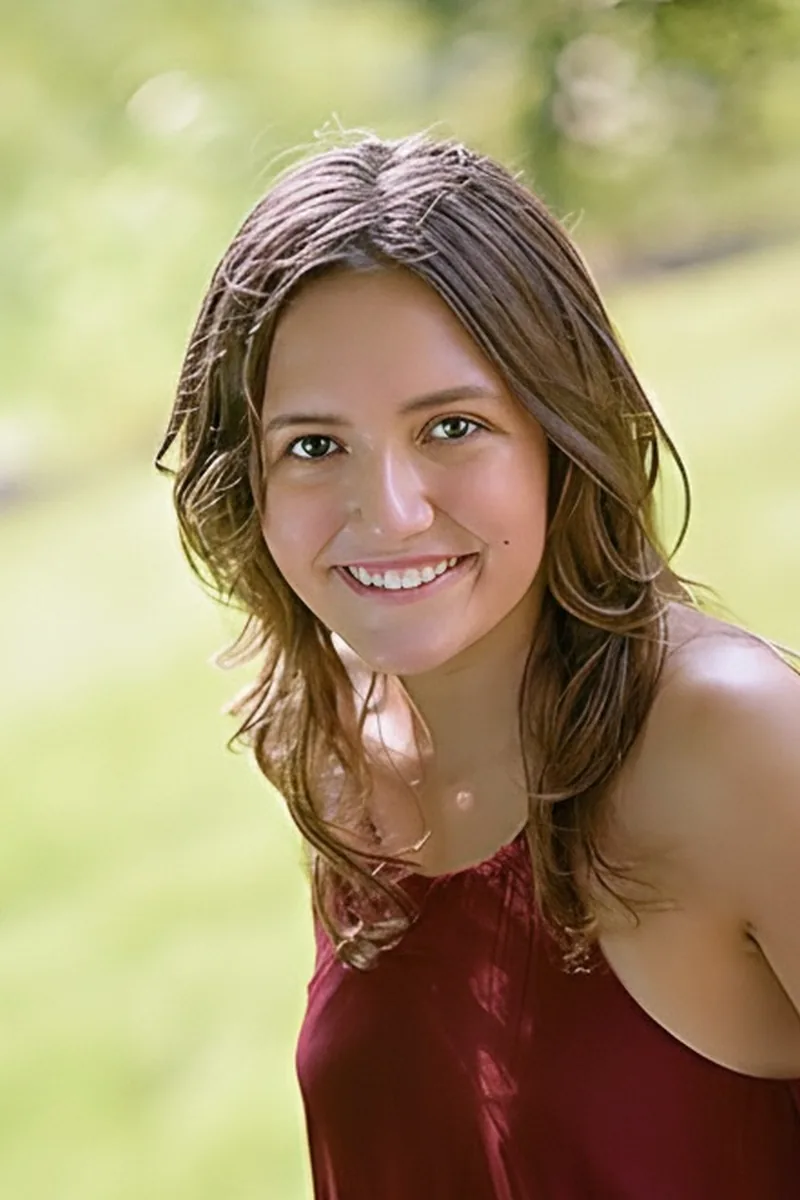
Biomedical engineering at Cornell throws parametric modeling, series approximations, and heavy integration at Annie every semester — BC Calculus is essentially the prerequisite language for her entire degree. Her year as a teaching assistant for introductory biology sharpened her instinct for spotting exactly where a student's reasoning goes sideways, whether it's a shaky limit concept underneath a convergence test or a misread of how polar area integrals accumulate. Rated 4.9 by students.
Convergence tests, parametric equations, and Taylor series expansions are where BC separates from AB — and where many students start to feel lost. Rithi breaks these topics into intuitive steps, connecting new concepts back to the foundational calculus reasoning students already have. Her 1550 SAT and deep STEM background reflect the kind of mathematical fluency that makes those connections clear.
I am a graduate of Cornell University's College of Arts and Sciences. I received my Bachelor of Arts in Chemistry with Distinction in 2015. Since graduation, I was a physics/chemistry teacher and soccer coach at a private school in Virginia for a year, where I led the soccer team to an undefeated season. Before teaching and coaching professionally, I was a Teaching Assistant for the Cornell Math and Physics Departments, where I taught many subjects including calculus, mechanics, electromagnetism. Throughout my time at Cornell and as a teacher, I tutored subjects ranging from the SAT to AP Physics and Algebra II, which is where my true talents lie: in small group or one-on-one settings where I can give students the full attention they deserve and tailor my approach specifically to their learning styles. This is why I am now pursuing tutoring as a part-time occupation at Varsity Tutors. I embrace teaching all math and science subjects, especially physics and calculus, at both the college and high school level and will go above and beyond to make sure all of my students succeed, according to their definition of success. In my spare time, I enjoy playing league soccer, basketball, tennis and guitar, and also like to travel and see as much of the world as I can.
BC Calculus layers convergence tests, parametric equations, and polar curves on top of an already demanding AB foundation, and the pacing leaves little room to fall behind. Vinson earned a 36 ACT and National AP Scholar distinction while building the kind of deep mathematical fluency that makes series analysis and integration techniques click. He breaks each new BC topic into the AB concept it extends, so the jump never feels arbitrary.
Most BC students can follow a convergence test step by step but freeze when asked to choose which test to apply — that decision-making is where Nima, a physics major heading to Duke on a full merit scholarship, spends most of his teaching energy. His physics training means he treats series and parametric equations as descriptions of real motion and real forces, which gives students an intuitive anchor when the abstraction piles up. A 1580 SAT and 4.7 rating back up his ability to make that AB-to-BC jump feel manageable.
Studying applied physics at Cornell, Ritesh encounters BC-level calculus constantly — parametric motion in mechanics, series approximations in wave theory, integration techniques in electromagnetism — so he teaches these topics as interconnected tools rather than isolated chapters. He's especially sharp at walking through the logic of convergence tests, where students often memorize steps without understanding which test to reach for and why. His 1440 SAT and 4.6 rating speak to that clarity.
BC Calculus layers convergence tests, parametric equations, and polar curves on top of an already demanding AB foundation, and keeping all of it organized is half the battle. Tessa's approach is to unpack each new topic by tying it back to core ideas students already understand — showing, for instance, how Taylor series are really just an extension of local linearity. She's a math major at Yale with a 4.9 client rating.
Kenan's mathematical economics training means he's comfortable with the kinds of series, parametric equations, and integration techniques that make BC a step up from AB. He walks through convergence tests and Taylor polynomials by connecting each tool to the problem it was invented to solve, which keeps the logic clear even when the notation gets dense.
Studying applied mathematics at Stanford means Alex isn't just recalling BC topics from a past exam — he's actively using series, parametric equations, and advanced integration in his current coursework, which keeps his explanations sharp and grounded in how the math actually behaves. He's especially good at tracing a tricky convergence test or Lagrange error bound back to the core AB reasoning that makes it click. Rated 4.8 by students.
Chemical and biomolecular engineering at Johns Hopkins means Joshitha is actively using series approximations and integration techniques in thermodynamics and transport courses — so when she teaches Taylor polynomial construction or walks through convergence test logic, it comes from current, hands-on application rather than distant memory. Her 1580 SAT and 5.0 tutoring rating back up an approach that prioritizes building problem-solving intuition over drilling formulas.
Notre Dame's Science-Computing program front-loads calculus-heavy coursework — Aidan moved through multivariable calc and differential equations while simultaneously applying integration techniques and series in his science courses, so BC topics like Taylor polynomials and convergence tests landed as tools he actually needed, not just exam hurdles. He's especially sharp at tracing where a BC struggle — say, setting up an integral in polar coordinates or choosing the right convergence test — traces back to an AB concept that needs reinforcing. His 35 ACT and premed science background keep explanations precise and grounded.
Testimonials
Because the right AP Calculus BC tutor makes all the difference.
Average Session Rating – Based on 3.4M Learner Ratings
Practice AP Calculus BC
Free practice tests, flashcards, and AI tutoring for AP Calculus BC
Nearby AP Calculus BC Tutors
Other New Orleans Tutors
Related Math Tutors in New Orleans
Frequently Asked Questions
AP Calculus BC covers all topics from AP Calculus AB plus additional material including parametric equations, polar coordinates, vector-valued functions, and series/sequences. The exam tests your understanding of limits, derivatives, integrals, differential equations, and applications like optimization and related rates. Most students spend the first semester on AB material and the second semester on BC-specific content, though pacing varies by school.
AP Calculus BC is more advanced than AB—it covers everything in AB plus series, parametric equations, and polar functions. Students typically need 4-6 hours per week of focused study to master the material, though this depends on your math background and comfort level. Many students find the series unit and convergence tests particularly challenging, so dedicating extra time to these topics early can prevent gaps later.
Score improvement depends on your starting point and consistency with tutoring. Students who work with tutors 1-2 times weekly typically see 1-2 point improvements on the AP scale (1-5), especially when tutoring focuses on weak topics like series or applications. The key is identifying your specific challenges—whether it's conceptual understanding, problem-solving speed, or test-taking strategy—and addressing those directly.
Students in New Orleans and nationwide often struggle with pacing—calculus requires both conceptual understanding and computational speed, and many fall behind on practice. Series convergence tests, parametric differentiation, and interpreting polar graphs are frequently misunderstood. Additionally, students sometimes memorize formulas without understanding when to apply them, which hurts performance on free-response questions where justification is critical.
The AP Calculus BC exam has 45 multiple-choice questions (90 minutes) and 6 free-response questions (90 minutes). For multiple-choice, pace yourself at roughly 2 minutes per question and skip difficult ones to return to later. For free-response, show all work and reasoning—partial credit is generous if your method is sound. Practice with released AP exams under timed conditions so you're comfortable with the format and can identify which question types trip you up.
Most students benefit from taking 3-4 full-length practice tests in the weeks leading up to the exam, starting 4-6 weeks out. After each test, spend time reviewing every mistake—not just the ones you got wrong, but also questions you guessed on correctly. This targeted review is more valuable than taking practice tests without reflection. Spacing out your practice tests also helps you apply feedback and build confidence over time.
Look for tutors with strong calculus backgrounds and experience preparing students for the AP exam. They should be able to explain concepts clearly, identify your specific weak areas quickly, and provide targeted practice on those topics. It's also helpful if they're familiar with the AP exam format and can teach test-taking strategies alongside content—this combination of expertise and exam knowledge makes the biggest difference in score improvement.
Your first session is typically a diagnostic and planning meeting. The tutor will assess your current understanding of calculus fundamentals, review your recent test scores or assignments, and identify your biggest challenges. Together, you'll create a focused study plan with clear goals—whether that's mastering series, improving your free-response writing, or building test-taking speed. This foundation helps ensure your tutoring time is spent on what matters most for your exam.
Let’s find your perfect tutor
Answer a few quick questions. We’ll recommend the right plan and match you with a top 5% tutor.