Award-Winning Math Tutors
serving Des Moines, IA
Math
Tutors in Des Moines
Private 1-on-1 tutoring, weekly live classes for academic support, test prep & enrichment, practice tests and diagnostics, and more to elevate grades and test scores.
Based on 3.4M Learner Ratings
UniversitiesSchools & Universities
DeliveredHours Delivered
ProficiencyGrowth in Proficiency
Who needs tutoring?
No obligation. Takes ~1 minute.
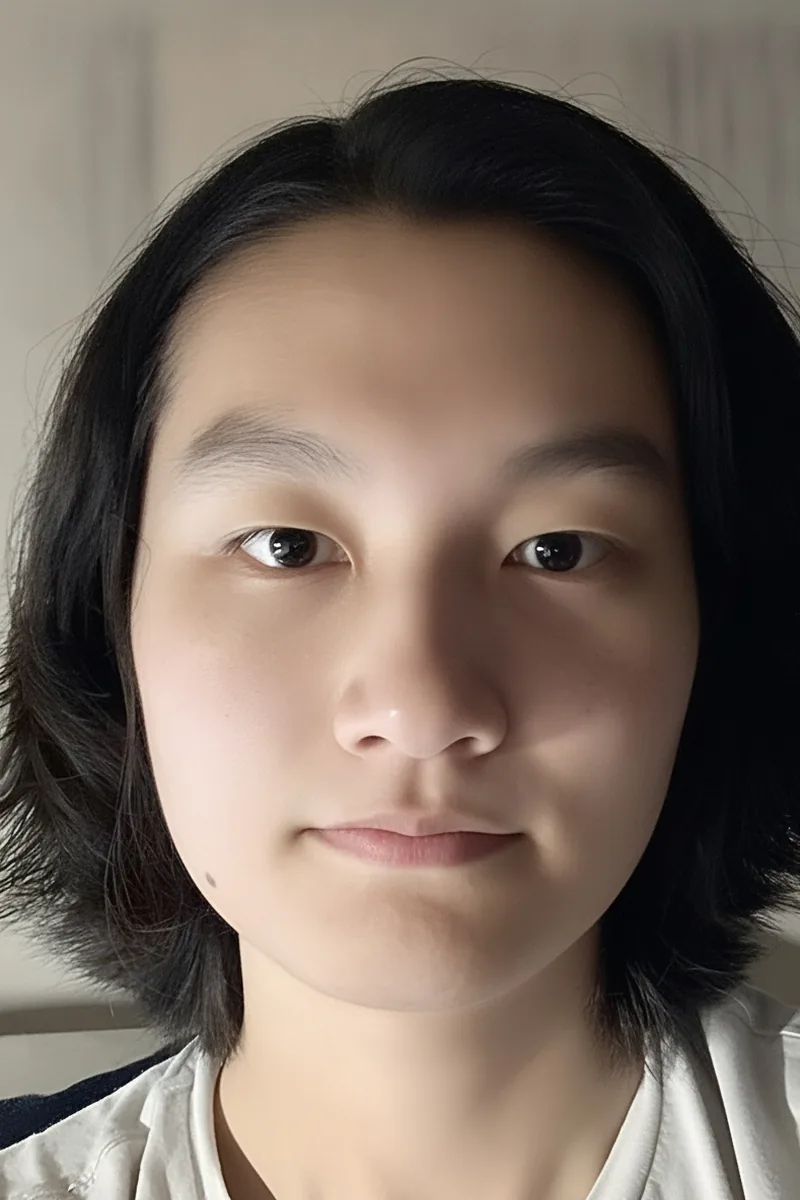
Computer science coursework at Penn State means Joshua spends most of his time thinking in algorithms — breaking complex problems into discrete, logical steps — which is essentially what math asks students to do from algebra through calculus. He's especially effective at teaching students to recognize the underlying structure of a problem before jumping into computation, a habit that comes from writing code where skipping a step means nothing runs. He scored a 1560 on the SAT and carries a 4.7 rating.

Economics at UChicago is math-intensive, so Elliot has spent years applying algebra, calculus, and statistical methods to solve real problems — not just completing problem sets in isolation. He's especially sharp at connecting abstract math procedures to concrete scenarios, which tends to unlock understanding for students who struggle with "when will I ever use this."
Mary's subject range — calculus, algebra, science, and a deep bench of English and writing courses — suggests someone who's genuinely comfortable moving between quantitative and verbal thinking, which is exactly what students need when a math problem requires reading comprehension as much as computation. She's particularly well-suited for learners who freeze up at word problems or need someone to slow down and re-explain a concept in plain language rather than textbook jargon.
Rather than rushing through problem sets, Tom zeroes in on the specific step where a student's reasoning goes off track — whether that's setting up a proportion, interpreting a word problem, or choosing the right operation. His 1520 SAT score speaks to his own quantitative comfort, and his teaching style emphasizes walking through each problem until the logic clicks rather than just arriving at an answer.
Some students need to see a concept drawn out visually; others need to work backward from the answer to understand the steps. Sabira's applied mathematics degree at Johns Hopkins trained her to approach problems from multiple angles, whether that means arithmetic fundamentals, fraction operations, or early algebraic thinking. She adapts her explanations on the fly until the reasoning genuinely clicks.
Elena's approach to math leans on her test-prep background, where she learned that most students don't struggle with the concepts themselves — they struggle with translating word problems into equations or recognizing which technique a question is really asking for. She teaches pattern recognition and strategic problem-solving across arithmetic, pre-algebra, and foundational algebra, turning vague confusion into a clear decision tree. Her style is quirky and joke-filled, which tends to lower the anxiety that makes math feel harder than it is.
Kevin treats math as a language that rewards understanding over memorization, whether a student is working through fractions or tackling introductory calculus concepts. His 34 ACT composite reflects strong quantitative reasoning, and his economics coursework at Penn keeps him applying mathematical thinking to real problems every day.
From algebra through calculus, James has spent years teaching college and high school students to see math as a connected set of ideas rather than isolated procedures. His chemistry background means he constantly ties abstract concepts — like derivatives or systems of equations — back to tangible problems where the math actually does something. That context tends to make tricky topics click faster.
Having ground through the quantitative demands of two science degrees at Rice — biostatistics, pharmacokinetics, lab data analysis — Perry treats math as something you use to answer real questions, not just a problem set to survive. He breaks down everything from algebraic manipulation to calculus by tying it back to concrete scenarios, which tends to unstick students who can follow procedures but don't understand what they're actually computing. Rated 5.0 by students.
From fraction operations in middle school to derivatives in calculus, Sherry covers a wide math range and zeroes in on the conceptual gaps that cause recurring mistakes. Her psychology training at UChicago also means she's attuned to math anxiety — she knows how to rebuild a student's confidence around word problems or multi-step equations without glossing over the rigor.
Whether a student is working through fractions or tackling quadratic equations, Phillip pinpoints the specific concept causing the roadblock rather than re-teaching an entire chapter. His biomedical engineering background at Brown means math is something he uses daily, and he explains ideas by connecting abstract procedures to concrete reasoning. Rated 5.0 across his students.
Sash's 1560 SAT required serious math performance under pressure, and her Comparative Literature training — constantly analyzing structures, patterns, and logical progressions across texts — gives her an unexpected but effective lens for tackling math problems that demand careful, sequential reasoning. She's especially useful for students who freeze up on word-heavy questions, since parsing dense language and extracting what actually matters is literally what her degree trained her to do.
Law school at the University of Chicago sharpened Elena's ability to dissect complex arguments into logical steps — a habit she now applies to walking through multi-step math problems where students need to see exactly where their reasoning breaks down. Her approach is Socratic: she listens to a student talk through a problem, then asks the precise question that exposes the gap, rather than jumping straight to the correct method. She scored a 1600 on the SAT and is rated 4.9 by students.
From simplifying fractions in pre-algebra to tackling derivatives in calculus, Michelle covers the full math pipeline and knows where the common stumbling blocks are at each level. Her biochemistry training at Rice required heavy quantitative coursework, so she's comfortable connecting abstract math concepts — like logarithmic functions or rate-of-change problems — to real applications that make them click.
Philosophy majors spend four years doing something most people don't associate with math: constructing airtight logical proofs where every step must follow necessarily from the last. Emily's BA in Philosophy from Northwestern built exactly that kind of sequential reasoning, which she now applies to walking through algebraic and arithmetic problems where students need to see why each operation is justified, not just what button to press. Her legal career reinforced that discipline — building a case and solving a multi-step equation aren't as different as they sound.
Testimonials
Because the right Math tutor makes all the difference.
Average Session Rating – Based on 3.4M Learner Ratings
Practice Math
Free practice tests, flashcards, and AI tutoring for Math
Nearby Math Tutors
Other Des Moines Tutors
Related Math Tutors in Des Moines
Frequently Asked Questions
Math instruction across Des Moines schools varies by district and grade level, so tutors work with students using whatever curriculum their school uses—whether that's a traditional textbook approach or a more conceptual program. During an initial session, a tutor will review your student's current materials, assignments, and teaching style to align personalized instruction with what's happening in the classroom. This ensures the tutoring reinforces and extends what students are already learning, rather than introducing conflicting methods.
Word problems require students to translate language into mathematical operations—a skill that's separate from computation itself. Tutors help students break down complex problems into manageable steps, identify key information, and develop a problem-solving strategy before jumping to calculations. With personalized practice and feedback, students build confidence in approaching unfamiliar problem types and learn to recognize patterns across different contexts.
Math anxiety often stems from gaps in foundational understanding or past negative experiences. Working 1-on-1 with a tutor creates a low-pressure environment where students can ask questions freely, make mistakes, and receive immediate, supportive feedback without classroom distractions or peer pressure. As students experience small wins and begin to understand concepts more deeply, their confidence naturally grows—and that confidence carries over into the classroom.
Showing work isn't just about getting partial credit—it reveals a student's thinking process and makes it easier to identify where misconceptions occur. Tutors emphasize clear, organized work from the start, teaching students to document their steps so they can catch their own errors and understand their reasoning. This habit also prepares students for more advanced math, where conceptual understanding matters far more than the final answer.
Graphing and proofs both require students to move beyond procedural steps and understand the underlying concepts—why a line has that slope, why a proof follows logically. Tutors break these topics into smaller, visual components, helping students see patterns and connections rather than memorizing steps. With guided practice and real-time feedback, students develop the reasoning skills needed to tackle these more abstract topics with confidence.
Multi-step equations often trip students up because they require balancing operations across both sides of the equation—a conceptual leap from single-step problems. Tutors use visual strategies, like balance models or color-coding steps, to help students understand why they perform the same operation on both sides. Breaking equations into smaller chunks and building complexity gradually helps students internalize the logic, so they're not just following rules but understanding the 'why' behind each step.
The first session focuses on understanding your student's current level, learning style, and specific challenges. A tutor will review recent assignments or test results, ask about topics that feel confusing, and identify whether gaps are conceptual (not understanding why) or procedural (not knowing how). This assessment guides the tutoring plan, ensuring sessions target the right areas and build on existing strengths.
Effective math tutors combine subject expertise with the ability to explain concepts clearly and adapt to different learning styles. Look for tutors with strong backgrounds in the specific math level your student needs—algebra, geometry, precalculus, or calculus—and experience working with students who have similar challenges. Varsity Tutors connects you with tutors who have proven expertise and can provide references, so you can find someone who's a great fit for your student's needs.
Let’s find your perfect tutor
Answer a few quick questions. We’ll recommend the right plan and match you with a top 5% tutor.