Award-Winning AP Calculus BC Tutors
serving Des Moines, IA
AP Calculus BC
Tutors in Des Moines
Private 1-on-1 tutoring, weekly live classes for academic support, test prep & enrichment, practice tests and diagnostics, and more to elevate grades and test scores.
Based on 3.4M Learner Ratings
UniversitiesSchools & Universities
DeliveredHours Delivered
ProficiencyGrowth in Proficiency
Who needs tutoring?
No obligation. Takes ~1 minute.
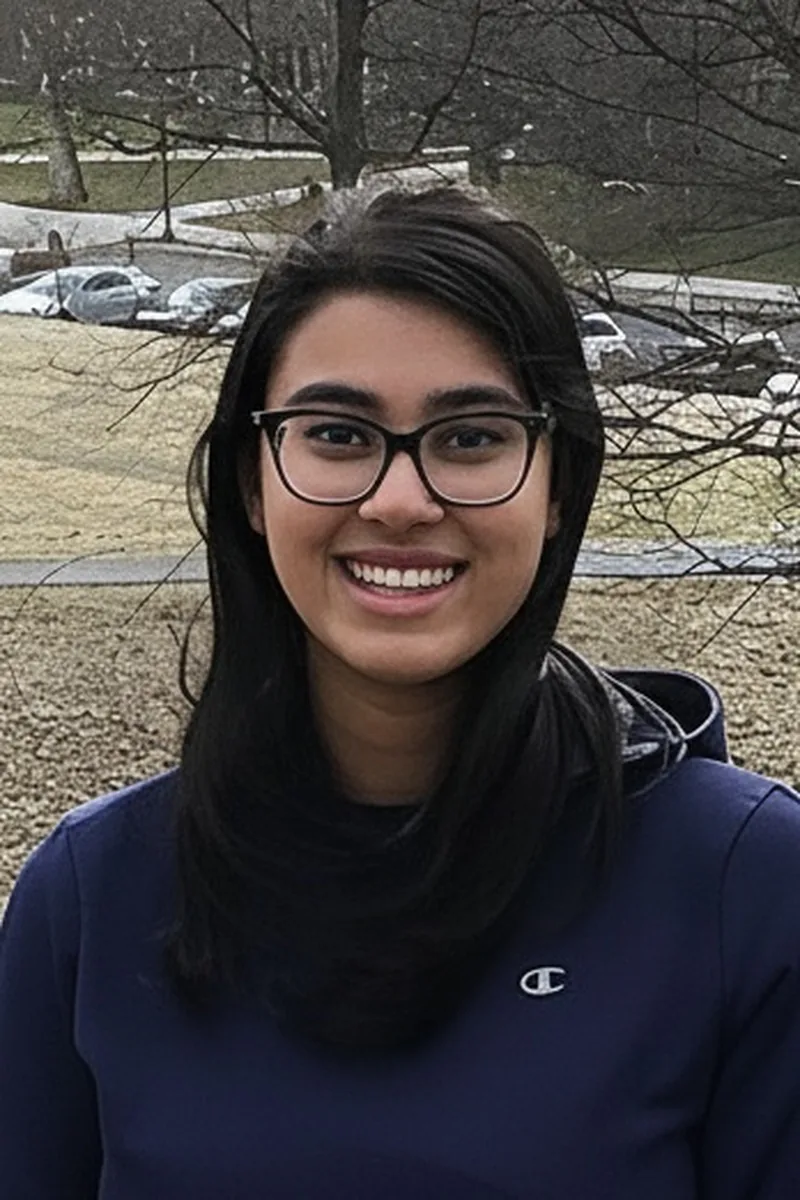
Scoring a 36 on the ACT while studying environmental engineering at Cornell means Akanksha lives in the calculus that BC demands — her coursework in fluid dynamics and pollutant modeling leans heavily on integration techniques, series approximations, and differential equations. She breaks down the transition from AB to BC by treating topics like convergence tests and parametric curves as practical extensions of tools students already trust, not as an overwhelming new syllabus. Rated 4.8 by students.
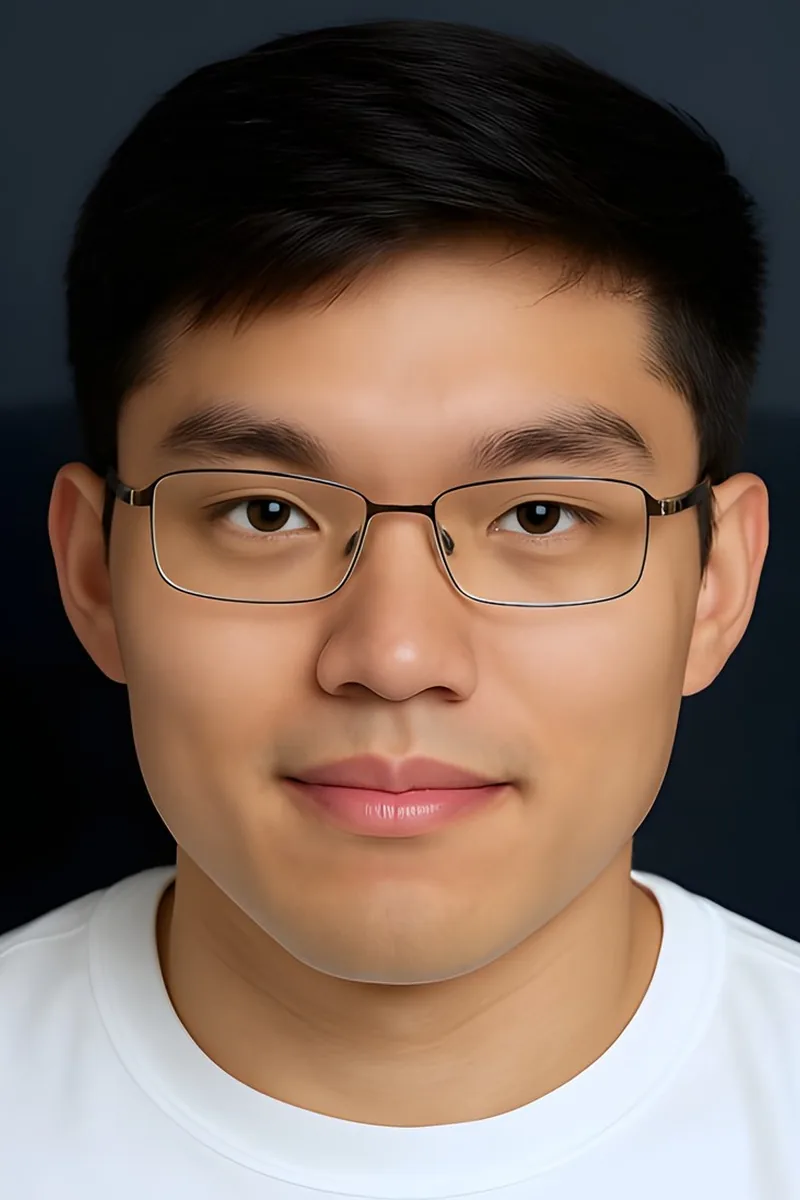
Scoring a perfect 1600 on the SAT while studying computer science at MIT suggests Brice isn't just comfortable with calculus — he's fluent in it, and BC's extension into series, parametric equations, and advanced integration techniques sits squarely in his daily coursework. He breaks down topics like convergence tests by tracing each one back to the limit reasoning students already built in AB, turning what feels like a grab bag of rules into a coherent decision-making process. Rated 4.9 by students.
Coming out of Thomas Jefferson High School for Science and Technology — one of the most rigorous STEM pipelines in the country — Rhamy had BC Calculus concepts like series convergence and parametric integration locked down before most students even encounter them. His computer engineering program at Vanderbilt keeps those tools sharp daily, since signal analysis and circuit design lean heavily on the same Taylor expansions and differential equations that define the BC curriculum. Rated 5.0 by students.
Scoring a 36 on the ACT while majoring in chemistry at MIT means Nicholas lives in the overlap where rigorous math meets scientific application — and BC Calculus sits right at that intersection. He's especially good at breaking down series convergence and integration techniques by grounding them in the kind of approximation problems he encounters in physical chemistry coursework, so the logic behind a ratio test or a Taylor expansion feels earned rather than arbitrary. Rated 5.0 by students.
Mackenzie scored a 35 on the ACT and tutors math at every level from elementary through AP, which means she knows exactly which algebra and AB gaps trip students up once BC introduces new integration techniques and series. She walks through problems like setting up improper integrals or applying ratio tests by tracing each step back to the reasoning behind it, so students build intuition they can rely on during the exam.
BC Calculus layers convergence tests, parametric equations, and polar curves on top of an already demanding AB foundation, and the pacing leaves little room to fall behind. Vinson earned a 36 ACT and National AP Scholar distinction while building the kind of deep mathematical fluency that makes series analysis and integration techniques click. He breaks each new BC topic into the AB concept it extends, so the jump never feels arbitrary.
Biomedical engineering at Johns Hopkins means Bidyut uses series approximations and differential equations to model biological systems — the same convergence tests and integration techniques that define the BC curriculum beyond AB. He's especially sharp at showing how a topic like Taylor polynomial error bounds connects back to the derivative reasoning students already trust, turning what feels like a wall of new material into a logical extension. Holds a 5.0 rating and a 36 ACT composite.
Until age 16, Viktor saw math as blind formula memorization — then a series of teachers at the right moment revealed the deeper logic underneath, and he ended up majoring in math at UChicago, where rigorous proof-based coursework made concepts like convergence and infinite series feel inevitable rather than arbitrary. That shift from "memorize the ratio test" to "understand why it works" is exactly what he brings to BC Calculus, especially when students hit the wall where AB intuition stops and formal reasoning about Taylor polynomials and error bounds needs to take over. His 1600 SAT and current CS master's work at NYU keep that analytical edge sharp.
Notre Dame's Science-Computing program front-loads calculus-heavy coursework — Aidan moved through multivariable calc and differential equations while simultaneously applying integration techniques and series in his science courses, so BC topics like Taylor polynomials and convergence tests landed as tools he actually needed, not just exam hurdles. He's especially sharp at tracing where a BC struggle — say, setting up an integral in polar coordinates or choosing the right convergence test — traces back to an AB concept that needs reinforcing. His 35 ACT and premed science background keep explanations precise and grounded.
Biomedical engineering eats BC Calculus for breakfast — Spencer's coursework has him building models with differential equations, approximating functions with series, and integrating across complex domains before he even opens his calc textbook. That real-time immersion means he can walk through something like the Lagrange error bound or a tricky polar area setup with the fluency of someone who just used it in a lab report, not someone dusting off old notes. His 1550 SAT and 35 ACT speak to the test-taking precision he pairs with that technical depth.
BC Calculus piles on series convergence, parametric equations, and polar coordinates on top of an already demanding AB curriculum. Julie's Princeton training in statistics and machine learning means she regularly uses advanced calculus as a tool, giving her an intuitive sense for which techniques apply where. She tackles integration strategies and Taylor series by connecting each method back to the core idea it extends.
A year as a course assistant in Harvard's math department teaching introductory calculus gave Richard a close-up view of exactly where students' AB foundations crack under the weight of BC material — particularly when series convergence and parametric functions demand a more flexible kind of reasoning. He breaks down topics like interval of convergence arguments and integration techniques by rebuilding the underlying logic rather than layering on new formulas. His perfect 1600 SAT and 36 ACT suggest the kind of precision he brings to each explanation.
Testimonials
Because the right AP Calculus BC tutor makes all the difference.
Average Session Rating – Based on 3.4M Learner Ratings
Practice AP Calculus BC
Free practice tests, flashcards, and AI tutoring for AP Calculus BC
Nearby AP Calculus BC Tutors
Other Des Moines Tutors
Related Math Tutors in Des Moines
Frequently Asked Questions
AP Calculus BC covers all Calculus AB topics plus additional material including parametric equations, polar coordinates, vector-valued functions, and series/sequences. The exam tests your understanding of limits, derivatives, integrals, differential equations, and applications like optimization and related rates. Most students take AP Calculus BC after completing Precalculus, though some strong math students progress directly from Algebra II with additional preparation.
The main difficulty is the pace—you're covering two years of calculus content in one year, which requires strong foundational skills in algebra and trigonometry. Many students struggle with conceptual understanding versus procedural fluency; you need to know not just how to solve problems, but why the methods work. Time management on the exam is also critical, as you have limited time for both multiple-choice and free-response sections.
Expert tutors can identify gaps in your foundational knowledge, create a personalized study plan aligned with the AP curriculum, and provide targeted practice on your weakest topics. They can also teach you efficient problem-solving strategies, help you understand the reasoning behind calculus concepts rather than just memorizing procedures, and build your confidence through practice tests and timed drills. Personalized 1-on-1 instruction is particularly effective for calculus because it allows tutors to address your specific misconceptions in real time.
Score improvement depends on your starting point and how consistently you work with a tutor. Students who start with weak fundamentals typically see the most dramatic gains by strengthening prerequisite skills. Most students who commit to regular tutoring sessions and practice between meetings improve by 1-2 score points on the AP scale (1-5), though some improve more. The key is consistent effort—tutoring is most effective when combined with your own practice and review outside of sessions.
Your first session is typically a diagnostic and planning meeting. A tutor will assess your current understanding of calculus concepts, identify your strongest and weakest areas, and discuss your AP exam goals and timeline. Based on this conversation, they'll create a personalized study plan that targets your specific needs, whether that's building foundational skills, mastering particular topics, or refining test-taking strategies. This foundation helps make all future sessions more productive.
The exam has two sections: multiple-choice (45 minutes, 30 questions) and free-response (1 hour 30 minutes, 6 questions). A smart strategy is to tackle multiple-choice questions you're confident about first, then return to harder ones; don't get stuck on one question. For free-response, show all your work even if you make a computational error, since partial credit is awarded for correct methodology. Practice full-length timed exams regularly to build pacing skills and reduce test anxiety.
You should have strong skills in Precalculus, including trigonometry, functions, and exponential/logarithmic functions. Solid algebra skills are essential since calculus problems often involve algebraic manipulation. If you're weak in any of these areas, a tutor can help you fill gaps quickly, though addressing major deficiencies may require additional time before diving deep into calculus topics. Many Des Moines students benefit from a few tutoring sessions focused on prerequisite review before tackling the full AP curriculum.
Varsity Tutors connects you with expert tutors who specialize in AP Calculus BC and understand the specific demands of the exam. You can share your goals, current level, and availability, and we'll match you with a tutor who fits your needs. Most students start with 2-3 sessions per week during the school year, adjusting frequency as the exam approaches. Get in touch to discuss your situation and find the right tutor to help you succeed.
Let’s find your perfect tutor
Answer a few quick questions. We’ll recommend the right plan and match you with a top 5% tutor.