Award-Winning AP Spanish Language & Culture Tutors
serving Orlando, FL
AP Spanish Language & Culture
Tutors in Orlando
Private 1-on-1 tutoring, weekly live classes for academic support, test prep & enrichment, practice tests and diagnostics, and more to elevate grades and test scores.
Based on 3.4M Learner Ratings
UniversitiesSchools & Universities
DeliveredHours Delivered
ProficiencyGrowth in Proficiency
Who needs tutoring?
No obligation. Takes ~1 minute.

AP Spanish Language & Culture asks students to do more than conjugate verbs — they need to interpret audio sources, synthesize cultural texts, and write persuasive essays entirely in Spanish. Sebastian pairs strong Spanish skills with the kind of structured exam strategy that earned him a 4.8 rating from students. He breaks down each task type (presentational writing, interpersonal speaking, interpretive reading) so students know exactly what the rubric rewards.
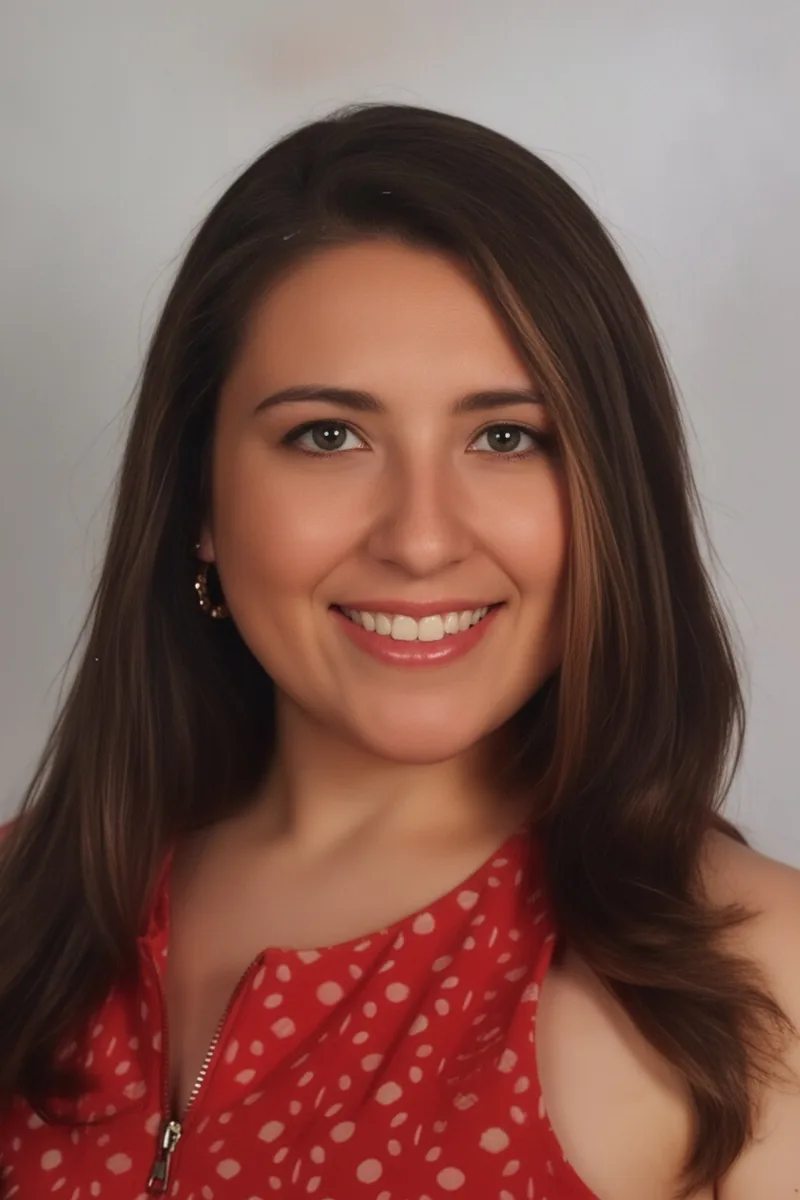
Growing up in Miami gave Caitlin daily exposure to Spanish in real-world contexts — the kind of authentic, unscripted language that mirrors what the AP exam throws at students in its interpretive listening and reading sections. She teaches Spanish 1 through 4 and pairs that progression with her own experience navigating Spanish across levels, so she knows exactly which grammar gaps (subjunctive triggers, formal vs. informal register) trip students up on timed free-response tasks. Rated 5.0 by students.
Born in Colombia and raised speaking Spanish at home, Manuela brings native fluency to AP Spanish Language & Culture — but what sets her apart is her academic training in Romance Languages, which means she can explain the grammar rules she uses instinctively. She tackles the exam's trickiest components, like the persuasive essay and cultural comparison presentational speaking tasks, by drilling source synthesis and formal register. Her 5.0 rating speaks to how well that combination works.
Fluent in Spanish since childhood, Adriana treats AP Spanish Language & Culture as more than vocabulary drills — she digs into the interpretive and presentational communication tasks that drive the exam, from synthesizing audio sources to crafting persuasive essays in Spanish. Her Rice University background in both sciences and humanities means she can coach students through the cultural comparison and argumentative writing sections with real analytical depth. Rated 5.0 by students.
Growing up speaking French, Haitian Creole, and English before learning Spanish and Italian academically, Muriel understands from the inside how multilingual thinkers process a new language's grammar, idioms, and register shifts — the exact skills the AP exam's persuasive essay and interpersonal speaking tasks test under pressure. Her BA in Spanish and Italian Literature means she reads and writes in formal academic Spanish, not just conversational Spanish, which is the register gap that trips up most AP students on exam day.
Native fluency gives Solange an ear for the idiomatic phrasing and natural register that score well on AP Spanish Language's interpersonal and presentational tasks. She digs into the cultural comparison essays and audio-response prompts that trip up even advanced students, coaching them to move beyond translated English and into authentic Spanish expression. Rated 5.0 by her students.
I am very interested in a career in the medical field, so I am apart of some pre-medical organizations. I really enjoy playing all different sports, from soccer to volleyball to tennis.
All students can learn, however, not all students learn the same way. The key to learning and the most important part of any teachers job is helping students understand how they learn best. That is what I do well.
Latin American Studies as a major means Alyssa spent years reading, writing, and arguing about the Spanish-speaking world in an academic context — exactly the kind of cultural depth the AP exam's free-response prompts reward. She teaches Spanish from level 1 through AP and conversational Spanish, so she can quickly identify whether a student needs to shore up subjunctive mechanics or sharpen their ability to sustain a formal written argument under timed conditions. Rated 4.9 by students.
Scoring well on the AP Spanish Language exam means toggling fluently between reading comprehension, audio interpretation, and spontaneous spoken responses — skills that require more than grammar drills. Patrick builds students' confidence in each mode of communication by practicing with authentic sources like news articles, podcasts, and cultural essays, sharpening both accuracy and the natural flow that AP graders reward.
A cognitive sciences degree with a minor in Spanish means Adam approaches the language analytically — he treats subjunctive triggers and register shifts as pattern-recognition problems, which clicks for students who struggle with the "just memorize it" approach to grammar. His 34 ACT confirms strong reading and reasoning skills that translate directly into coaching the AP exam's interpretive reading and audio tasks, where extracting meaning from authentic Spanish sources under time pressure is half the battle.
A year as an exchange student at the University of Puerto Rico — taking courses in Spanish linguistics, business Spanish, and constitutional law entirely in Spanish — gave Chiquita the kind of immersive academic fluency that the AP exam's timed persuasive essay and presentational speaking tasks demand. She later earned a graduate certificate in Spanish Interpretation and Translation from UCLA, training that sharpened her ability to move between registers and process Spanish at speed, which is exactly what the interpretive listening section requires. Rated 5.0 by students.
Iselee earned her bachelor's degree in Spanish from Loyola Marymount University, which means the AP exam's demand for formal written register and nuanced cultural knowledge sits squarely in her academic wheelhouse. Her current graduate work in digital communication adds a layer of rhetorical awareness — understanding how audiences process arguments — that she applies to coaching the timed persuasive essay, where students must synthesize Spanish-language sources into a coherent, register-appropriate response. Rated 4.8 by students.
Speaking five languages — Gujarati, Hindi, Spanish, Arabic, and French — gives Sahar an intuitive grasp of how Spanish grammar and idiomatic expression actually work in conversation, not just on paper. She digs into the interpersonal and presentational communication modes the AP exam tests, from crafting persuasive essays with proper subjunctive usage to navigating audio sources on cultural topics. Rated 5.0 by students.
Christopher's memory-sport training — he's actively working toward a Guinness World Record — translates surprisingly well to the vocabulary and conjugation retention that AP Spanish demands, especially when students need to internalize subjunctive triggers and idiomatic expressions under exam pressure. His biology coursework at Johns Hopkins doesn't scream Spanish, but his ACT score of 32 and comfort across multiple academic disciplines show he knows how to systematically tackle material outside his primary lane.
Earning a strong score on AP Spanish Language & Culture means toggling between interpersonal conversation, presentational writing, and audio-source synthesis — often in the same exam sitting. Sarah's Spanish major and her background in international education give her native-level command of the language and a clear method for tackling the cultural comparison essay, which is where most students lose points.
Scoring well on the AP Spanish Language & Culture exam means toggling between interpersonal conversation, presentational writing, and audio-source synthesis — often in the same sitting. Heather's deep Spanish background, built through years of advanced coursework and one-on-one tutoring, means she can drill the specific skills each task type demands. She's particularly strong at coaching students through the persuasive essay, where organizing an argument in Spanish trips up even strong speakers.
Hillel's geology research on Antarctic ice sheet dynamics — conducted partly through Spanish-language scientific literature — gives him a practical connection to the formal register and academic vocabulary the AP exam's persuasive essay demands. He also teaches conversational Spanish and Hebrew, so he's comfortable switching between languages and coaching students through the interpersonal speaking tasks where real-time fluency matters most. Rated 5.0 by students.
Rebecca's anthropology degree trained her to analyze cultural practices across communities — the exact skill the AP Spanish exam's cultural comparison free-response prompt tests. She teaches Spanish at every level from 1 through 4 plus conversational, so she can diagnose whether a student's weak spot is grammar mechanics like subjunctive triggers or the higher-order task of building a nuanced argument in formal register. Her 1550 SAT score reflects the kind of disciplined, timed-test thinking she brings to AP prep.
Success on the AP Spanish Language & Culture exam depends on toggling fluently between interpretive, interpersonal, and presentational communication — often within a single task. Margaret tackles each mode separately, drilling persuasive email writing one session and audio-source synthesis the next, so students build confidence across the full exam format. Her own deep engagement with Spanish literature and conversation gives her the cultural fluency this exam specifically rewards.
Being Colombian and fully bilingual, Esteban doesn't just teach Spanish — he thinks, writes, and jokes in it daily. For AP Spanish Language & Culture, that native fluency matters: he coaches students through the interpersonal speaking tasks, persuasive essays, and audio-source questions using authentic cultural contexts from across the Spanish-speaking world. His 4.9 rating speaks to how effectively he prepares students for both the language mechanics and the cultural comparisons the exam demands.
Testimonials
Because the right AP Spanish Language & Culture tutor makes all the difference.
Average Session Rating – Based on 3.4M Learner Ratings
Nearby AP Spanish Language & Culture Tutors
Other Orlando Tutors
Related Languages Tutors in Orlando
Frequently Asked Questions
The AP Spanish Language & Culture exam tests your ability to communicate in Spanish across three modes: interpersonal (conversations), interpretive (reading and listening), and presentational (speaking and writing). You'll encounter authentic Spanish-language materials like news articles, podcasts, and videos, then respond through essays, spoken responses, and conversations. The exam is designed to assess real-world language proficiency rather than just grammar rules, so preparation focuses on building confidence with authentic communication.
Score improvement depends on your starting point and preparation intensity, but students who work with tutors on targeted weak areas—whether that's the speaking section, essay writing, or listening comprehension—often see meaningful gains. Many students benefit from focused practice on the specific exam format and timing, which can make a significant difference since the AP Spanish exam rewards both accuracy and fluency. A tutor can help you identify which sections need the most work and create a study plan that maximizes your preparation time.
The speaking section requires you to think quickly and respond naturally in Spanish—something that's hard to practice alone. Working with a tutor gives you a conversation partner who can simulate the actual exam format, provide real-time feedback on pronunciation and grammar, and help you develop strategies for thinking in Spanish rather than translating from English. Regular speaking practice also builds the confidence you need to handle unexpected questions and maintain fluency under pressure.
AP Spanish reading and listening sections challenge you with authentic materials at native-speaker pace, which requires exposure to real Spanish content and strategic note-taking skills. A tutor can teach you how to identify key vocabulary in context, recognize common question patterns, and manage the timing pressure—skills that aren't always covered in regular classroom instruction. They can also help you build familiarity with different Spanish accents and regional expressions you'll encounter on the exam.
Students often struggle with essay timing, trying to write too much and running out of time, or focusing too heavily on complex grammar at the expense of clear communication. Common errors include inconsistent verb tenses, forgetting to address all parts of the prompt, and using English sentence structure translated into Spanish. A tutor can help you develop a planning strategy that ensures you address the prompt fully, practice writing under timed conditions, and build a repertoire of useful phrases and transitions that sound natural to native speakers.
Most students benefit from 3-6 months of focused preparation, though this varies based on your current Spanish proficiency level. A typical study schedule might include 2-3 tutoring sessions per week combined with independent practice—using authentic Spanish media, practice tests, and targeted grammar review. Starting early gives you time to identify weak areas and build the fluency and confidence needed for the speaking and writing sections, which require more time to develop than test-taking strategy alone.
Look for tutors who have native or near-native Spanish fluency, ideally with experience teaching AP Spanish or similar advanced language courses. They should understand the specific exam format and scoring rubrics, and be able to teach both language skills and test-taking strategies. Varsity Tutors connects you with expert tutors in Orlando who have proven experience helping students succeed on the AP Spanish exam and can tailor instruction to your specific needs.
Your first session typically includes an assessment of your current Spanish proficiency level, a discussion of your goals and timeline, and an overview of which exam sections feel most challenging. The tutor will likely review the exam format with you, identify your strongest and weakest areas, and create a personalized study plan. This foundation helps ensure that subsequent sessions are focused and efficient, addressing the specific skills and strategies that will have the biggest impact on your score.
Let’s find your perfect tutor
Answer a few quick questions. We’ll recommend the right plan and match you with a top 5% tutor.