Award-Winning Math Tutors
serving Gilbert, AZ
Math
Tutors in Gilbert
Private 1-on-1 tutoring, weekly live classes for academic support, test prep & enrichment, practice tests and diagnostics, and more to elevate grades and test scores.
Based on 3.4M Learner Ratings
UniversitiesSchools & Universities
DeliveredHours Delivered
ProficiencyGrowth in Proficiency
Who needs tutoring?
No obligation. Takes ~1 minute.
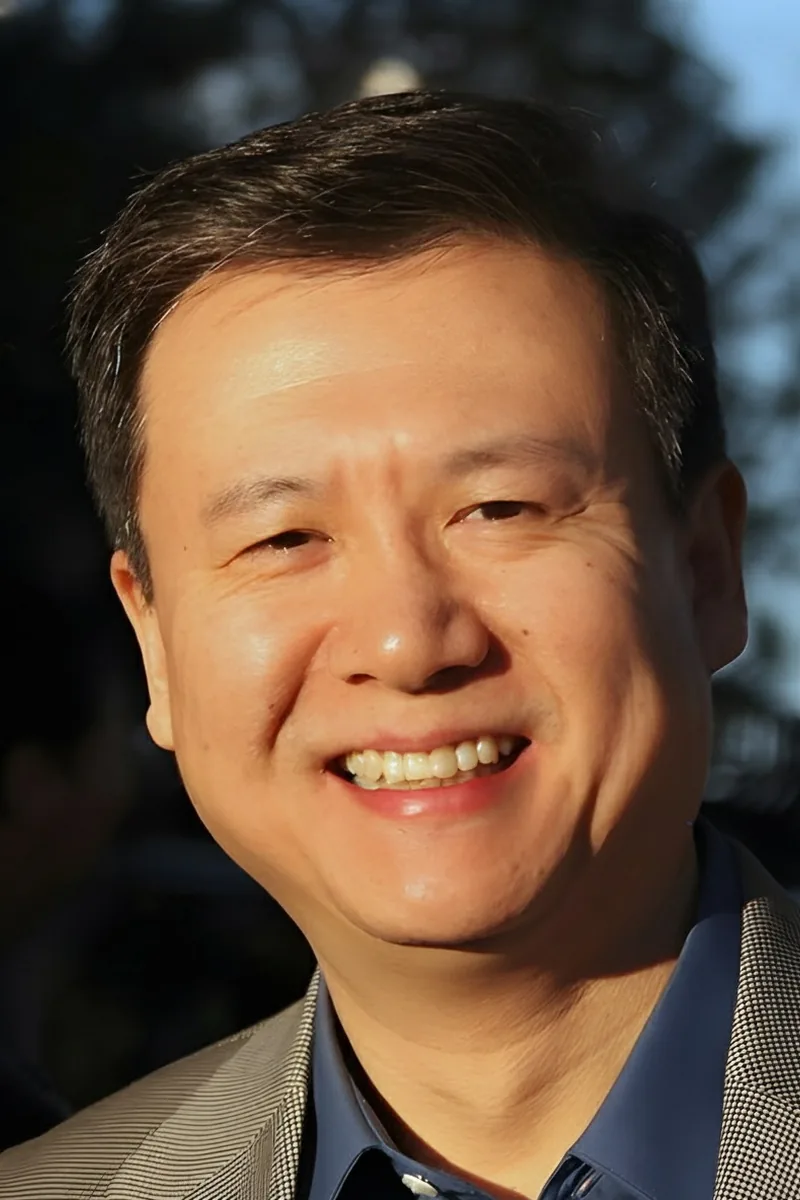
Tim teaches math from pre-algebra through multivariable calculus and differential equations, which means he sees the full arc of how early gaps — a shaky grasp of fractions, or confusion about variable manipulation — snowball into bigger problems later. His physics training makes him especially good at connecting abstract math to tangible applications, whether that's using slope to describe motion or applying systems of equations to real scenarios.
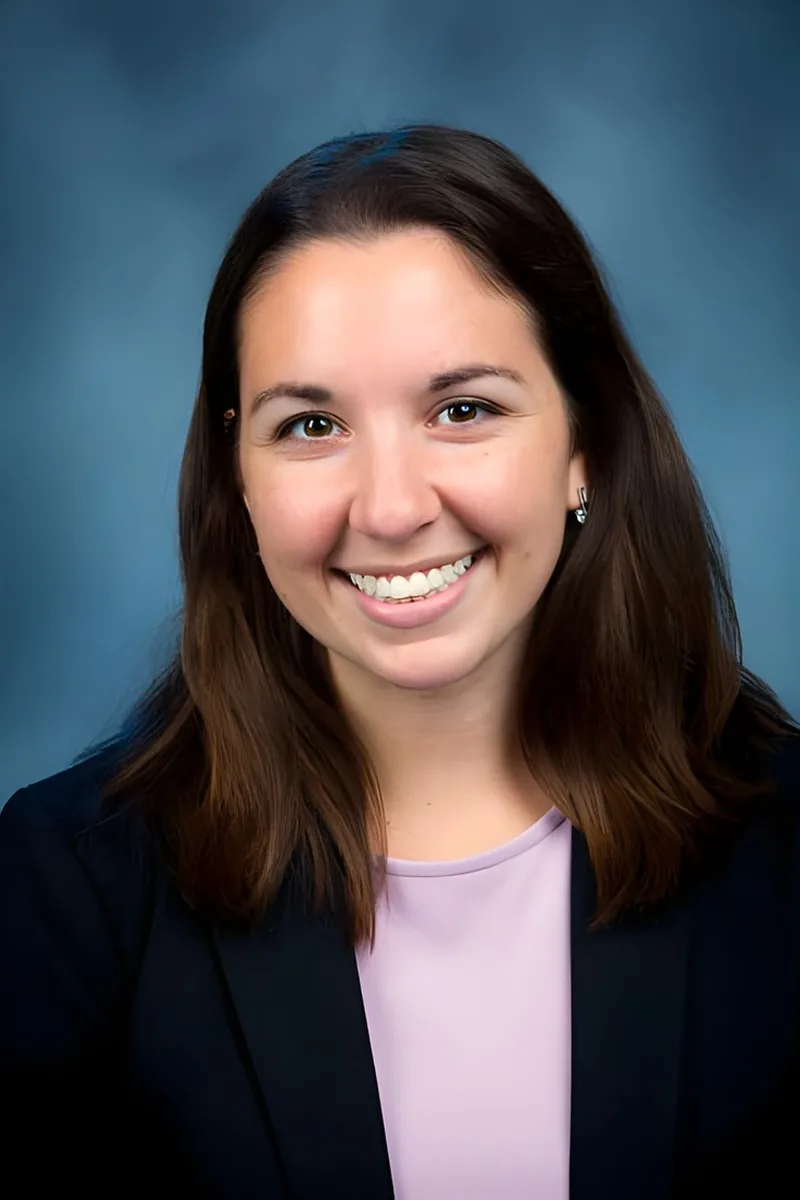
Bridget holds a mathematics minor and currently teaches high school math, which means she's seen firsthand where students get stuck — whether it's fraction operations in middle school or function transformations in pre-calc. She breaks problems into visual, step-by-step reasoning so students understand the logic behind each procedure. That approach builds the kind of flexibility that carries across math courses.
I am a graduate student currently working on my Master's Degree in Big Data Systems.
Whether it's fractions tripping up a sixth grader or logarithms stumping a high schooler, Chelsea pinpoints exactly where a student's understanding breaks down and rebuilds from there. Her BYU math education degree trained her in how students actually learn mathematical concepts — not just how to solve problems, but how to teach the reasoning behind each step. She's a visual thinker who loves drawing diagrams and graphs to make abstract ideas click.
Earning a 34 ACT and making Valedictorian required Ben to master math alongside his humanities strengths — he didn't get to skip the quantitative side just because he loved Latin and literature. That well-rounded discipline means he's particularly good at teaching pre-algebra and algebra to students who think of themselves as "not math people," since he knows how to bridge the gap between verbal reasoning and numerical problem-solving. He holds a 4.7 rating from students.
Audrey treats math as a problem-solving skill rather than a set of formulas to memorize, which makes her especially effective with students who've started to believe they're just "not math people." She covers everything from fraction operations and order of operations up through early algebra concepts, building each new idea on the reasoning behind the last. Her 5.0 rating speaks to how well that approach clicks.
From basic arithmetic through calculus, Dale's engineering background means he sees math as a connected system rather than isolated chapters. He unpacks each new concept by linking it to what a student already knows, which makes transitions — like moving from multiplication into fractions, or from fractions into ratios — feel logical instead of jarring. Rated 5.0 by students.
From basic arithmetic through precalculus, Madison approaches math as a connected set of ideas rather than isolated procedures to memorize. Her engineering program at the University of Arizona demands daily problem-solving across algebra, geometry, and data analysis, so she brings current fluency — not distant memory — to every session.
Thirty-five years as an electrical engineer meant Robert used math daily — from linear algebra and differential equations to statistical analysis and complex number theory. That real-world fluency lets him show students not just how to solve a problem, but why a particular method works and where it actually shows up outside the classroom. He holds a 4.7 rating from students.
When I was in high school, I remember seeing the joy of my math teachers when they would teach in class. This inspired me to become a high school math teacher. The first step was becoming a peer tutor to my classmates. This lead to tutoring math to college students. Then tutoring students while working as a TA. Then I worked as a data scientist which not only did I understand more how to apply math in the workspace, but also learned how to explain math concepts to coworkers without a strong math background. This helped me to shape my tutoring philosophy to relate to the person being tutored and this opened the door to me teaching high school calculus 1 & calculus 2! I am currently teaching precalculus at a community college.
Whether it's fractions that never quite made sense or word problems that feel like a foreign language, Niabari pinpoints exactly where a student's understanding breaks down and rebuilds from there. Her approach emphasizes number sense and problem-solving logic over rote procedures, giving students tools they can apply across arithmetic, pre-algebra, and beyond.
Galen scored a 34 ACT and 1480 SAT, both of which required strong quantitative reasoning, and he currently teaches algebra and calculus alongside his humanities subjects. He's particularly effective with students who think of themselves as 'not math people' — his background in logic and structured argumentation gives him a way of explaining mathematical reasoning that feels less like memorizing procedures and more like following an argument to its conclusion.
Quantitative reasoning runs through everything Courtney does, from biostatistics in her graduate research to the algebra and data analysis she teaches. She connects abstract math concepts — proportions, functions, interpreting graphs — to concrete scenarios so the logic behind each step makes sense, not just the procedure.
From fractions and ratios in middle school to linear equations and coordinate geometry in high school, Alexis treats math like a sport — drilling fundamentals until problem-solving becomes instinct. Her coaching-style approach means students don't just memorize formulas; they practice applying them under varied conditions until the logic clicks. Rated 5.0 by students.
Elizabeth's master's in Chinese politics required heavy quantitative analysis — interpreting economic data, modeling political trends, working through statistical methods — so she's no stranger to putting math to work under pressure. Her 1500 SAT score backs up that comfort with numbers, and she's particularly good at breaking down word problems where the math hides behind confusing language, a skill sharpened by years of parsing dense academic texts. Rated 5.0 by students.
Linda's primary expertise lives in the humanities, but her analytical training through two philosophy degrees sharpens the kind of logical, step-by-step thinking that math demands. She's a solid fit for students who need support with foundational concepts and who benefit from a tutor who explains the reasoning behind each step rather than just demonstrating procedures.
Ivanna's graduate work in political science leaned heavily on quantitative methods — statistical analysis, interpreting survey data, building models of electoral outcomes — which keeps her fluent in the kind of applied math that makes abstract operations feel purposeful. She's particularly good at reframing a problem a student finds intimidating into smaller, logical pieces, the same way she'd break down a complex dataset. Rated 5.0 by students.
Whether it's simplifying algebraic expressions or working through a calculus limit, Michelle approaches math by identifying exactly where a student's reasoning breaks down and rebuilding from that point. Her 1490 SAT score speaks to her own quantitative fluency, and she's comfortable across the full high school math sequence from basic operations through derivatives and integrals.
"There's no such thing as a math person" isn't just something Kristi says — it's a conviction she's tested across nearly a decade of teaching students from elementary arithmetic through undergraduate multivariable calculus. Her time as a teaching assistant in Harvard's Mathematics Department sharpened her ability to explain the same concept three different ways until one clicks. She holds a 5.0 rating.
Alice earned a 36 ACT composite, which required fluency across algebra, geometry, and pre-calculus concepts under serious time pressure. She's particularly effective at breaking down word problems — translating real-world scenarios into equations and identifying which mathematical tools apply. Her scientific training at Yale reinforces a methodical, step-by-step approach to problem-solving.
Daniel's science background means he approaches math as a tool that has to work in real contexts — calculating dosages, interpreting data, modeling biological processes. He covers everything from foundational arithmetic and fractions through algebra and introductory calculus, connecting each concept to practical problem-solving rather than leaving it abstract. Students who wonder "when will I ever use this?" tend to stop asking that question pretty quickly.
Annelisa scored a 1570 on the SAT, which demands solid fluency in algebra, data analysis, and problem-solving under time pressure. She's a strong fit for students who need to solidify core math concepts — fractions, ratios, linear equations — or who want structured practice tackling word problems without freezing up.
From algebra through multivariable calculus, Jake teaches across the full math curriculum and zeroes in on the specific step where a concept stops making sense. His 1580 SAT — earned in part through the math section — speaks to the precision and problem-solving instincts he brings to every session. Rated 4.9 by students.
From arithmetic fundamentals through calculus, Diana has tutored the full spectrum of math at the college and secondary level. She treats every problem like a puzzle to decode — asking students targeted questions to figure out where their reasoning breaks down, then offering an alternate explanation that clicks. Rated 4.9 by students.
Philosophy training at Arizona State — where Rachelle graduated Summa Cum Laude — sharpened the kind of logical, step-by-step reasoning that makes math click. She breaks down problems in arithmetic, algebra, and geometry by teaching students to identify what a question is actually asking before jumping into calculations. That emphasis on structured thinking carries across every math level she covers, from elementary concepts through calculus.
From simplifying fractions in pre-algebra to integration techniques in calculus, Alex covers the full math pipeline and spots exactly where a student's understanding breaks down. His chemical engineering training at Washington and Lee required heavy applied math — differential equations, linear algebra, numerical methods — so he can show students how abstract procedures actually get used in the real world.
Three separate bachelor's degrees and a 1490 SAT give John a cross-disciplinary perspective that makes math feel less isolated and more like a tool. He's comfortable across a wide range — from fraction operations and proportional reasoning up through functions and introductory calculus — and adapts his explanations to whatever level a student is working at.
From fraction operations in elementary school to trigonometric identities in high school, Arshia covers the full math pipeline and adjusts her explanations based on where a student's understanding actually breaks down. Her biology training at UCLA required heavy quantitative coursework — statistics, calculus, dimensional analysis — so she's comfortable translating abstract math into concrete, solvable steps. She's rated 5.0 across her students.
Three years as a primary instructor at a Kumon Math and Reading Center gave Megan a deep understanding of how math skills build on each other — from fraction operations and proportional reasoning up through polynomial functions and beyond. She's studying Computer Science at Harvey Mudd College, where math isn't abstract but the foundation for everything, and she brings that same practical clarity to every concept she teaches.
I am a graduate student at Arizona State University studying Human and Social Dimensions of Science and Technology, and am passionate about the value of education at all levels. Previously I worked at the US Department of Energy on energy technology in Washington, DC. I have enjoyed setting up roots in Phoenix over the past few years, and am excited about sharing my knowledge and passion for learning with others in the area.I have a knack for explaining complicated ideas to people in simple terms, enjoy deepening people's understandings of issues, and value education highly. All of these characteristics make me an ideal tutor for Varsity Tutors, and I look forward to the opportunity to share my academic experiences and skills with tutees. In addition, I can give an expert's perspective on a wide range of topics including political science, public policy, various topics in science and technology, as well as an academic success-oriented mindset.
I am Arizona born and raised, my education includes an NYC law school degree with an undergraduate BS degree from University of Miami. In college I majored in Health Sciences with minors in Psychology and Public Health while in law school I leaned into corporate law and finance. Between law school and college I've pretty much covered every topic under the sun! In my spare time, I enjoy reading (especially mystery novels), pretending I'm a chef, and meditating.
From pre-algebra through multivariable calculus, Alex has tutored nearly every level of math on offer — and his 1560 SAT score backs up the depth of that knowledge. He pinpoints exactly where a concept breaks down for a student, whether it's fraction operations in middle school or chain rule applications in calculus, and rebuilds understanding from that specific gap.
Whether it's fractions tripping up a middle schooler or logarithms confusing a high schooler, Kyle identifies the specific conceptual gap and addresses it directly. His subject range spans pre-algebra through calculus, and he earned a 32 ACT — so he understands both the fundamentals and how they build toward higher-level problem solving.
From basic fraction operations to integration by parts, Elise has tutored math at nearly every level — elementary arithmetic through graduate-level statistics. Her biomedical sciences background means she often connects abstract math concepts to tangible applications, like using exponential functions to model drug metabolism or applying probability to genetics problems. That cross-subject perspective tends to make the "why" behind formulas click.
Psychology research runs on numbers, which means Robert spends much of his graduate work in the quantitative side of math — calculating probabilities, interpreting distributions, and solving equations that model real data. He's particularly strong at connecting abstract math concepts to concrete problems, making topics like functions, proportions, and algebraic reasoning feel less arbitrary. Students who struggle with the "why" behind math procedures tend to click with his approach.
From simplifying fractions to setting up word problems, Thara zeroes in on the reasoning behind each step so students aren't just following a memorized recipe. Her pre-med coursework at Duke keeps her math skills sharp, and algebra has been her most-tutored subject — she knows exactly where younger students tend to get stuck.
From basic multiplication strategies in third grade to equation-solving in eighth, Jamila has taught math across the full K–12 spectrum as both a classroom substitute and a private tutor. She zeros in on the specific step where a student's understanding breaks down — whether that's regrouping in subtraction or distributing negative signs — and rebuilds confidence from that exact point.
Ken's computer science training at ASU's Barrett Honors College means he uses math daily — from discrete logic to linear algebra — and can show students why concepts like proportional reasoning and integer operations matter beyond the textbook. He breaks problems into smaller steps the same way a programmer breaks code into functions, making multi-step problems feel manageable.
Jeff covers math fundamentals from arithmetic through early algebra, emphasizing the logical reasoning that connects each concept to the next. His approach mirrors the structured thinking he uses in legal studies: identify what you know, figure out what's missing, and work step by step toward the answer.
A dual background in physics and mathematics means Sam sees math not as isolated procedures but as a connected toolkit — fractions feed into ratios, ratios feed into proportional reasoning, and all of it shows up again in algebra. He pinpoints exactly where a student's understanding breaks down and rebuilds from that specific gap, whether it's integer operations or translating word problems into equations.
Testimonials
Because the right Math tutor makes all the difference.
Average Session Rating – Based on 3.4M Learner Ratings
Practice Math
Free practice tests, flashcards, and AI tutoring for Math
Other Gilbert Tutors
Related Math Tutors in Gilbert
Frequently Asked Questions
Varsity Tutors matches Gilbert students with expert Math tutors for 1-on-1 instruction. We pair each student with a tutor based on their specific needs, learning style, and goals.
Whether you need homework help, exam prep, or want to get ahead, our Math tutors are ready to help.
Common challenges include gaps from earlier material, difficulty with specific concepts, and trouble applying learning to new problems. These issues can snowball quickly in Math.
A tutor identifies where you're stuck, fills in gaps, and provides targeted practice. The 1-on-1 format means you get help exactly where you need it.
Tutors work with your student's actual coursework—homework assignments, class notes, and upcoming tests. This keeps tutoring directly relevant to what's happening in the classroom.
When you share information about your student's school and curriculum, we can match you with a tutor who has relevant experience.
All tutors complete background checks, credential verification, and teaching evaluation. Many of our Math tutors hold advanced degrees or have years of teaching experience.
You can review tutor profiles to find someone with the right background for your student's level and needs.
Many students see improved grades within a few weeks, along with better understanding of Math concepts and more confidence tackling challenging material.
Tutors track progress and adjust their approach to ensure continued improvement.
Most students benefit from 1-2 sessions per week. More frequent sessions help if your student is significantly behind or has an important exam coming up.
Your tutor can recommend a schedule based on your student's specific situation and goals.
Tutoring is purchased in packages of hours, with rates varying by tutor experience. Varsity Tutors offers several options to fit different budgets and needs.
You can discuss pricing during your consultation to find what works best.
Your tutor will assess where your student is, discuss goals, and start working on priority areas. Most students bring current homework or upcoming test material to focus on.
By the end, you'll have a clear sense of how the tutor can help and a plan for moving forward.
Let’s find your perfect tutor
Answer a few quick questions. We’ll recommend the right plan and match you with a top 5% tutor.