Award-Winning Linear Algebra Tutors
serving Gilbert, AZ
Linear Algebra
Tutors in Gilbert
Private 1-on-1 tutoring, weekly live classes for academic support, test prep & enrichment, practice tests and diagnostics, and more to elevate grades and test scores.
Based on 3.4M Learner Ratings
UniversitiesSchools & Universities
DeliveredHours Delivered
ProficiencyGrowth in Proficiency
Who needs tutoring?
No obligation. Takes ~1 minute.
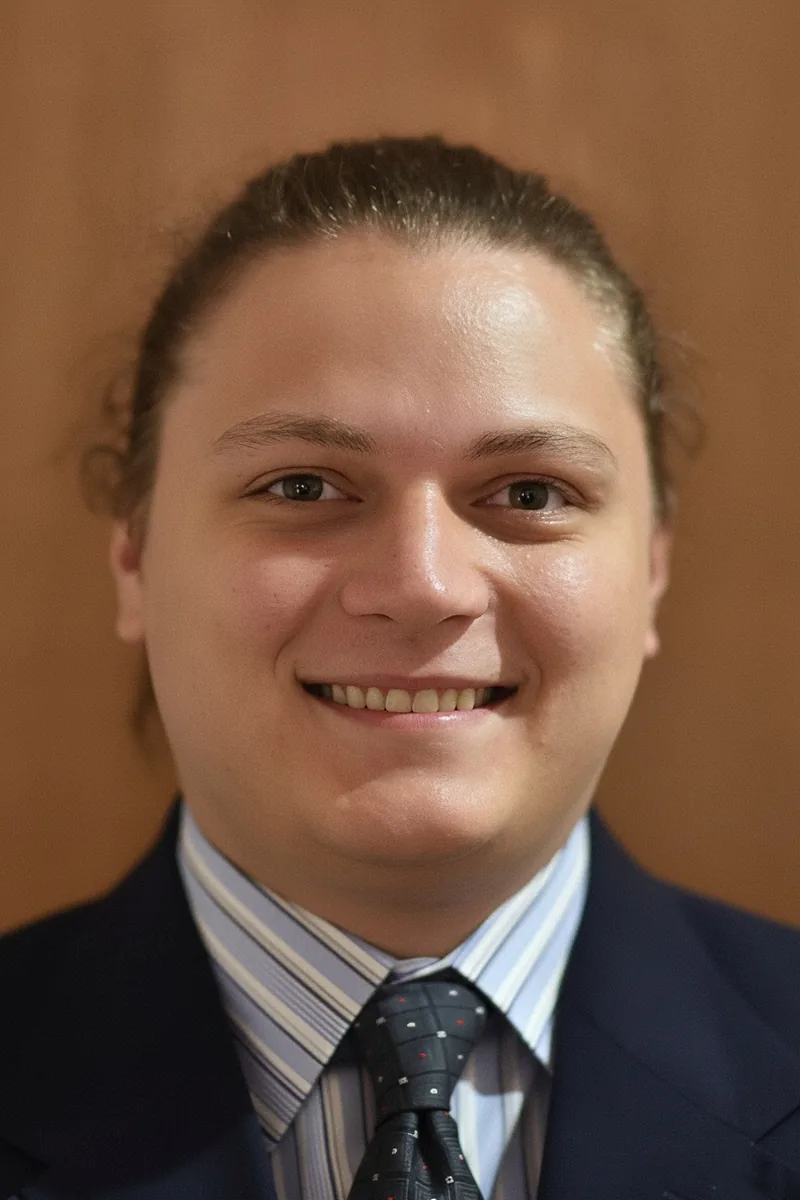
Chemical engineering coursework throws you into systems of linear equations, matrix operations, and eigenvalue problems long before you've had time to fully digest the theory — so Adrian knows firsthand which concepts trip students up and which shortcuts actually hold up under pressure. He breaks down topics like determinants, row reduction, and vector space definitions by tying them back to the material and energy balance problems where they naturally show up, giving the abstraction a concrete anchor.

Vector spaces, matrix transformations, and eigenvalues require a shift in thinking from computation to abstraction that trips up many students. Tracey's graduate work in mathematics education gives her a framework for breaking down that conceptual leap — she connects linear algebra ideas to geometric intuition so that proofs and definitions feel grounded rather than arbitrary.
Emily's research at Smith College on Markov chains and random walks gave her hands-on fluency with matrix operations, eigenvalues, and vector spaces — the core of any linear algebra course. She unpacks abstract proofs by tying them back to computational examples, making topics like change of basis and diagonalization feel far more concrete.
Pursuing a pure mathematics degree at Rice means Aaron encounters linear algebra not as a service course but as foundational language — the ideas behind vector spaces, linear maps, and diagonalization thread through nearly every upper-level math class he takes. That ongoing immersion keeps concepts like kernel, image, and change of basis sharp in a way that's hard to replicate from a single semester's memory. Rated 4.9 by students.
I am passionate about the importance of math and science, I enjoy making them more relatable to a student by explaining their real world applications whenever possible.
Sarah's Penn math degree covered linear algebra at the proof-heavy level where determinants and row reduction give way to abstract vector spaces, linear maps, and dimension arguments — and her statistics minor means she's also seen how matrix factorizations and eigendecompositions power real data analysis. She breaks down the notoriously tricky shift from computation to abstraction by building students' geometric intuition for what transformations, span, and independence actually mean. Rated 4.9 by students.
Eigenvalues, vector spaces, and matrix transformations can feel impossibly abstract without someone who connects them to real applications. Michael studied biomedical engineering at the University of Rochester, where linear algebra was foundational to signal processing, imaging, and systems modeling — so he teaches these concepts with concrete examples that make the abstraction meaningful. He's especially effective at walking through proof-based problems step by step.
Eigenvalues, vector spaces, and matrix decompositions show up everywhere in engineering — and Sabry used them extensively in his doctoral research on computational modeling. He unpacks linear algebra by tying each concept to a geometric or physical interpretation: what a determinant actually measures, why eigenvectors matter for system stability, how a change of basis simplifies a problem. That dual perspective makes the subject far more intuitive than rote row-reduction ever could.
Eigenvalues, vector spaces, and matrix transformations can feel impossibly abstract the first time through. As a math major at Georgia Tech, Sally has worked through linear algebra at a proof-based level and can unpack ideas like span and linear independence using concrete geometric intuition alongside the formal definitions.
Teaching linear algebra as adjunct faculty at Washington State University means Moayad isn't just tutoring this material — he's designing syllabi, writing exams, and watching in real time where students lose the thread between matrix computation and abstract vector space theory. His two math degrees (BS and MS, the latter from Oregon State) gave him deep fluency with everything from determinants and eigenvalue problems to the proof techniques that trip students up mid-semester.
I'm trying to work on personal projects. I really enjoy snowboarding, and have been doing that since the third grade. I also enjoy playing sports and video games.
Pursuing both a BS and MS in Computer Science and Mathematics at Tufts means Julie uses linear algebra constantly — from implementing matrix transformations in code to working through the proofs that justify why those algorithms converge. She's especially sharp at connecting the computational mechanics of determinants, eigenvalues, and row reduction to the programming contexts where students can actually see the output change when a matrix is singular or a basis is swapped. Rated 5.0 by students.
Studying both biomedical and chemical engineering at Vanderbilt means William encounters linear algebra from two applied angles — modeling biological systems and solving material balance equations — which gives him an intuitive grasp of why concepts like matrix operations and eigenvalue problems matter beyond the homework set. He breaks down the mechanics of row reduction and determinants while connecting them to the engineering contexts that make the abstraction feel purposeful. Rated 4.8 by students.
Pryce studied both economics and math at the University of Pennsylvania, which means he hit linear algebra from two sides — the theoretical proof-based course and the applied matrix methods that underpin econometrics and optimization models. That double exposure makes him especially effective at unpacking concepts like vector spaces and linear transformations for students who can do the row reduction but can't yet articulate why it works. Rated 5.0 by students.
Eigenvalues, vector spaces, and matrix decompositions can feel disconnected from anything tangible until someone shows you where they actually appear. Tim studied Linear Algebra as a core part of his Electrical Engineering Honors program, where concepts like diagonalization and singular value decomposition powered real signal-processing and circuit-analysis problems. He unpacks the theory by tying each abstraction back to a concrete application.
A math degree from Colby plus plans for a PhD means Alexander isn't just passing through linear algebra — he's building a career on the kind of abstract reasoning the course demands. He's particularly good at unpacking the shift from matrix computation to the proof-heavy second half, where students suddenly need to show why a transformation is onto or why a set spans a subspace. Rated 5.0 by students.
Testimonials
Because the right Linear Algebra tutor makes all the difference.
Average Session Rating – Based on 3.4M Learner Ratings
Practice Linear Algebra
Free practice tests, flashcards, and AI tutoring for Linear Algebra
Other Gilbert Tutors
Related Math Tutors in Gilbert
Frequently Asked Questions
Varsity Tutors matches Gilbert students with expert Linear Algebra tutors for 1-on-1 instruction. We pair each student with a tutor based on their specific needs, learning style, and goals.
Whether you need homework help, exam prep, or want to get ahead, our Linear Algebra tutors are ready to help.
Common challenges include gaps from earlier material, difficulty with specific concepts, and trouble applying learning to new problems. These issues can snowball quickly in Linear Algebra.
A tutor identifies where you're stuck, fills in gaps, and provides targeted practice. The 1-on-1 format means you get help exactly where you need it.
Tutors work with your student's actual coursework—homework assignments, class notes, and upcoming tests. This keeps tutoring directly relevant to what's happening in the classroom.
When you share information about your student's school and curriculum, we can match you with a tutor who has relevant experience.
All tutors complete background checks, credential verification, and teaching evaluation. Many of our Linear Algebra tutors hold advanced degrees or have years of teaching experience.
You can review tutor profiles to find someone with the right background for your student's level and needs.
Many students see improved grades within a few weeks, along with better understanding of Linear Algebra concepts and more confidence tackling challenging material.
Tutors track progress and adjust their approach to ensure continued improvement.
Most students benefit from 1-2 sessions per week. More frequent sessions help if your student is significantly behind or has an important exam coming up.
Your tutor can recommend a schedule based on your student's specific situation and goals.
Tutoring is purchased in packages of hours, with rates varying by tutor experience. Varsity Tutors offers several options to fit different budgets and needs.
You can discuss pricing during your consultation to find what works best.
Your tutor will assess where your student is, discuss goals, and start working on priority areas. Most students bring current homework or upcoming test material to focus on.
By the end, you'll have a clear sense of how the tutor can help and a plan for moving forward.
Let’s find your perfect tutor
Answer a few quick questions. We’ll recommend the right plan and match you with a top 5% tutor.