Award-Winning Linear Algebra Tutors
serving Glendale, AZ
Linear Algebra
Tutors in Glendale
Private 1-on-1 tutoring, weekly live classes for academic support, test prep & enrichment, practice tests and diagnostics, and more to elevate grades and test scores.
Based on 3.4M Learner Ratings
UniversitiesSchools & Universities
DeliveredHours Delivered
ProficiencyGrowth in Proficiency
Who needs tutoring?
No obligation. Takes ~1 minute.
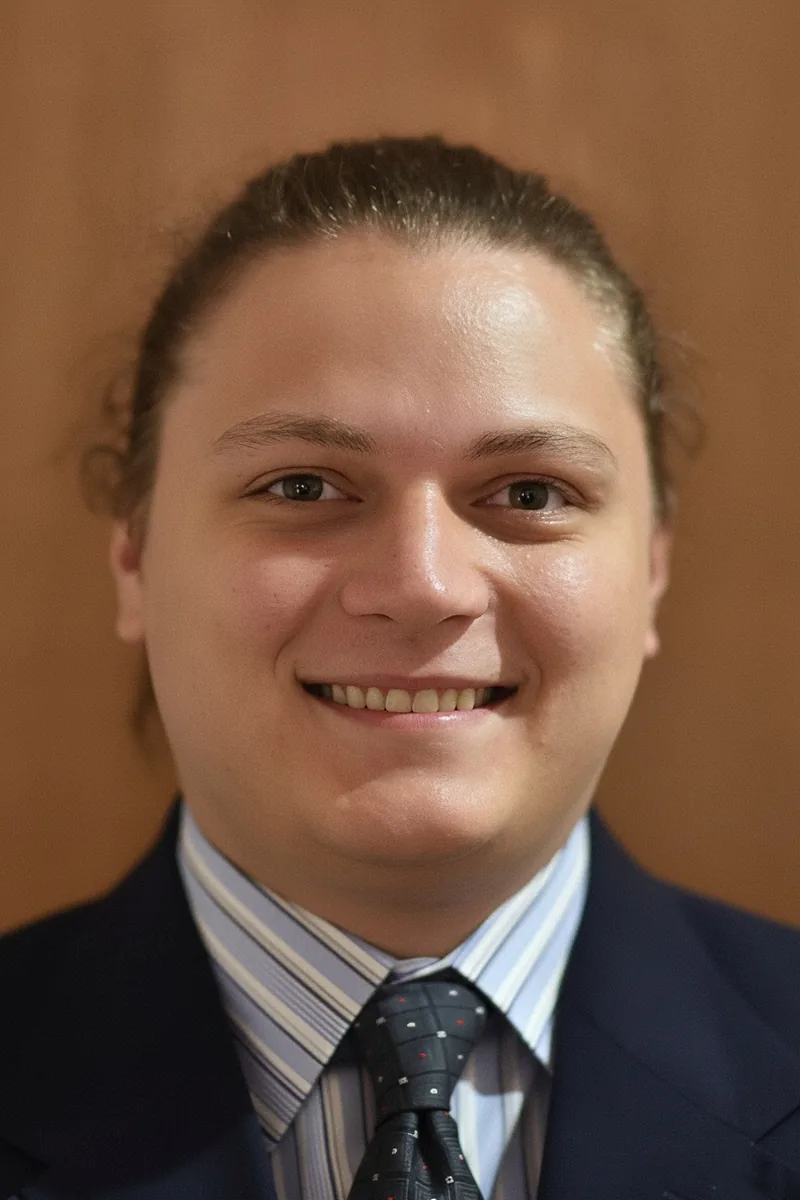
Chemical engineering coursework throws you into systems of linear equations, matrix operations, and eigenvalue problems long before you've had time to fully digest the theory — so Adrian knows firsthand which concepts trip students up and which shortcuts actually hold up under pressure. He breaks down topics like determinants, row reduction, and vector space definitions by tying them back to the material and energy balance problems where they naturally show up, giving the abstraction a concrete anchor.
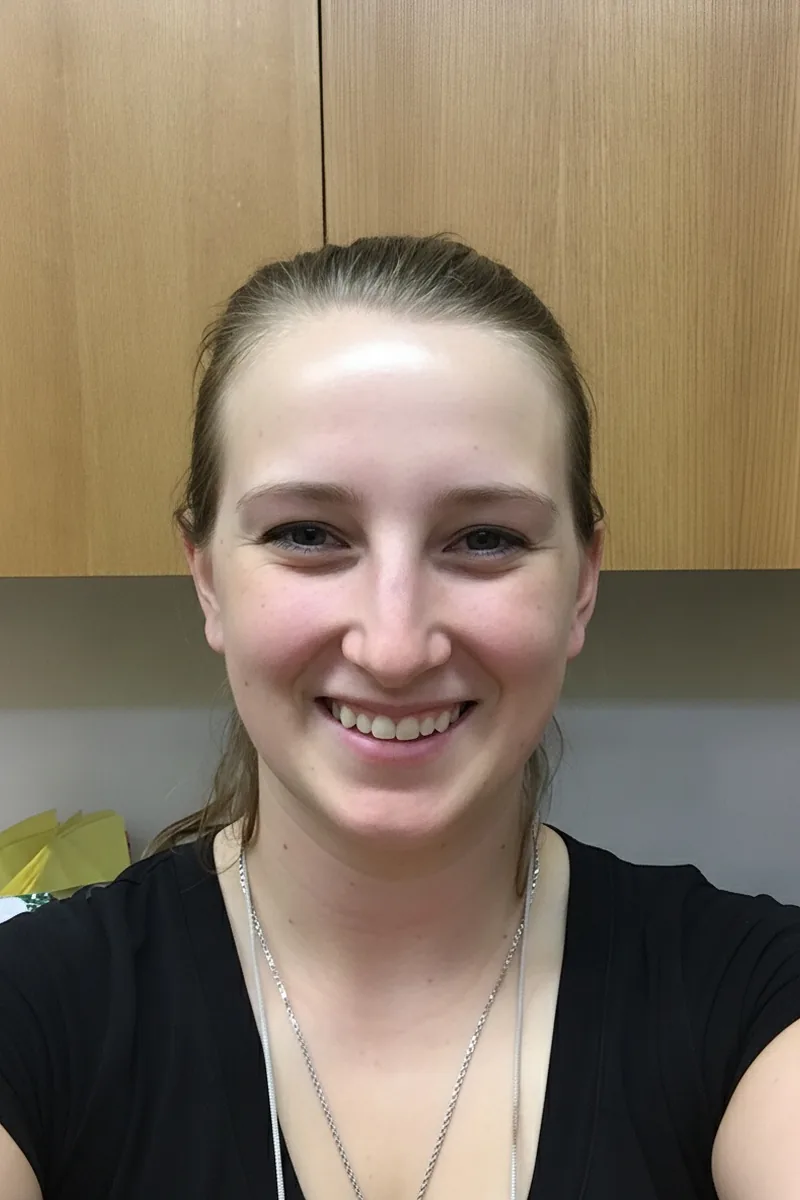
Vector spaces, matrix transformations, and eigenvalues require a shift in thinking from computation to abstraction that trips up many students. Tracey's graduate work in mathematics education gives her a framework for breaking down that conceptual leap — she connects linear algebra ideas to geometric intuition so that proofs and definitions feel grounded rather than arbitrary.
Emily's research at Smith College on Markov chains and random walks gave her hands-on fluency with matrix operations, eigenvalues, and vector spaces — the core of any linear algebra course. She unpacks abstract proofs by tying them back to computational examples, making topics like change of basis and diagonalization feel far more concrete.
Pursuing a pure mathematics degree at Rice means Aaron encounters linear algebra not as a service course but as foundational language — the ideas behind vector spaces, linear maps, and diagonalization thread through nearly every upper-level math class he takes. That ongoing immersion keeps concepts like kernel, image, and change of basis sharp in a way that's hard to replicate from a single semester's memory. Rated 4.9 by students.
Ben's math degree from Penn means he's worked through linear algebra at the level where determinants, diagonalization, and abstract vector spaces all connect — not just as isolated chapters but as a unified framework. He's especially sharp at teaching students to build intuition around concepts like null space and linear independence by tying each idea back to the matrix computations they already understand. Rated 5.0 by students.
Training at ETH Zurich's applied math program means Shahnawaz worked through linear algebra at a level where concepts like spectral decompositions, Jordan normal forms, and singular value factorizations were prerequisites for more advanced coursework — not endpoints. He digs into the geometric intuition behind abstract definitions, showing students what a null space or eigenvector actually looks like before formalizing the algebra around it. Rated 4.9 by students.
Studying both biomedical and chemical engineering at Vanderbilt means William encounters linear algebra from two applied angles — modeling biological systems and solving material balance equations — which gives him an intuitive grasp of why concepts like matrix operations and eigenvalue problems matter beyond the homework set. He breaks down the mechanics of row reduction and determinants while connecting them to the engineering contexts that make the abstraction feel purposeful. Rated 4.8 by students.
A PhD in Statistics built on a biomedical engineering foundation means Sam has leaned heavily on matrix algebra — from multivariate regression to principal component analysis — where understanding rank, column space, and decompositions isn't optional. He breaks down the theoretical side by showing students how each abstraction maps onto a statistical or engineering problem they can visualize. Rated 4.9 by students.
Eigenvalues, vector spaces, and matrix transformations aren't just abstract math — in Tony's robotics and aerospace work, they're the backbone of everything from control systems to coordinate frame rotations. His MS in Mechatronics means he can unpack concepts like singular value decomposition or change of basis with concrete engineering examples that make the theory click.
Enrico's current research in Spectral Graph Theory at MIT means he uses linear algebra daily — eigenvalues, matrix decompositions, and vector spaces aren't textbook abstractions for him but working tools. He teaches the subject by grounding definitions like span, basis, and linear independence in geometric intuition before moving to computation. Rated 5.0 by students.
Eigenvalues, vector spaces, and matrix decompositions aren't just theoretical exercises — they're tools Adel used routinely during his PhD for finite element analysis and dynamic systems modeling. He unpacks linear algebra by showing students the geometric meaning behind each operation, so that abstract proofs and computational techniques reinforce each other instead of feeling like separate courses.
Eigenvalues, vector spaces, and matrix decompositions show up everywhere in engineering — and Sabry used them extensively in his doctoral research on computational modeling. He unpacks linear algebra by tying each concept to a geometric or physical interpretation: what a determinant actually measures, why eigenvectors matter for system stability, how a change of basis simplifies a problem. That dual perspective makes the subject far more intuitive than rote row-reduction ever could.
I am currently a graduate student in Chemical Engineering at the University of Delaware. I am working on using magnetic and flow fields to create advanced materials by directing the self-assembly process of nanoparticles . I have tutored students in Chemistry, Physics and Math all throughout undergraduate and graduate work. I truly enjoy breaking material down into its core components that allows the students to understand complicated information.
I am a senior with a Neuroscience major at Swarthmore College. My favorite subjects include Biology and Psychology. I am interested in teaching students how to develop a better grasp of their academic material, improve their learning skills, and succeed in whatever course they take. Outside of the classroom, I enjoy playing violin, reading, and traveling. I also have extensive community service experience and have traveled to China, Kenya, and the Dominican Republic to engage in volunteer work.
A Ph.D. in Biomedical Engineering means Andrew has relied on eigenvalue problems, matrix decompositions, and systems of linear equations as everyday tools for modeling biological systems — not just as homework exercises. He's especially strong at bridging the gap when courses shift from row reduction mechanics to the abstract reasoning behind vector spaces and linear maps, drawing on years of applying those concepts in research. Rated 4.9 by students.
I've been working with students for over seven years, from middle school all the way through college, across subjects like math, calculus, statistics, linear algebra, chemistry, and physics, with a lot of SAT and ACT prep mixed in. My background is perhaps a little unconventional. I have two bachelor's degrees, one in Engineering and one in Communication Studies, plus a Master's in Design. That combination means I can guide you through challenging technical material and communicate it in a way that is easy to grasp. What I care most about is helping students get to a place where they don't need me anymore. I know that sounds like a strange thing for a tutor to say, but I think it's the right goal. I'm not here to walk you through steps to copy down. I want you to understand why something works, because that's what holds up under pressure, on a test you haven't seen before. If you're ready to ace that test or prove that theorem that's been bugging you, reach out and let's work together
Testimonials
Because the right Linear Algebra tutor makes all the difference.
Average Session Rating – Based on 3.4M Learner Ratings
Practice Linear Algebra
Free practice tests, flashcards, and AI tutoring for Linear Algebra
Other Glendale Tutors
Related Math Tutors in Glendale
Frequently Asked Questions
Varsity Tutors matches Glendale students with expert Linear Algebra tutors for 1-on-1 instruction. We pair each student with a tutor based on their specific needs, learning style, and goals.
Whether you need homework help, exam prep, or want to get ahead, our Linear Algebra tutors are ready to help.
Common challenges include gaps from earlier material, difficulty with specific concepts, and trouble applying learning to new problems. These issues can snowball quickly in Linear Algebra.
A tutor identifies where you're stuck, fills in gaps, and provides targeted practice. The 1-on-1 format means you get help exactly where you need it.
Tutors work with your student's actual coursework—homework assignments, class notes, and upcoming tests. This keeps tutoring directly relevant to what's happening in the classroom.
When you share information about your student's school and curriculum, we can match you with a tutor who has relevant experience.
All tutors complete background checks, credential verification, and teaching evaluation. Many of our Linear Algebra tutors hold advanced degrees or have years of teaching experience.
You can review tutor profiles to find someone with the right background for your student's level and needs.
Many students see improved grades within a few weeks, along with better understanding of Linear Algebra concepts and more confidence tackling challenging material.
Tutors track progress and adjust their approach to ensure continued improvement.
Most students benefit from 1-2 sessions per week. More frequent sessions help if your student is significantly behind or has an important exam coming up.
Your tutor can recommend a schedule based on your student's specific situation and goals.
Tutoring is purchased in packages of hours, with rates varying by tutor experience. Varsity Tutors offers several options to fit different budgets and needs.
You can discuss pricing during your consultation to find what works best.
Your tutor will assess where your student is, discuss goals, and start working on priority areas. Most students bring current homework or upcoming test material to focus on.
By the end, you'll have a clear sense of how the tutor can help and a plan for moving forward.
Let’s find your perfect tutor
Answer a few quick questions. We’ll recommend the right plan and match you with a top 5% tutor.