Award-Winning High School Biology Tutors
serving Gilbert, AZ
High School Biology
Tutors in Gilbert
Private 1-on-1 tutoring, weekly live classes for academic support, test prep & enrichment, practice tests and diagnostics, and more to elevate grades and test scores.
Based on 3.4M Learner Ratings
UniversitiesSchools & Universities
DeliveredHours Delivered
ProficiencyGrowth in Proficiency
Who needs tutoring?
No obligation. Takes ~1 minute.
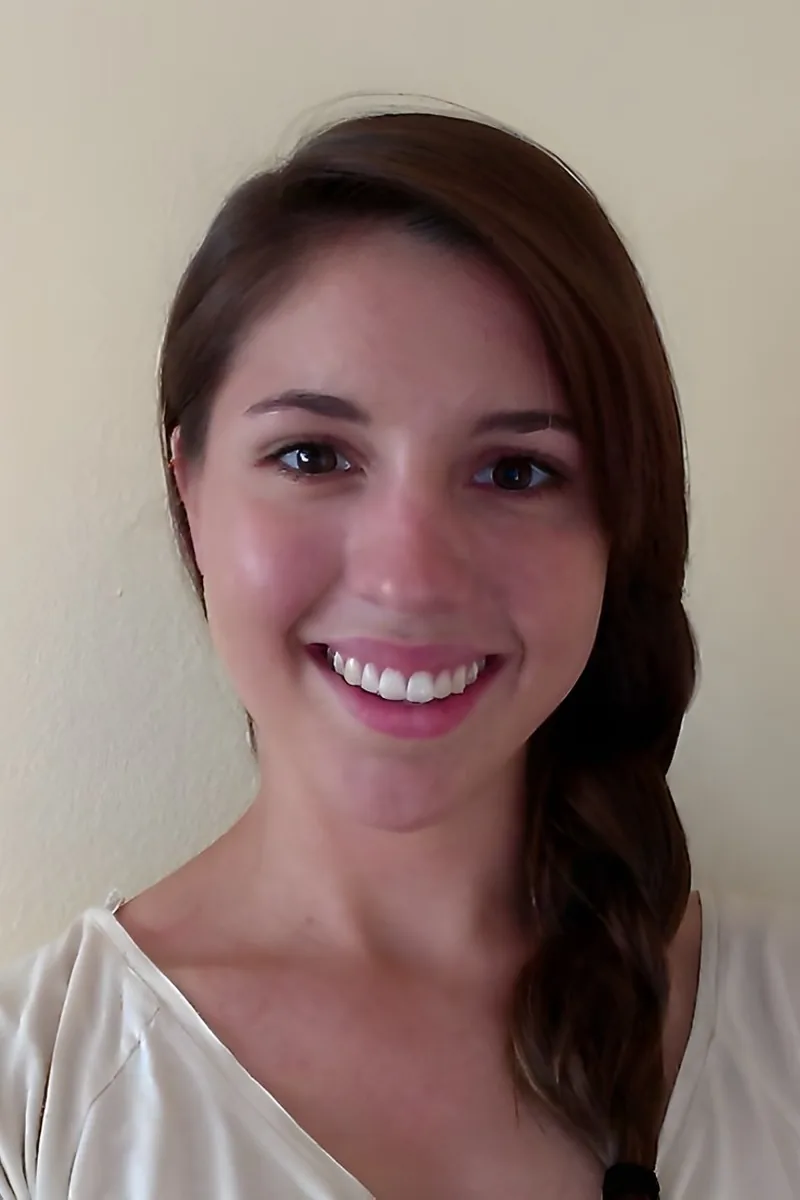
Researching aquatic ecology means Courtney traces biological processes — nutrient cycling, population dynamics, energy flow — through real ecosystems every day, which gives her a concrete way to teach units on ecology, photosynthesis, and cellular respiration that most tutors cover only from a textbook. Her master's in biology and undergraduate environmental sciences training let her connect the molecular scale to the ecosystem scale, showing students how a single metabolic pathway shapes an entire food web. Rated 5.0 by students.
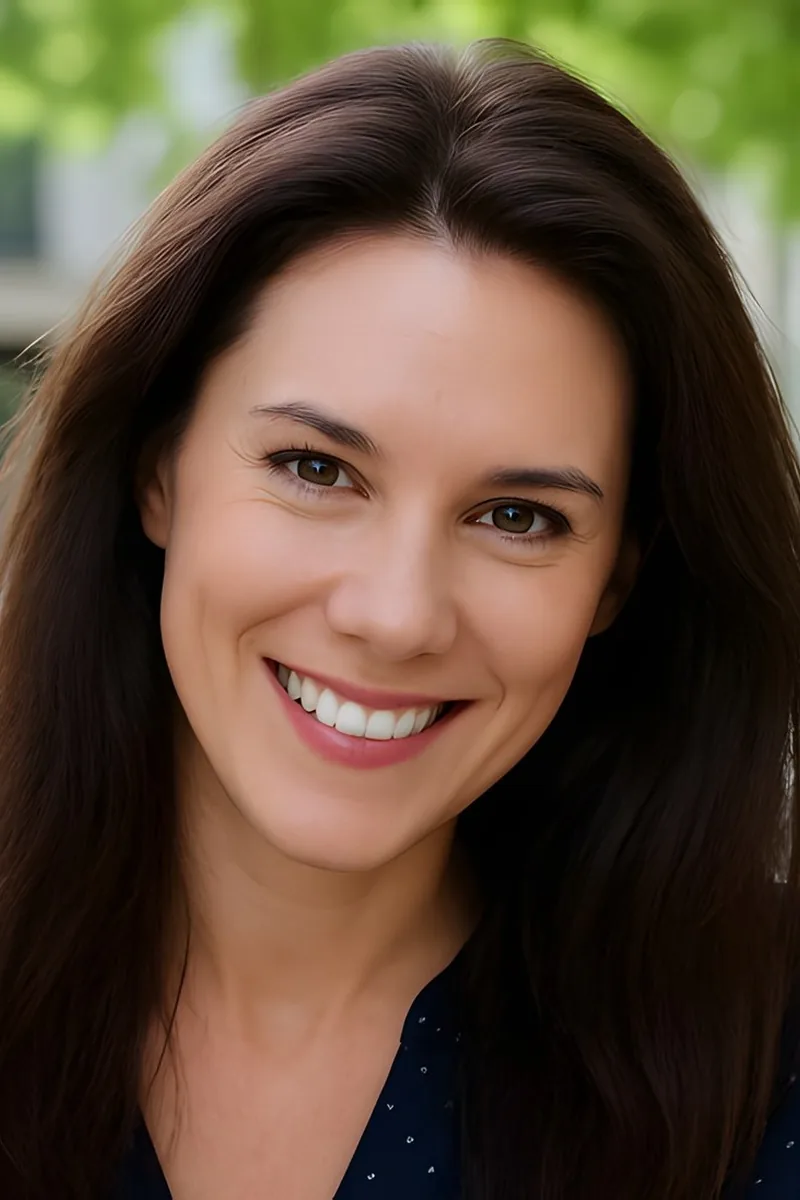
Most of Michelle's tutoring subjects cluster around humanities and test prep, so she approaches biology the way a sharp generalist does — by teaching students how to decode unfamiliar diagrams, pull meaning from dense vocabulary, and organize information logically before an exam. Her 1490 SAT and history training mean she's practiced at breaking down complex material into structured arguments, a skill that translates surprisingly well to tracing processes like cellular respiration or walking through genetics problems. Rated 5.0 by students.
Cellular and molecular biology at Yale means Alice built her understanding of high school bio topics — DNA replication, membrane transport, metabolic pathways — by going several layers deeper than the AP or honors curriculum ever asks. That depth lets her explain the *why* behind processes like mitosis or protein synthesis instead of just narrating the steps, which tends to be the difference between memorizing a diagram and actually being able to reason through an exam question. She scored a 36 ACT, so she also knows how to translate deep understanding into performance under timed pressure.
A microbiology degree means Daniel learned biology from the cellular level up — membrane transport, DNA replication, enzyme kinetics, and ecological interactions all had to become second nature before he could specialize. He teaches high school biology by connecting each unit back to a bigger picture, so students understand why mitosis matters when they get to genetics, and why genetics matters when they get to evolution.
The jump from memorizing biology facts in middle school to actually analyzing experimental data and constructing explanations in high school catches many students off guard. Rachelle unpacks topics like genetics, cell division, and ecological relationships by teaching students to reason through cause and effect rather than rely on flashcards alone. Her philosophy training at ASU sharpened exactly the kind of critical thinking that high school biology rewards.
Arshia's biology degree from UCLA and hands-on clinical experience — performing glucose screenings and blood pressure exams in underserved communities — give her a practical lens on topics like cellular respiration, homeostasis, and human physiology. She connects textbook diagrams to how these processes actually play out in living bodies, which makes concepts like enzyme regulation and feedback loops far easier to remember. Rated 5.0 by students.
I am Arizona born and raised, my education includes an NYC law school degree with an undergraduate BS degree from University of Miami. In college I majored in Health Sciences with minors in Psychology and Public Health while in law school I leaned into corporate law and finance. Between law school and college I've pretty much covered every topic under the sun! In my spare time, I enjoy reading (especially mystery novels), pretending I'm a chef, and meditating.
The best part of tutoring is promoting students' long-term success through mastery of reading, writing, math, study skills, organization, and critical thinking. In particular, I enjoy helping students build test-taking strategies and core skills for the ACT, SAT, and other admissions tests. I also support pre-K and K-12 students learning math and ELA. Before joining Varsity, I tutored in a Reading and Writing Lab for university students with learning disabilities where I earned a College Reading and Learning Association (CRLA) certification. Since joining Varsity, I have completed continuing education through the Lastinger Center for Learning. I graduated from the University of Arizona in 2021 with a BA in Cultural Anthropology. In addition to tutoring, I have worked as an instructional aide for an art program, an applied anthropology researcher, and a nonprofit program coordinator. Out of all these experiences, I enjoy tutoring the most. I look forward to working with you!
Duke's pre-med track has Thara deep in the biology and chemistry coursework right now, which means topics like cell division, genetics, and energy pathways aren't distant memories — they're last week's problem sets. Having taken AP Biology herself just a year ago, she still remembers exactly which diagrams in the textbook made sense immediately and which ones needed to be redrawn three times before clicking. That closeness to the material lets her walk through processes like mitosis or protein synthesis with the kind of step-by-step clarity that comes from recently figuring it out herself.
The sheer volume of high school biology — cell structure, genetics, evolution, ecology, human body systems — makes it easy for students to fall behind if even one unit doesn't land. Amanda zeroes in on the conceptual threads that tie units together, like how energy flow explains both photosynthesis and food webs. With dual degrees in biology and anthropology, she brings a depth of knowledge that turns surface-level definitions into genuine comprehension.
Teach for America put Gordon in front of K-12 classrooms where he had to make topics like mitosis, ecosystem dynamics, and Mendelian genetics land for students with wildly different starting points — and his biology degree from Arizona State means the content knowledge runs deep enough to handle follow-up questions that go beyond the textbook. He also mentored premed undergraduates, so he understands how high school bio concepts like cell signaling and energy transfer connect to what students will see if they continue into college-level science.
Studying black widow spider development for her honors thesis at ASU meant Claire had to master hormonal regulation, cellular signaling, and organismal biology at a research level — exactly the kind of depth that makes high school units on endocrine systems, cell structure, and biological development click for students who need more than textbook definitions. Now a third-year medical student who tutors pathology and clinical medicine courses, she connects introductory bio concepts to what they actually look like inside a living body. Rated 5.0 by students.
Ecology and life sciences aren't just subjects Rebia tutors — they're the core of her Stanford training, which means she can trace a concept like energy flow from the chloroplast in a single cell all the way out to nutrient cycling in an entire ecosystem. That big-picture wiring is especially useful when students need to connect scattered units on cell biology, genetics, and ecology into something coherent for exams. Holds a 5.0 rating.
A Conservation Biology degree from ASU means River doesn't just know the textbook definitions of cellular respiration or Mendelian genetics — they've applied those concepts in ecological fieldwork and lab research. That real-world context makes topics like natural selection, gene expression, and ecosystem dynamics click in a way that rote memorization never does. Rated 4.8 by students.
Double-minoring in mathematics and biochemistry alongside a biology degree at the University of Arizona means Lindsay didn't just learn ecology or genetics in isolation — she built the quantitative and molecular toolkit to connect them, from analyzing population growth models to tracing metabolic pathways through their chemical steps. That cross-disciplinary fluency is especially useful when students hit topics like cellular respiration or inheritance patterns, where the math and the chemistry quietly drive everything the textbook presents as pure biology.
Spencer's strength in biology isn't specialist depth — it's the ability to translate between disciplines, connecting concepts like energy transfer in cellular respiration to the chemistry and math that underpin them. His broad academic background across sciences, humanities, and business at BYU and Thunderbird means he approaches topics like ecology or genetics from multiple angles, which is particularly useful for students who think in systems rather than memorized definitions. Rated 4.9 by students.
A Biochemistry degree sits right at the intersection of biology and chemistry, which gives Hritik a molecular-level understanding of topics like cell signaling, genetics, and metabolism that most biology tutors don't have. He teaches students to trace biological processes back to their chemical foundations — making concepts like enzyme function and DNA replication click on a deeper level.
Most high school biology struggles come down to vocabulary overload — students see terms like "oxidative phosphorylation" and shut down before they even try. Charles, whose biochemistry background means he can trace every metabolic pathway from glucose to ATP, teaches students to decode the terminology and see the logic underneath it.
Nutritional sciences coursework at the University of Arizona means Atley has to understand biology at the molecular level — how enzymes catalyze metabolic reactions, how cells transport nutrients across membranes, how organ systems coordinate to maintain homeostasis. Her biochemistry minor reinforces that foundation, giving her the ability to unpack topics like cellular respiration and DNA replication with the kind of mechanistic detail that turns memorization into genuine understanding.
Biology at the high school level is deceptively broad, covering everything from cellular respiration to ecology to Mendelian genetics in a single year. Hanna's kinesiology and premed training gave her deep fluency in how biological systems connect — so she teaches students to see the throughlines between topics instead of treating each chapter as an isolated unit.
Genetics is the thread Cameron pulls to unravel the rest of high school biology — once students see how DNA replication, transcription, and translation actually work, topics like evolution, cell division, and heredity start to make intuitive sense. His PhD research gives him a storytelling toolkit most high school biology tutors simply don't have.
Genetics problems, enzyme kinetics, ecological modeling — high school biology increasingly asks students to think quantitatively, and Maurice's math background gives him an edge in explaining these analytical components. He also digs into the conceptual side, breaking down processes like mitosis, photosynthesis, and evolution by natural selection into clear cause-and-effect sequences. Students come away understanding the logic of biology, not just its vocabulary.
Studying molecular and cellular biology at the University of Arizona means Kylianne lives in the details of genetics, cell division, and metabolic pathways every day. She breaks down dense textbook material — like DNA replication or enzyme kinetics — into logical steps that make high school bio feel less like memorization and more like problem-solving.
Double-majoring in cellular and molecular biology means Alexa is knee-deep in genetics, cell division, and metabolic pathways right now — the exact material that shows up in high school bio, just at a higher resolution. She's especially good at breaking down topics like DNA replication and mitosis into visual, step-by-step sequences that students can actually reproduce on a test. Rated 5.0 by students.
Pursuing a B.S. in Biology at the University of Houston, Pooja lives this subject daily — from cellular respiration and mitosis to Mendelian genetics and ecology. She unpacks dense textbook diagrams and vocabulary-heavy chapters by tying each concept back to a bigger biological story, so students retain information instead of just cramming it. Rated 5.0 by her students.
Biology at the high school level is often a student's first encounter with genuinely dense material — cell division, genetics, ecology, evolution — all in one year. Musa breaks these topics into logical chains so that each unit builds on the last, turning what feels like a wall of vocabulary into a connected story. His experience at ASU's tutoring center showed him which concepts trip students up most frequently.
As a recent graduate and experienced tutor with a summa cum laude Bachelor's degree in Molecular Biology from Colorado College, I bring over five years of tutoring experience across a variety of subjects, including high school biology and chemistry (regular, honors, and AP), as well as physics, writing, math, and general study skills. My strong foundation in the sciences, built through extensive coursework and research in molecular biology, biochemistry, and genetics, allows me to explain complex topics with clarity and enthusiasm. Further, my long-standing passion for reading and literature has helped me develop strong writing skills, which I enjoy sharing with students. My teaching philosophy centers on patience, empathy, and personalized support. I strive to create a calm, encouraging, and collaborative environment where students feel comfortable asking questions and exploring ideas deeply together. Each lesson is tailored to the student's learning style and goals, with a focus on developing true understanding rather than rote memorization. I believe that when students feel supported and confident, they're able to reach their full potential. Ultimately, my goal as a tutor is to help students build both knowledge and confidence, empowering them to succeed academically and develop a lasting curiosity for learning.
From Punnett squares to cellular respiration pathways, Paul breaks biology into the underlying stories of how organisms function and evolve. His own biology degree keeps him grounded in the details — membrane transport, DNA replication, ecological interactions — and his 5.0 rating speaks to how well that knowledge translates in one-on-one sessions.
Jack's journalism training — breaking complex stories into clear, structured narratives — translates surprisingly well to biology topics like tracing energy through cellular respiration or mapping out the steps of mitosis, where students often lose the thread in a sea of vocabulary. He treats each biological process as a story with a logical sequence, teaching students to follow the cause-and-effect chain instead of memorizing isolated terms. Rated 4.8 by students.
From mitosis and meiosis to photosynthesis and cellular respiration, high school biology asks students to visualize processes happening at a scale they can't see. Jake tackles this by walking through each process as a story with inputs, outputs, and a reason it matters to the organism — an approach shaped by his own Human Biology studies at Stanford, where connecting molecular details to whole-organism outcomes is the entire point.
I am a graduate from the University of Pennsylvania where I received my Bachelor's of Arts in Health & Societies with minors in Hispanic Studies and Chemistry while on the premed track. My tutoring experience begins junior year of high school where I tutored middle schoolers in pre-Algebra and Algebra and high school students in biology. I expanded my services in college to include mentoring as well as tutoring in gastroenterology program as part of a service project in collaboration with the Perelman School of Medicine targeted to Philadelphian high school students. Since graduation, I have continued in this role as a 4-8th grade math tutor. Math is a difficult subject but with sufficient time and attention, I believe every student is capable of excelling. I make it a point to curate my lesson plans to the specific needs of my students and emphasize open communication that allows for deeper understanding.
Rahul's biomolecular engineering coursework at Cornell covered cell biology, genetics, and protein structure in rigorous detail — topics that map directly onto the high school biology curriculum. He teaches students to connect processes like DNA replication and cellular respiration into a coherent story rather than treating each chapter as a separate pile of vocabulary to memorize.
Running a cell biology lab at Notre Dame for three years meant Connor didn't just teach high school-level biology concepts — he watched students physically work through them at the bench. He unpacks topics like mitosis, Mendelian genetics, and cellular respiration by linking each process to observable, tangible outcomes rather than leaving them as diagrams on a page.
A neuroscience major doesn't just study the brain — Ethan's program at WashU covers everything from Mendelian genetics and cell signaling to ecology and evolution. That breadth means he can tackle any unit in a high school biology course with real depth, explaining concepts like mitosis, DNA replication, or protein synthesis in ways that connect back to how living systems actually function.
Having studied biological sciences at the University of Chicago and then rebuilt that knowledge at the cellular and pharmacological level during nursing school at Penn, Kristin has an unusual double pass through the high school bio curriculum — once as pure science, once as clinical application. That means when she teaches topics like membrane transport or metabolic pathways, she can explain both the textbook mechanism and what it actually looks like when something goes wrong in a patient. Rated 5.0 by students.
Every biology concept Micah teaches — whether it's tracing energy through ATP synthesis or mapping out Mendelian inheritance — is grounded in the same material he mastered earning his own biology degree at Washington University in St. Louis. That formal training means he can connect the dots between units that often feel disconnected to students, like showing how the chemistry of photosynthesis feeds directly into the logic of ecosystem energy flow. His 34 ACT reflects the kind of precise, detail-oriented thinking he brings to breaking down lab data and diagram-heavy exam questions.
Cell division, Mendelian genetics, enzyme kinetics — Michelle teaches these topics with the depth of someone who majored in Biochemistry and Cell Biology at Rice University. Now in medical school at Baylor College of Medicine, she connects high school biology concepts to real physiological examples that make the material click rather than feel abstract.
From mitosis and meiosis to Mendelian genetics and ecological interactions, high school biology asks students to hold a lot of interconnected ideas at once. Li tackles this by teaching students to trace cause and effect through biological systems — understanding how a mutation in DNA actually changes a protein, which changes a trait, which affects an organism's fitness.
An undergraduate biology degree from UIUC means Todd built his understanding of genetics, ecology, and cell processes through rigorous lab science before shifting into social work — so he's had time to distill which explanations actually land and which ones just sound right in a textbook. He's particularly effective at walking through cellular respiration and photosynthesis as connected energy stories rather than isolated diagrams. Rated 5.0 by students.
Testimonials
Because the right High School Biology tutor makes all the difference.
Average Session Rating – Based on 3.4M Learner Ratings
Other Gilbert Tutors
Related Science Tutors in Gilbert
Frequently Asked Questions
Varsity Tutors matches Gilbert students with expert High School Biology tutors for 1-on-1 instruction. We pair each student with a tutor based on their specific needs, learning style, and goals.
Whether you need homework help, exam prep, or want to get ahead, our High School Biology tutors are ready to help.
Common challenges include gaps from earlier material, difficulty with specific concepts, and trouble applying learning to new problems. These issues can snowball quickly in High School Biology.
A tutor identifies where you're stuck, fills in gaps, and provides targeted practice. The 1-on-1 format means you get help exactly where you need it.
Tutors work with your student's actual coursework—homework assignments, class notes, and upcoming tests. This keeps tutoring directly relevant to what's happening in the classroom.
When you share information about your student's school and curriculum, we can match you with a tutor who has relevant experience.
All tutors complete background checks, credential verification, and teaching evaluation. Many of our High School Biology tutors hold advanced degrees or have years of teaching experience.
You can review tutor profiles to find someone with the right background for your student's level and needs.
Many students see improved grades within a few weeks, along with better understanding of High School Biology concepts and more confidence tackling challenging material.
Tutors track progress and adjust their approach to ensure continued improvement.
Most students benefit from 1-2 sessions per week. More frequent sessions help if your student is significantly behind or has an important exam coming up.
Your tutor can recommend a schedule based on your student's specific situation and goals.
Tutoring is purchased in packages of hours, with rates varying by tutor experience. Varsity Tutors offers several options to fit different budgets and needs.
You can discuss pricing during your consultation to find what works best.
Your tutor will assess where your student is, discuss goals, and start working on priority areas. Most students bring current homework or upcoming test material to focus on.
By the end, you'll have a clear sense of how the tutor can help and a plan for moving forward.
Let’s find your perfect tutor
Answer a few quick questions. We’ll recommend the right plan and match you with a top 5% tutor.