Award-Winning Geometry Tutors
serving Chandler, AZ
Geometry
Tutors in Chandler
Private 1-on-1 tutoring, weekly live classes for academic support, test prep & enrichment, practice tests and diagnostics, and more to elevate grades and test scores.
Based on 3.4M Learner Ratings
UniversitiesSchools & Universities
DeliveredHours Delivered
ProficiencyGrowth in Proficiency
Who needs tutoring?
No obligation. Takes ~1 minute.
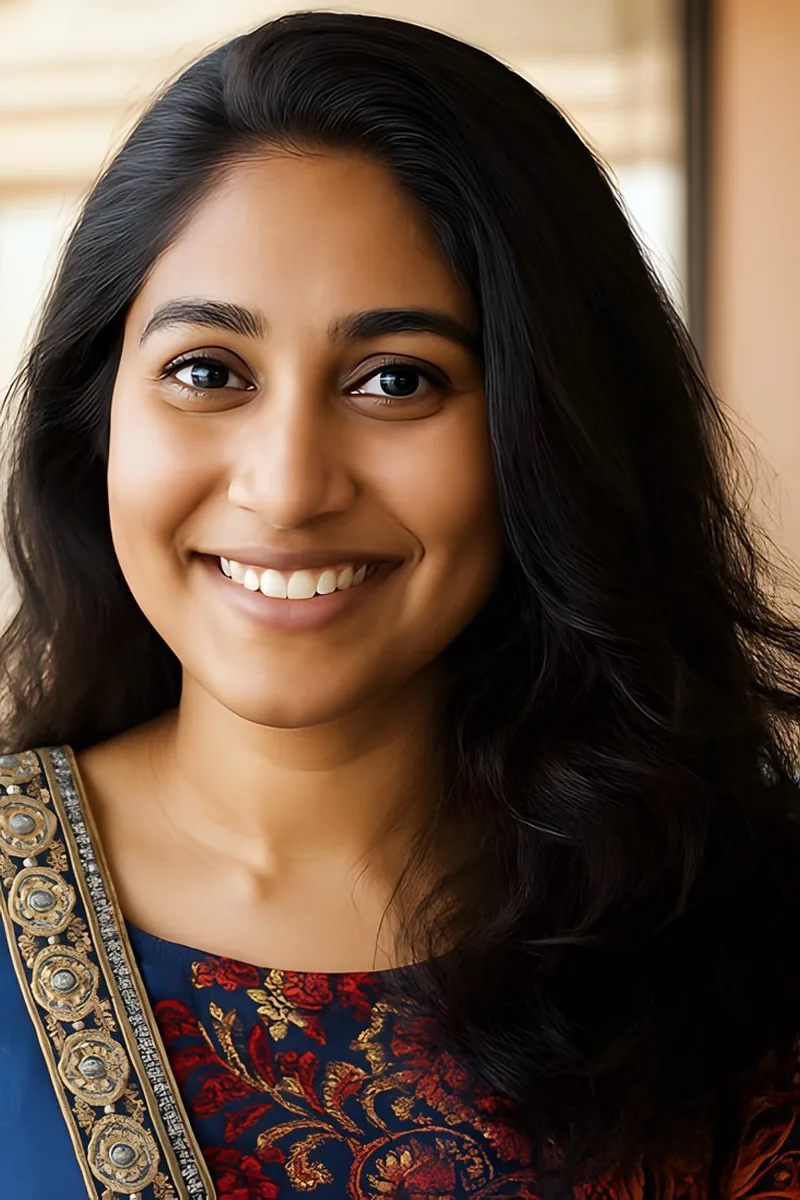
Proofs are where most geometry students get stuck, and Mehek tackles them by teaching the logic underneath — why corresponding parts matter, how to chain together congruence theorems, and when to deploy an auxiliary line. Her training in computer science and algorithms gives her a knack for breaking multi-step reasoning into clear, sequential arguments that actually make sense on paper.
Proofs are usually the first time geometry students have to build a logical argument from scratch, and that shift trips up even strong math students. Ekta teaches proof structure as a skill — identifying givens, selecting postulates, and chaining reasoning — so the process becomes systematic rather than intimidating. She also digs into triangle congruence, circle theorems, and coordinate geometry with the precision her engineering background demands.
Proofs are where most geometry students lose confidence — the leap from calculating angles to constructing logical arguments feels unfamiliar. Michelle breaks proofs into small, sequential steps and ties each theorem back to the visual intuition behind it, making congruence and similarity arguments click. Rated 5.0 by her students.
Proofs are usually where geometry students start to panic, but Troy breaks them into a logical chain of small, defensible steps rather than one intimidating block. From triangle congruence to circle theorems, he walks through each problem by asking students to justify what they already see before introducing new reasoning.
Proofs are the part of geometry that makes students want to quit — writing a logical chain from given information to a conclusion feels nothing like the arithmetic they're used to. Jake approaches each proof as a persuasive argument, teaching students to identify the key geometric relationship first and then build their reasoning around it.
Proofs are usually the first time students have to construct a logical argument in math, and that shift from computation to reasoning is where most frustration lives. Tim breaks geometric proofs into a sequence of small, justifiable claims — treating them more like building a case than performing a trick. His physics background reinforces a habit of asking "why does this follow?" at every step.
Philosophy majors spend years constructing airtight arguments from premises to conclusions — which is essentially what a two-column proof asks students to do with angle relationships and congruent triangles. Rachelle graduated summa cum laude from Arizona State in philosophy, so the logical scaffolding behind geometric proofs comes naturally to her. She also teaches across the full math spectrum from arithmetic through calculus, giving her a clear sense of which algebraic skills need shoring up before geometry concepts can land.
A PhD in law means John spent years constructing airtight arguments from premises to conclusions — which is essentially what a two-column proof asks students to do with angle relationships and triangle congruence. He teaches the logical architecture behind geometric reasoning, making the jump from "I see why" to "I can prove why" feel natural rather than intimidating. Rated 5.0 by students.
A biology degree from UCLA might not scream geometry, but Arshia's science training built the exact kind of careful, step-by-step reasoning that makes geometric proofs and multi-step problems manageable — breaking a complex diagram into individual relationships and tackling them one at a time. She applies that same methodical approach to teaching circle theorems and polygon properties, making sure each piece clicks before moving to the next. Rated 5.0 by students.
Proofs are where most geometry students panic, unsure how to chain logical statements together from a diagram. Kyle approaches them as structured arguments — not unlike the analytical writing he did across two degrees — and teaches students to identify which theorems and postulates actually apply before writing a single line.
I am Arizona born and raised, my education includes an NYC law school degree with an undergraduate BS degree from University of Miami. In college I majored in Health Sciences with minors in Psychology and Public Health while in law school I leaned into corporate law and finance. Between law school and college I've pretty much covered every topic under the sun! In my spare time, I enjoy reading (especially mystery novels), pretending I'm a chef, and meditating.
I have an MBA from Rice University and both real-world business experience and teaching experience. Most recently, I taught a first-year college course in Microeconomics for nine years, in addition to other classes in the university's international trade program. My students came from over 30 countries! I've worked in over a dozen countries for the U.S. Department of Commerce, as well as for private firms in building engineering and the energy industry. I enjoy helping students gain competence and master their chosen area of study.
I am here because I thoroughly enjoy working with students and watching them succeed in their academic studies. As a Mathematics major at the University of Arizona (currently a junior), I have extensive experience teaching and tutoring: I have been a teacher's assistant for a Calculus II section at my university and have spent a great deal of time assisting students with non-math related subjects as well such as English and essay-writing, time management and study skills techniques, and standardized test prep (SAT).
Proofs are usually the first place geometry students hit a wall — the leap from calculating angles to constructing logical arguments feels completely foreign. Amanda's training in anthropology and archaeology, where spatial reasoning and evidence-based argumentation are daily skills, gives her a natural way to teach both the computational and the proof-writing sides of geometry.
A law degree from Tulane means Andrew spent three years constructing airtight arguments from premises to conclusions — which is essentially what a two-column proof asks students to do with angle relationships and congruence theorems. He teaches geometry as structured reasoning, showing students how to identify given information, select the right postulate, and build each step logically toward what they need to prove. Rated 4.9 by students.
Proofs are where most geometry students hit a wall — suddenly math requires logical arguments, not just calculations. Chris's astrophysics training at the University of Arizona demanded rigorous spatial reasoning, from coordinate geometry to three-dimensional modeling. He teaches students to see geometric relationships as a connected system, making proofs and constructions feel less like guesswork.
Proofs are usually where geometry students panic, because suddenly math asks them to build a logical argument instead of just computing an answer. Tucker's theater background actually sharpens this skill — constructing a proof isn't that different from building a scene beat by beat, where every step has to justify the next. He walks students through angle relationships, congruence, and similarity with that same sense of logical sequence.
Proofs are usually the sticking point in geometry: students can measure angles and identify shapes but freeze when asked to construct a logical argument. Steven's accounting training is essentially applied logic — building airtight chains of reasoning from given information — and he brings that same rigor to teaching congruence proofs, similarity, and circle theorems.
Proofs are usually the first place geometry students get stuck — moving from "I can see it's true" to writing a logical chain of reasons feels like a completely different skill. Madeleine's training in applied mathematics at ASU built exactly that kind of rigorous reasoning, and she teaches students to approach each proof as a structured argument rather than a guessing game.
Proofs are usually the sticking point in geometry — students can calculate angles and areas but freeze when asked to construct a logical argument about congruent triangles or parallel lines. Adrian teaches proof-writing as a structured process: identify what's given, figure out what connects to what, and build the chain one statement at a time. That step-by-step breakdown turns an intimidating format into something students can actually replicate on their own.
Proofs are where most geometry students hit a wall, and Geoffrey addresses them head-on by teaching the logical structure underneath — if-then reasoning, converses, and how to chain statements together. His engineering background means he also connects geometric concepts like similar triangles and the Pythagorean theorem to practical measurement problems students can visualize.
Proofs are usually the breaking point in geometry — students go from calculating angles to suddenly needing to construct logical arguments, and the shift feels enormous. Tracey tackles this by teaching proof structure as a skill separate from the geometry content, so students aren't learning two things at once. She carries a 5.0 rating and brings daily classroom experience with exactly these kinds of conceptual hurdles.
Designing houses is applied geometry — every roof pitch, floor plan, and structural joint depends on angle relationships, area calculations, and spatial reasoning. Aaron brings that daily fluency to tutoring, turning proofs and theorems into something students can visualize rather than just memorize. Whether the topic is triangle congruence, circle theorems, or coordinate geometry, he connects the abstract rule to the shape it actually describes.
A dual physics and mathematics major at Emory, Yurok approaches geometry problems the way a physicist would — sketching force diagrams, decomposing vectors, thinking about how shapes behave under constraints — which gives students a more intuitive feel for why theorems about parallel lines, congruent triangles, and circle properties actually hold. He's especially effective at bridging the gap between seeing a relationship in a diagram and translating it into a formal argument. Rated 4.9 by students.
Bridging creative and analytical thinking is Spencer's sweet spot — his international relations and MBA coursework required constant toggling between qualitative arguments and quantitative analysis, which is exactly the mental shift geometry demands when students move from calculating measurements to writing structured proofs. He's especially effective with students who feel confident in algebra but freeze when a problem asks them to reason visually about parallel line cuts, circle properties, or geometric constructions. Rated 4.9 by students.
Proofs are where most geometry students stall — not because the logic is hard, but because nobody taught them how to organize their reasoning step by step. Ajay's engineering background means he thinks in spatial relationships daily, from circuit board layouts to signal diagrams, and he brings that concrete intuition to concepts like congruence, similarity, and angle relationships. He breaks proofs into a repeatable structure students can apply to any new problem.
A biochemistry degree means Charles spent years interpreting molecular geometries — bond angles, spatial configurations, symmetry operations — before ever stepping into a tutoring session, so the logic behind angle relationships and triangle properties feels intuitive to him. His Masters in Education training adds a layer most STEM tutors lack: he's studied how students actually process spatial reasoning and where geometric proofs tend to break down cognitively, so he can diagnose confusion quickly rather than just re-explaining the same steps louder.
Three and a half years as a peer tutor covering math at Stevenson — plus an applied mathematics minor — means Chris has walked dozens of students through the exact moment geometry stops being about shapes and starts being about reasoning. He unpacks proof structure the way his psychology training unpacks arguments: premise by premise, making sure each logical step actually holds before moving to the next. Rated 5.0 by students.
Civil engineering is geometry with real stakes — Alina spent her University of Arizona coursework calculating load distributions across angled beams, designing graded surfaces, and reasoning through three-dimensional spatial problems where a wrong measurement means a structural failure. That practical fluency makes her especially effective at teaching students to set up and solve problems involving parallel and perpendicular lines, triangle properties, and area calculations. Rated 5.0 by students.
Proof writing is usually the biggest shock in geometry — suddenly students need to justify every step instead of just computing an answer. Leah walks through the logical structure behind two-column and paragraph proofs, then applies that same reasoning to triangle congruence, circle theorems, and coordinate geometry problems.
Proofs are where most geometry students hit a wall — the shift from calculating angles to constructing logical arguments feels completely different from prior math classes. Cameron's scientific training means he thinks in structured reasoning every day, and he walks students through how to build a proof the same way you'd build any careful argument: one justified step at a time.
Thirty-five years of electrical engineering means Robert has spent his career thinking in diagrams — circuit schematics, waveform graphs, spatial layouts — so the visual logic of geometry feels like a natural extension of his daily work. He's especially grounded in the practical, measurement-driven side: working through problems involving angle relationships, parallel line properties, and the kind of precise geometric reasoning that underpins real engineering design. Rated 4.7 by students.
Hi, I recently earned my Ph.D. in Organic Chemistry from Purdue University and have entered the private sector. In my program, I found that teaching and instructing students was very enjoyable and I wish to continue that by being a tutor. I have been a successful tutor for over a decade and know how to instruct to a variety of different skill sets and learning abilities.
Proofs are usually the first place geometry students feel lost — the logic feels nothing like the computation they're used to. Adam approaches two-column and paragraph proofs as exercises in structured reasoning, connecting them to the properties of parallel lines, triangle congruence, and circle theorems so students see each proof as a story rather than a guessing game.
Proofs are usually the make-or-break moment in geometry — students who've relied on plugging in numbers suddenly need to construct logical arguments. Maurice teaches proof-writing as a skill in itself, walking through how to choose postulates and chain reasoning step by step. He also reinforces spatial thinking through hands-on problems involving area, volume, and coordinate geometry so the abstract feels tangible.
Proofs are where most geometry students panic — the jump from computing angles to constructing logical arguments feels completely different from prior math. Naveen approaches proofs as a skill you practice, not a talent you either have or don't, walking through each theorem's structure until students can build their own reasoning chains. His 1570 SAT score speaks to the kind of precision that geometry demands.
I am a graduate of the University of Florida's PhD program in the Microbiology and Cell Science Department. Since graduation, I have worked for a startup company studying neurodegenerative biomarker uptake by immune cells in the peripheral blood during neuroinflammation. While I tutor a variety of subjects, my main passions lie in biology, microbiology, and chemistry. I believe it is important for students to not only learn the subject material but also to discover how they learn in general and how they can learn to take assessment tests efficiently.
Proofs are usually the first place Geometry students feel lost — the logic of "given, prove, therefore" is a completely different skill from computing areas or angles. Having studied formal logic extensively in her computer science program at Arizona State, Ayushi teaches proof-writing as a structured argument, which makes the reasoning process click rather than feel like guesswork.
Proofs are where most geometry students get stuck — the leap from calculating angles to constructing logical arguments feels like a different subject entirely. Tod breaks down two-column and paragraph proofs into clear reasoning steps, connecting each theorem back to the shapes and diagrams students can actually see. His biochemistry training at Arizona State means structured, logical thinking is second nature.
Double-majoring in cellular biology and environmental science means Alexa reads diagrams for a living — cell structures, ecological maps, molecular models — all of which demand the same spatial reasoning that geometry problems test. She's especially comfortable teaching students how to break apart complex figures into familiar shapes and reason through area and perimeter calculations step by step. Rated 5.0 by students.
Testimonials
Because the right Geometry tutor makes all the difference.
Average Session Rating – Based on 3.4M Learner Ratings
Practice Geometry
Free practice tests, flashcards, and AI tutoring for Geometry
Other Chandler Tutors
Related Math Tutors in Chandler
Frequently Asked Questions
Varsity Tutors matches Chandler students with expert Geometry tutors for 1-on-1 instruction. We pair each student with a tutor based on their specific needs, learning style, and goals.
Whether you need homework help, exam prep, or want to get ahead, our Geometry tutors are ready to help.
Common challenges include gaps from earlier material, difficulty with specific concepts, and trouble applying learning to new problems. These issues can snowball quickly in Geometry.
A tutor identifies where you're stuck, fills in gaps, and provides targeted practice. The 1-on-1 format means you get help exactly where you need it.
Tutors work with your student's actual coursework—homework assignments, class notes, and upcoming tests. This keeps tutoring directly relevant to what's happening in the classroom.
When you share information about your student's school and curriculum, we can match you with a tutor who has relevant experience.
All tutors complete background checks, credential verification, and teaching evaluation. Many of our Geometry tutors hold advanced degrees or have years of teaching experience.
You can review tutor profiles to find someone with the right background for your student's level and needs.
Many students see improved grades within a few weeks, along with better understanding of Geometry concepts and more confidence tackling challenging material.
Tutors track progress and adjust their approach to ensure continued improvement.
Most students benefit from 1-2 sessions per week. More frequent sessions help if your student is significantly behind or has an important exam coming up.
Your tutor can recommend a schedule based on your student's specific situation and goals.
Tutoring is purchased in packages of hours, with rates varying by tutor experience. Varsity Tutors offers several options to fit different budgets and needs.
You can discuss pricing during your consultation to find what works best.
Your tutor will assess where your student is, discuss goals, and start working on priority areas. Most students bring current homework or upcoming test material to focus on.
By the end, you'll have a clear sense of how the tutor can help and a plan for moving forward.
Let’s find your perfect tutor
Answer a few quick questions. We’ll recommend the right plan and match you with a top 5% tutor.