Award-Winning AP Calculus BC Tutors
serving Birmingham, AL
AP Calculus BC
Tutors in Birmingham
Private 1-on-1 tutoring, weekly live classes for academic support, test prep & enrichment, practice tests and diagnostics, and more to elevate grades and test scores.
Based on 3.4M Learner Ratings
UniversitiesSchools & Universities
DeliveredHours Delivered
ProficiencyGrowth in Proficiency
Who needs tutoring?
No obligation. Takes ~1 minute.
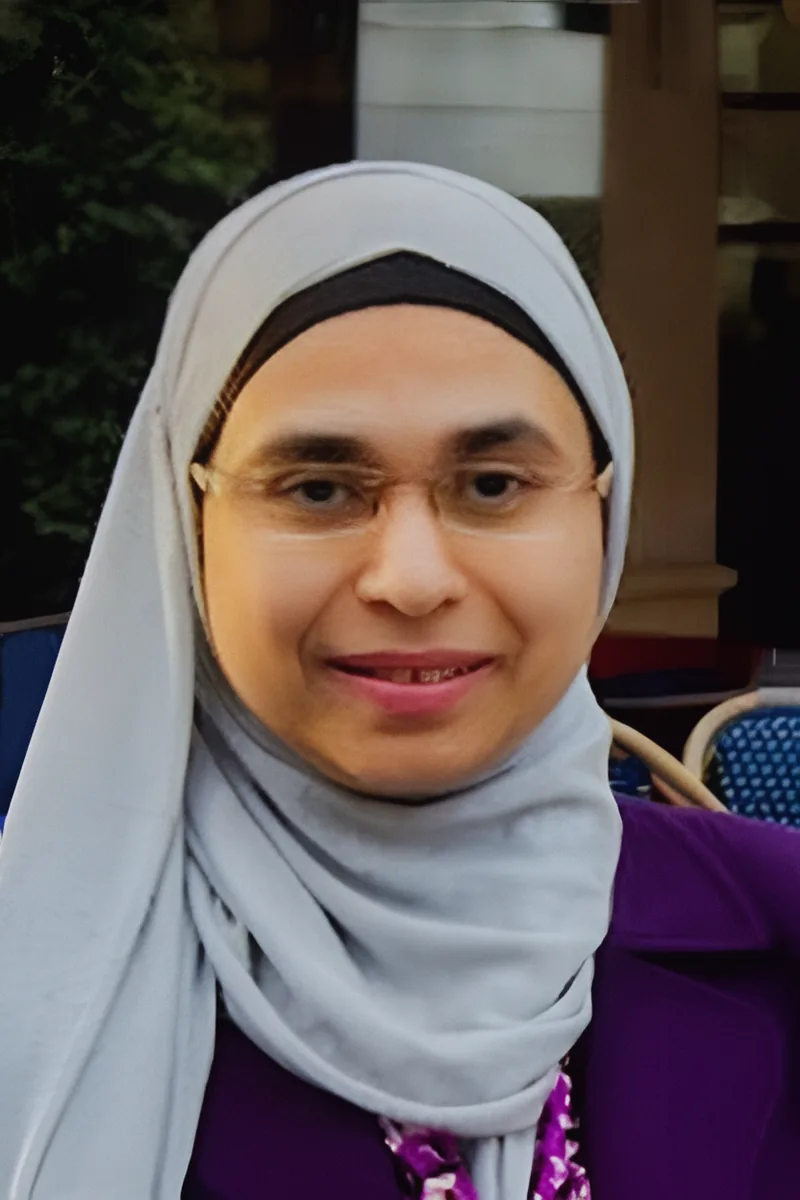
As a former IB student, my love for knowledge runs deep. I majored in Biomedical Engineering at the University of Alabama at Birmingham, graduating in December 2015 with honors (BME honors and Science and Technology Honors program) and going on to earn a Master's degree in Management Information Systems from the same university in 2019. I am currently pursuing a Master of Engineering in Artificial Intelligence and Machine Learning from the University of Illinois at Chicago and hope to start a career in data science and analytics. I greatly enjoy helping others learn and tutored throughout high school and college; I love seeing the light flash on in a student's eyes when they finally understand something they had been struggling with or when they easily solve a problem. I have tutored both young children as well as high school and college students, in just about every subject. I particularly enjoy language tutoring; I am fluent in Arabic and French and I love literature and poetry. I also love to tutor math and science subjects. My tutoring style is very much student-first; I listen and observe to determine the best approach for each individual student and what methods or strategies will be most helpful for you specifically. I am not averse to making a fool of myself with song or dance if it will help! I enjoy what I do and I want the students I work with to enjoy learning as well.

Sanjana doesn't just know AP Calculus BC — she teaches it, serving as a Course Assistant for Harvard's introductory calculus sequence. That means she's seen exactly where students stumble on Taylor series, parametric equations, and convergence tests, and she knows how to untangle those concepts in real time. Rated 5.0 by students.
BC Calculus layers convergence tests, parametric equations, and polar curves on top of an already demanding AB foundation, and the pacing leaves little room to fall behind. Vinson earned a 36 ACT and National AP Scholar distinction while building the kind of deep mathematical fluency that makes series analysis and integration techniques click. He breaks each new BC topic into the AB concept it extends, so the jump never feels arbitrary.
Electrical engineering at Duke means Brooke is actively using series expansions to analyze circuits and integration techniques to model signal behavior — so when she teaches convergence tests or Taylor polynomial construction, she knows exactly which conceptual gaps trip students up because she's recently closed those gaps herself. Her 1550 SAT and 5.0 tutoring rating back up what her coursework suggests: she can break down the leap from AB to BC in precise, concrete terms that make parametric curves and polar integrals feel like logical next steps rather than foreign territory.
Biomedical engineering at Johns Hopkins means Bidyut uses series approximations and differential equations to model biological systems — the same convergence tests and integration techniques that define the BC curriculum beyond AB. He's especially sharp at showing how a topic like Taylor polynomial error bounds connects back to the derivative reasoning students already trust, turning what feels like a wall of new material into a logical extension. Holds a 5.0 rating and a 36 ACT composite.
Physics majors don't just take BC Calculus — they breathe it, using series expansions to model wave behavior, integration techniques to solve equations of motion, and parametric equations to describe trajectories. Kiran is finishing a physics and computer science double major at Stony Brook, which means topics like Taylor polynomials and convergence aren't abstract to him; they're tools he reaches for in his own coursework daily. His 34 ACT and 4.7 rating speak to an ability to make that applied intuition accessible to students still building their BC toolkit.
As a multivariable calculus teaching assistant at Harvard's Math Department, Kristi spent semesters watching exactly where students' BC foundations cracked under pressure — shaky series intuition, mechanical convergence testing, parametric reasoning that never quite solidified. Her astrophysics training means she learned these tools by necessity, using Taylor expansions to model orbital mechanics and integration techniques to analyze planetary data, so she teaches the logic driving each method rather than just the steps. Rated 5.0 by students.
Most people who breeze through math can't explain it — Daniel learned BC Calculus by grinding through the logic of every convergence test, every parametric derivative, every series expansion until it genuinely made sense, and that's exactly how he teaches it. As an applied mathematics undergrad, he's currently using these tools in upper-level coursework, so he knows which BC concepts tend to feel arbitrary and how to make the reasoning behind them stick.
Having TA'd Calculus I and II at Rice while pursuing a graduate degree in computational and applied mathematics, Sakibul knows exactly where the AB-to-BC transition trips students up — particularly when series convergence and parametric differentiation demand a sharper kind of reasoning than anything before. He breaks down topics like interval of convergence arguments and integration techniques by rebuilding the logic from scratch rather than handing over shortcuts. His applied math background means he treats Taylor approximations and error bounds as precision tools, not abstract busywork.
Environmental engineering graduate work is essentially applied calculus — Kate's thesis work required series approximations for modeling fluid dynamics and integration techniques for analyzing pollutant transport, so BC topics like Taylor polynomials and improper integrals are tools she's used professionally, not just academically. She's particularly good at showing how convergence tests follow a logical decision tree rather than feeling like a random grab bag of techniques. Rated 4.9 by students.
Engineering physics at Cornell means Daniel is currently neck-deep in the math that BC Calculus builds toward — using series to model oscillating systems, applying integration techniques to energy problems, and solving differential equations that describe real physical behavior. That context gives him a clear picture of which BC skills actually matter and how to teach something like the ratio test or parametric arc length by grounding it in the AB intuition a student already carries. Rated 5.0 by students.
Derek scored a 5 on the AP Calculus BC exam and now studies applied mathematics at Harvard, which means series convergence tests, parametric equations, and polar area problems are still part of his daily toolkit. He breaks down intimidating topics like Taylor series error bounds and integration by parts into repeatable strategies that click on exam day. Rated 4.9 by students.
Studying both biomedical engineering and applied mathematics at Johns Hopkins, Nicholas lives in the world where BC Calculus concepts — series approximations, parametric modeling, advanced integration — are daily requirements rather than abstract exercises. He's especially good at breaking down the transition from AB to BC, showing how something like a convergence test or polar area calculation grows directly out of derivative and integral logic students already trust. His 35 ACT and 4.8 rating speak to the clarity he brings to those explanations.
Testimonials
Because the right AP Calculus BC tutor makes all the difference.
Average Session Rating – Based on 3.4M Learner Ratings
Practice AP Calculus BC
Free practice tests, flashcards, and AI tutoring for AP Calculus BC
Nearby AP Calculus BC Tutors
Other Birmingham Tutors
Related Math Tutors in Birmingham
Frequently Asked Questions
AP Calculus BC builds on AB concepts and covers advanced integration techniques, differential equations, sequences and series, parametric equations, polar coordinates, and vector-valued functions. The course culminates in the AP exam, which tests your ability to solve complex problems using both computational and conceptual understanding. A tutor can help you master each unit's key concepts and see how they connect to the broader calculus framework.
Score improvement depends on your starting point and how consistently you apply feedback. Students who work with a tutor typically see gains by identifying knowledge gaps, practicing problem-solving strategies, and building confidence with challenging topics like series and differential equations. Most students benefit from starting tutoring several months before the exam to allow time for skill development and practice test review.
Students often struggle most with infinite series (convergence tests, power series), parametric and polar equations, and applications involving differential equations. These topics require both conceptual understanding and computational fluency. Personalized tutoring helps break down these complex topics into manageable steps and connects them to problems you'll see on the exam.
The exam has two sections: multiple-choice (where you can't use a calculator for part of it) and free-response (where calculators are allowed for some questions). Key strategies include managing your time across different problem types, knowing when to use your calculator versus work by hand, and showing all work on free-response questions even if you make a computational error. A tutor can help you practice these strategies through full-length practice tests and timed problem sets.
Practice tests are essential—they help you identify weak areas, get comfortable with the exam format, and build stamina for the full 3-hour test. Taking practice tests under timed conditions also reveals whether you're rushing through problems or spending too long on difficult questions. Varsity Tutors connects you with tutors who can review your practice test results with you, explain mistakes, and help you refine your approach before test day.
Look for tutors with strong calculus backgrounds, experience teaching or tutoring AP-level material, and familiarity with the specific AP Calculus BC curriculum and exam format. Ideally, they should be able to explain difficult concepts clearly, help you develop problem-solving strategies, and provide targeted feedback on practice problems. Varsity Tutors connects you with expert tutors who have proven experience helping students succeed in AP Calculus BC.
Birmingham's 5 school districts serve nearly 40,000 students across 118 schools, many of which offer AP Calculus BC. Your school likely provides access to AP resources, practice materials, and teacher office hours. Personalized tutoring complements these resources by giving you one-on-one help with concepts that challenge you most and customized practice aligned with your learning pace.
In your first session, a tutor will assess your current understanding of calculus fundamentals, identify your specific challenges, and learn your goals—whether that's improving your grade, preparing for the AP exam, or mastering particular topics. This helps them create a personalized study plan tailored to your needs. From there, you'll work together on targeted practice and strategies to build confidence and competence.
Let’s find your perfect tutor
Answer a few quick questions. We’ll recommend the right plan and match you with a top 5% tutor.