Award-Winning AP Calculus BC Tutors
serving Huntsville, AL
AP Calculus BC
Tutors in Huntsville
Private 1-on-1 tutoring, weekly live classes for academic support, test prep & enrichment, practice tests and diagnostics, and more to elevate grades and test scores.
Based on 3.4M Learner Ratings
UniversitiesSchools & Universities
DeliveredHours Delivered
ProficiencyGrowth in Proficiency
Who needs tutoring?
No obligation. Takes ~1 minute.
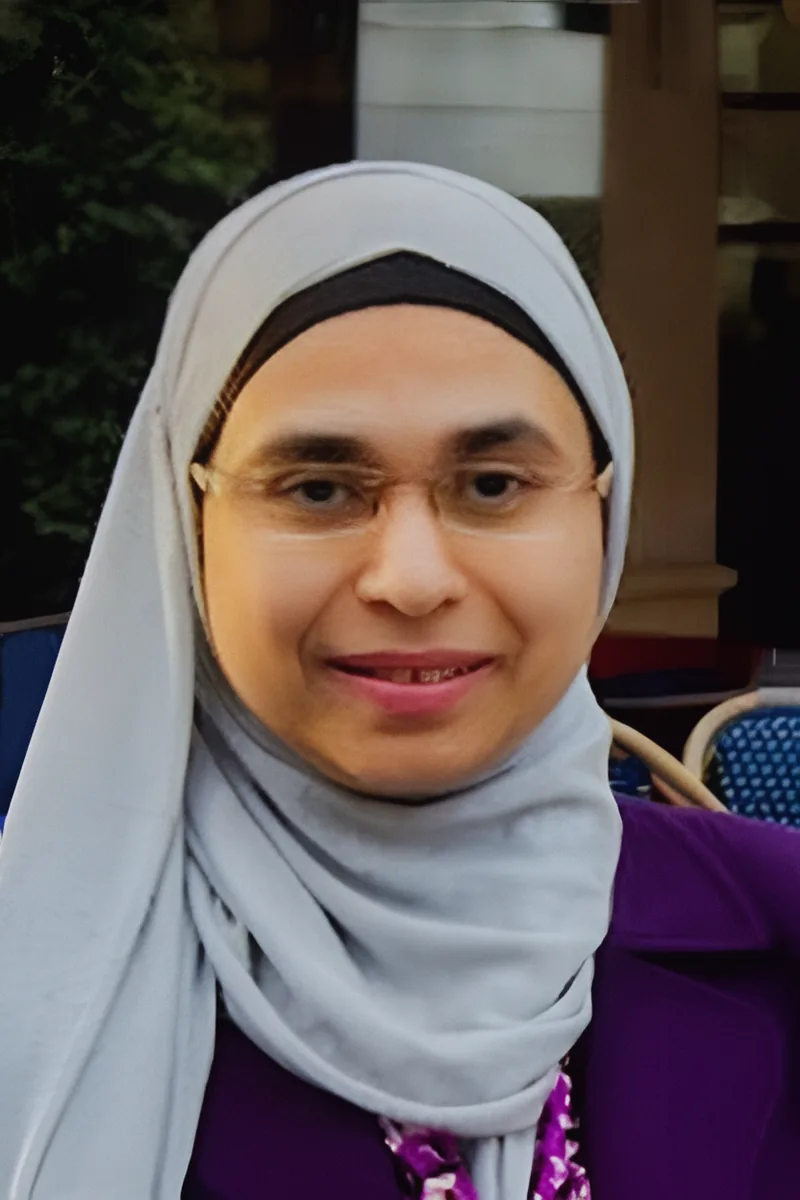
As a former IB student, my love for knowledge runs deep. I majored in Biomedical Engineering at the University of Alabama at Birmingham, graduating in December 2015 with honors (BME honors and Science and Technology Honors program) and going on to earn a Master's degree in Management Information Systems from the same university in 2019. I am currently pursuing a Master of Engineering in Artificial Intelligence and Machine Learning from the University of Illinois at Chicago and hope to start a career in data science and analytics. I greatly enjoy helping others learn and tutored throughout high school and college; I love seeing the light flash on in a student's eyes when they finally understand something they had been struggling with or when they easily solve a problem. I have tutored both young children as well as high school and college students, in just about every subject. I particularly enjoy language tutoring; I am fluent in Arabic and French and I love literature and poetry. I also love to tutor math and science subjects. My tutoring style is very much student-first; I listen and observe to determine the best approach for each individual student and what methods or strategies will be most helpful for you specifically. I am not averse to making a fool of myself with song or dance if it will help! I enjoy what I do and I want the students I work with to enjoy learning as well.
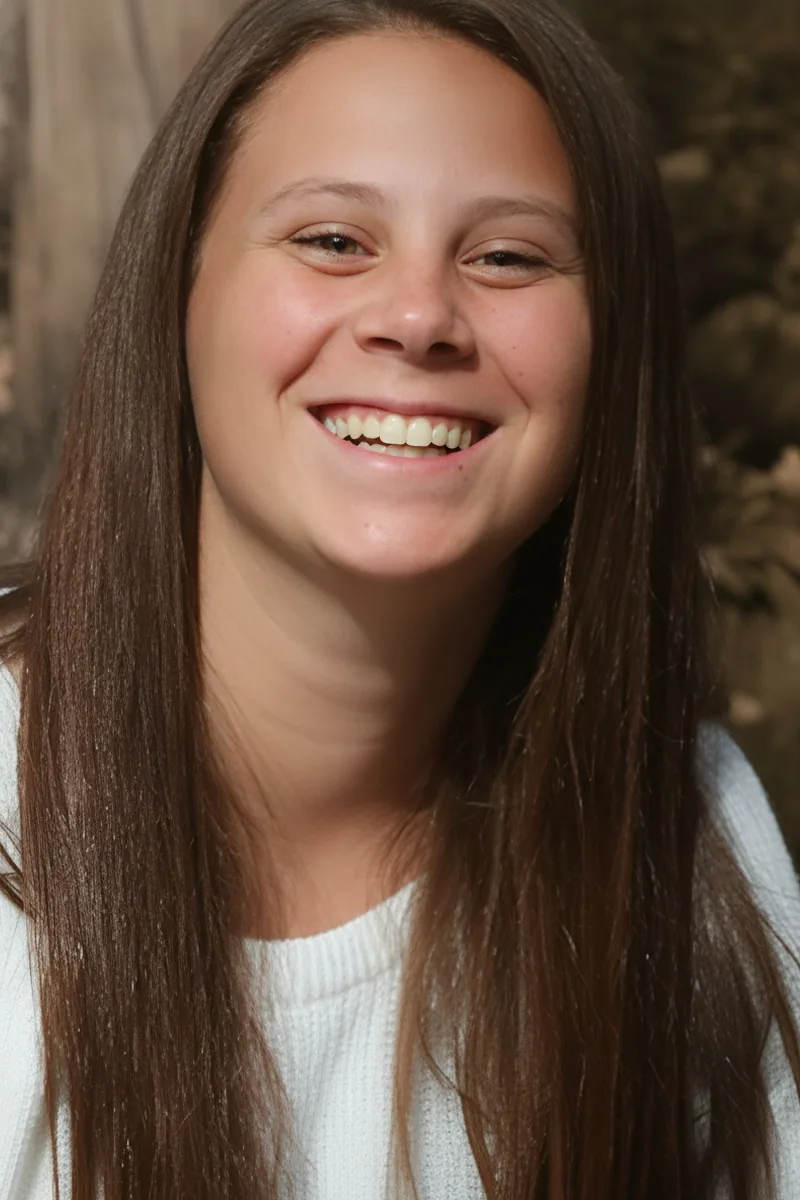
Rachel's 35 ACT and economics coursework at WashU mean she's comfortable with the quantitative reasoning BC demands, though her real edge is in how she breaks down the transition from AB material into BC-specific territory — particularly series convergence and polynomial approximations, where students often memorize tests without understanding what they're actually checking. She approaches each new BC tool by rebuilding the calculus logic underneath it, so topics like the ratio test or integration by parts hold up under exam pressure instead of falling apart.
Electrical engineering at Duke means Brooke is actively using series expansions to analyze circuits and integration techniques to model signal behavior — so when she teaches convergence tests or Taylor polynomial construction, she knows exactly which conceptual gaps trip students up because she's recently closed those gaps herself. Her 1550 SAT and 5.0 tutoring rating back up what her coursework suggests: she can break down the leap from AB to BC in precise, concrete terms that make parametric curves and polar integrals feel like logical next steps rather than foreign territory.
Justin's PhD work in Computational and Applied Mathematics at the University of Chicago means he doesn't just teach Taylor series and convergence — he builds on them daily in research involving image processing and climate modeling, where approximation methods have to actually hold up under real conditions. That perspective sharpens how he explains error bounds and series manipulation, grounding each technique in why it matters rather than just how to execute it on an exam. Rated 5.0 by students.
Most BC students can follow a convergence test step by step but freeze when asked to choose which test to apply — that decision-making is where Nima, a physics major heading to Duke on a full merit scholarship, spends most of his teaching energy. His physics training means he treats series and parametric equations as descriptions of real motion and real forces, which gives students an intuitive anchor when the abstraction piles up. A 1580 SAT and 4.7 rating back up his ability to make that AB-to-BC jump feel manageable.
BC Calculus covers a massive range — from parametric equations and polar curves to Taylor series and convergence tests — and Dennis's physics research at Princeton demanded fluency in all of it. He connects topics like integration techniques and differential equations to the physical problems they were invented to solve, which makes the logic behind each method click.
BC Calculus layers convergence tests, parametric equations, and polar curves on top of an already demanding AB foundation, and keeping all of it organized is half the battle. Tessa's approach is to unpack each new topic by tying it back to core ideas students already understand — showing, for instance, how Taylor series are really just an extension of local linearity. She's a math major at Yale with a 4.9 client rating.
Two years teaching math at every level at Mathnasium gave Amy an unusual skill for BC Calculus: she can trace a student's confusion with, say, a convergence test or polar area setup back to the specific algebraic or AB-level gap causing the problem. Her biochemistry coursework at Notre Dame also means she's used series approximations and integration techniques in applied contexts like enzyme kinetics and thermodynamics. A 1570 SAT and 35 ACT speak to the across-the-board precision she brings to the trickiest parts of the BC curriculum.
Scoring a 36 on the ACT while majoring in chemistry at MIT means Nicholas lives in the overlap where rigorous math meets scientific application — and BC Calculus sits right at that intersection. He's especially good at breaking down series convergence and integration techniques by grounding them in the kind of approximation problems he encounters in physical chemistry coursework, so the logic behind a ratio test or a Taylor expansion feels earned rather than arbitrary. Rated 5.0 by students.
BC Calculus throws students into deep water fast — Taylor and Maclaurin series, parametric equations, and convergence tests all pile up in a single semester. Rahi's applied mathematics engineering background means he can unpack these topics by connecting them to the real-world modeling problems they were designed to solve. He builds each concept from its AB foundation so students see how the BC extensions actually work.
Biology majors at WashU don't just memorize — Laura's upper-level coursework in evolutionary modeling and physical chemistry means she's actively using integration techniques, differential equations, and series approximations to solve problems outside a math classroom. That cross-disciplinary fluency is especially useful for BC's trickiest conceptual leap: understanding what a Taylor polynomial actually approximates and why specific convergence tests apply in specific situations. Rated 5.0 by students.
Until age 16, Viktor saw math as blind formula memorization — then a series of teachers at the right moment revealed the deeper logic underneath, and he ended up majoring in math at UChicago, where rigorous proof-based coursework made concepts like convergence and infinite series feel inevitable rather than arbitrary. That shift from "memorize the ratio test" to "understand why it works" is exactly what he brings to BC Calculus, especially when students hit the wall where AB intuition stops and formal reasoning about Taylor polynomials and error bounds needs to take over. His 1600 SAT and current CS master's work at NYU keep that analytical edge sharp.
Most people who breeze through math can't explain it — Daniel learned BC Calculus by grinding through the logic of every convergence test, every parametric derivative, every series expansion until it genuinely made sense, and that's exactly how he teaches it. As an applied mathematics undergrad, he's currently using these tools in upper-level coursework, so he knows which BC concepts tend to feel arbitrary and how to make the reasoning behind them stick.
Testimonials
Because the right AP Calculus BC tutor makes all the difference.
Average Session Rating – Based on 3.4M Learner Ratings
Practice AP Calculus BC
Free practice tests, flashcards, and AI tutoring for AP Calculus BC
Nearby AP Calculus BC Tutors
Other Huntsville Tutors
Related Math Tutors in Huntsville
Frequently Asked Questions
Varsity Tutors matches Huntsville students with expert AP Calculus BC tutors for 1-on-1 instruction. We pair each student with a tutor based on their specific needs, learning style, and goals.
Whether you need homework help, exam prep, or want to get ahead, our AP Calculus BC tutors are ready to help.
Common challenges include gaps from earlier material, difficulty with specific concepts, and trouble applying learning to new problems. These issues can snowball quickly in AP Calculus BC.
A tutor identifies where you're stuck, fills in gaps, and provides targeted practice. The 1-on-1 format means you get help exactly where you need it.
Tutors work with your student's actual coursework—homework assignments, class notes, and upcoming tests. This keeps tutoring directly relevant to what's happening in the classroom.
When you share information about your student's school and curriculum, we can match you with a tutor who has relevant experience.
All tutors complete background checks, credential verification, and teaching evaluation. Many of our AP Calculus BC tutors hold advanced degrees or have years of teaching experience.
You can review tutor profiles to find someone with the right background for your student's level and needs.
Many students see improved grades within a few weeks, along with better understanding of AP Calculus BC concepts and more confidence tackling challenging material.
Tutors track progress and adjust their approach to ensure continued improvement.
Most students benefit from 1-2 sessions per week. More frequent sessions help if your student is significantly behind or has an important exam coming up.
Your tutor can recommend a schedule based on your student's specific situation and goals.
Tutoring is purchased in packages of hours, with rates varying by tutor experience. Varsity Tutors offers several options to fit different budgets and needs.
You can discuss pricing during your consultation to find what works best.
Your tutor will assess where your student is, discuss goals, and start working on priority areas. Most students bring current homework or upcoming test material to focus on.
By the end, you'll have a clear sense of how the tutor can help and a plan for moving forward.
Let’s find your perfect tutor
Answer a few quick questions. We’ll recommend the right plan and match you with a top 5% tutor.