Award-Winning College Chemistry Tutors
serving Birmingham, AL
College Chemistry
Tutors in Birmingham
Private 1-on-1 tutoring, weekly live classes for academic support, test prep & enrichment, practice tests and diagnostics, and more to elevate grades and test scores.
Based on 3.4M Learner Ratings
UniversitiesSchools & Universities
DeliveredHours Delivered
ProficiencyGrowth in Proficiency
Who needs tutoring?
No obligation. Takes ~1 minute.
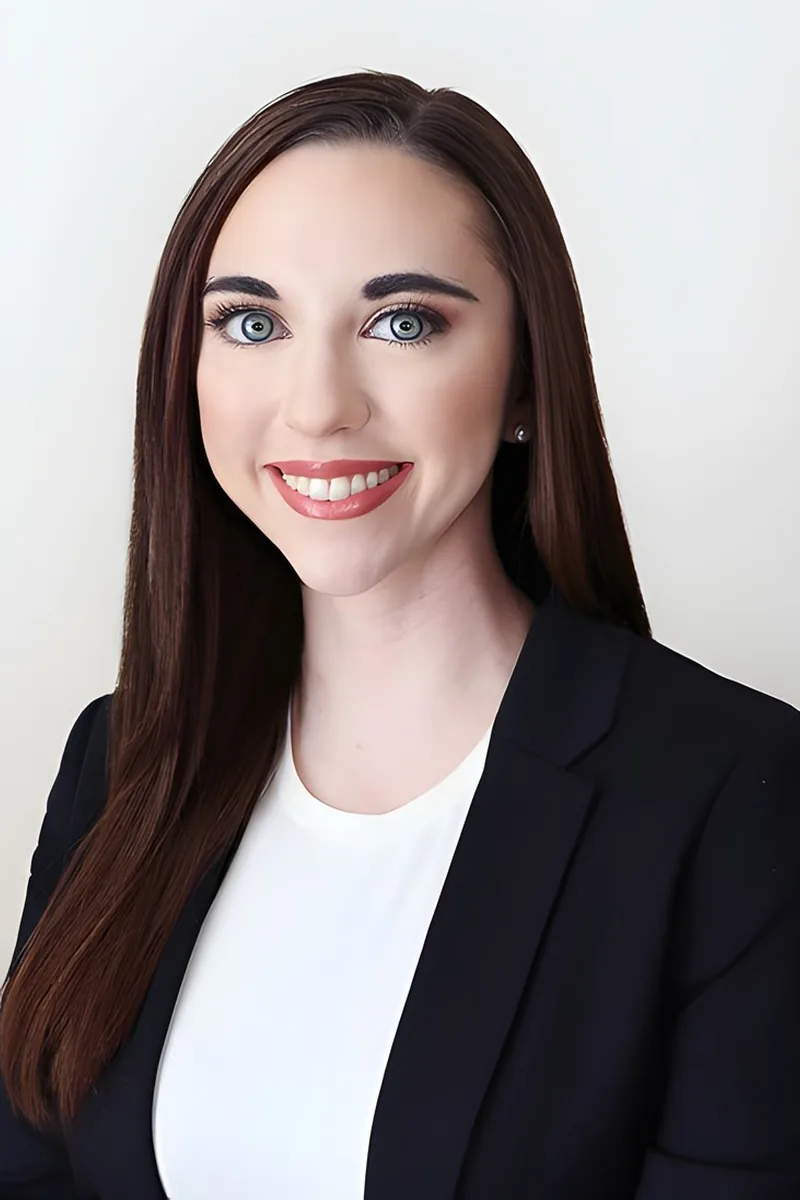
Studying malaria parasite genetics at Notre Dame meant Haley was running assays where getting solution concentrations, buffer pH, and reaction conditions wrong wasn't a grading issue — it was months of lost research. That lab instinct carries into how she teaches college chemistry topics like molarity, acid-base chemistry, and thermodynamics: she connects the textbook version to what actually happens when you're pipetting reagents and reading spectrophotometer output. Rated 5.0 by students.

I have enjoyed tutoring students for over 40 years. I remember my first student was the 7 grade daughter of the college librarian where I work at as an undergraduate at the University of North Alabama. I tutored her in math. I tutored numerous nursing students in chemistry while at graduate school at Vanderbilt University in Nashville where I received my PhD in 1985. I tutored students in science and math during my career as an industrial water treatment chemist. Upon retiring, I decided to continue tutoring part time as it still continues to bring me so much joy to help others suceed in their academic pursuits. I am the chemistry tutor at the tutor center at our local community college.
A bio-organic chemistry degree means Alex has lived through the full gen chem sequence and then pushed those concepts further — into reaction mechanisms, molecular orbital theory, and the quantitative problem-solving that upper-level chemistry demands. That depth shows up when tackling topics like chemical kinetics or periodic trends, where he can explain not just how to solve a problem but why the underlying chemistry behaves the way it does.
Tackling college-level chemistry means juggling thermodynamics, kinetics, and equilibrium all in the same problem set. Brittany was employed at the University of Pennsylvania's Tutoring Center specifically for General Chemistry I and II, where she worked with both undergraduates encountering the material for the first time and graduate students brushing up on fundamentals. That range sharpened her ability to adjust explanations to any level of preparation.
I've been working with students for over seven years, from middle school all the way through college, across subjects like math, calculus, statistics, linear algebra, chemistry, and physics, with a lot of SAT and ACT prep mixed in. My background is perhaps a little unconventional. I have two bachelor's degrees, one in Engineering and one in Communication Studies, plus a Master's in Design. That combination means I can guide you through challenging technical material and communicate it in a way that is easy to grasp. What I care most about is helping students get to a place where they don't need me anymore. I know that sounds like a strange thing for a tutor to say, but I think it's the right goal. I'm not here to walk you through steps to copy down. I want you to understand why something works, because that's what holds up under pressure, on a test you haven't seen before. If you're ready to ace that test or prove that theorem that's been bugging you, reach out and let's work together
Balancing redox equations, predicting reaction spontaneity with Gibbs free energy, working through equilibrium problems — these are the topics that trip up most college chemistry students. Laura tackles them daily as a biology major at WashU, where the pre-med chemistry sequence demands real fluency with thermodynamics, kinetics, and acid-base chemistry. Rated 5.0 by students, she breaks down quantitative problems into clear, logical steps.
Medical school demands fluency in chemistry that goes well beyond introductory courses, and Abrahim brings that depth to college-level topics like thermodynamics, kinetics, and electrochemistry. He diagnoses conceptual gaps fast — if a student can balance an equation but can't explain why a reaction is spontaneous, that's exactly where the session will dig in.
Having served as an undergraduate teaching assistant at Cornell for introductory biochemistry, Josef has spent real time diagnosing where students get stuck on foundational chemistry — electron configurations bleeding into bonding theory, or mole concepts falling apart during stoichiometric conversions. He teaches college chemistry with a life sciences backbone, connecting topics like solution chemistry and reaction energetics to the biological applications his students will actually encounter next semester. Rated 5.0 by students.
Li's doctoral-level medical coursework means she's encountered college chemistry concepts like acid-base equilibria, solution chemistry, and reaction energetics in clinical contexts where getting the chemistry wrong has real consequences. Her microbiology and anatomy teaching background also means she can ground abstract gen chem topics — like intermolecular forces or oxidation states — in the biological systems students will see again in upper-level courses.
Thermodynamics, equilibrium constants, and reaction kinetics demand more than memorizing formulas — they require thinking about why a reaction proceeds the way it does. Garrett's coursework in physical chemistry and organic chemistry means he can unpack the energy landscapes and molecular interactions behind each concept. He connects general chemistry principles to their applications in biochemistry and physiology, which makes abstract ideas click faster.
Working in Duke's Bilbo lab on neuroimmune interactions means Lauren applies gen chem principles — reaction kinetics, molecular polarity, acid-base behavior — in a research setting where getting the chemistry wrong has real consequences for experimental design. That hands-on context, paired with her neuroscience and chemistry coursework, gives her a practical read on which concepts students need to truly internalize versus which ones they're just memorizing long enough to pass the exam. Rated 4.8 by students.
Pre-med bio-psychology coursework at UCSB means Aaron has pushed through college chemistry the same way his students are — as a high-stakes prerequisite where every gap in stoichiometry or equilibrium shows up again in upper-division science courses. He talks through problems conversationally, pressing students to explain the reasoning back to him, which exposes shaky understanding far faster than just re-solving practice sets. Holds a 5.0 rating.
Having TA'd general chemistry at Cornell — running problem-solving sessions and later training other TAs in teaching techniques — Alec knows exactly which concepts derail students: electron configurations that don't match periodic trends, buffer problems where the Henderson-Hasselbalch equation gets misapplied, or enthalpy calculations where sign conventions silently flip answers. His genetics and pre-med coursework means he's also seen how gen chem principles resurface in biochemistry and organic chemistry, so he teaches each topic with an eye toward where it's headed. Rated 4.8 by students.
Between AP Chemistry, organic chemistry, and inorganic chemistry, Rebecca has covered college-level chemical concepts from multiple angles — but it's her biology background that shapes how she teaches gen chem topics like electron configurations, bonding, and solution chemistry, always tying them back to the biological systems where students will encounter them again. She's especially sharp at bridging the gap between memorizing periodic trends and actually using them to predict reactivity or molecular behavior. Rated 5.0 by students.
Testimonials
Because the right College Chemistry tutor makes all the difference.
Average Session Rating – Based on 3.4M Learner Ratings
Nearby College Chemistry Tutors
Other Birmingham Tutors
Related Science Tutors in Birmingham
Frequently Asked Questions
College Chemistry requires mastering both conceptual understanding and problem-solving skills—many students struggle with balancing chemical equations, unit conversions, and visualizing molecular structures at the atomic level. Additionally, the pace moves quickly, with new topics building on previous material, so gaps in foundational knowledge can compound fast. Personalized tutoring helps you identify which concepts need clarification and develop strategies to connect theory to practice.
Yes—tutors can help you understand the scientific method, prepare for lab reports, and grasp the reasoning behind experimental procedures. Whether you're struggling with data analysis, lab safety, or connecting lab observations to lecture concepts, personalized instruction helps you approach experiments with confidence and develop stronger scientific thinking skills.
Your first session focuses on understanding your specific challenges—whether that's stoichiometry, thermodynamics, or preparing for an exam. The tutor will assess your current understanding, identify knowledge gaps, and create a personalized plan tailored to your goals and learning style. This foundation ensures every future session builds exactly what you need.
College Chemistry requires deep understanding—memorizing formulas without grasping why they work leads to failure on exams and higher-level courses. Expert tutors use real-world applications, visual models, and problem-solving practice to help you truly understand bonding, reactions, and equilibrium. This approach builds long-term retention and prepares you for success in organic chemistry and beyond.
Many students struggle to 'see' molecules and atomic interactions—tutors use diagrams, 3D models, and analogies to make abstract concepts concrete and tangible. By connecting visual representations to equations and real-world examples, you'll develop stronger intuition for how atoms bond, how reactions proceed, and how structure determines properties.
Ideally, start 3-4 weeks before a major exam to allow time for concept review, problem-solving practice, and test-taking strategy development. However, even a few weeks of focused tutoring can significantly boost your confidence and performance. The sooner you identify weak areas, the more time you have to strengthen them before exam day.
Varsity Tutors connects you with experienced chemistry tutors who understand college-level coursework and can teach both content and problem-solving strategies. When you get matched with a tutor, you'll work with someone who has deep expertise in general chemistry and can adapt their teaching to your learning style and goals.
Absolutely—personalized tutoring is designed to fit your schedule, whether you need weekly sessions, intensive exam prep, or flexible drop-in support. You can adjust frequency and timing based on your course demands, upcoming exams, and other classes, making it easy to get help exactly when you need it most.
Let’s find your perfect tutor
Answer a few quick questions. We’ll recommend the right plan and match you with a top 5% tutor.