Award-Winning AP Calculus BC Tutors
serving Mobile, AL
AP Calculus BC
Tutors in Mobile
Private 1-on-1 tutoring, weekly live classes for academic support, test prep & enrichment, practice tests and diagnostics, and more to elevate grades and test scores.
Based on 3.4M Learner Ratings
UniversitiesSchools & Universities
DeliveredHours Delivered
ProficiencyGrowth in Proficiency
Who needs tutoring?
No obligation. Takes ~1 minute.
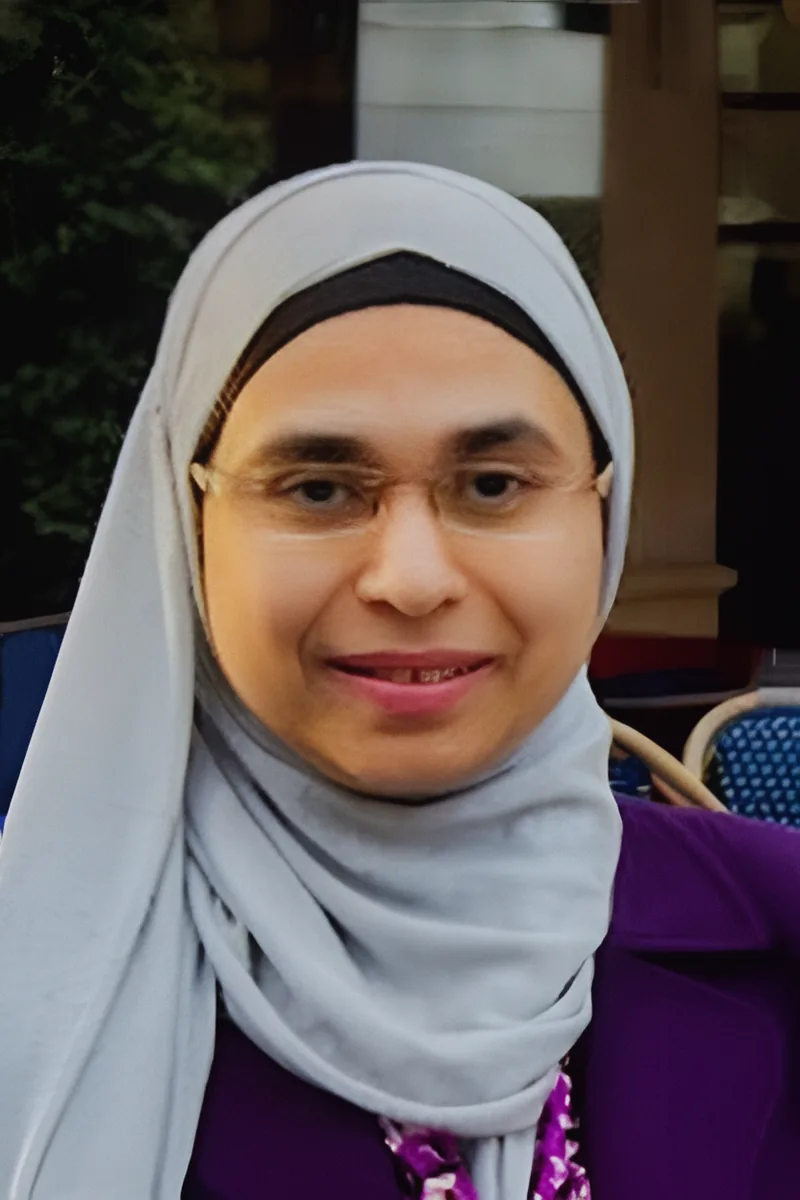
As a former IB student, my love for knowledge runs deep. I majored in Biomedical Engineering at the University of Alabama at Birmingham, graduating in December 2015 with honors (BME honors and Science and Technology Honors program) and going on to earn a Master's degree in Management Information Systems from the same university in 2019. I am currently pursuing a Master of Engineering in Artificial Intelligence and Machine Learning from the University of Illinois at Chicago and hope to start a career in data science and analytics. I greatly enjoy helping others learn and tutored throughout high school and college; I love seeing the light flash on in a student's eyes when they finally understand something they had been struggling with or when they easily solve a problem. I have tutored both young children as well as high school and college students, in just about every subject. I particularly enjoy language tutoring; I am fluent in Arabic and French and I love literature and poetry. I also love to tutor math and science subjects. My tutoring style is very much student-first; I listen and observe to determine the best approach for each individual student and what methods or strategies will be most helpful for you specifically. I am not averse to making a fool of myself with song or dance if it will help! I enjoy what I do and I want the students I work with to enjoy learning as well.

Scoring a 36 on the ACT while studying Human Biology at Cornell means Sharan lives at the intersection of rigorous quantitative thinking and applied science — exactly where BC Calculus sits when series approximations and integration techniques start modeling real biological systems. She breaks down the AB-to-BC jump by treating topics like Taylor polynomials and convergence tests as logical extensions of limits and derivatives, not a separate universe of formulas to memorize. Rated 5.0 by students.
Biomedical engineering at Johns Hopkins means Bidyut uses series approximations and differential equations to model biological systems — the same convergence tests and integration techniques that define the BC curriculum beyond AB. He's especially sharp at showing how a topic like Taylor polynomial error bounds connects back to the derivative reasoning students already trust, turning what feels like a wall of new material into a logical extension. Holds a 5.0 rating and a 36 ACT composite.
Princeton's electrical engineering program leans hard on series expansions and differential equations from day one — Sabrina uses them to analyze circuits and model signal behavior in her applied physics coursework, which means BC topics like Taylor polynomials and convergence tests aren't abstract exercises for her but tools she reaches for weekly. She's especially clear at breaking down the logic behind each convergence test so students can choose the right one on their own instead of guessing. Rated 5.0 by students.
Convergence tests, parametric equations, and Taylor series expansions are where BC separates from AB — and where many students start to feel lost. Rithi breaks these topics into intuitive steps, connecting new concepts back to the foundational calculus reasoning students already have. Her 1550 SAT and deep STEM background reflect the kind of mathematical fluency that makes those connections clear.
Having worked as a teaching assistant for multiple engineering courses at Washington University in St. Louis, Ava spent hours breaking down the calculus that trips students up most — and BC's jump into series convergence, parametric derivatives, and advanced integration techniques is exactly the material she kept revisiting with struggling engineers. Her dual degree in mechanical and energy engineering means she's applied Taylor expansions and improper integrals to real thermodynamic and fluid systems, giving her a concrete vocabulary for explaining why these tools matter beyond the AP exam.
Running a peer-tutoring program in high school meant Ryan spent years diagnosing exactly where classmates got stuck on calculus problems — a skill he's sharpened further through his civil engineering coursework at Cornell, where series expansions and integration techniques show up constantly in structural analysis and fluid mechanics. He breaks down the BC-specific leap into convergence tests and Taylor polynomials by grounding each new idea in the derivative and integral logic students built in AB. His 35 ACT and 4.7 rating speak to the precision he brings to every session.
BC Calculus throws students into deep water fast — Taylor and Maclaurin series, parametric equations, and convergence tests all pile up in a single semester. Rahi's applied mathematics engineering background means he can unpack these topics by connecting them to the real-world modeling problems they were designed to solve. He builds each concept from its AB foundation so students see how the BC extensions actually work.
Studying both biomedical engineering and applied mathematics at Johns Hopkins, Nicholas lives in the world where BC Calculus concepts — series approximations, parametric modeling, advanced integration — are daily requirements rather than abstract exercises. He's especially good at breaking down the transition from AB to BC, showing how something like a convergence test or polar area calculation grows directly out of derivative and integral logic students already trust. His 35 ACT and 4.8 rating speak to the clarity he brings to those explanations.
BC Calculus piles on series convergence, parametric equations, and polar coordinates on top of an already demanding AB curriculum. Julie's Princeton training in statistics and machine learning means she regularly uses advanced calculus as a tool, giving her an intuitive sense for which techniques apply where. She tackles integration strategies and Taylor series by connecting each method back to the core idea it extends.
A year as a course assistant in Harvard's math department teaching introductory calculus gave Richard a close-up view of exactly where students' AB foundations crack under the weight of BC material — particularly when series convergence and parametric functions demand a more flexible kind of reasoning. He breaks down topics like interval of convergence arguments and integration techniques by rebuilding the underlying logic rather than layering on new formulas. His perfect 1600 SAT and 36 ACT suggest the kind of precision he brings to each explanation.
Derek scored a 5 on the AP Calculus BC exam and now studies applied mathematics at Harvard, which means series convergence tests, parametric equations, and polar area problems are still part of his daily toolkit. He breaks down intimidating topics like Taylor series error bounds and integration by parts into repeatable strategies that click on exam day. Rated 4.9 by students.
BC Calculus throws students into series convergence tests, parametric equations, and polar coordinates — topics that feel disconnected unless someone ties them back to the core ideas of AB. Dylan's physics major at Vanderbilt means he uses calculus daily and can show exactly how Taylor series or integration by parts behave visually, not just symbolically. He turns abstract series into something students can sketch, interpret, and reason through on exam day.
Testimonials
Because the right AP Calculus BC tutor makes all the difference.
Average Session Rating – Based on 3.4M Learner Ratings
Practice AP Calculus BC
Free practice tests, flashcards, and AI tutoring for AP Calculus BC
Nearby AP Calculus BC Tutors
Other Mobile Tutors
Related Math Tutors in Mobile
Frequently Asked Questions
Varsity Tutors matches Mobile students with expert AP Calculus BC tutors for 1-on-1 instruction. We pair each student with a tutor based on their specific needs, learning style, and goals.
Whether you need homework help, exam prep, or want to get ahead, our AP Calculus BC tutors are ready to help.
Common challenges include gaps from earlier material, difficulty with specific concepts, and trouble applying learning to new problems. These issues can snowball quickly in AP Calculus BC.
A tutor identifies where you're stuck, fills in gaps, and provides targeted practice. The 1-on-1 format means you get help exactly where you need it.
Tutors work with your student's actual coursework—homework assignments, class notes, and upcoming tests. This keeps tutoring directly relevant to what's happening in the classroom.
When you share information about your student's school and curriculum, we can match you with a tutor who has relevant experience.
All tutors complete background checks, credential verification, and teaching evaluation. Many of our AP Calculus BC tutors hold advanced degrees or have years of teaching experience.
You can review tutor profiles to find someone with the right background for your student's level and needs.
Many students see improved grades within a few weeks, along with better understanding of AP Calculus BC concepts and more confidence tackling challenging material.
Tutors track progress and adjust their approach to ensure continued improvement.
Most students benefit from 1-2 sessions per week. More frequent sessions help if your student is significantly behind or has an important exam coming up.
Your tutor can recommend a schedule based on your student's specific situation and goals.
Tutoring is purchased in packages of hours, with rates varying by tutor experience. Varsity Tutors offers several options to fit different budgets and needs.
You can discuss pricing during your consultation to find what works best.
Your tutor will assess where your student is, discuss goals, and start working on priority areas. Most students bring current homework or upcoming test material to focus on.
By the end, you'll have a clear sense of how the tutor can help and a plan for moving forward.
Let’s find your perfect tutor
Answer a few quick questions. We’ll recommend the right plan and match you with a top 5% tutor.