Award-Winning Algebra 2 Tutors
serving Birmingham, AL
Algebra 2
Tutors in Birmingham
Private 1-on-1 tutoring, weekly live classes for academic support, test prep & enrichment, practice tests and diagnostics, and more to elevate grades and test scores.
Based on 3.4M Learner Ratings
UniversitiesSchools & Universities
DeliveredHours Delivered
ProficiencyGrowth in Proficiency
Who needs tutoring?
No obligation. Takes ~1 minute.
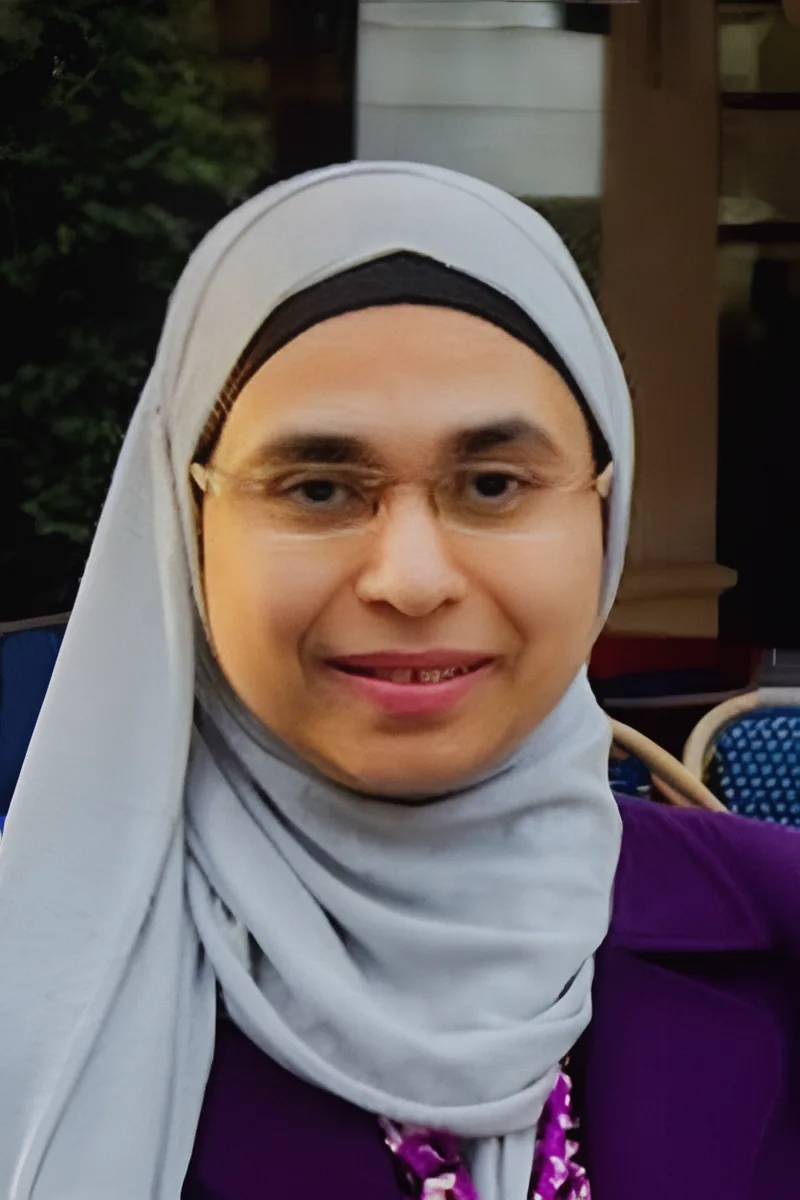
As a former IB student, my love for knowledge runs deep. I majored in Biomedical Engineering at the University of Alabama at Birmingham, graduating in December 2015 with honors (BME honors and Science and Technology Honors program) and going on to earn a Master's degree in Management Information Systems from the same university in 2019. I am currently pursuing a Master of Engineering in Artificial Intelligence and Machine Learning from the University of Illinois at Chicago and hope to start a career in data science and analytics. I greatly enjoy helping others learn and tutored throughout high school and college; I love seeing the light flash on in a student's eyes when they finally understand something they had been struggling with or when they easily solve a problem. I have tutored both young children as well as high school and college students, in just about every subject. I particularly enjoy language tutoring; I am fluent in Arabic and French and I love literature and poetry. I also love to tutor math and science subjects. My tutoring style is very much student-first; I listen and observe to determine the best approach for each individual student and what methods or strategies will be most helpful for you specifically. I am not averse to making a fool of myself with song or dance if it will help! I enjoy what I do and I want the students I work with to enjoy learning as well.

Logarithms, rational functions, and conic sections are where Algebra 2 stops feeling like an extension of Algebra 1 and starts demanding real conceptual flexibility. As a math major at Vanderbilt, Mustafa unpacks why these ideas behave the way they do — connecting logarithmic rules back to exponent properties, for instance — so the procedures actually make sense. Rated 5.0 by students.
When a student freezes on a problem involving complex numbers or polynomial long division, Rosalyn tries a completely different angle — sketching it visually, reframing it as a pattern, or building it from a simpler case the student already trusts. That flexibility comes from being a math major at Amherst who genuinely enjoys finding multiple paths to the same answer. Her 34 ACT and 5.0 rating speak to the mathematical depth behind that adaptability.
Aerospace engineering at Georgia Tech throws Emma into differential equations and orbital mechanics daily — but all of it traces back to the algebraic toolkit Algebra 2 builds, from manipulating exponential relationships to working fluently with complex functions. She earned a 34 ACT and holds a 5.0 student rating, and she's particularly effective at showing how topics like sequences and logarithms aren't just hoops to jump through but the actual language her engineering courses speak.
I am an aerospace engineering student. I am very passionate about teaching math, physics, and chemistry. I realized tutoring was my calling while working as a tutor at my school. Seeing students gain a greater understanding of the subject was the highlight of my day while working there.
Logarithms, polynomial functions, and systems of equations all start making sense once a student sees the underlying logic instead of just memorizing steps. Darcey's science training means she uses algebra constantly — modeling population growth curves, analyzing data sets — and she brings that practical fluency to Algebra 2 tutoring, showing students where these tools actually get used.
A biology double-major at UCLA who went on to Yale's public health program, Joseph has spent years working with exponential growth models, decay rates, and data analysis — all grounded in the algebraic tools Algebra 2 introduces. He's particularly good at showing how concepts like logarithmic and exponential functions describe real phenomena, from disease spread to population dynamics, which gives the math a concrete purpose. Rated 4.9 by his students.
Logarithmic functions, polynomial division, and complex numbers all show up constantly in engineering — so when Steve teaches Algebra 2, he can explain not just the procedure but why each concept matters beyond the textbook. His mechanical and electrical engineering degrees required fluency in every topic the course covers, from conic sections to sequences and series, and he unpacks each one with the precision of someone who still uses this math daily.
The IB Diploma Programme threw Dalton into higher-level math early, so topics like complex number operations, polynomial division, and sequence behavior were skills he had to master under pressure before most students even encountered them. His 35 ACT confirms that algebraic fluency stuck, and his experience tutoring everything from pre-algebra through calculus means he can quickly trace an Algebra 2 stumbling block back to the specific gap causing it.
The jump to Algebra 2 is where many students lose their footing, especially once logarithmic and rational functions enter the picture. Amber's experience teaching math from elementary through college-level calculus means she can trace a concept like exponential growth all the way back to the arithmetic a student already knows, building genuine understanding rather than rote steps. She holds a 5.0 client rating.
Nina's path from neurobiology at Northwestern to a biostatistics master's at Columbia means she's had to wield every Algebra 2 concept — polynomial manipulation, exponential models, logarithmic transformations — as everyday tools in real research. That gives her a sharp sense for which algebraic steps trip students up and how to rebuild the reasoning on the spot, rather than just re-demonstrating the procedure. She holds a 5.0 rating and a 1550 SAT.
After scoring a 34 ACT and landing in Princeton's Mechanical and Aerospace Engineering program, Matthew still remembers exactly where Algebra 2 gets tricky — the leap from straightforward equations to piecewise definitions, complex roots, and sequences that don't behave like anything from Algebra 1. His tutoring style is hands-on: he walks through a problem step by step, then puts a harder one in front of the student and asks targeted questions until they can navigate it independently.
Environmental engineering coursework is full of the exact algebra that trips up Algebra 2 students — modeling pollutant decay with exponential functions, solving systems to balance material flows, manipulating logarithmic scales for water chemistry data. Kate brings that applied fluency back to the classroom, so when she teaches a topic like logarithms or rational expressions, she can ground it in something tangible. Rated 4.9 by her students.
The jump from Algebra 1 to Algebra 2 is where math starts demanding abstract thinking — suddenly students are manipulating logarithms, working with complex numbers, and interpreting conic sections. Justin's dual background in physics and mathematics means he can show exactly where these tools get used, turning concepts like exponential growth or polynomial division from arbitrary procedures into ideas that actually make sense.
Logarithms, complex numbers, and rational functions stop feeling arbitrary once a student sees them applied — and Greg's chemistry background is full of those applications, from pH scales to reaction rate equations. He unpacks each Algebra 2 concept by connecting the abstract notation to something tangible, then builds fluency through targeted practice that reinforces the underlying logic.
After scoring a 35 ACT and 1530 SAT, Asta spent years tutoring students in Hong Kong who were preparing for U.S. college admissions — many of whom needed to solidify Algebra 2 topics like systems of equations and exponential functions under real pressure. That experience taught her how to quickly identify whether a student's confusion is about the new concept itself or a gap in earlier algebra that's quietly causing problems. Rated 5.0 by her students.
Before medical school, Samantha earned a perfect 1600 SAT and 36 ACT — scores that required deep command of exactly the kind of abstract reasoning Algebra 2 demands. She teaches topics like systems of inequalities and exponential modeling by building each idea from its simplest form, so students develop their own problem-solving instincts instead of relying on memorized shortcuts. Rated 5.0 by students.
Logarithms, complex numbers, and rational functions are where Algebra 2 starts to feel abstract, but Ava's engineering background means she's used every one of these tools in real design problems. As a former teaching assistant for calculus and physics courses at Washington University in St. Louis, she knows exactly which Algebra 2 gaps trip students up later — and tackles them before they compound.
Testimonials
Because the right Algebra 2 tutor makes all the difference.
Average Session Rating – Based on 3.4M Learner Ratings
Practice Algebra 2
Free practice tests, flashcards, and AI tutoring for Algebra 2
Nearby Algebra 2 Tutors
Other Birmingham Tutors
Related Math Tutors in Birmingham
Frequently Asked Questions
Algebra 2 is taught differently across Birmingham's five school districts, with varying textbooks and pacing. When you connect with a tutor through Varsity Tutors, they'll review your student's specific curriculum, textbook, and class notes during the first session to align their instruction with what's being taught in the classroom. This ensures tutoring reinforces and extends what students are learning, rather than introducing conflicting approaches.
Word problems require students to translate language into mathematical expressions—a skill that takes practice and strategy. Tutors work with students to break down problems into manageable steps, identify key information, and build a systematic approach rather than guessing. With personalized 1-on-1 instruction, students gain confidence tackling unfamiliar problem types and develop the reasoning skills that transfer across different contexts.
Showing work moves students beyond just getting the right answer—it reveals their reasoning and helps teachers (and tutors) identify where misconceptions occur. In Algebra 2, this is especially important because the skills build on each other; if a student can't explain their steps, gaps in understanding compound in later topics. Tutors help students articulate their problem-solving process, which deepens understanding and makes it easier to catch and fix errors.
Graphing requires students to see the connection between equations and visual representations—something that's hard to grasp from lectures alone. Tutors use personalized instruction to help students explore how changing coefficients affects graphs, practice sketching with immediate feedback, and build the visual intuition that makes transformations make sense. Many students find that once they see these patterns in action, graphing shifts from intimidating to manageable.
Math anxiety often stems from past struggles or feeling rushed in a classroom setting. Personalized 1-on-1 tutoring removes that pressure—students work at their own pace, ask questions without embarrassment, and experience success on problems they thought were impossible. Tutors also help students recognize patterns and connections they've been missing, which shifts their mindset from "I can't do math" to "I just needed a different approach."
The first session is about building a foundation for progress. The tutor will assess your student's current understanding, identify specific gaps (whether in foundational skills or current topics like systems of equations or polynomials), and learn their learning style. From there, the tutor creates a personalized plan focused on your student's goals—whether that's catching up, building confidence, or preparing for an exam.
Yes—many students find the shift from computational problems to logical reasoning and proofs challenging because it requires a different type of thinking. Rather than following a formula, students must justify each step and think abstractly. Tutors help students build this logical foundation by working through proofs step-by-step, explaining the "why" behind each justification, and practicing until the reasoning becomes natural.
Tutors create targeted review plans based on your student's weak areas rather than reviewing everything equally. They use practice problems and past exams to identify patterns in what your student struggles with, then focus instruction there. This strategic approach, combined with practice testing and feedback, helps students build both knowledge and test-taking confidence—leading to stronger performance on exams.
Let’s find your perfect tutor
Answer a few quick questions. We’ll recommend the right plan and match you with a top 5% tutor.