Award-Winning Science Tutors
serving Plano, TX
Science
Tutors in Plano
Private 1-on-1 tutoring, weekly live classes for academic support, test prep & enrichment, practice tests and diagnostics, and more to elevate grades and test scores.
Based on 3.4M Learner Ratings
UniversitiesSchools & Universities
DeliveredHours Delivered
ProficiencyGrowth in Proficiency
Who needs tutoring?
No obligation. Takes ~1 minute.
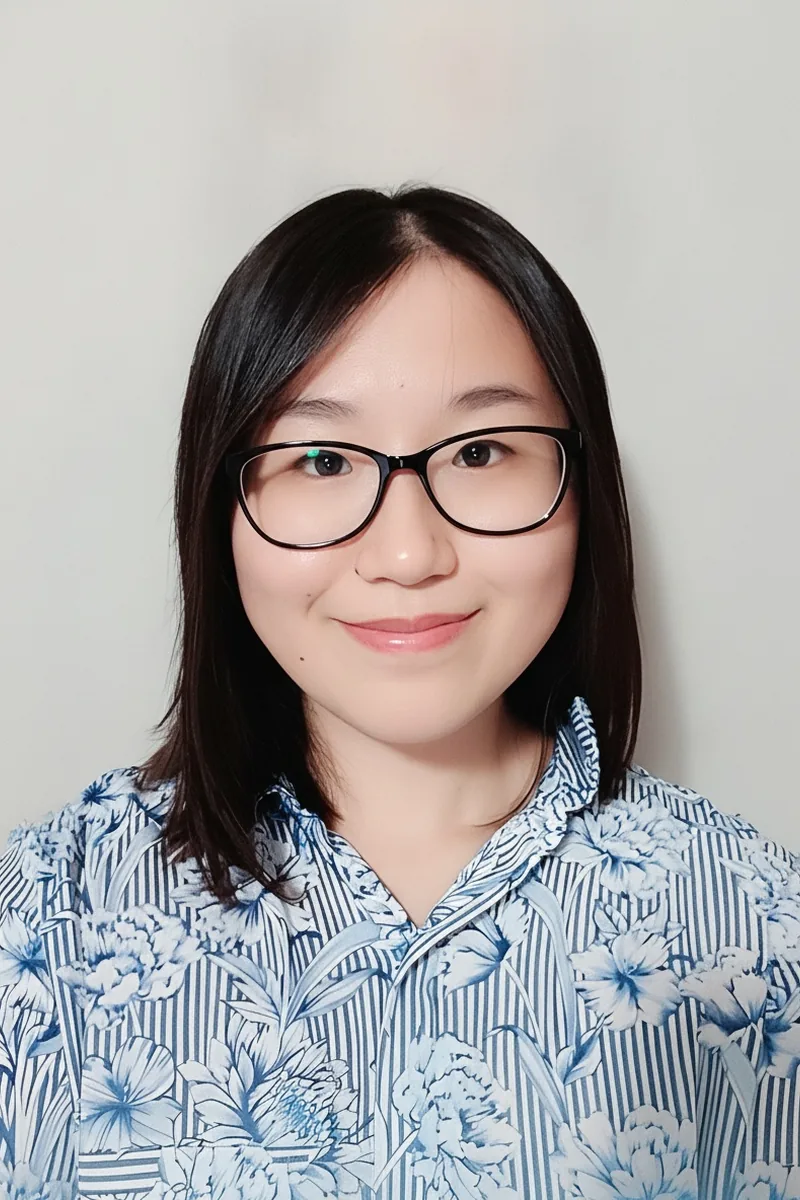
With degrees that include environmental science, Patricia brings real-world context to science tutoring — connecting textbook concepts in biology, chemistry, and earth science to systems students can actually observe. She's particularly strong at teaching students to read data tables, interpret graphs, and design basic experiments, which are skills that show up across every science class. Her approach makes abstract processes like the water cycle or cellular respiration concrete and visual.
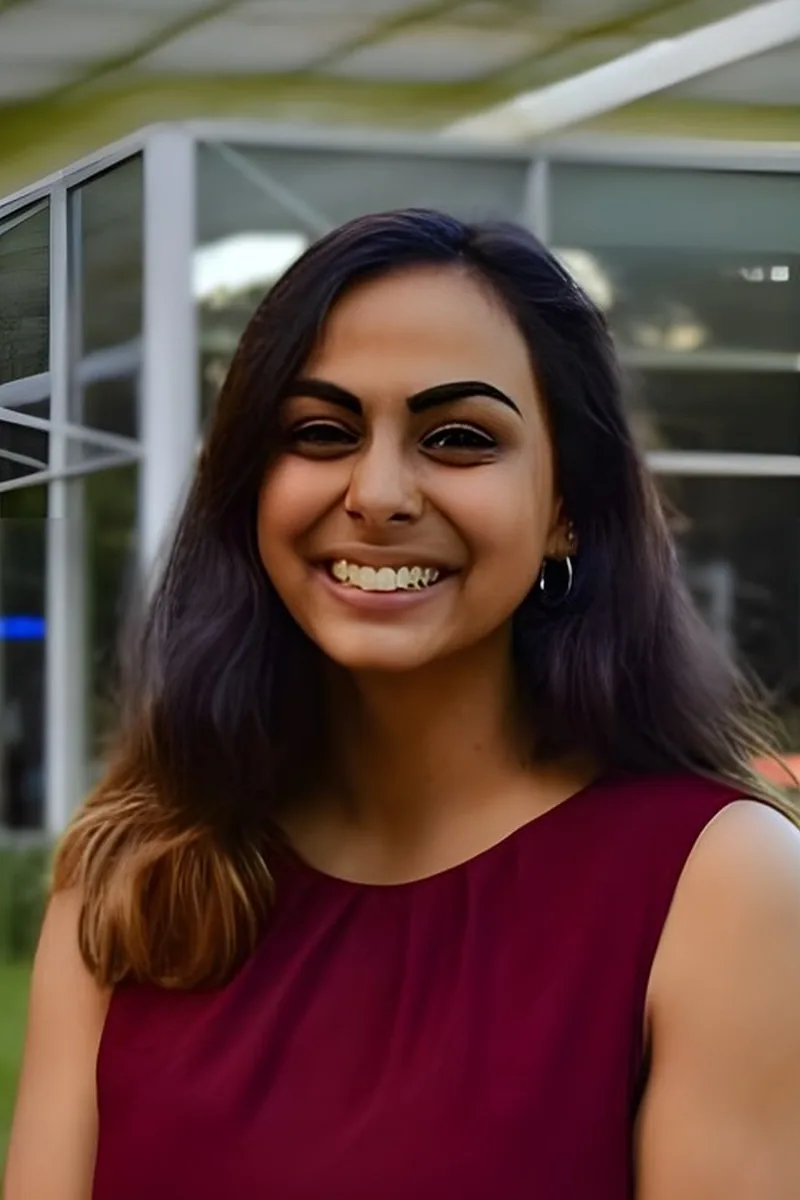
I am most passionate about biology and chemistry. I am a firm proponent of education, believing it to be absolutely necessary for an improved quality of life, and I try to impart this appreciation to all of my students.
Between a chemistry degree and an ongoing PhD in materials engineering, Nivedina has spent years moving between biology, physics, and chemistry — and understands how younger students experience science before those boundaries exist. She tackles topics like the scientific method, energy transfer, and properties of matter by tying them to tangible experiments and everyday observations. That cross-disciplinary fluency makes her especially good at answering the follow-up questions that go beyond what's in the textbook.
A biology degree from Texas A&M gave Kinjal deep fluency across the life and physical sciences — from cellular respiration and genetics to Newton's laws and chemical bonding. She breaks down the scientific method itself, teaching students how to read data tables, form hypotheses, and connect observations to underlying principles. Rated 5.0 by students.
Kenan's mathematical economics training means he's spent serious time with data modeling, statistical analysis, and quantitative problem-solving — skills that translate naturally to the measurement, graphing, and hypothesis-testing components of science coursework. He's especially useful when students need to make sense of numerical relationships in experiments, like calculating rates, interpreting proportional data, or figuring out what a graph is actually telling them.
Having tutored subjects from elementary math through college calculus, Siyu has a knack for scaling explanations to match a student's level — which matters in science, where a fifth grader learning about ecosystems and a high schooler tackling energy conservation need completely different entry points. She zeroes in on the reading-comprehension side of science, teaching students to pull key information from diagrams, data tables, and dense textbook passages, drawing on the same close-reading skills she applies across her English and SAT prep work.
As a Biochemistry and Cell Biology major at Rice, Natalie lives inside scientific thinking daily — designing experiments, interpreting data, and connecting molecular-level processes to larger biological systems. She brings that real coursework experience into tutoring sessions, whether a student needs to understand the periodic table, cell division, or how to read a scientific graph.
An electrical engineering background means Alisa lives at the intersection of physics, math, and applied science — she can explain circuit behavior, energy conservation, or wave properties with the fluency of someone who uses those principles daily. She's particularly effective at connecting scientific formulas to real-world demonstrations so the reasoning behind each equation becomes intuitive.
A strong math background turns out to be one of the best tools for science tutoring — interpreting graphs, unit conversions, and quantitative reasoning underpin nearly every science topic from biology to physics. Kavitya studied advanced STEM coursework at the University of North Texas and brings that analytical rigor to scientific concepts, connecting formulas and data analysis back to the underlying logic so students actually retain what they learn.
I am currently a senior at Emory University studying chemistry and applied math with a focus on inorganic chemistry. I will be available to tutor algebra, trigonometry, algebra 2, biology, chemistry, calculus, geometry, pre- calculus, and ACT prep. I started tutoring in high school and continued tutoring at Emory where I tutored general chemistry, introductory biology, and calculus for two years. Apart from academic tutoring, I am also involved in Project SHINE which teaches English to recent Atlanta immigrants. I believe that education (no matter what kind) is crucial in life, but I also strive to emphasize why something is important. In my experience, most students struggle with something because they don't understand exactly why it is important or simply do not care. I am heavily involved in academic research at Emory so I am able to help a student understand exactly why a specific subject area is important and how it is continuously applied both in the lab and in the real world to improve our lives. It's always easier to see the physical and practical applications of a subject than try to visualize its importance on paper. In my spare time I enjoy chemistry, ancient Roman history, jam bands, running, cycling, and scuba diving.
Hamza's bioinformatics degree required deep coursework in biology, chemistry, and physics, giving him an unusually integrated view of the sciences. He's especially effective at explaining the quantitative side — dimensional analysis in chemistry, free-body diagrams in physics, data interpretation in biology — where students often struggle to bridge math and science thinking.
Studying biochemistry at Rice means Sunny lives inside scientific reasoning — designing experiments, interpreting data, and linking molecular-level processes to larger biological outcomes. She breaks down tricky concepts like chemical equilibrium or cellular respiration by walking through the logic step by step, so students understand the 'why' behind each reaction.
A computer science background might not scream "science tutor," but Anna's coursework required heavy doses of physics and applied math, giving her a strong handle on unit conversions, data interpretation, and the scientific method. She's especially effective at teaching students how to read graphs and draw conclusions from experimental data — skills that transfer across biology, chemistry, and earth science.
Balancing chemical equations, drawing free-body diagrams, interpreting motion graphs — Mackenzie tackles all of it with the applied perspective of someone building on these concepts daily in her engineering program at UT Dallas. She breaks science problems into their underlying math and logic so students see the reasoning, not just the formula to memorize.
Engineering at UT Austin means Akhil applies physics, chemistry, and earth science concepts to real problems on a regular basis — fluid dynamics in reservoirs, thermodynamic cycles, chemical compositions of rock formations. He uses those concrete applications to make abstract science topics click, whether a student is working through force diagrams or balancing chemical equations.
The analytical thinking Nicholas applies daily in his computer science and math coursework translates directly to science — interpreting data, setting up equations from word problems, and reasoning through cause-and-effect relationships. He approaches science topics methodically, breaking experiments and formulas into logical steps rather than expecting students to memorize outcomes.
A psychology degree is essentially a science degree in disguise — Gabriela spent her undergraduate training learning experimental design, statistical analysis, and how to evaluate peer-reviewed research, all core skills that general science coursework demands. She's particularly strong at walking students through biology-adjacent material like human body systems, genetics, and ecology, where her neuroscience background gives her depth most general science tutors lack.
A biochemistry degree from Rice and a current M.D. program at Baylor mean Michelle lives at the intersection of biology and chemistry every day. She unpacks concepts like cellular respiration, acid-base equilibria, and molecular genetics by tying them to how the body actually works — turning dense textbook material into something students can visualize and retain.
Biochemistry, cell biology, neuroscience, physical chemistry — Sugi didn't just take these courses, she built a medical career on top of them. When a student struggles with something like cellular respiration or chemical equilibrium, she connects the textbook version to the larger story of why that process matters, which turns rote memorization into genuine understanding.
A molecular, cellular, and developmental biology degree plus an MD in progress at Stanford means Maggie doesn't just know science content — she thinks like a scientist. Whether a student needs to untangle Newton's third law in physics or trace electron transport in biology, she connects abstract diagrams to concrete reasoning so the logic sticks beyond the test.
A biomedical engineering major doesn't just study science — they live at the intersection of physics, chemistry, and biology every day. Bidyut uses that cross-disciplinary perspective to explain concepts like energy conservation or chemical bonding by showing how they appear in real systems, from circuit design to cellular processes. He holds a 5.0 rating across his students.
A Human Biology degree and graduate coursework in development give Jonathan unusual range across the sciences — he can walk through cellular respiration one session and explain acid-base equilibria the next without switching tutors. He connects topics across disciplines, showing how the chemistry behind enzyme kinetics feeds directly into the biology of metabolic pathways.
As a Human Biology major at Stanford with a concentration in health policy, Jake lives at the intersection of biology, chemistry, and data analysis every day. He teaches scientific concepts by grounding them in real-world applications — how cells respond to environmental changes, why energy flows through ecosystems the way it does — so the material actually sticks.
Studying biology with a concentration in health and human disease at Northwestern gives Mackenzie a working scientist's perspective on topics like cell biology, genetics, and experimental design. She's also comfortable with physics and chemistry through her IB-level teaching experience, so she can connect concepts across scientific disciplines the way real research does. Students get someone who genuinely finds this material fascinating, not just teachable.
Tutoring middle schoolers through InspireSTL meant Elena fielded whatever subject walked through the door — including impromptu lessons on biology and experimental design — which built the kind of flexible, on-the-spot science teaching that textbook training alone doesn't provide. Her art history research also sharpens a skill students underestimate in science: reading visual information carefully, whether it's a Byzantine mosaic or a data table showing plant growth under different conditions.
Studying biosciences on the pre-med track at Rice, Tegan lives inside scientific thinking every day — designing experiments, interpreting data, and connecting molecular processes to real-world outcomes. She unpacks concepts in biology, chemistry, and general science by grounding abstract ideas in concrete examples students can actually visualize. That approach makes dense material far more manageable.
Cognitive studies at Vanderbilt is essentially the science of how people think — covering neuroscience, experimental design, and data-driven research methods — so Vy brings real lab-adjacent training to topics like the nervous system, hypothesis testing, and interpreting results. Her 35 ACT confirms she can handle the quantitative and reading-heavy demands of science material, and her approach leans on making students articulate the reasoning behind an answer rather than just circling it.
Rishi's computer science and math training at Rice gives him a structured way of breaking down science problems — whether it's interpreting data tables, working through unit conversions, or applying formulas in physics and chemistry contexts. As a student-athlete on Rice's golf team, he also knows how to make study sessions efficient so concepts stick the first time around.
Studying computer science and math at Rice University means William spends most of his time doing what science courses ask students to do — building models, testing them against data, and figuring out why something broke when the results don't match expectations. His physics background adds a concrete physical-science dimension to that analytical toolkit, so he can walk students through everything from interpreting graphs to understanding how energy and forces actually behave in an experiment.
Studying biophysics at Rice means Aadith lives at the intersection of biology, chemistry, and physics every day — so he can show students how a concept like energy conservation appears across all three disciplines. He unpacks scientific reasoning step by step, emphasizing how to set up problems and interpret results rather than just plugging into formulas.
Game theory — which Carter taught to advanced middle schoolers at a Johns Hopkins CTY program in Hong Kong — is applied science at its core: building models, testing predictions, and revising strategies based on outcomes. That experience, combined with an economics degree from Brown that included applied math coursework, means he's comfortable walking students through hypothesis testing, data interpretation, and the quantitative reasoning that underpins science at every level. Rated 5.0 by students.
Studying neuroscience on the premed track at Rice means Aditi lives inside scientific thinking every day — forming hypotheses, interpreting data, connecting cause and effect across biological systems. She brings that same inquiry-driven approach to younger students, whether they're learning about ecosystems, the water cycle, or basic chemistry. Her goal is to make science feel like detective work, not a list of vocabulary to memorize.
Coding in Python actually builds the same mental muscles science demands — isolating variables, testing predictions systematically, and figuring out why something didn't work the way you expected. Meagen's computer science coursework at Carleton gives her a hands-on feel for that debugging-style thinking, which she applies to walking students through experimental design, data interpretation, and writing up conclusions that go beyond restating results. Her 5.0 rating suggests the approach lands.
A comparative literature degree might not scream 'science tutor,' but Chloe's Linguistics minor trained her to dissect systems — breaking language into morphemes and syntax trees uses the same pattern-recognition that classifying organisms or tracing chemical reactions demands. She's particularly handy when students need to decode dense scientific vocabulary, since someone who studied word roots across multiple languages can demystify terms like 'endothermic' or 'photosynthesis' on sight. Her 5.0 rating suggests the cross-disciplinary approach clicks.
Paul's economics degree built fluency in the core toolkit science courses also demand — reading graphs, isolating variables, and figuring out whether the data actually supports the conclusion or just looks like it does. He leans on that quantitative training to walk students through experimental design and data interpretation, treating every lab question like a mini argument that needs evidence. His 34 ACT confirms he can handle the analytical rigor across disciplines.
Studying biosciences on the premed track at Rice University, Jessy brings real lab-course knowledge to topics like cell biology, genetics, and ecological systems. She breaks down scientific reasoning — forming hypotheses, interpreting data, connecting cause and effect — in ways that make the subject click rather than feel like a list of vocabulary terms. Rated 5.0 by students.
A cognitive science degree sits at the intersection of biology, psychology, and neuroscience, which gives Adam a genuine cross-disciplinary science background rather than expertise in just one narrow area. He breaks down concepts like the scientific method, experimental design, and biological systems by connecting them to real-world examples — how the brain processes information, how cells communicate, why certain variables matter in an experiment.
A biochemistry and molecular biology major on the pre-med track, Sajel lives in the sciences daily — organic reaction mechanisms, cell signaling pathways, experimental design. She connects abstract concepts to real examples from her coursework, which makes topics like energy transfer or molecular structure click faster than rereading a textbook chapter.
Applied mathematics at Rice means Alexander spends most of his time building models and solving problems — skills that translate naturally when a science student needs to work through dimensional analysis, interpret a velocity-time graph, or figure out why their chemistry calculations keep coming out wrong. His MATLAB and Python experience also means he can teach students to visualize and manipulate scientific data computationally, not just on paper.
I am an Atlanta native. I hold an undergraduate degree in Business from Tennessee State University and graduated degree in Education from Cambridge College. I am a Georgia and Texas certified teacher. I have always enjoyed working with kids. I have taught kindergarten, first, second and fourth grade. I am a hard-worker, team player and passionate about my students succeeding in whatever they set their minds too. I currently hold endorsements in K-5 Mathematics, Teacher Support Specialist, and ESOL (English for Speakers of Other Languages). I am able to provide instruction that meets the needs of all students. I have the ability to differentiate instruction so that I cater to all learning styles and levels.
Testimonials
Because the right Science tutor makes all the difference.
Average Session Rating – Based on 3.4M Learner Ratings
Practice Science
Free practice tests, flashcards, and AI tutoring for Science
Nearby Science Tutors
Other Plano Tutors
Related Science Tutors in Plano
Frequently Asked Questions
Varsity Tutors matches Plano students with expert Science tutors for 1-on-1 instruction. We pair each student with a tutor based on their specific needs, learning style, and goals.
Whether you need homework help, exam prep, or want to get ahead, our Science tutors are ready to help.
Common challenges include gaps from earlier material, difficulty with specific concepts, and trouble applying learning to new problems. These issues can snowball quickly in Science.
A tutor identifies where you're stuck, fills in gaps, and provides targeted practice. The 1-on-1 format means you get help exactly where you need it.
Tutors work with your student's actual coursework—homework assignments, class notes, and upcoming tests. This keeps tutoring directly relevant to what's happening in the classroom.
When you share information about your student's school and curriculum, we can match you with a tutor who has relevant experience.
All tutors complete background checks, credential verification, and teaching evaluation. Many of our Science tutors hold advanced degrees or have years of teaching experience.
You can review tutor profiles to find someone with the right background for your student's level and needs.
Many students see improved grades within a few weeks, along with better understanding of Science concepts and more confidence tackling challenging material.
Tutors track progress and adjust their approach to ensure continued improvement.
Most students benefit from 1-2 sessions per week. More frequent sessions help if your student is significantly behind or has an important exam coming up.
Your tutor can recommend a schedule based on your student's specific situation and goals.
Tutoring is purchased in packages of hours, with rates varying by tutor experience. Varsity Tutors offers several options to fit different budgets and needs.
You can discuss pricing during your consultation to find what works best.
Your tutor will assess where your student is, discuss goals, and start working on priority areas. Most students bring current homework or upcoming test material to focus on.
By the end, you'll have a clear sense of how the tutor can help and a plan for moving forward.
Let’s find your perfect tutor
Answer a few quick questions. We’ll recommend the right plan and match you with a top 5% tutor.