Award-Winning Science Tutors
serving Dallas, TX
Science
Tutors in Dallas
Private 1-on-1 tutoring, weekly live classes for academic support, test prep & enrichment, practice tests and diagnostics, and more to elevate grades and test scores.
Based on 3.4M Learner Ratings
UniversitiesSchools & Universities
DeliveredHours Delivered
ProficiencyGrowth in Proficiency
Who needs tutoring?
No obligation. Takes ~1 minute.
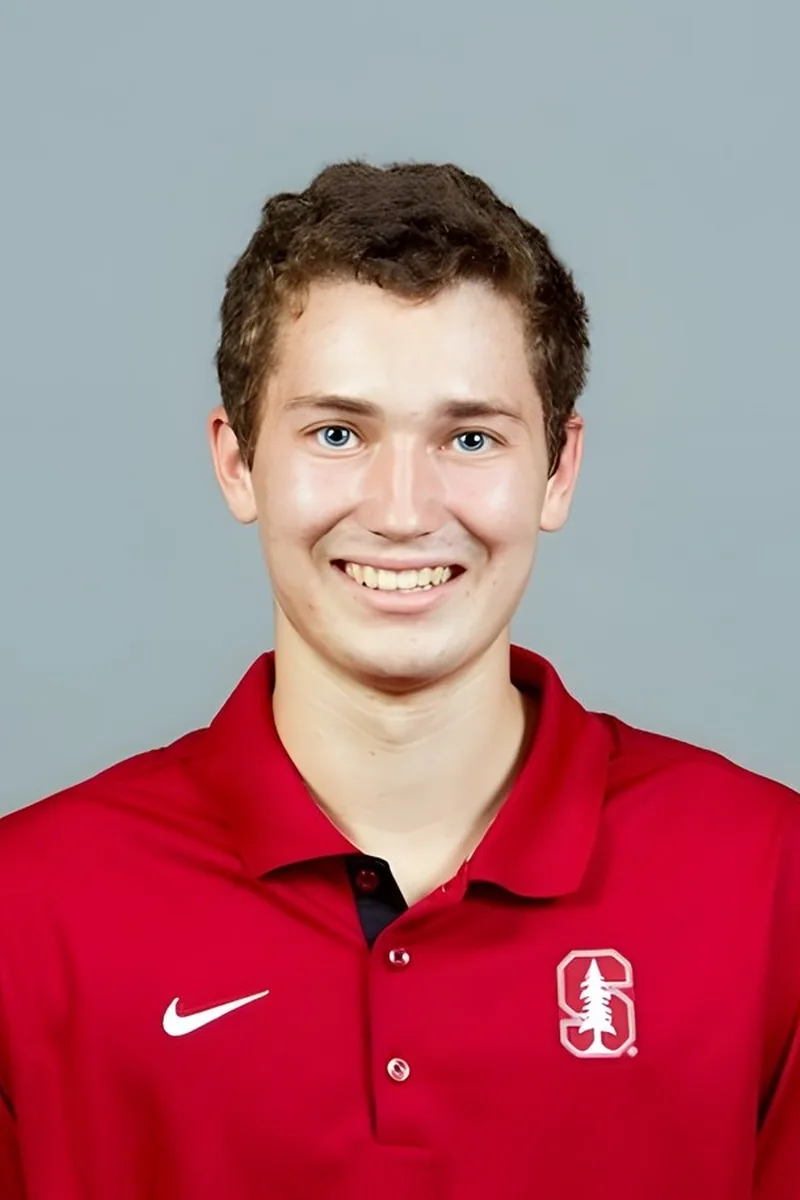
As a Human Biology major at Stanford with a concentration in health policy, Jake lives at the intersection of biology, chemistry, and data analysis every day. He teaches scientific concepts by grounding them in real-world applications — how cells respond to environmental changes, why energy flows through ecosystems the way it does — so the material actually sticks.
I am an Atlanta native. I hold an undergraduate degree in Business from Tennessee State University and graduated degree in Education from Cambridge College. I am a Georgia and Texas certified teacher. I have always enjoyed working with kids. I have taught kindergarten, first, second and fourth grade. I am a hard-worker, team player and passionate about my students succeeding in whatever they set their minds too. I currently hold endorsements in K-5 Mathematics, Teacher Support Specialist, and ESOL (English for Speakers of Other Languages). I am able to provide instruction that meets the needs of all students. I have the ability to differentiate instruction so that I cater to all learning styles and levels.
A biochemistry and molecular biology degree means Sanjay spent years in the overlap between biology, chemistry, and physics — exactly the territory general science courses cover. He's especially strong on cell biology, basic chemistry concepts like bonding and reactions, and the life sciences topics that show up from middle school through introductory college courses. He explains scientific processes by connecting them to real examples from his medical training, which makes abstract concepts like osmosis or enzyme kinetics click faster.
Political economy coursework gave Misael practice with the same skills that show up constantly in science classes — reading data tables, interpreting graphs, and building cause-and-effect arguments from evidence rather than guesswork. He's especially useful for students who freeze when a science question asks them to explain *why* something happens, since his training is all about tracing systems back to their underlying mechanisms. His Spanish fluency also makes him a strong fit for bilingual students navigating dense scientific vocabulary for the first time.
Medical school gives Si a daily reason to care about science fundamentals — cell biology, chemistry, and human body systems aren't abstract concepts for him but tools he actively uses. He writes out diagrams and processes step by step, turning dense material like the periodic table or energy transfer into something students can trace with their own pencil.
As a college English professor, Toni might not be the first person you'd picture for science — but her entire teaching approach revolves around having students construct knowledge from evidence, which is exactly what the scientific method demands. She's especially strong at helping students who struggle with the literacy-heavy parts of science: reading dense passages, interpreting diagrams, and writing clear explanations of what they observe and why. Her 4.9 rating suggests that facilitative, question-driven style clicks with students across subjects.
Few science tutors bring both a PhD in Microbiology and active botanical research to the table. Brian teaches scientific reasoning from the ground up — how to read experimental data, understand controls and variables, and connect biological processes like cellular respiration or nutrient cycling to what's actually happening in a lab. His 5.0 rating speaks to how clearly he communicates complex material.
A master's in linguistics means John spent years doing exactly what science demands — observing patterns, forming hypotheses about how systems work, and testing those hypotheses against new data. He's particularly strong at helping students decode scientific vocabulary by breaking terms into their Greek and Latin components, turning intimidating words like "endothermic" or "photosynthesis" into transparent descriptions of what's actually happening. Rated 4.8 by students.
A human biology degree means Angela has spent years connecting chemistry, physiology, and ecology into a coherent picture of how living systems work. She unpacks scientific concepts by tying them back to real-world examples — cell respiration becomes about why you breathe harder during a sprint, not just a diagram to memorize.
Doctoral-level training in physical therapy means Alyssa lives at the intersection of biology, anatomy, chemistry, and physics every day. She unpacks scientific concepts — cell transport, energy systems, force and motion — by connecting them to real examples from the human body, which tends to make abstract ideas click faster for students.
Kevin's undergraduate work in Medicine, Health & Society included coursework in biology, chemistry, and public health research methods — a combination that maps well onto high school and AP-level science. He connects abstract concepts like cellular respiration or experimental design to tangible examples from healthcare and disease, which tends to make the "why does this matter" question answer itself.
Shreya's biology degree from Brown included advanced coursework in genetics and hands-on experience as a teaching assistant for upper-level lab courses. She unpacks scientific concepts — from cell structure and energy cycles to heredity — by connecting them to real experiments and observable phenomena, making abstract processes feel concrete.
Growing up in Singapore and traveling extensively through Southeast Asia exposed Julia to diverse ecosystems and environmental contexts that make topics like biodiversity, adaptation, and earth systems feel tangible rather than textbook-abstract. Her business coursework at Vanderbilt also included data analysis and quantitative reasoning, which she applies when walking students through graphing, measurement, and interpreting experimental results. Rated 5.0 by students.
Sarah's pre-med track at Duke, with coursework spanning biology and chemistry, gives her a broad scientific vocabulary she can scale down for younger learners exploring topics like ecosystems, the water cycle, or basic anatomy. She turns abstract science concepts into concrete observations, often using simple at-home demonstrations to make ideas click.
Kari approaches science by anchoring abstract concepts — like the water cycle, force and motion, or cell structure — to concrete examples students can visualize and describe in their own words. She also emphasizes the skill of reading data tables and graphs, which tends to be the quiet stumbling block behind many low test scores.
I am a graduate of UC San Diego with a Bachelors in Neuroscience through the Psychology department. After graduating, I went to Michigan Technological University and did some graduate work, before moving to Texas to be closer to my parents. I did my alternative certification program through Texas Teachers and am highly qualified to teach Science for grades 7-12. I have been a teacher in public and charter schools for the last four years, and have tutoring experience extending over ten years behind me as well.
I am a graduate of Georgetown University where I earned my Bachelor of Science degree in International Politics with a concentration on Foreign Policy. I also earned a Certificate in Latin American Studies and am a member of Pi Sigma Alpha, The National Political Science Honor Society. I have experience tutoring students in both the SAT and the SSAT. Additionally, my time as an 8th Grade Science teacher here in Dallas has prepared me for the curriculum and challenges facing students in the area. While I offer tutoring in a broad range of subjects from foreign languages to grammar and writing to math and science, I find Physics to be the most enjoyable subject to teach. I see Physics as the science that allows all the other sciences to occur, and I find it helpful to use Physics demonstrations when studying the subject. When it comes to tutoring, I believe that whoever is doing the talking is doing the learning, so my students will be doing the leg work when it comes to their learning. I believe that every student can achieve success in school; each student just learns at their own pace and in their own way. When I have free time, I enjoy reading a good book, playing a game of tennis, or participating in or watching theatrical events.
A degree in Ecology and Evolutionary Biology means Scott learned science by doing it — designing experiments, interpreting data, and building arguments from evidence. He applies that same process-oriented thinking when teaching scientific concepts, whether the topic is cell biology, ecosystems, or the scientific method itself. Students come away understanding not just what the answer is, but how scientists arrive at it.
A geology degree is essentially a science sampler — Cameron studied chemistry, physics, biology, and earth systems, then applied all of them to fieldwork and lab analysis. That cross-disciplinary background lets him connect concepts like the water cycle to thermodynamics or plate tectonics to material properties, giving students a bigger picture instead of isolated facts.
A National Merit Scholar who earned a 1490 SAT, Del has the analytical horsepower for science even though his degree is in drama — and theater training actually builds a surprisingly useful habit: asking "what happens if I change this one thing?" which is the core logic behind controlling variables and designing experiments. He's especially good at walking students through how to read data displays and articulate conclusions in their own words, since clear communication under pressure is literally what he trained to do.
Mary's interdisciplinary graduate training gives her a knack for explaining scientific concepts in plain language — breaking down processes like the scientific method, basic chemistry, or biological systems into clear, digestible pieces. She's a strong fit for students who need someone patient and methodical to walk them through foundational science coursework.
Biomedical engineering at UT-Austin sits at the intersection of biology, chemistry, and physics, which means Shyon uses all three daily. Whether a student is puzzling over cell division, balancing chemical equations, or calculating net force, he explains the underlying logic so the science makes sense beyond just the worksheet. Rated 5.0 by students.
Heading into medical school at UC Davis this fall, Daniel spent his undergraduate years deep in molecular and cell biology — dissecting cellular pathways, analyzing lab data, and connecting microscopic processes to big-picture biological systems. That training means he can teach science the way working scientists actually think: forming hypotheses, designing experiments, and interpreting results with real mechanistic understanding behind them. Rated 5.0 by students.
Hands-on learning is where Erin's tutoring style really shines in science — she skips the lecture format and instead walks students through designing simple experiments, making predictions, and figuring out what actually happened and why. Her psychology major at Texas Christian University means she's comfortable with research design, hypothesis testing, and interpreting results, which she uses to make the scientific method feel like a natural way of thinking rather than a set of steps to memorize.
Between research at the National Institutes of Health and coursework spanning biology, chemistry, physics, and neuroscience, Snipta covers an unusually broad range of science topics with genuine depth. A student studying cellular respiration, balancing chemical equations, or interpreting force diagrams gets explanations rooted in real research context — not just textbook definitions.
An English master's degree might not scream science, but Binny's psychology coursework — including AP Psychology and clinical psychology — means she's spent real time with research design, hypothesis testing, and interpreting behavioral data. She's strongest when students need to understand how experiments are structured and why controls matter, teaching the logic of the scientific method through concrete examples rather than abstract definitions.
Electrical engineering coursework is basically applied physics stacked on top of applied math — circuit analysis, electromagnetic theory, signal processing — so Muhammad brings genuine technical fluency to science topics that involve energy, forces, and quantitative problem-solving. He's especially strong at walking students through the kind of unit conversions and formula manipulation that make physical science feel intimidating, breaking each step into something concrete enough to follow on the first pass.
Accounting is built on precision and systematic problem-solving — skills Zach applies when walking students through data tables, unit conversions, and the kind of step-by-step reasoning that science assignments demand. His 1540 SAT confirms he can handle evidence-based analysis across disciplines, and his 4.8 rating shows he makes that process clear enough for students to replicate on their own.
Having nannied and tutored kids across age groups in the DFW area, Alexandra knows that younger students often stall in science not because the concepts are hard, but because the reading demands catch them off guard — decoding a passage about ecosystems or pulling key details from a diagram caption. Her creative writing background makes her unusually good at teaching students to slow down and actually parse what a science question is asking before jumping to an answer. Rated 4.9 by students.
A biology major now in medical school, Brianna lives and breathes science across disciplines — from cellular biology and organic chemistry to anatomy and earth science. She unpacks complex processes like DNA replication or chemical equilibrium by tying them to concrete, memorable examples, making dense material feel approachable rather than overwhelming. Rated 4.9 by students.
A chemistry degree from Brigham Young University means Maleah can teach science the way it actually works — connecting concepts across biology, chemistry, and physics instead of treating them as separate worlds. She's especially strong at breaking down topics like atomic structure, chemical reactions, and the scientific method into steps that click.
Drawing planetary orbits on a blackboard for fun is a pretty good indicator of someone who genuinely enjoys figuring out how the natural world works — and Clairemarie brings that curiosity to science tutoring alongside a liberal arts education that trained her to ask precise questions and build arguments from evidence. She's especially strong at connecting science concepts to the reading and writing skills students need to succeed, like interpreting diagrams, explaining processes in their own words, and tackling vocabulary-heavy material without getting lost.
Covering biology, chemistry, and environmental science across multiple grade levels gives Devon an unusually wide lens on how scientific thinking develops. She teaches students to read data, form hypotheses, and explain results in their own words — skills that transfer across every science class they'll take.
Studying microbiology and cell science at UF gave Maria deep fluency across biology, chemistry, and the scientific method itself. She explains concepts like cell division, chemical bonding, or ecological relationships by grounding them in experiments and real examples, so students understand the reasoning behind each answer — not just the answer itself.
I am a seasoned educator and tutor with a Ph.D. in Literature, an M.A. in Literature, and an M.B.A. in international business. I have taught many, many students to write, read, speak, and think academically. Since 2005, I have worked taught in universities in China, Bosnia, the UAE, Afghanistan and Bahrain (teaching our troops!) and Cambodia. I recently returned to the USA. If you are feeling uncertain about your writing assignments, your English or Literature courses, public speaking, or standardized testing, I believe I can help! No one is born with the ability to read, think critically, and write an essay that will get people to stand up and take notice. These are skills that everyone must be taught to become successful, and they can be learned. Students often think they 'just aren't capable' of improving their skills, but as a professional who specializes in English and Writing, I know they are wrong. Every student, with the right motivation, systems, and tools can improve their skills. I have been teaching and tutoring students for over 20 years. As a professor, I know what steps students need to take to become better in writing, reading, literature, critical thinking, and public speaking. As a faculty member at universities and colleges for over 20 years, I know what will be expected of students both in educational settings, and in the professional world after they graduate. I love to work with students, and I have had a great deal of success in helping them to improve. I have developed proven methods to give students the help they need to write better essays, read with greater comprehension, and test more effectively. Most students tell me that I am funny, and that my lessons are far less 'painful than they expect them to be! I look forward to working with you-
Preparing for medical school means Gabriele lives in the world of scientific reasoning daily — interpreting research papers, mastering biological systems, and connecting chemical processes to real outcomes. That firsthand immersion, combined with a linguistics background that makes her precise about how terms are built from Greek and Latin roots, gives her a practical way to teach students both the concepts and the vocabulary that science coursework throws at them. Holds a 5.0 rating.
Biochemistry majors spend their days connecting chemistry and biology at the molecular level, and Bryan brings that same integrative thinking to science tutoring. He breaks down topics like cell biology, chemical reactions, and genetics by linking them to real biochemical processes he studies at Texas Tech. Students walk away understanding how scientific concepts connect rather than treating each chapter as an isolated unit.
A molecular, cellular, and developmental biology degree from the University of Colorado plus ongoing medical training at UT Southwestern means Samantha lives and breathes science daily. She digs into everything from cell signaling pathways in biology to stoichiometry in chemistry, and she's especially skilled at teaching students how to interpret experimental data and think like a scientist rather than just memorize terms.
Two science degrees give Adeyemi unusual range across biology, ecology, and the quantitative side of science that trips many students up — reading data tables, designing controlled experiments, and writing conclusions supported by evidence. Whether a student is tackling cell structure, ecosystems, or the scientific method itself, he unpacks the reasoning behind each concept instead of treating science as a vocabulary list to memorize.
A biology specialization at Alabama means Maruka spent semesters digging into cell structure, genetics, and lab methodology — the exact topics that trip up students encountering science for the first time. She breaks down the scientific method and data interpretation into repeatable steps so students can approach unfamiliar experiments with confidence.
Testimonials
Because the right Science tutor makes all the difference.
Average Session Rating – Based on 3.4M Learner Ratings
Practice Science
Free practice tests, flashcards, and AI tutoring for Science
Nearby Science Tutors
Other Dallas Tutors
Related Science Tutors in Dallas
Frequently Asked Questions
Students in Dallas often struggle with connecting abstract scientific concepts to real-world applications, especially in chemistry and physics where visualization is critical. With an average student-teacher ratio of 15.3:1 across Dallas school districts, many students don't get individualized attention to address gaps in foundational skills like mathematical reasoning or lab technique interpretation. Personalized tutoring helps students work through these challenges at their own pace and build confidence in problem-solving.
In a classroom setting, teachers must pace instruction for 20-30+ students with varying needs, which can leave struggling students behind or advanced students unchallenged. Personalized 1-on-1 instruction allows tutors to diagnose exactly where a student is struggling—whether it's understanding photosynthesis, balancing equations, or lab analysis—and adjust teaching methods accordingly. This targeted approach typically leads to faster skill development and stronger conceptual understanding than classroom instruction alone.
Yes, tutors who work with Dallas students are familiar with Texas Essential Knowledge and Skills (TEKS) standards and the science curricula used across Dallas ISD and other local school districts. Whether your student is working through life science, earth science, chemistry, or physics, tutors can align their instruction with what's being taught in the classroom and help reinforce key concepts from lessons and labs. This ensures tutoring complements and strengthens classroom learning rather than working in isolation.
The first session focuses on understanding your student's current level, learning style, and specific challenges—whether that's test anxiety, difficulty with lab reports, or gaps in prerequisite knowledge. The tutor will likely review recent assignments or assessments to identify where to focus, then begin working on targeted skills or concepts. This foundation helps create a personalized plan for ongoing sessions that addresses your student's unique needs.
Many students show noticeable improvement in understanding and confidence within 3-4 weeks of consistent tutoring, especially when addressing specific skill gaps. More substantial improvements in grades and test performance typically develop over 8-12 weeks as foundational concepts strengthen and problem-solving strategies become more automatic. The timeline depends on the student's starting point, the complexity of the material, and how frequently they're tutoring.
Absolutely. Tutors help students prepare for unit tests, AP exams, SAT Science sections, and standardized science assessments by reviewing key concepts, practicing problems, and building test-taking strategies. They can also help students understand why they missed questions and develop stronger analytical skills so they're not just memorizing facts. This targeted exam prep often results in measurable score improvements and stronger overall mastery of the subject.
Yes, tutors can help students understand lab procedures, interpret data, and write clear lab reports that demonstrate scientific thinking. Many students struggle with the writing and analysis components of labs, not just the hands-on work, and personalized instruction helps clarify what teachers expect and how to communicate findings effectively. This support strengthens both practical lab skills and the academic writing that goes along with them.
Varsity Tutors connects you with expert tutors who can work with your student based on their specific needs and schedule. You'll share information about your student's grade level, science course, and areas where they need support, and we'll match them with a tutor who has the right expertise. From there, you can schedule your first session and begin working toward your student's science goals.
Let’s find your perfect tutor
Answer a few quick questions. We’ll recommend the right plan and match you with a top 5% tutor.