Award-Winning Science Tutors
serving Fort Worth, TX
Science
Tutors in Fort Worth
Private 1-on-1 tutoring, weekly live classes for academic support, test prep & enrichment, practice tests and diagnostics, and more to elevate grades and test scores.
Based on 3.4M Learner Ratings
UniversitiesSchools & Universities
DeliveredHours Delivered
ProficiencyGrowth in Proficiency
Who needs tutoring?
No obligation. Takes ~1 minute.
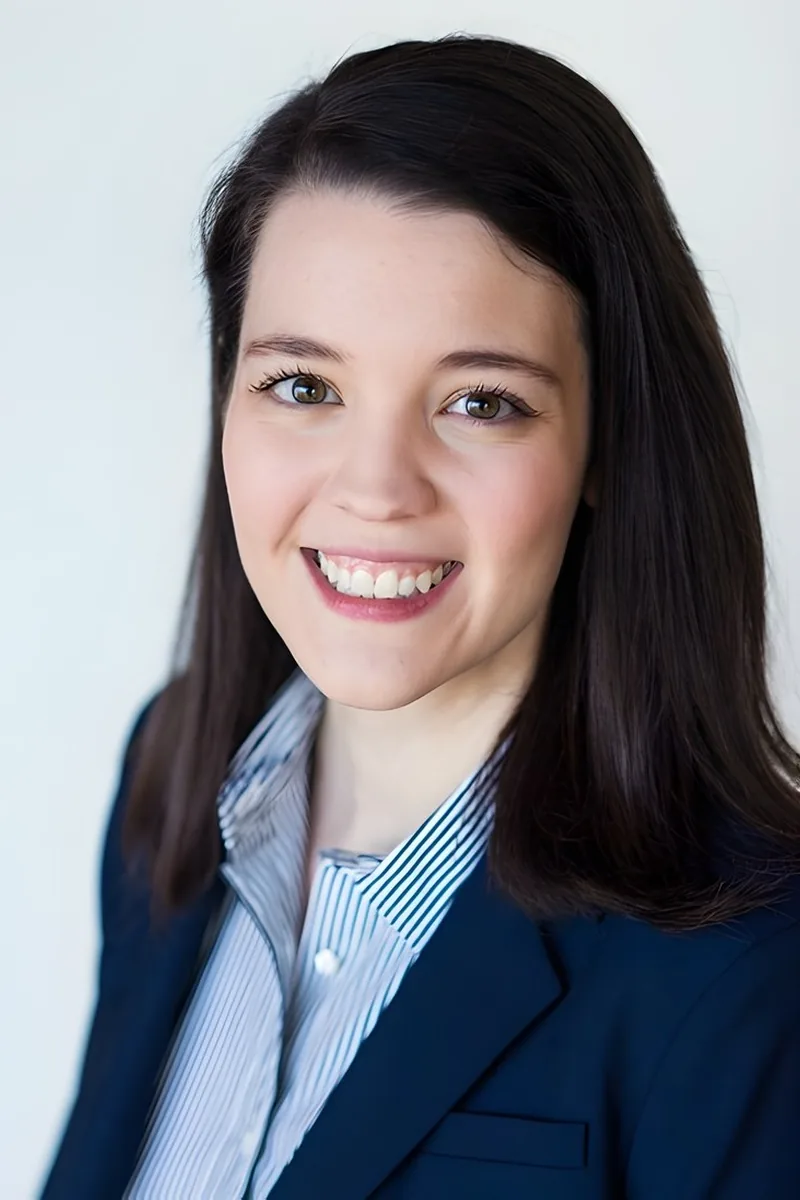
A comparative literature degree might not scream 'science tutor,' but Chloe's Linguistics minor trained her to dissect systems — breaking language into morphemes and syntax trees uses the same pattern-recognition that classifying organisms or tracing chemical reactions demands. She's particularly handy when students need to decode dense scientific vocabulary, since someone who studied word roots across multiple languages can demystify terms like 'endothermic' or 'photosynthesis' on sight. Her 5.0 rating suggests the cross-disciplinary approach clicks.
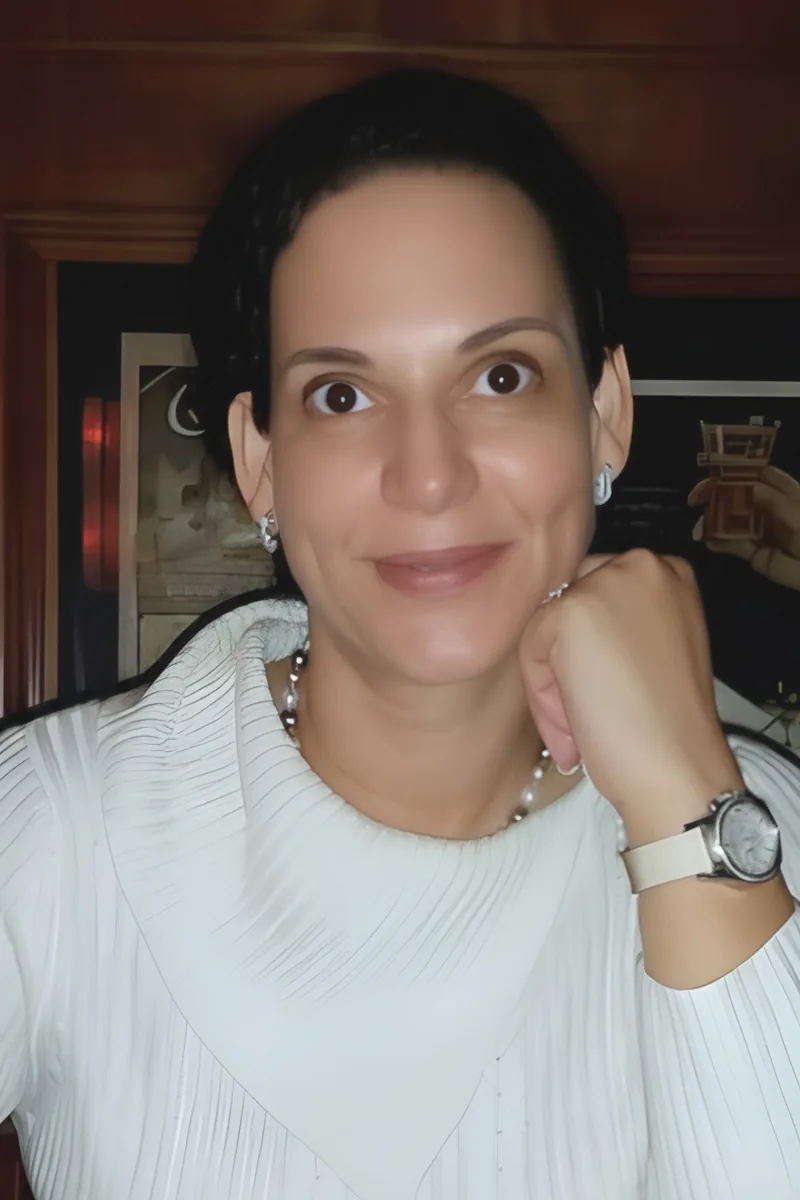
Nadja's undergraduate background is in the sciences, and she pairs that foundation with the analytical rigor her MBA and corporate training work demand. She's particularly effective at breaking down how to read data tables, interpret experimental results, and connect scientific reasoning to structured problem-solving. Her teaching style leans on real-world applications rather than abstract theory alone.
Elementary science often lives or dies on vocabulary — words like 'hypothesis,' 'condensation,' and 'organism' can shut a young learner down before the concept even registers. Petra's specialty in Latin derivatives means she can break those terms apart at the root level, turning intimidating scientific language into something a student can decode on their own.
Studying neuroscience at Rice gives Nathan a working knowledge of biology, chemistry, and physics that goes well beyond textbook summaries — he regularly applies scientific reasoning in his own coursework. He's especially sharp on physics concepts like kinematics, energy conservation, and electromagnetism, having tutored both AP Physics 1 and AP Physics 2. Students get someone who can explain not just what happens in an experiment but why.
As a working engineer in Fort Worth, Nate applies scientific principles daily — from thermodynamics and fluid mechanics to materials behavior under stress. He brings that real-world context into science tutoring, connecting abstract concepts like energy conservation or force diagrams to tangible engineering problems students can visualize. Rated 5.0 by students.
I am qualified to tutor many subjects, my favorite subject by far is math, specifically calculus. Math is a subject almost universally hated, and I believe that is mainly due to the narrow way in which it is taught. I have ADHD, and I often don't understand things the first time they are explained to me, meaning over the years I have had to figure out different ways of looking at information. Oftentimes, all a student needs is for something to be explained in a different way, and I love watching people finally understand a concept. Everyone learns differently, but everyone can learn.
As a current Dallas ISD teacher, Adam knows exactly which science concepts trip students up in real classrooms — from interpreting data tables to explaining how variables interact in an experiment. His 35 ACT confirms he can handle the quantitative and reading-heavy demands of science material, and his teaching instincts mean he spots misconceptions early before they compound. Rated 4.9 by students.
An applied mathematics degree means Rudy spent years working with the quantitative backbone of science — modeling real-world systems, interpreting data sets, and translating equations into physical meaning. Now pursuing a graduate degree in secondary education, he knows how to break down topics like energy, motion, and chemical quantities so the math feels like a lens for understanding rather than an extra hurdle.
A psychology degree is essentially a science degree in disguise — Nathania spent her undergraduate training learning experimental design, statistical analysis, and how to evaluate whether a study's conclusions actually follow from its data. That foundation makes her especially effective at teaching students to think through variables, controls, and predictions rather than treating science as a subject you survive through memorization. Her 32 ACT confirms she can handle the quantitative and analytical reasoning the material demands.
Adam's English and creative writing background might not scream science, but his ACT score of 32 shows he can handle data interpretation and experimental reasoning under pressure — and his real edge is teaching students to read dense scientific passages carefully and communicate their findings in clear, organized language. Lab reports, short-answer explanations, and making sense of a graph's story all improve when a student learns to write with precision, which is exactly where his training kicks in.
A political science degree is essentially training in how to evaluate claims using evidence — skills Samuel now applies to teaching students how to work through science material, from interpreting graphs to explaining cause-and-effect relationships in their own words. His broad tutoring range across math, French, and the humanities means he can meet a science assignment from multiple angles, whether the stumbling block is a tricky calculation, unfamiliar vocabulary, or writing up a clear lab conclusion.
A double major in government and English at Georgetown might not scream science, but Alexis's coursework in policy analysis builds the same core skill science classes test: reading data, weighing evidence, and constructing a clear argument about what it means. She's strongest on the literacy-heavy side of science — interpreting diagrams, unpacking dense textbook passages, and helping students write lab conclusions that actually explain their reasoning.
A cell and molecular biology degree plus a master's in pathology means Salman can teach science at nearly every level — from middle school life sciences through college-level organic chemistry, physics, and microbiology. What sets him apart is the ability to connect concepts across disciplines, like explaining how the chemistry of enzyme kinetics drives the biology of metabolic disease. Students get a tutor who sees science as one interconnected system, not isolated courses.
Studying biomedical sciences at the graduate level means Richa is still actively doing science — reading primary literature, designing experiments, thinking about biological systems at the molecular level. She channels that into making science tangible for students at any stage, whether it's explaining how cells divide, why circuits need a complete loop, or how to interpret a data table in a lab report. Her teaching moves from observation to explanation so students learn to think like scientists, not just memorize vocabulary.
Pursuing a B.S. in Chemistry at TCU means Nathan lives inside the scientific method daily — designing experiments, interpreting data, and connecting theory to observation. He breaks down topics across biology, chemistry, and physics by anchoring abstract ideas to concrete examples students can visualize and test.
Running three startups means Tanner designs experiments every day — testing product assumptions, measuring results, and pivoting when the data says so — which is essentially the scientific method applied to business. That hands-on cycle of hypothesize-test-analyze gives him a practical vocabulary for teaching students how variables, controls, and evidence-based conclusions actually work. His 31 ACT and 5.0 rating back up the analytical skills behind the entrepreneurial résumé.
Hi y'all! I hold my Master of Science in Psychology of Sport and my Bachelor of Science in both Psychology and Applied Human and Sport Physiology. I have many years of tutoring under my belt, working with people of all levels from elementary school through college in hard science subjects (Biology, Chemistry, and Mathematics), a few social sciences (History, Psychology, Economics), and language arts. When not tutoring, I love playing soccer and I even coach a youth team. I love encouraging students to learn, grow, and think critically for themselves.
A biochemistry degree from Rice and a current M.D. program at Baylor mean Michelle lives at the intersection of biology and chemistry every day. She unpacks concepts like cellular respiration, acid-base equilibria, and molecular genetics by tying them to how the body actually works — turning dense textbook material into something students can visualize and retain.
Biochemistry, cell biology, neuroscience, physical chemistry — Sugi didn't just take these courses, she built a medical career on top of them. When a student struggles with something like cellular respiration or chemical equilibrium, she connects the textbook version to the larger story of why that process matters, which turns rote memorization into genuine understanding.
A biomedical engineering major doesn't just study science — they live at the intersection of physics, chemistry, and biology every day. Bidyut uses that cross-disciplinary perspective to explain concepts like energy conservation or chemical bonding by showing how they appear in real systems, from circuit design to cellular processes. He holds a 5.0 rating across his students.
A molecular, cellular, and developmental biology degree plus an MD in progress at Stanford means Maggie doesn't just know science content — she thinks like a scientist. Whether a student needs to untangle Newton's third law in physics or trace electron transport in biology, she connects abstract diagrams to concrete reasoning so the logic sticks beyond the test.
A Human Biology degree and graduate coursework in development give Jonathan unusual range across the sciences — he can walk through cellular respiration one session and explain acid-base equilibria the next without switching tutors. He connects topics across disciplines, showing how the chemistry behind enzyme kinetics feeds directly into the biology of metabolic pathways.
Studying biology with a concentration in health and human disease at Northwestern gives Mackenzie a working scientist's perspective on topics like cell biology, genetics, and experimental design. She's also comfortable with physics and chemistry through her IB-level teaching experience, so she can connect concepts across scientific disciplines the way real research does. Students get someone who genuinely finds this material fascinating, not just teachable.
As a Human Biology major at Stanford with a concentration in health policy, Jake lives at the intersection of biology, chemistry, and data analysis every day. He teaches scientific concepts by grounding them in real-world applications — how cells respond to environmental changes, why energy flows through ecosystems the way it does — so the material actually sticks.
Tutoring middle schoolers through InspireSTL meant Elena fielded whatever subject walked through the door — including impromptu lessons on biology and experimental design — which built the kind of flexible, on-the-spot science teaching that textbook training alone doesn't provide. Her art history research also sharpens a skill students underestimate in science: reading visual information carefully, whether it's a Byzantine mosaic or a data table showing plant growth under different conditions.
Coding in Python actually builds the same mental muscles science demands — isolating variables, testing predictions systematically, and figuring out why something didn't work the way you expected. Meagen's computer science coursework at Carleton gives her a hands-on feel for that debugging-style thinking, which she applies to walking students through experimental design, data interpretation, and writing up conclusions that go beyond restating results. Her 5.0 rating suggests the approach lands.
A cognitive science degree sits at the intersection of biology, psychology, and neuroscience, which gives Adam a genuine cross-disciplinary science background rather than expertise in just one narrow area. He breaks down concepts like the scientific method, experimental design, and biological systems by connecting them to real-world examples — how the brain processes information, how cells communicate, why certain variables matter in an experiment.
Studying biosciences on the pre-med track at Rice, Tegan lives inside scientific thinking every day — designing experiments, interpreting data, and connecting molecular processes to real-world outcomes. She unpacks concepts in biology, chemistry, and general science by grounding abstract ideas in concrete examples students can actually visualize. That approach makes dense material far more manageable.
Rishi's computer science and math training at Rice gives him a structured way of breaking down science problems — whether it's interpreting data tables, working through unit conversions, or applying formulas in physics and chemistry contexts. As a student-athlete on Rice's golf team, he also knows how to make study sessions efficient so concepts stick the first time around.
Studying computer science and math at Rice University means William spends most of his time doing what science courses ask students to do — building models, testing them against data, and figuring out why something broke when the results don't match expectations. His physics background adds a concrete physical-science dimension to that analytical toolkit, so he can walk students through everything from interpreting graphs to understanding how energy and forces actually behave in an experiment.
Studying biosciences on the premed track at Rice University, Jessy brings real lab-course knowledge to topics like cell biology, genetics, and ecological systems. She breaks down scientific reasoning — forming hypotheses, interpreting data, connecting cause and effect — in ways that make the subject click rather than feel like a list of vocabulary terms. Rated 5.0 by students.
Paul's economics degree built fluency in the core toolkit science courses also demand — reading graphs, isolating variables, and figuring out whether the data actually supports the conclusion or just looks like it does. He leans on that quantitative training to walk students through experimental design and data interpretation, treating every lab question like a mini argument that needs evidence. His 34 ACT confirms he can handle the analytical rigor across disciplines.
Game theory — which Carter taught to advanced middle schoolers at a Johns Hopkins CTY program in Hong Kong — is applied science at its core: building models, testing predictions, and revising strategies based on outcomes. That experience, combined with an economics degree from Brown that included applied math coursework, means he's comfortable walking students through hypothesis testing, data interpretation, and the quantitative reasoning that underpins science at every level. Rated 5.0 by students.
Cognitive studies at Vanderbilt is essentially the science of how people think — covering neuroscience, experimental design, and data-driven research methods — so Vy brings real lab-adjacent training to topics like the nervous system, hypothesis testing, and interpreting results. Her 35 ACT confirms she can handle the quantitative and reading-heavy demands of science material, and her approach leans on making students articulate the reasoning behind an answer rather than just circling it.
Studying neuroscience on the premed track at Rice means Aditi lives inside scientific thinking every day — forming hypotheses, interpreting data, connecting cause and effect across biological systems. She brings that same inquiry-driven approach to younger students, whether they're learning about ecosystems, the water cycle, or basic chemistry. Her goal is to make science feel like detective work, not a list of vocabulary to memorize.
Applied mathematics at Rice means Alexander spends most of his time building models and solving problems — skills that translate naturally when a science student needs to work through dimensional analysis, interpret a velocity-time graph, or figure out why their chemistry calculations keep coming out wrong. His MATLAB and Python experience also means he can teach students to visualize and manipulate scientific data computationally, not just on paper.
With degrees that include environmental science, Patricia brings real-world context to science tutoring — connecting textbook concepts in biology, chemistry, and earth science to systems students can actually observe. She's particularly strong at teaching students to read data tables, interpret graphs, and design basic experiments, which are skills that show up across every science class. Her approach makes abstract processes like the water cycle or cellular respiration concrete and visual.
Studying biophysics at Rice means Aadith lives at the intersection of biology, chemistry, and physics every day — so he can show students how a concept like energy conservation appears across all three disciplines. He unpacks scientific reasoning step by step, emphasizing how to set up problems and interpret results rather than just plugging into formulas.
A biochemistry and molecular biology major on the pre-med track, Sajel lives in the sciences daily — organic reaction mechanisms, cell signaling pathways, experimental design. She connects abstract concepts to real examples from her coursework, which makes topics like energy transfer or molecular structure click faster than rereading a textbook chapter.
A PhD in physics, combined coursework spanning biology and engineering, and hands-on research experience give Zhengdong unusually broad scientific fluency. Whether a student is puzzling over cell biology, force diagrams, or chemical reactions, he connects each topic back to core scientific reasoning — forming hypotheses, interpreting data, and distinguishing correlation from causation.
Testimonials
Because the right Science tutor makes all the difference.
Average Session Rating – Based on 3.4M Learner Ratings
Practice Science
Free practice tests, flashcards, and AI tutoring for Science
Nearby Science Tutors
Other Fort Worth Tutors
Related Science Tutors in Fort Worth
Frequently Asked Questions
Many students struggle with connecting abstract scientific concepts to real-world applications, especially in chemistry and physics where visualization is key. Others find it difficult to balance memorization of facts with understanding underlying principles—a challenge that becomes more pronounced as students progress through biology, earth science, and advanced courses. Personalized tutoring helps students build conceptual understanding rather than relying on rote learning, which leads to better retention and performance on assessments.
During an initial session, a tutor will assess your current understanding of science concepts, identify specific areas where you're struggling, and discuss your learning goals—whether that's improving grades, preparing for the STAAR exam, or mastering a particular unit. This personalized approach allows the tutor to create a customized learning plan that addresses your unique needs rather than following a generic curriculum. Most students find this diagnostic session helps them feel more confident about their path forward.
Tutors working with Varsity Tutors are familiar with Texas science standards and the specific curricula used across Fort Worth's 12 school districts, including alignment with STAAR testing requirements. They can target the exact concepts your school emphasizes, whether you're in middle school earth science, high school biology, chemistry, or physics. This targeted approach means tutoring directly supports what you're learning in class rather than teaching in isolation.
In a classroom with a 15:1 student-teacher ratio, teachers must move at an average pace that works for the group—meaning some students fall behind while others aren't challenged enough. Personalized tutoring lets you learn at your own speed, spend extra time on difficult concepts like stoichiometry or photosynthesis, and skip over material you've already mastered. This flexibility, combined with immediate feedback and hands-on explanations tailored to your learning style, typically leads to faster understanding and better retention.
Results vary based on your starting point and commitment, but students typically see improvements in test scores, assignment grades, and conceptual understanding within 4-6 weeks of consistent tutoring. Many students report feeling more confident asking questions in class, participating in lab discussions, and tackling challenging problem sets independently. The goal is building genuine understanding so you can apply scientific thinking to new problems, not just memorize answers.
Tutors support students across all grade levels and science disciplines, from elementary science and middle school earth science to high school biology, chemistry, physics, environmental science, and AP/IB courses. Whether you need help with foundational skills like the scientific method and ecosystems, or advanced concepts like quantum mechanics or organic chemistry, there are tutors with expertise in your specific area. Varsity Tutors can connect you with someone who specializes in exactly what you're studying.
Yes—tutors can help you understand the science behind lab experiments, organize your findings, and write clear lab reports that demonstrate your understanding of the concepts. They can also guide you through the scientific method for independent projects, helping you design experiments, analyze data, and draw meaningful conclusions. This support builds critical thinking skills that extend far beyond individual assignments.
Absolutely. Tutors can prepare you for STAAR science exams, AP Biology, AP Chemistry, AP Physics, and other standardized tests by reviewing key concepts, practicing with released test questions, and identifying your weak areas. They'll help you develop test-taking strategies specific to science—like managing time on complex problems and avoiding common mistakes. Targeted exam prep typically begins 4-6 weeks before test day for best results.
Let’s find your perfect tutor
Answer a few quick questions. We’ll recommend the right plan and match you with a top 5% tutor.