Award-Winning Science Tutors
serving Houston, TX
Science
Tutors in Houston
Private 1-on-1 tutoring, weekly live classes for academic support, test prep & enrichment, practice tests and diagnostics, and more to elevate grades and test scores.
Based on 3.4M Learner Ratings
UniversitiesSchools & Universities
DeliveredHours Delivered
ProficiencyGrowth in Proficiency
Who needs tutoring?
No obligation. Takes ~1 minute.
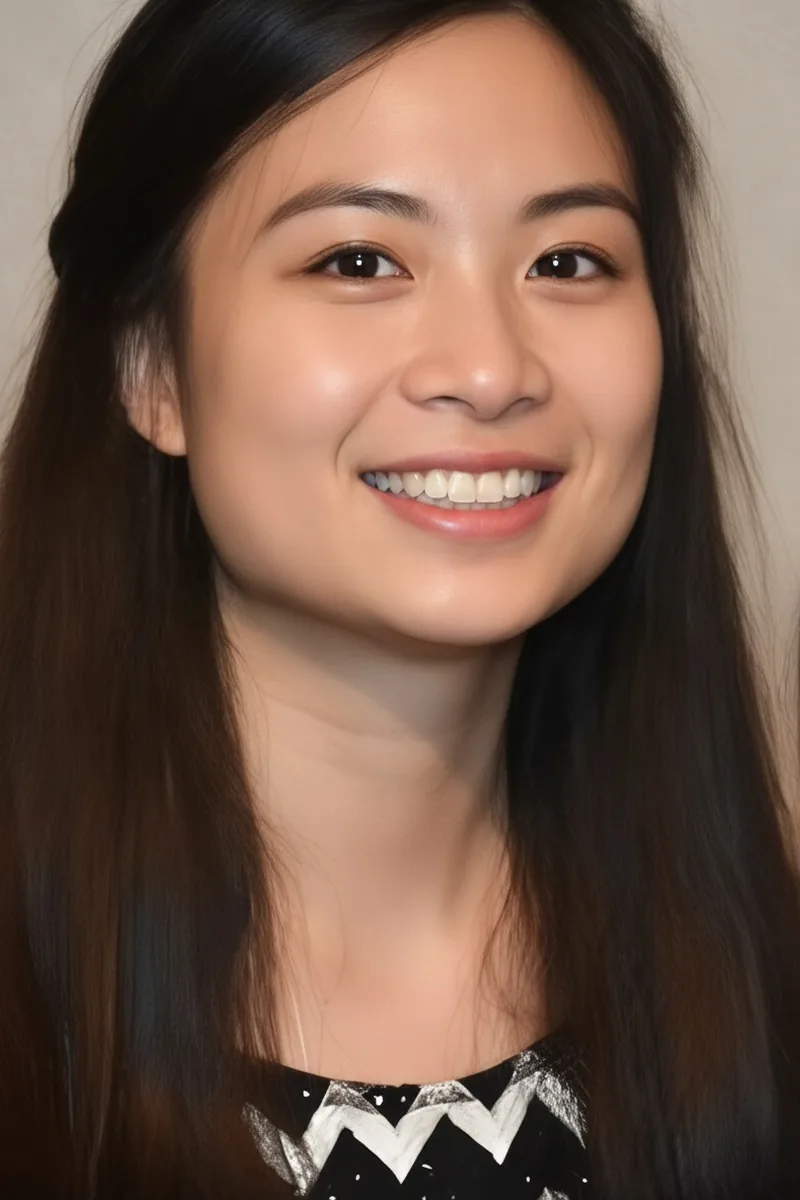
A biochemistry degree from Rice and a current M.D. program at Baylor mean Michelle lives at the intersection of biology and chemistry every day. She unpacks concepts like cellular respiration, acid-base equilibria, and molecular genetics by tying them to how the body actually works — turning dense textbook material into something students can visualize and retain.
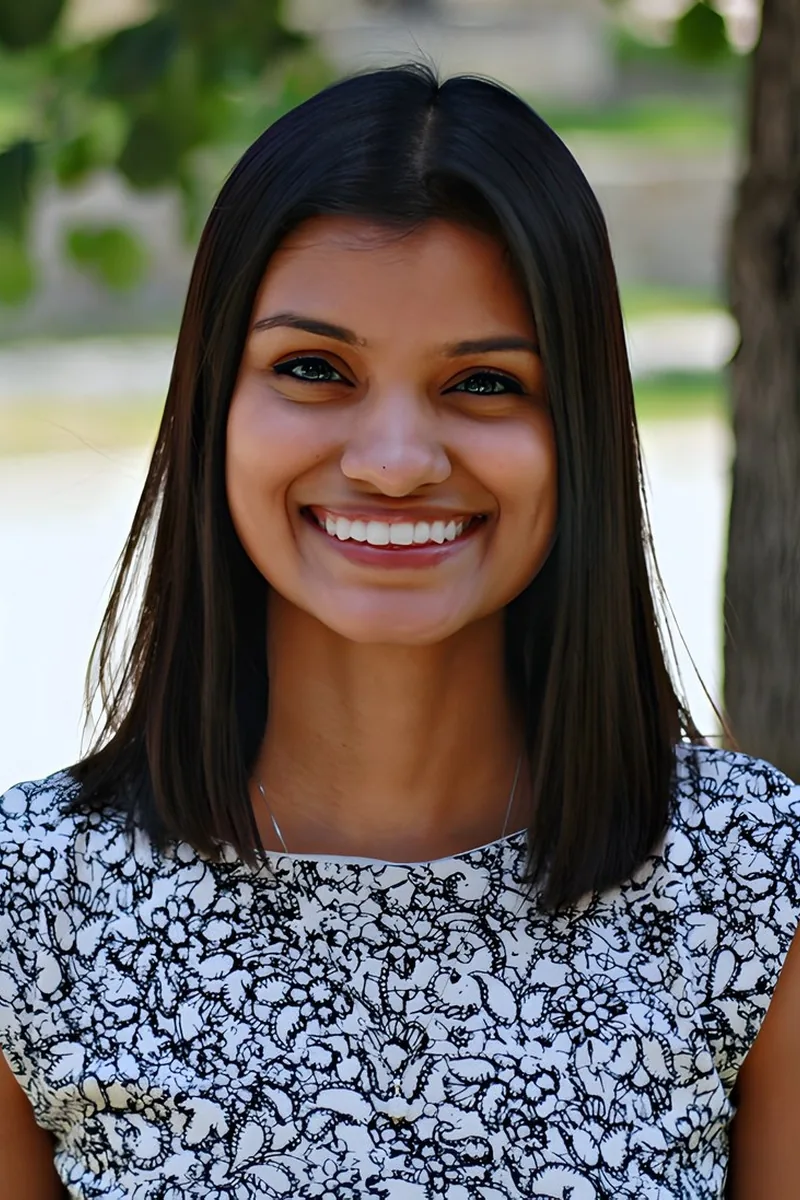
Biochemistry, cell biology, neuroscience, physical chemistry — Sugi didn't just take these courses, she built a medical career on top of them. When a student struggles with something like cellular respiration or chemical equilibrium, she connects the textbook version to the larger story of why that process matters, which turns rote memorization into genuine understanding.
Tutoring middle schoolers through InspireSTL meant Elena fielded whatever subject walked through the door — including impromptu lessons on biology and experimental design — which built the kind of flexible, on-the-spot science teaching that textbook training alone doesn't provide. Her art history research also sharpens a skill students underestimate in science: reading visual information carefully, whether it's a Byzantine mosaic or a data table showing plant growth under different conditions.
A cognitive science degree sits at the intersection of biology, psychology, and neuroscience, which gives Adam a genuine cross-disciplinary science background rather than expertise in just one narrow area. He breaks down concepts like the scientific method, experimental design, and biological systems by connecting them to real-world examples — how the brain processes information, how cells communicate, why certain variables matter in an experiment.
Studying biophysics at Rice means Aadith lives at the intersection of biology, chemistry, and physics every day — so he can show students how a concept like energy conservation appears across all three disciplines. He unpacks scientific reasoning step by step, emphasizing how to set up problems and interpret results rather than just plugging into formulas.
Applied mathematics at Rice means Alexander spends most of his time building models and solving problems — skills that translate naturally when a science student needs to work through dimensional analysis, interpret a velocity-time graph, or figure out why their chemistry calculations keep coming out wrong. His MATLAB and Python experience also means he can teach students to visualize and manipulate scientific data computationally, not just on paper.
Studying computer science and math at Rice University means William spends most of his time doing what science courses ask students to do — building models, testing them against data, and figuring out why something broke when the results don't match expectations. His physics background adds a concrete physical-science dimension to that analytical toolkit, so he can walk students through everything from interpreting graphs to understanding how energy and forces actually behave in an experiment.
Studying biosciences on the premed track at Rice University, Jessy brings real lab-course knowledge to topics like cell biology, genetics, and ecological systems. She breaks down scientific reasoning — forming hypotheses, interpreting data, connecting cause and effect — in ways that make the subject click rather than feel like a list of vocabulary terms. Rated 5.0 by students.
A biochemistry and molecular biology major on the pre-med track, Sajel lives in the sciences daily — organic reaction mechanisms, cell signaling pathways, experimental design. She connects abstract concepts to real examples from her coursework, which makes topics like energy transfer or molecular structure click faster than rereading a textbook chapter.
Liz treats science as a subject where reading comprehension matters just as much as content knowledge — interpreting data tables, understanding experimental design, and pulling conclusions from results. Her 32 ACT composite reflects the same analytical thinking she brings to breaking down biology and physical science concepts.
Vinson's strongest science background is in physics, where his AP Physics C experience connects directly to the force diagrams, energy conservation problems, and kinematics that most students encounter in general science courses. His math fluency means he can untangle the quantitative side of science without skipping steps.
AP Biology and AP Chemistry aren't just lines on Kendall's subject list — they represent genuine depth in life and physical sciences, which means her science tutoring is grounded in actual content knowledge rather than general study strategies. She's particularly strong at walking students through classification systems, chemical reactions, and experimental design, connecting each topic back to the underlying logic so the material organizes itself in a student's memory. Her 4.9 rating suggests that approach resonates.
Editing for newspapers trained Molly to fact-check claims, spot weak reasoning, and ask whether the evidence actually supports the conclusion — which is exactly what the scientific method demands of students. Her communication background also means she can teach the skill most science students dread: translating observations and data into clear, organized written explanations that hold up under scrutiny.
Working in a UTHealth research lab every day means Emily doesn't just recall science concepts from a textbook — she uses them. Whether a student needs to understand cell division, chemical bonding, or how organ systems interact, she can ground abstract ideas in real experiments and clinical applications that make the material click.
Studying biochemistry and molecular biology at Rice means Raj lives at the intersection of chemistry, biology, and physics every day. He unpacks scientific concepts — whether it's cell respiration, Newton's laws, or chemical bonding — by connecting them to each other, so students start seeing science as one interconnected system rather than three separate textbooks.
Few tutors can move as fluidly between biology, chemistry, and neuroscience as Emmanuel, who double-majored in behavioral biology and general biology at Johns Hopkins and has worked in labs ranging from computational neuroscience to genome editing. He connects scientific concepts to real research — explaining cell division or chemical reactions through the lens of experiments students can visualize.
Studying Biochemistry and Cell Biology alongside Economics at Rice gave Jennifer unusual range across the sciences — she's equally comfortable explaining Newton's laws, cellular respiration, or acid-base equilibria. She connects abstract scientific concepts to concrete, visual examples, which is especially useful for students who struggle with textbook-heavy courses. Rated 4.9 by students.
Global health sits at the intersection of biology, epidemiology, and data interpretation — Andria's Duke master's program covered everything from disease transmission models to reading clinical trial results. She breaks down scientific reasoning by teaching students how to form hypotheses, interpret graphs, and connect cause-and-effect relationships in real-world contexts. Six years in Novartis's vaccines division gave her practical fluency with how science operates outside the classroom.
Sociology is fundamentally a science — Caio's coursework at Rice involves designing surveys, controlling for confounding variables, and running statistical analyses on real population data, which means he's practiced the scientific method in contexts that feel immediately relevant to students. He's particularly good at walking through how to set up a controlled experiment and interpret results, since that's what his own research training demands daily. Rated 5.0 by students.
Biochemistry at Rice means Malcolm lives at the intersection of biology, chemistry, and physics daily — he's not teaching these subjects from old notes but from active coursework. Whether a student is struggling with balancing chemical equations, understanding cell division, or setting up free-body diagrams, he connects each concept back to something tangible so the reasoning sticks beyond the test.
A biological and physical sciences degree means Mingee has spent serious time in both the life sciences and physics sides of the curriculum. She unpacks concepts like energy transfer, cell biology, and chemical reactions by tying them to concrete examples, making abstract processes — like how ATP actually powers a cell — tangible and memorable.
Elementary and middle school science is where curiosity either takes root or fades, and Amanda's classroom experience gives her a practical toolkit for making concepts like the water cycle, states of matter, or ecosystems click. She connects abstract ideas to hands-on examples students can visualize, turning vocabulary-heavy units into something they can actually explain back in their own words.
Theresa's biomedical engineering studies at Rice sit right at the intersection of biology, chemistry, and physics — so she doesn't just know science subjects in isolation, she understands how cellular biology connects to thermodynamics and how lab data turns into real conclusions. She teaches students to think through scientific problems systematically, from interpreting experimental results to applying formulas with confidence.
A cognitive neuroscience background means Giovanna actually uses the scientific method in her own training — forming hypotheses, interpreting data, drawing conclusions. She brings that same structured curiosity to elementary science topics like life cycles, states of matter, and simple machines, turning each lesson into a mini-investigation rather than a vocabulary list.
Kenneth approaches science tutoring with the same structured reasoning he applies to legal analysis — breaking complex problems into smaller claims and evaluating the evidence for each. His strength is in teaching students how to read scientific material carefully, interpret data, and construct clear explanations of what they observe.
Between her pre-med coursework and cognitive science research at Rice, Natalie tackles science across disciplines — from cell biology and genetics to basic chemistry and the scientific method. She's especially skilled at teaching students how to read diagrams, interpret data, and connect experimental results back to the underlying concepts.
A chemical engineering degree means Jonathan didn't just take science classes — he lived in the overlap of chemistry, physics, and applied math for four years. He breaks down concepts like energy conservation, reaction stoichiometry, and fluid behavior by connecting them to tangible examples rather than leaving them as abstract formulas on a page.
Bioengineering sits at the intersection of biology, chemistry, and physics, so Casey doesn't treat these as separate silos. Whether a student is balancing redox reactions, tracing metabolic pathways, or solving free-body diagrams, she connects each concept back to a tangible system — a medical device, a cell membrane, a bridge — that makes the science feel purposeful rather than abstract.
A Georgetown and University of Chicago education drilled Erik in constructing arguments from evidence and questioning assumptions — habits that translate cleanly to teaching students how to form hypotheses, interpret experimental data, and explain results in their own words. His broad tutoring range across math, reading, and social studies means he can meet science material from multiple angles, whether a student is struggling with the quantitative side or the dense reading passages in a biology textbook. Rated 5.0 by students.
Engineering at Brown requires deep fluency in physics, chemistry, and data analysis, so Chelsea tackles science tutoring from a problem-solving angle rather than a memorization one. She's particularly strong at walking students through lab reports, unit conversions, and interpreting graphs — the skills that tend to separate A students from B students.
Computer science at Vanderbilt means Xavier spends most of his time building logical models and testing them systematically — the same cycle of hypothesize, experiment, and analyze that underpins any science class. His 34 ACT confirms he can handle the data-heavy, graph-reading side of science, and he's especially effective at teaching students to trace cause-and-effect chains in topics like physics and biology where multiple variables interact at once. Rated 5.0 by students.
A math grad student might not be the first person you'd picture for science tutoring, but Jacob's pure mathematics training at the PhD level means he's fluent in the quantitative backbone that holds science together — unit analysis, modeling rates of change, and translating real-world phenomena into equations that actually predict something. He's especially useful when students hit the parts of physics or chemistry where the math suddenly gets harder than the science. Rated 5.0 by students.
A dual background in child development and art history means Sarah is practiced at both meeting younger learners at their level and teaching close observation — noticing details in a painting isn't so different from noticing what happens when you change one variable in an experiment. She walks students through how to record observations carefully, ask testable questions, and explain results in their own words, turning science from a vocabulary-heavy subject into something hands-on and logical.
While science isn't Briana's primary specialty, her graduate work in public policy required deep engagement with scientific research — reading studies, interpreting data, and understanding how evidence supports conclusions. She's a strong fit for students who need to improve their scientific literacy, lab report writing, or ability to read graphs and extract meaning from experiments.
Jocelyn approaches science the way she approaches any dense text: by teaching students to pull apart complex information and identify what matters. Her cross-disciplinary training in history and the humanities means she's particularly good at connecting scientific concepts to real-world context, making topics like ecosystems or the scientific method click for younger learners.
Mechanical engineering demands a deep working knowledge of physics and chemistry, so Irfan tackles science concepts like force diagrams, energy conservation, and stoichiometry with the confidence of someone who applies them in lab and coursework regularly. He breaks down intimidating formulas by connecting them to tangible, real-world examples — how a bridge bears load, or why certain reactions release heat.
A sociology degree builds surprisingly relevant science skills — designing surveys, controlling for confounding variables, and interpreting statistical results are all part of the social science toolkit Onjheney developed as an undergrad. She applies that same systematic thinking to general science concepts like classification, experimental design, and drawing conclusions from data, making the scientific method feel like a process students already understand intuitively.
Adi's triple major in political science and economics means he's spent serious time with data — reading charts, evaluating competing claims, and building arguments from evidence — which is most of what general science coursework actually asks students to do. He's strongest when the task involves interpreting an experiment's results or explaining cause-and-effect relationships in plain language, since that mirrors the analytical writing he's done across disciplines.
Mariane's PhD research at Rice — designing 3D hydrogels for tissue engineering — means she doesn't just teach science concepts from a textbook; she lives them daily in the lab. Whether a student is tackling the scientific method, cell structure, or basic chemistry, she ties each topic back to tangible experiments and observations that make the material click.
Teaching English and music for years sharpened Wendel's ability to spot patterns and explain systems — skills he now applies to walking students through scientific vocabulary, lab report writing, and the reasoning behind experimental design. His MAT training means he knows how to sequence a lesson so that a concept like the scientific method doesn't feel like a checklist but like a way of thinking. Rated 4.8 by students.
Testimonials
Because the right Science tutor makes all the difference.
Average Session Rating – Based on 3.4M Learner Ratings
Practice Science
Free practice tests, flashcards, and AI tutoring for Science
Nearby Science Tutors
Other Houston Tutors
Related Science Tutors in Houston
Frequently Asked Questions
Many students struggle with connecting abstract concepts to real-world applications, especially in chemistry and physics where visualization is critical. Others find it difficult to balance memorization of facts with understanding underlying principles, or they lack confidence in lab skills and data analysis. Personalized tutoring addresses these gaps by breaking down complex topics into manageable pieces and building conceptual understanding at each step.
Your first session is an opportunity for a tutor to assess your current understanding, identify specific areas of difficulty, and learn your learning style. They'll discuss your goals—whether that's improving grades, preparing for the AP exam, or building confidence in lab work—and create a personalized plan tailored to your needs. This foundation ensures every subsequent session builds directly on what you need most.
Tutors are familiar with Texas Essential Knowledge and Skills (TEKS) standards and the specific curricula used across Houston's 45 school districts. Whether you're in middle school life science, high school biology, chemistry, physics, or AP-level courses, Varsity Tutors connects you with tutors who understand your exact coursework and can reinforce what you're learning in class while filling knowledge gaps.
Yes. Tutors can help you understand lab procedures, interpret results, write lab reports, and develop experimental design skills—all critical components of Science courses. They can walk you through proper technique, help you troubleshoot unexpected results, and explain the reasoning behind each step, which builds both competence and confidence in hands-on work.
In a classroom with a 16.3:1 student-teacher ratio, teachers must pace instruction for the whole group, which often leaves students who need extra support behind. Personalized 1-on-1 tutoring adapts to your exact pace and learning style—a tutor can spend extra time on photosynthesis if that's where you're stuck, skip topics you've mastered, and use explanations and examples that click for you specifically. This targeted approach typically leads to faster, deeper understanding.
Absolutely. Tutors help students prepare for unit tests, cumulative exams, AP Science exams, SAT Science reasoning, and other standardized assessments. They focus on high-yield topics, teach test-taking strategies specific to Science (like process-of-elimination for multiple choice and time management for lab-heavy exams), and use practice problems to build confidence and identify remaining gaps before test day.
Tutors work with students across all grade levels—from middle school Earth science and life science through high school Biology, Chemistry, Physics, Environmental Science, and AP-level courses like AP Biology, AP Chemistry, and AP Physics. Whether you need foundational help or advanced preparation, Varsity Tutors connects you with a tutor whose expertise matches your specific course and level.
Expert tutors use techniques like asking guiding questions, connecting new concepts to things you already know, and having you explain ideas in your own words—all evidence-based strategies that build deeper understanding. Rather than simply telling you facts, they help you discover the "why" behind concepts, which makes material stick longer and transfers better to new problems and real-world situations.
Let’s find your perfect tutor
Answer a few quick questions. We’ll recommend the right plan and match you with a top 5% tutor.