Award-Winning Science Tutors
serving Detroit, MI
Science
Tutors in Detroit
Private 1-on-1 tutoring, weekly live classes for academic support, test prep & enrichment, practice tests and diagnostics, and more to elevate grades and test scores.
Based on 3.4M Learner Ratings
UniversitiesSchools & Universities
DeliveredHours Delivered
ProficiencyGrowth in Proficiency
Who needs tutoring?
No obligation. Takes ~1 minute.

Certified in biology and deeply curious about how natural systems work, Rebecca connects scientific concepts to observable, real-world examples — cellular respiration becomes a story about energy your body is using right now, and ecology becomes the park down the street. Her classroom teaching covered both life and environmental sciences, so she's comfortable moving between molecular-level detail and big-picture systems thinking.
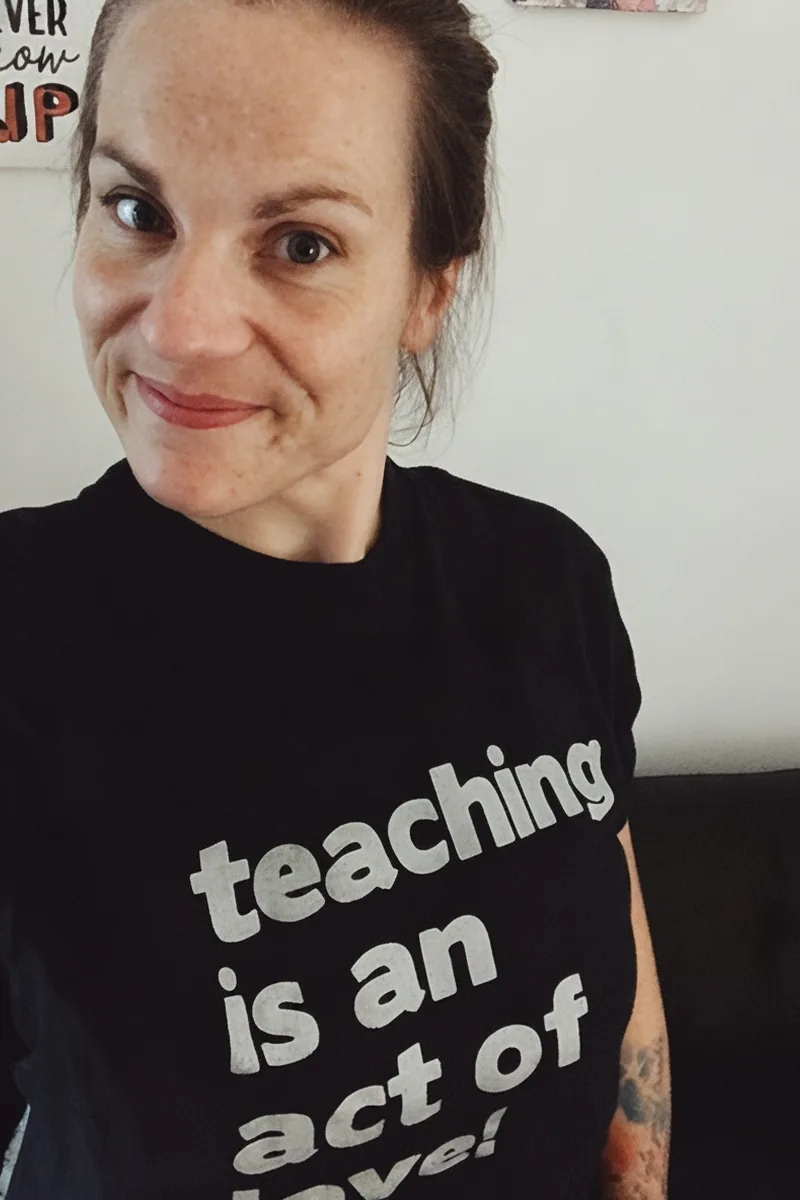
A linguistics MA trains you to dissect systems — how components interact, why patterns emerge, and what happens when you change one variable — which is exactly the thinking science coursework demands when students need to trace cause-and-effect or explain how processes like photosynthesis or erosion actually work. Nicole applies that same analytical rigor to helping students decode scientific vocabulary, since breaking terms into Latin and Greek morphemes (her bread and butter as a linguist) turns intimidating words like 'endothermic' or 'phototropism' into transparent labels. Rated 4.9 by students.
Civil and environmental engineering at Michigan gave Ashley hands-on experience applying scientific principles — from fluid dynamics to soil chemistry — in lab and field settings. While science isn't her primary teaching focus, she explains core concepts in physics, chemistry, and earth science by grounding them in the engineering problems where she first encountered them.
An English specialist by training, Joanne brings something underrated to science tutoring: the ability to teach students how to read dense, information-heavy text and extract what actually matters. Much of science at the middle and high school level comes down to comprehending nonfiction passages, interpreting diagrams, and writing clear explanations — skills she's spent years building across every grade level from sixth through college.
With degrees in neuroscience and a pre-med track at Dartmouth, Arianna doesn't just teach science concepts — she's lived them, from dissecting neural pathways in upper-level labs to grinding through organic chemistry and physics prerequisites. That depth across biology, chemistry, and physical science means she can connect topics students often see as isolated — like how cellular respiration links to the energy concepts they'll hit again in physics. Rated 4.8 by students.
For students who struggle with science not because the concepts are too hard but because the textbook language feels impenetrable, Sierra's communications training is a real advantage. She breaks down dense passages about topics like the scientific method, ecosystems, or basic chemistry into plain language that actually sticks.
A biology degree and ongoing medical education give Ishan unusually deep scientific literacy across disciplines — from cellular respiration and genetics to chemistry and human physiology. He connects textbook concepts to real clinical examples, which makes abstract processes like enzyme kinetics or gas exchange click in a way that diagrams alone rarely achieve.
A science lesson full of dense vocabulary and multi-step lab procedures can shut down a student who struggles with working memory or reading comprehension. Sheyna breaks scientific concepts into smaller, concrete pieces — using graphic organizers for the water cycle or step-by-step visual guides for an experiment — so the content stays accessible without being watered down.
Working as a research assistant in transplant surgery at Johns Hopkins School of Medicine, Jonathan teaches science the way he encounters it daily — through real data, real questions, and real biological systems. He breaks down topics like cell biology, chemical reactions, and experimental design by connecting them to the medical research happening in his own lab.
Jonah's science tutoring centers on physics, where he breaks down problems involving kinematics, forces, and energy conservation into clear, step-by-step reasoning rather than formula memorization. His strong math background — he also tutors through calculus — means students get help with the algebra and trigonometry embedded in physics problems, not just the conceptual side. He holds a 5.0 student rating.
Filmmaking is more hands-on science than most people realize — Anthony has worked with optics, sound waves, color temperature, and electrical rigging, all of which require understanding physical principles to get right on set. He uses that production experience to make science concepts tangible, walking students through real-world examples of how light behaves, how circuits work, or why materials respond differently to heat. His 32 ACT confirms the analytical skills backing up those practical instincts.
Neuroscience sits at the intersection of biology, chemistry, and physics — so Hamid's undergraduate training has him regularly moving between cellular mechanisms, organic reactions, and electrical signaling concepts. He breaks down dense scientific material by connecting it to how systems actually function in the body, making topics like enzyme kinetics or membrane potential click rather than feel abstract. Rated 5.0 by students.
Four years teaching undergraduate lab courses at the University of Michigan gave Michael a front-row seat to exactly where science students get stuck: interpreting graphs, designing controlled experiments, and connecting mathematical formulas to physical intuition. Whether the topic is energy conservation, wave behavior, or circuit analysis, he unpacks the underlying logic until the concept clicks.
Skyler's academic path through Russian and Eurasian studies required mastering research methodologies across disciplines — gathering evidence, analyzing competing sources, and building defensible conclusions from incomplete data. That cross-disciplinary rigor translates well when she teaches students to work through scientific vocabulary, interpret charts, and articulate what an experiment actually proved. Her 5.0 rating suggests the approach clicks.
Research in global health and psychology requires constant engagement with the scientific method — designing studies, interpreting data, and evaluating whether evidence actually supports a conclusion. Martha brings that hands-on research experience from Duke and Michigan into her science tutoring, breaking down concepts like experimental design, hypothesis testing, and data analysis so students understand the reasoning behind each step.
Scoring a 36 on the ACT — including its Science section — required Sophia to master the skill of rapidly interpreting experimental data, conflicting viewpoints, and research summaries under pressure. She teaches those same graph-reading and data-analysis strategies to students who need to sharpen their scientific reasoning, whether for standardized tests or classroom assignments.
Environmental Engineering at Yale is applied science — fluid dynamics, chemistry, ecology — so Megan lives in the material she teaches. She unpacks scientific concepts by connecting them to tangible examples, whether that's explaining energy transfer through a real-world system or walking through the scientific method with a hands-on problem.
Certified in both biology and chemistry, Israa connects topics across the sciences in a way that makes each subject reinforce the other — explaining how chemical bonding principles show up in cell membrane behavior, for instance. She walks students through designing experiments, reading data tables, and writing conclusions that actually reflect the evidence.
A chemical and biological engineering degree plus current MD/PhD work at Michigan means Suzie lives at the intersection of chemistry, biology, and physics every day. She unpacks scientific concepts — whether it's balancing equations, understanding cell respiration, or interpreting experimental data — by tying them to real mechanisms rather than asking students to memorize isolated facts.
A chemistry degree and coursework in biochemistry, thermodynamics, and life sciences give David unusual breadth across the sciences — he can move fluidly between balancing redox reactions, interpreting energy diagrams, and explaining cellular respiration. He tackles each topic by anchoring it in a core principle first, then layering on the details, so students build understanding they can actually apply on exams. That approach earned him a 4.9 rating across his tutoring subjects.
While science isn't his doctoral field, Anthony's analytical training in philosophy translates well to the skills students need most: interpreting data, evaluating experimental claims, and understanding cause-and-effect reasoning. He's a strong fit for students who struggle less with memorizing facts and more with making sense of how scientific arguments are constructed.
A psychology degree from National Taiwan University means Lulu studied research design, statistics, and behavioral experiments before most students ever set foot in a lab — giving her a firsthand understanding of hypothesis testing and data analysis that anchors her science tutoring. She's especially effective at walking students through how to set up controlled experiments and interpret results, skills she later reinforced through graduate-level quantitative coursework in accounting.
A mechanical engineering major at Yale, Andrew tackles science through the lens of real physical systems — forces acting on a bridge, heat transferring through a wall, energy converting in an engine. That applied perspective makes abstract scientific principles feel concrete and gives students a reason to care about the formulas.
A mechanical engineering degree is essentially applied science — thermodynamics, fluid mechanics, materials behavior — so Lane brings real-world context to physics and chemistry concepts that can otherwise feel abstract. He's particularly strong at connecting equations to physical intuition, like explaining what Newton's second law actually means when you're designing something that has to hold weight.
A biology degree from the University of Alabama and current medical training at the University of Michigan mean Ruth can teach science the way it actually connects — linking concepts like cellular respiration to organ systems, or explaining how pH and chemical equilibria show up in real lab scenarios. She breaks down the scientific method and data interpretation skills that students need across chemistry, biology, and physical science courses.
Mechanical engineering at Penn State means Ashley lives in physics and chemistry daily — force diagrams, thermodynamics, material properties, and data analysis are part of her coursework every semester. She breaks scientific concepts down into visual, intuitive explanations, drawing on her experience teaching younger students at The Robot Garage and FIRST Tech Challenge.
Eric's business administration degree included a heavier dose of quantitative analysis than most people expect — statistics, data modeling, and hypothesis testing all show up in core business coursework. He applies that training to science by walking students through how to set up controlled comparisons and read results critically, treating every experiment like a case study with evidence to weigh. His 36 ACT confirms he can handle the full range of science content, from physical systems to biological processes.
A premed biology major at Cornell who also teaches AP Chemistry and AP Physics, Pratik brings real depth across all three core sciences. He unpacks concepts like cellular respiration, stoichiometry, or Newton's laws by tying them to everyday phenomena — making the material feel less like isolated facts and more like a connected story about how the world works.
An economics degree means Rae spent years building and testing models — isolating variables, reading data tables, and figuring out whether a correlation actually means anything — which is the same core logic underneath every science class from middle school biology to high school chemistry. She's particularly good at walking students through graph interpretation and experimental design, since those skills were baked into her coursework long before she started tutoring. Her 33 ACT confirms she can handle the quantitative side without breaking a sweat.
Between her bioinformatics major and AP Chemistry tutoring experience, Raveena covers science from molecular-level chemistry up through data interpretation and experimental design. She's especially effective at teaching students how to read graphs, identify variables, and connect lab results back to the underlying concepts — skills that carry across biology, chemistry, and physics coursework.
A biology degree from the University of Michigan gave Megan hands-on experience with lab sciences, cellular biology, genetics, and ecology — plus the chemistry and physics prerequisites that come with the major. She's especially effective for students who struggle with science because they're strong verbal learners; her literature background means she can translate dense scientific concepts into clear, memorable explanations. She treats science vocabulary the same way she treats a foreign language: breaking roots, prefixes, and suffixes into a system.
A PhD in history means Eric has spent years doing what science courses ultimately ask students to do: gather evidence, weigh competing explanations, and build an argument that holds up under scrutiny. He's especially effective at walking students through how to read charts and diagrams carefully, structure a lab write-up, and articulate the reasoning behind an answer — skills his dissertation work demanded daily.
Chemistry majors learn science by doing it — balancing equations, running reactions, and predicting outcomes based on molecular behavior — and Sreya brings that hands-on chemical reasoning to broader science topics like energy transfer, atomic structure, and lab methodology. Her 36 ACT means she aced the Science section's rapid-fire data interpretation, a skill she now teaches students to apply across biology, chemistry, and physics coursework. Rated 5.0 by students.
A biochemistry major at Michigan who has completed through Organic Chemistry II, Ajay covers science from middle school life science through college-level chemistry with genuine depth. He's especially sharp at explaining reaction mechanisms, molecular interactions, and lab reasoning — the kinds of topics where students often memorize facts but miss the underlying logic that makes them predictable.
I am a learner for life and I love sharing my knowledge with others. I have tutored middle-school students for one year and university students for two years. My focus is mainly on mathematics, chemistry, and related fields. I have degrees in both mathematics and biomedical engineering so I cover a lot of ground in the physiological sciences, computer programming, and statistics as well. Taking tests is one of my strong points and I have some killer strategies to share!
Studying biomedical engineering at Michigan means Nikhil lives at the intersection of biology, chemistry, and physics every day. He unpacks scientific concepts by connecting them to real systems — explaining cellular respiration through energy flow, or Newton's laws through the biomechanics of how muscles move bones. That cross-disciplinary perspective makes abstract science topics feel concrete and logical.
I am a undergraduate freshman of the University of Michigan, studying business at the Ross School of Business. Working together with students and having a good time while seeing steady improvements has proven to provide me great joy. I believe that communication and relationship building is crucial for students to open up about their struggles and also for me to identify problems they don't realize they can improve on, so this is a key aspect of all of my lessons. During my free time, I enjoy playing sports or snacking on desserts while binge-watching Friends!
Psychology research requires the same core skills that trip students up in general science — designing controlled experiments, interpreting data sets, and distinguishing correlation from causation. Audrey applies that training to break down the scientific method, lab report writing, and concept-heavy units in biology and chemistry so the reasoning clicks, not just the vocabulary.
A mechanical engineering degree means Douglas spent four years applying physics, chemistry, and math to real-world systems — calculating heat transfer, analyzing material properties, modeling fluid dynamics — so he teaches science as something you use, not just something you memorize for a test. He's especially strong on the quantitative side, walking students through unit conversions, force diagrams, and energy calculations with the kind of fluency that only comes from solving hundreds of engineering problems. Rated 5.0 by students.
Between calculus problem sets and economics models at Michigan Ross, Kerry picked up a habit of translating abstract concepts into concrete, step-by-step logic — which is exactly what science asks students to do when they're interpreting data, tracing cause and effect, or explaining how variables interact in an experiment. Her 33 ACT composite means she handled the Science section's rapid-fire graph reading and passage analysis at a high level, and she brings that same data-literacy approach to general science tutoring.
Testimonials
Because the right Science tutor makes all the difference.
Average Session Rating – Based on 3.4M Learner Ratings
Practice Science
Free practice tests, flashcards, and AI tutoring for Science
Other Detroit Tutors
Related Science Tutors in Detroit
Frequently Asked Questions
Many Detroit students struggle with connecting abstract scientific concepts to real-world applications, especially in chemistry and physics where visualization is key. With an average student-teacher ratio of 20.7:1 in the area, classroom instruction often can't address individual gaps in foundational skills like math in science contexts or reading scientific diagrams. Personalized tutoring helps students work through these specific sticking points at their own pace, building confidence before moving to more complex topics.
Tutors work with students across Michigan's science standards, whether they're in middle school earth science, high school biology, chemistry, or physics. Personalized instruction ensures students master grade-level expectations while also filling any gaps from previous years—something that's especially valuable when classroom pacing doesn't match individual learning needs. Tutors can also prepare students for AP Science exams, STEM-focused programs, or science competitions if those are goals.
The first session focuses on understanding your student's current level, learning style, and specific challenges—whether that's lab report writing, problem-solving in physics, or grasping cellular biology. Tutors assess which foundational concepts might need reinforcement and discuss goals, whether improving grades, test prep, or building deeper understanding. From there, a personalized plan is created to address gaps and accelerate progress in the areas that matter most.
In a classroom of 20+ students, teachers can't slow down to explain why a concept matters or spend extra time on diagrams and problem-solving strategies that click for individual learners. Personalized 1-on-1 instruction lets tutors adapt explanations, choose examples relevant to your student's interests, and use practice problems that target specific weak spots. This focused approach typically leads to faster skill-building and stronger conceptual understanding compared to whole-class instruction.
Results vary based on starting point and goals, but students typically see improved test scores, stronger lab performance, and greater confidence tackling challenging concepts within 4-6 weeks of consistent tutoring. Beyond grades, many students develop better problem-solving strategies and learn to approach unfamiliar science questions with less anxiety. The key is consistent practice with feedback—something personalized tutoring provides that classroom learning often can't.
Tutors working with Varsity Tutors bring deep subject expertise—many hold degrees in biology, chemistry, physics, or related fields, and many have classroom teaching experience or advanced certifications. They're skilled at breaking down complex concepts, designing practice problems that build skills progressively, and explaining the 'why' behind scientific principles. Each tutor is matched based on your student's specific needs, whether that's high school biology, AP Chemistry, or middle school earth science.
Pricing depends on the tutor's expertise, your student's grade level and subject, and how frequently you'd like sessions. Varsity Tutors works with your budget and can discuss flexible scheduling options to fit your needs. Most families start with 1-2 sessions per week and adjust based on progress and upcoming tests or deadlines.
Start by telling us about your student's grade level, which science subject they need help with, and what they're working toward—whether that's improving a grade, test prep, or building stronger fundamentals. Varsity Tutors then connects you with an expert tutor whose background and teaching style fit your student's needs. You can schedule a first session quickly and see if it's a good match before committing to ongoing tutoring.
Let’s find your perfect tutor
Answer a few quick questions. We’ll recommend the right plan and match you with a top 5% tutor.