Award-Winning Science Tutors
serving Ann Arbor, MI
Science
Tutors in Ann Arbor
Private 1-on-1 tutoring, weekly live classes for academic support, test prep & enrichment, practice tests and diagnostics, and more to elevate grades and test scores.
Based on 3.4M Learner Ratings
UniversitiesSchools & Universities
DeliveredHours Delivered
ProficiencyGrowth in Proficiency
Who needs tutoring?
No obligation. Takes ~1 minute.
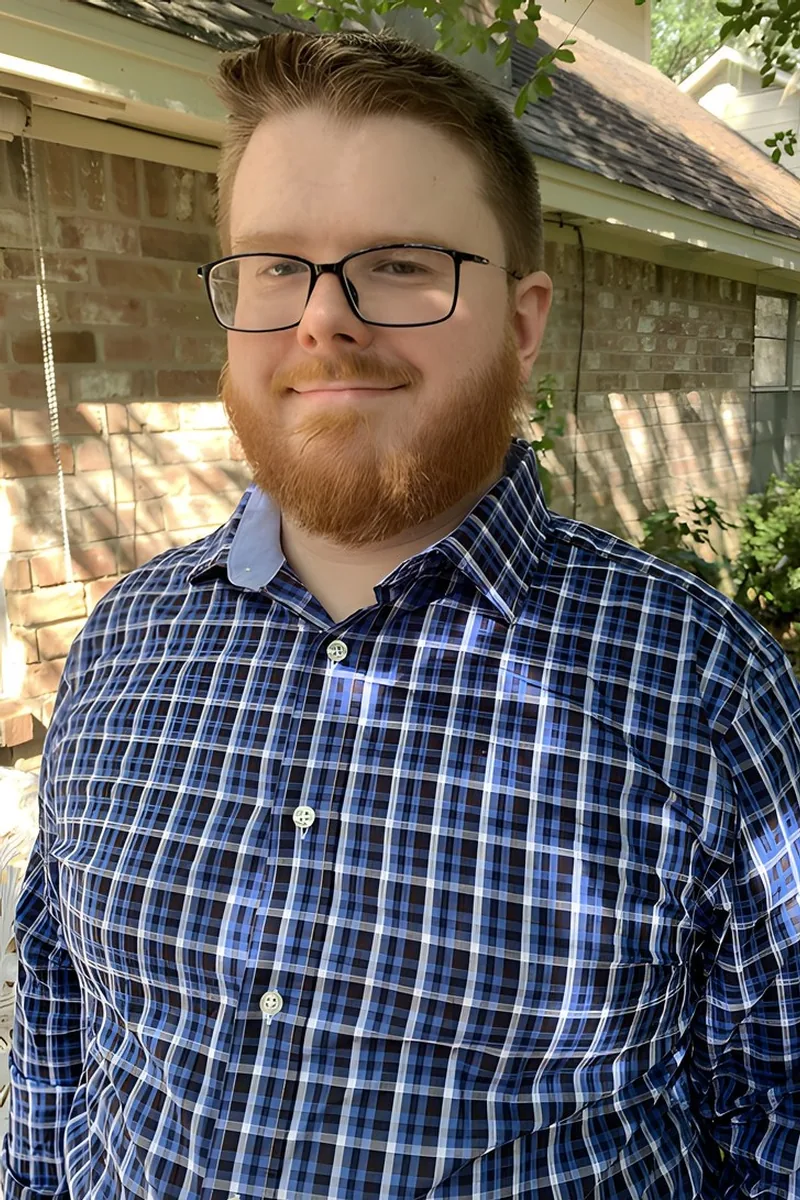
Four years teaching undergraduate lab courses at the University of Michigan gave Michael a front-row seat to exactly where science students get stuck: interpreting graphs, designing controlled experiments, and connecting mathematical formulas to physical intuition. Whether the topic is energy conservation, wave behavior, or circuit analysis, he unpacks the underlying logic until the concept clicks.

Skyler's academic path through Russian and Eurasian studies required mastering research methodologies across disciplines — gathering evidence, analyzing competing sources, and building defensible conclusions from incomplete data. That cross-disciplinary rigor translates well when she teaches students to work through scientific vocabulary, interpret charts, and articulate what an experiment actually proved. Her 5.0 rating suggests the approach clicks.
Research in global health and psychology requires constant engagement with the scientific method — designing studies, interpreting data, and evaluating whether evidence actually supports a conclusion. Martha brings that hands-on research experience from Duke and Michigan into her science tutoring, breaking down concepts like experimental design, hypothesis testing, and data analysis so students understand the reasoning behind each step.
Scoring a 36 on the ACT — including its Science section — required Sophia to master the skill of rapidly interpreting experimental data, conflicting viewpoints, and research summaries under pressure. She teaches those same graph-reading and data-analysis strategies to students who need to sharpen their scientific reasoning, whether for standardized tests or classroom assignments.
Environmental Engineering at Yale is applied science — fluid dynamics, chemistry, ecology — so Megan lives in the material she teaches. She unpacks scientific concepts by connecting them to tangible examples, whether that's explaining energy transfer through a real-world system or walking through the scientific method with a hands-on problem.
A chemical and biological engineering degree plus current MD/PhD work at Michigan means Suzie lives at the intersection of chemistry, biology, and physics every day. She unpacks scientific concepts — whether it's balancing equations, understanding cell respiration, or interpreting experimental data — by tying them to real mechanisms rather than asking students to memorize isolated facts.
A biology degree from the University of Alabama and current medical training at the University of Michigan mean Ruth can teach science the way it actually connects — linking concepts like cellular respiration to organ systems, or explaining how pH and chemical equilibria show up in real lab scenarios. She breaks down the scientific method and data interpretation skills that students need across chemistry, biology, and physical science courses.
A biochemistry major at Michigan who has completed through Organic Chemistry II, Ajay covers science from middle school life science through college-level chemistry with genuine depth. He's especially sharp at explaining reaction mechanisms, molecular interactions, and lab reasoning — the kinds of topics where students often memorize facts but miss the underlying logic that makes them predictable.
A biology degree from the University of Michigan gave Megan hands-on experience with lab sciences, cellular biology, genetics, and ecology — plus the chemistry and physics prerequisites that come with the major. She's especially effective for students who struggle with science because they're strong verbal learners; her literature background means she can translate dense scientific concepts into clear, memorable explanations. She treats science vocabulary the same way she treats a foreign language: breaking roots, prefixes, and suffixes into a system.
I am a learner for life and I love sharing my knowledge with others. I have tutored middle-school students for one year and university students for two years. My focus is mainly on mathematics, chemistry, and related fields. I have degrees in both mathematics and biomedical engineering so I cover a lot of ground in the physiological sciences, computer programming, and statistics as well. Taking tests is one of my strong points and I have some killer strategies to share!
Between calculus problem sets and economics models at Michigan Ross, Kerry picked up a habit of translating abstract concepts into concrete, step-by-step logic — which is exactly what science asks students to do when they're interpreting data, tracing cause and effect, or explaining how variables interact in an experiment. Her 33 ACT composite means she handled the Science section's rapid-fire graph reading and passage analysis at a high level, and she brings that same data-literacy approach to general science tutoring.
Jason approaches science as a subject that rewards curiosity over memorization, walking students through how to read data tables, form hypotheses, and connect cause-and-effect relationships across topics like biology and earth science. His analytical training in business administration translates well to teaching the scientific method and experimental design.
Eva's English degree and journalism work at Harvard might not scream science, but parsing dense nonfiction — pulling key claims from a passage, evaluating whether evidence actually supports a conclusion — is exactly what science reading and lab write-ups demand. She's strongest with students who understand the concepts but struggle to articulate their reasoning on paper, turning vague answers into precise, evidence-backed explanations. Rated 5.0 by students.
Henry's biochemistry minor at Carleton means he's actively studying science alongside computer science, giving him recent fluency in biology, chemistry, and the quantitative reasoning that ties them together. He explains scientific concepts by grounding them in real-world relevance — the approach he finds makes material stick for himself and the students he's tutored.
A computer science degree from Michigan means Nikitha spent years doing what science courses ultimately ask of students — forming hypotheses, testing them systematically, and debugging when results don't match expectations. She's especially sharp on the quantitative side, walking students through data tables, graph interpretation, and unit relationships with the same precision she applies to writing code. Holds a 5.0 rating.
Microbiology trained Surina to think at the cellular level — understanding how bacteria colonize, how immune responses cascade, and how lab techniques like gram staining reveal invisible worlds. Now a fourth-year dental student at the University of Michigan, she brings that hands-on life sciences background to topics ranging from cell biology and anatomy to chemistry fundamentals. Rated 5.0 by students, she's especially strong at making microscopic processes feel tangible.
Hundreds of hours tutoring chemistry give Phil a practical grip on the scientific reasoning that trips students up most — balancing equations, interpreting lab data, and connecting microscopic behavior to macroscopic observations. He teaches students to think through problems systematically instead of hunting for a formula to plug numbers into.
Eight years of tutoring elementary and middle school students gave Trishani a detailed map of where younger learners stumble in science — whether it's confusing observation with inference or struggling to set up a controlled experiment. Her psychology major at the University of Michigan adds a research methods backbone, so she can walk students through hypothesis formation and variable isolation using the same framework she applies in her own coursework. Rated 5.0 by students.
Having taught both general education and special education classrooms, Rachel knows how to adjust a science lesson on the fly — simplifying a diagram of the water cycle for one student while pushing another to explain evaporation in their own words. Her dual training in elementary science and special education means she can scaffold concepts like states of matter or plant life cycles so students actually retain them, not just copy definitions off the board.
An engineering degree from Michigan State means William spent four years doing science — calculating forces in physics, balancing equations in chemistry, and applying biological principles to materials design — not just reading about it. He teaches concepts like energy conservation, reaction rates, and experimental design by connecting them to real engineering problems he's actually solved. Rated 5.0 by students.
Ceren's psychology coursework at the University of Michigan included research methods, statistics, and the biological foundations of behavior — giving her a solid grasp of the scientific process. She explains concepts like experimental design and data interpretation in plain language, which is particularly useful for students just getting comfortable with science.
Three years of tutoring at UMBC plus a biochemistry degree and ongoing medical training mean Uchenna can explain science at virtually any level, from basic states of matter to cellular respiration. He's especially effective at teaching younger students how to read a diagram or data table — a skill that becomes the backbone of every science class they'll take later.
A Geology-Biology degree from Brown means Rebekah spent four years connecting lab work to field observations — reading rock formations, analyzing ecological data, and writing scientific arguments grounded in evidence. She brings that same hands-on reasoning to science tutoring, whether a student is interpreting a food web diagram or balancing a chemical equation.
Chemical engineering at Michigan means Haley spends her days applying physics, chemistry, and biology to real problems — thermodynamics, reaction kinetics, fluid mechanics. She unpacks scientific concepts by tying them to tangible examples, making topics like stoichiometry or Newton's laws feel less abstract and more like tools students can actually use.
Studying biology, health, and society at the University of Michigan gives Samantha daily practice connecting scientific disciplines — cellular biology to chemistry, physics to human physiology. She unpacks concepts like energy transfer, experimental design, and data interpretation by linking them to real-world scenarios students actually find interesting, rather than treating each topic as an isolated chapter to get through.
Pursuing neuroscience and movement science at Michigan means Vikhyathi lives inside scientific thinking daily — designing experiments, interpreting data, and connecting biological systems to chemistry and physics. She teaches students to approach science as a process of asking testable questions, not just memorizing vocabulary lists and diagrams.
Studying mechanical engineering at Eastern Michigan means Nikki lives in the world of physics, chemistry, and applied science daily. She connects classroom topics like the periodic table, energy transfer, or Newton's laws to tangible examples — how a bridge holds weight, why certain metals corrode — so the material sticks beyond the test.
Currently pursuing a chemistry doctorate at the University of Michigan, Tyler lives inside the scientific method every day — designing experiments, interpreting data, and connecting molecular-level concepts to observable phenomena. He teaches students to think like working scientists, breaking complex topics in biology, chemistry, or physics into testable questions rather than isolated facts to memorize.
A biochemistry degree from the University of Michigan means Kirby has tackled everything from cellular respiration pathways to thermodynamics to statistical analysis of experimental data — the full spectrum of what students encounter across biology, chemistry, and physics coursework. She breaks down scientific reasoning by connecting abstract concepts to lab-based examples, making it easier to understand why a reaction proceeds or how energy transfers through a system. Rated 4.9 by students.
A psychology degree means Alexandra spent years designing experiments, controlling for confounding variables, and interpreting statistical output — all core scientific skills wrapped in a social science package. She's especially good at walking students through how to set up a controlled experiment and explain what their results actually demonstrate, since that process mirrors the research methods she learned firsthand. Holds a 5.0 rating.
While science isn't Jack's primary specialty, his analytical training in economics translates well to interpreting data, reading graphs, and reasoning through experimental design. He's a strong fit for students who need support with the quantitative side of science courses — unit conversions, proportional reasoning, and making sense of lab results.
A chemistry bachelor's degree plus doctoral-level materials science research gives Vazrik unusual range across physics, chemistry, and the overlap between them. He's especially effective at unpacking concepts like energy transfer or molecular behavior where students need to think across disciplinary boundaries rather than in isolated chapters.
Studying biochemistry at Michigan put Nicholas at the intersection of biology, chemistry, and physics, so he's comfortable unpacking everything from cell structure to thermodynamic energy transfers. He teaches students to read scientific problems like puzzles — identifying what's given, what's missing, and which principles connect the two.
Julia's English degree and Writing Center experience might seem distant from science, but her strength is in the skill that trips up most students: explaining what they actually learned. Whether it's writing a lab report conclusion, interpreting a diagram in a textbook, or translating observations into clear cause-and-effect statements, she treats science communication as a writing problem — and that's exactly where her training kicks in.
An applied physics degree means Juliane has spent years doing the actual work of science — designing experiments, modeling physical systems in MATLAB, and analyzing real data sets to draw defensible conclusions. She brings that lab-trained rigor to topics like energy, forces, and properties of matter, teaching students to reason through problems the way a physicist would rather than hunting for the right formula to plug into. Rated 4.9 by students.
Graduate work in speech-language pathology means Anna spends her days studying anatomy, physiology, and the biological systems behind human communication — all of which ground her science tutoring in current, firsthand coursework rather than distant memory. Her elementary teaching background also means she knows how to make concepts like life cycles, states of matter, or simple machines accessible to younger learners who are encountering scientific vocabulary for the first time.
Chemical engineering coursework at Michigan means Alec spends his weeks doing science at the college level — balancing reaction equations, analyzing thermodynamic systems, and interpreting lab data — so he can walk high school students through the underlying concepts with real fluency. He's especially strong on the physical science and chemistry side, where his engineering training lets him explain not just what happens but the math and mechanisms behind it. Holds a 5.0 rating.
Studying business at the University of Michigan means Sarnath regularly works with data sets, statistical models, and hypothesis-driven analysis — skills that overlap heavily with what science courses ask students to do when interpreting experiments and drawing conclusions from evidence. He's especially comfortable with the math-heavy side of science, like calculating rates, converting units, and reading graphs, since math is one of his strongest subjects. His 33 ACT confirms he can handle the cross-disciplinary reasoning science demands.
While science isn't Timothy's primary discipline, his math minor at Michigan gives him strong quantitative instincts for the calculations and data interpretation that run through physics, chemistry, and biology coursework. He's especially useful for students who understand the concepts but freeze when a problem requires unit conversions, graph analysis, or algebraic manipulation.
At Michigan, Tiffany tutored across math and English simultaneously — a combination that turns out to be ideal preparation for science, where students constantly toggle between quantitative skills like reading graphs and verbal skills like explaining what an experiment actually proved. She teaches students to connect observations to conclusions step by step, treating each lab question or textbook problem like a mini-argument that needs evidence behind it.
Testimonials
Because the right Science tutor makes all the difference.
Average Session Rating – Based on 3.4M Learner Ratings
Practice Science
Free practice tests, flashcards, and AI tutoring for Science
Other Ann Arbor Tutors
Related Science Tutors in Ann Arbor
Frequently Asked Questions
Varsity Tutors matches Ann Arbor students with expert Science tutors for 1-on-1 instruction. We pair each student with a tutor based on their specific needs, learning style, and goals.
Whether you need homework help, exam prep, or want to get ahead, our Science tutors are ready to help.
Common challenges include gaps from earlier material, difficulty with specific concepts, and trouble applying learning to new problems. These issues can snowball quickly in Science.
A tutor identifies where you're stuck, fills in gaps, and provides targeted practice. The 1-on-1 format means you get help exactly where you need it.
Tutors work with your student's actual coursework—homework assignments, class notes, and upcoming tests. This keeps tutoring directly relevant to what's happening in the classroom.
When you share information about your student's school and curriculum, we can match you with a tutor who has relevant experience.
All tutors complete background checks, credential verification, and teaching evaluation. Many of our Science tutors hold advanced degrees or have years of teaching experience.
You can review tutor profiles to find someone with the right background for your student's level and needs.
Many students see improved grades within a few weeks, along with better understanding of Science concepts and more confidence tackling challenging material.
Tutors track progress and adjust their approach to ensure continued improvement.
Most students benefit from 1-2 sessions per week. More frequent sessions help if your student is significantly behind or has an important exam coming up.
Your tutor can recommend a schedule based on your student's specific situation and goals.
Tutoring is purchased in packages of hours, with rates varying by tutor experience. Varsity Tutors offers several options to fit different budgets and needs.
You can discuss pricing during your consultation to find what works best.
Your tutor will assess where your student is, discuss goals, and start working on priority areas. Most students bring current homework or upcoming test material to focus on.
By the end, you'll have a clear sense of how the tutor can help and a plan for moving forward.
Let’s find your perfect tutor
Answer a few quick questions. We’ll recommend the right plan and match you with a top 5% tutor.