Award-Winning Physiology Tutors
serving Sacramento, CA
Physiology
Tutors in Sacramento
Private 1-on-1 tutoring, weekly live classes for academic support, test prep & enrichment, practice tests and diagnostics, and more to elevate grades and test scores.
Based on 3.4M Learner Ratings
UniversitiesSchools & Universities
DeliveredHours Delivered
ProficiencyGrowth in Proficiency
Who needs tutoring?
No obligation. Takes ~1 minute.
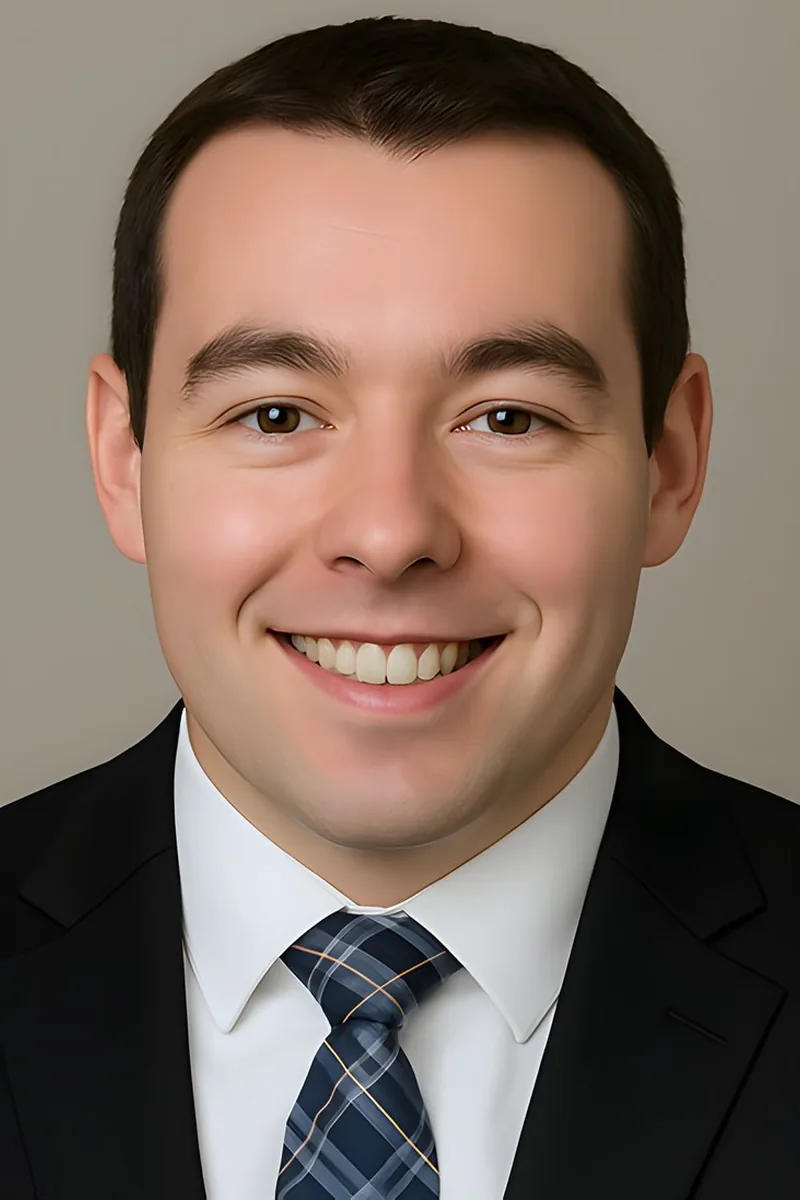
I am one of many Varsity Tutors. I attended Jesuit High School in Carmichael, CA where I graduated with a 4.3 GPA taking multiple AP and honors courses (AP Bio, Chem, Physics B, Gov, Macroeconomics, Microeconomics, English Lit, and English Lang). I also participated in several tutoring organizations throughout high school.

Understanding physiology means tracing cause and effect across organ systems — how a drop in blood pressure triggers the renin-angiotensin-aldosterone pathway, or why disrupting one ion channel can cascade through cardiac function. Nicholas's biology training gives him a systems-level perspective, and he teaches students to map these feedback loops rather than memorize isolated facts about each organ.
Helen earned a master's in pharmacology from Tulane, which means she didn't just study physiology — she studied what happens when you manipulate it. From cardiac output equations to renal filtration mechanics, she teaches organ systems by connecting structure to function to clinical relevance.
Studying physiology means understanding how organ systems actually function — why the nephron filters blood the way it does, how action potentials propagate along neurons, what drives gas exchange in the alveoli. Pooja's biology degree from UC Irvine included extensive coursework in human physiology, and she connects each mechanism to the bigger picture of homeostasis. She walks through complex pathways step by step, making dense material manageable.
Understanding how organ systems regulate themselves — from cardiac output adjustments during exercise to the hormonal feedback loops controlling blood glucose — requires more than memorizing diagrams. Nathan earned his biology degree at UCLA and went on to study nursing at Concordia, giving him both the academic foundation and the clinical perspective to unpack how the body actually functions at a systems level.
Understanding how organ systems regulate themselves — cardiac output, renal filtration, gas exchange — requires thinking in feedback loops rather than isolated facts. Mark studied physiology extensively as part of his public health science degree and his medical school preparation, so he can walk through mechanisms like the Frank-Starling relationship or oxygen-hemoglobin dissociation curves with real clinical context.
Studying biological sciences while preparing for medical school admissions means Fady has worked through physiology material repeatedly — once learning it, then again drilling it for standardized exams, and now teaching it to others. That repetition sharpens his ability to walk through multi-step processes like the cardiac conduction pathway or oxygen transport from alveoli to peripheral tissues, catching the specific points where students lose the thread. His parallel strength in chemistry and physics lets him fill in the quantitative details when a concept like Starling forces or gas partial pressures demands it.
I am able to tutor in a wide range of subjects and am passionate about helping students succeeding. I've never been that student who 'got things' right away, but I learned how to work hard and ask for help when I needed it. I hope to pass this on to my students.
I am a devoted tutor and life-long learner. I graduated from Indiana University Bloomington with a Bachelor of Science in Neuroscience and minors in Theatre & Drama and Biology. I was recently accepted to medical school and will begin my MD education this fall. I have experience tutoring a broad range of subjects, including science, math, history, and English, but my personal interests lie within the sciences. I have tutored students with diverse classroom and educational needs. I find joy in tailoring specific learning strategies to each of my students to provide them with individualized and quality support. I have always enjoyed learning new things inside and outside the classroom, and I most enjoy helping others find that same curiosity and excitement especially when accompanied by the feeling of accomplishment.
Teaching physiology well means connecting the molecular details — ion channels, hormone cascades, oxygen-hemoglobin dissociation — to how whole organ systems actually behave. Emad has taught physiology as an adjunct professor and brings a clinician's perspective from two medical degrees, making concepts like cardiac output regulation or renal filtration tangible rather than theoretical.
Completing premed coursework at NYU while earning a finance degree gave Hanna an unusual double fluency — she thinks about the body's regulatory systems with the same rigor she'd apply to financial models, tracing inputs, outputs, and feedback the way she'd track capital flows. That analytical habit pays off in physiology topics like hormonal feedback loops, cardiac cycle timing, and renal clearance, where students who can follow the logic outperform those who just memorize the steps. Her subsequent classroom teaching experience also means she's practiced at breaking a dense process into smaller, sequenced pieces that actually stick.
Studying kinesiology at Rice meant Tori lived in physiology — muscle contraction cascades, cardiac output regulation, renal filtration, respiratory gas exchange — for four years. She teaches these systems by tracing cause and effect through feedback loops, so students can predict what happens when one variable changes instead of memorizing isolated facts. That systems-level thinking is exactly what physiology exams reward.
Understanding physiology means thinking in systems — how a nerve impulse triggers muscle contraction, how the nephron filters blood, how cardiac output adjusts during exercise. Shayan's pre-health training at Penn gives him a clinical lens on these mechanisms, and he teaches each system by walking through what happens when it breaks down, which makes normal function far more intuitive.
Understanding physiology means thinking in systems — how a change in cardiac output ripples through blood pressure, renal filtration, and hormonal feedback all at once. James approaches each organ system by teaching students to trace cause-and-effect chains rather than memorize isolated facts, drawing on the integrative thinking his medical training demands daily.
Understanding how organ systems actually function — cardiac output regulation, nephron filtration, or the hormonal feedback loops controlling metabolism — requires more than memorizing diagrams. Aamod studied Cell Biology and Neuroscience as a pre-med undergraduate, giving him a deep grasp of the molecular mechanisms that drive physiological processes and the ability to explain them in plain language.
Laura's dual biology and anthropology degree from Fordham gave her an interesting vantage point on physiology — she learned human body systems both through the molecular lens of biology courses and through the evolutionary, whole-organism perspective that anthropology demands. Now pursuing her MPH in environmental health sciences at Columbia, she's especially sharp on how external factors interact with physiological processes like respiratory gas exchange or immune response cascades. Rated 5.0 by students.
A Northwestern history and economics graduate turned attorney, Andrew brings an unusual skill to physiology: the ability to build logical arguments out of complex evidence. That translates well when students need to reason through chains like how aldosterone affects sodium reabsorption in the distal tubule, or why sympathetic activation increases heart rate — he treats each mechanism as a case to construct, not a paragraph to memorize. Rated 4.9 by students.
Understanding physiology means tracing cause and effect across organ systems — how a drop in blood pressure triggers the renin-angiotensin pathway, or why the SA node sets heart rate. Leonard teaches these cascades as logical chains rather than isolated facts, asking students to predict what happens when one variable changes. His approach turns dense material like renal filtration or respiratory gas exchange into something students can reason through on an exam.
Studying physiology in a doctoral physical therapy program at Washington University means James isn't just reading about organ systems — he's applying concepts like cardiac output, muscle fiber recruitment, and respiratory mechanics to clinical cases every week. That applied lens makes him especially effective at explaining how the body's systems interact under stress, exercise, or disease. He teaches the 'why' behind each mechanism so the details stick.
Studying therapies for Alzheimer's and Parkinson's disease as a research scientist, Anthony encounters organ-system physiology daily — from neuronal signaling cascades to cardiovascular regulation. He teaches concepts like action potentials, renal filtration, and endocrine feedback loops by connecting textbook diagrams to what actually happens in a working lab.
Studying genetics and cell biology at the University of Minnesota means Brian lives in the details of how cells, tissues, and organ systems actually function — from action potentials and cardiac output to renal filtration and gas exchange. He teaches physiology by walking through the mechanism step by step, then tying it back to clinical or research scenarios from his lab work so each concept sticks.
Testimonials
Because the right Physiology tutor makes all the difference.
Average Session Rating – Based on 3.4M Learner Ratings
Nearby Physiology Tutors
Other Sacramento Tutors
Related Science Tutors in Sacramento
Frequently Asked Questions
Physiology is the study of how living organisms and their body systems function—focusing on processes like circulation, respiration, digestion, and nerve signaling. While anatomy describes the structure of the body, physiology explains how those structures work together. For students in Sacramento, understanding this distinction is crucial because physiology requires not just memorizing organ names, but grasping the mechanisms behind how they operate.
Many students struggle with the systems-based thinking physiology requires—understanding how changes in one system affect others. Memorizing complex pathways (like the cardiac cycle or neural signaling) without truly understanding the "why" is another common obstacle. Personalized tutoring helps by breaking these interconnected concepts into manageable pieces, using analogies and visual strategies tailored to how you learn best, rather than relying solely on textbook definitions.
Sacramento students typically encounter physiology through biology courses (covering basic cell and organ function), anatomy and physiology courses (integrating structure with function), and AP Biology or AP Human Anatomy and Physiology. Advanced students may take specialized courses focusing on specific systems like cardiovascular or nervous system physiology. Varsity Tutors connects you with tutors who understand these local curriculum standards and can align instruction with what your school emphasizes.
In a classroom of 22-23 students (Sacramento's average ratio), teachers must move at a pace that works for the majority, leaving gaps for students who need deeper explanation or faster progression. Personalized 1-on-1 instruction lets a tutor focus entirely on your learning style—whether you need hands-on analogies, detailed diagrams, or step-by-step problem-solving for complex processes like homeostasis or enzyme kinetics. This targeted approach helps you build genuine understanding rather than surface-level memorization.
Your first session is about establishing where you stand and how you learn best. A tutor will assess your current understanding of key concepts, identify specific areas causing confusion, and discuss your goals—whether that's improving test scores, preparing for AP exams, or mastering a particular system. From there, they'll create a personalized plan that builds on your strengths and addresses gaps systematically.
Yes. AP physiology courses require not just memorization but the ability to explain mechanisms, make connections between systems, and apply concepts to novel scenarios—exactly what personalized instruction excels at. Tutors can help you master the detailed pathways (like the renin-angiotensin system or action potentials), practice free-response questions, and develop the critical thinking skills the AP exam demands.
Absolutely. Many physiology courses include labs involving data analysis, microscopy, or physiological measurements. Tutors can help you understand what you're observing, interpret results, and connect lab findings to classroom concepts. This bridges the gap between theory and practice, making abstract processes like diffusion or muscle contraction feel concrete and measurable.
Many students notice clearer understanding of specific concepts within 2-3 sessions, especially once a tutor identifies your learning style and focuses on your biggest gaps. More significant improvements in test performance or overall confidence typically emerge over 4-8 weeks of consistent tutoring. The timeline depends on your starting point, how frequently you meet, and how actively you engage with the material between sessions.
Let’s find your perfect tutor
Answer a few quick questions. We’ll recommend the right plan and match you with a top 5% tutor.