Award-Winning Physics Tutors
serving Virginia Beach, VA
Physics
Tutors in Virginia Beach
Private 1-on-1 tutoring, weekly live classes for academic support, test prep & enrichment, practice tests and diagnostics, and more to elevate grades and test scores.
Based on 3.4M Learner Ratings
UniversitiesSchools & Universities
DeliveredHours Delivered
ProficiencyGrowth in Proficiency
Who needs tutoring?
No obligation. Takes ~1 minute.
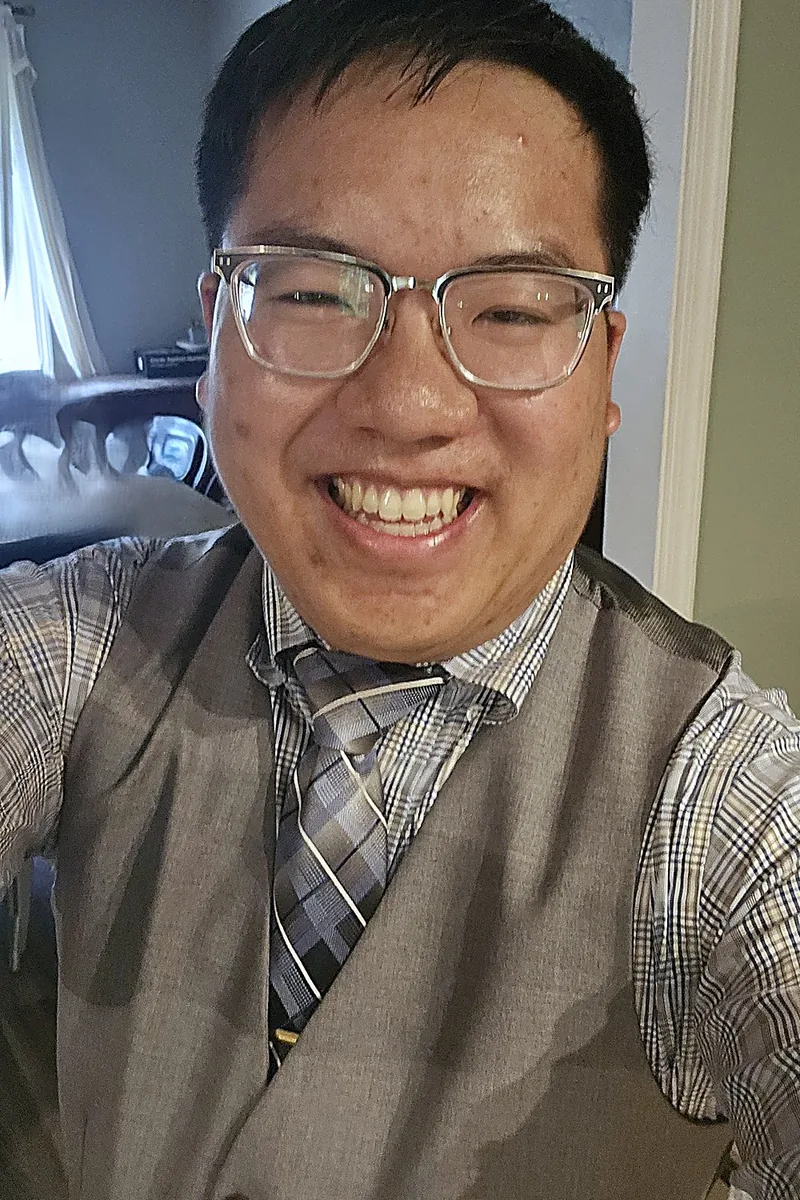
I'm a Crane Structural Engineer at a major defense contractor with a VA Mechanical Engineering FE/EIT Cert. I've been tutoring math, physics, and engineering courses for years and use them everyday. I graduated from Virginia Tech with a B.S. in Engineering Science and Mechanics and minors in Mathematics and Leadership Studies. I use humor and relatable situations to teach, turning difficult topics into easy concepts to remember. I've been the student at the bottom of the class before, so I know what it's like to be overwhelmed. I find the best fix for that is to use what students know to WORK SMARTER NOT HARDER. I've also tutored students with disabilities, tailoring my approach to meet unique learning needs with patience and creativity. I'm on the East Coast but keep a flexible schedule to ensure full availability for West Coast students. Whether you're local or four time zones away, I'm ready to help you reach your full potential. Hope to see you soon and best of luck with classes!
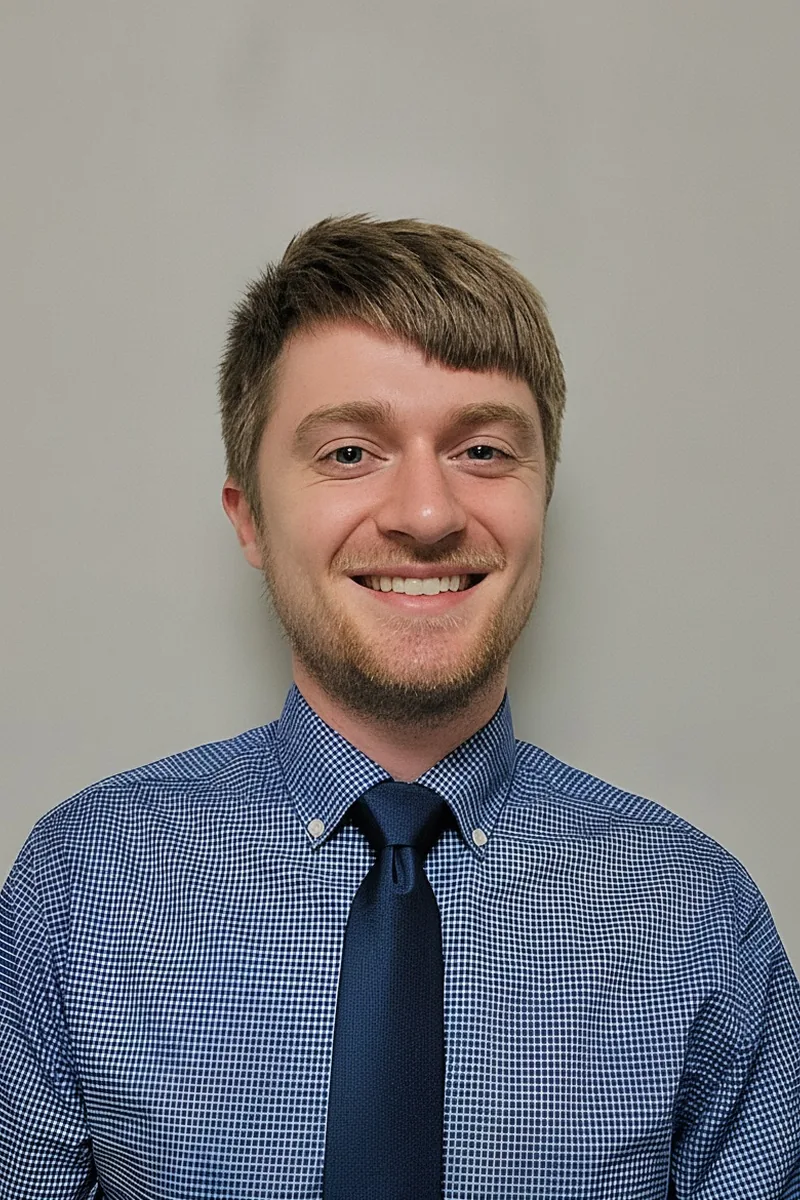
Bryan holds a B.S. in Physics and teaches the subject the way it's actually practiced — starting from a real situation, identifying the relevant principles, and building a solution step by step. Whether the problem involves conservation of momentum or circuit analysis, he emphasizes drawing clear free-body diagrams and checking units before touching a calculator.
A biomedical engineering degree from VCU means Waleed didn't just study physics — he applied Newtonian mechanics, wave behavior, and electromagnetism to design problems in materials science and medical devices. He unpacks force diagrams, energy conservation, and kinematics by tying each concept back to something a student can picture happening in the physical world. Rated 5.0 by students.
Every building Christianna designed in her architecture program had to obey Newton's laws — forces in equilibrium, torque on beams, energy transfer through materials. She brings that applied perspective to physics tutoring, walking students through free-body diagrams and kinematics with the confidence of someone who's used these concepts professionally.
Three years as a preceptor and supplemental instruction leader at VCU gave Anurag a sharp sense for where physics concepts break down — usually at the gap between understanding a formula and knowing which one applies to a new scenario. He walks through force diagrams, energy conservation, and kinematics by anchoring each problem in a clear physical picture before touching any math.
Kinematics, forces, energy conservation, and electromagnetism all showed up repeatedly in Sanam's biomedical engineering program, where she applied them to real systems like prosthetics and medical imaging. She teaches physics by anchoring each equation to a physical situation first, so students build intuition alongside their math skills.
I am currently a lead preschool teacher. I received my Bachelor's in Psychology from VCU and am looking to return to school to further my education. While in college, I worked as a Supplemental Instruction leader, teaching general biology and anatomy. I have also worked in an after school program with elementary age children, but I have my fondest memories volunteering as a counselor for Camp Kesem. In my own experience, I loved school and now I love teaching even more at all age levels! I especially enjoy the challenge of getting creative to discover what approach and mediums work best for each student. I am available for in person as well as online tutoring.
A biology and economics double major might not scream "physics," but Yashwant's pre-med track at VCU requires serious fluency in mechanics, thermodynamics, and wave behavior — the same core topics that dominate introductory physics courses. He approaches problem-solving by teaching students to draw the situation first, identify the relevant forces or energy transfers, and only then reach for an equation.
Kinematics, Newton's laws, and energy conservation show up across every science discipline, and Monika encounters them regularly in her biomedical engineering courses. She unpacks free-body diagrams and motion equations step by step, connecting the math to physical intuition so the formulas aren't just symbols on a page.
Studying mechanical and aerospace engineering at UVA means Andrew lives inside physics problems — forces on structures, projectile trajectories, energy conservation in rotating systems. He teaches kinematics, Newton's laws, and work-energy concepts by sketching out free-body diagrams and walking through the reasoning before touching a single equation. That diagram-first approach consistently clears up the confusion students feel when a problem has too many variables.
A mechanical engineering degree is essentially an applied physics degree, and Michael uses that overlap to teach everything from Newtonian mechanics to electromagnetism with a problem-solver's mindset. He digs into the physical intuition behind equations — why conservation of energy actually constrains a system, or what a force diagram is really telling you — before touching the math.
Kinematics, forces, and energy conservation click differently when a tutor can tie them to real motion — Ryan's kinesiology degree from James Madison means he spent years analyzing how physics governs the human body. He breaks down free-body diagrams and projectile motion problems by connecting them to tangible examples students can visualize, from joint torques to the arc of a ball in flight.
Hello, I currently work in an experimental quantum optics lab and will be enrolled in a quantum computing Ph.D. program at Rice University Fall 2026. I have been an employed tutor at my college (William and Mary) and during my high school career at the Governor's School at Innovation Park for 4 years. I struggled in my first physics class at George Mason University through my Governor's school as a junior in high school, but spent hours restructuring how I learned and approached problems to reach success! Physics and math are my true passions and I cannot wait to use the valuable lessons and strategies I learned to help and support you in your academic journey. William and Mary GPA - 3.95 B.S. in Physics (honors) - 4.0 770 on math SAT 5 on AP Calculus BC exam Experience with Pearson Physics textbook and Griffiths
Hi! I'm Utkarsha, and I genuinely enjoy helping students of all levels and learning styles better know subjects they would like help with. Whether you want to know math, English, Tableau, data science, or economics better, or are prepping for the SAT, I'm here to make it understandable and even enjoyable until you're confident! As a math major & an econ minor with a near-perfect SAT score (Math 800, English 780), I'm excited to share my know-how and deep understanding in these subjects. Throughout my years of experience in tutoring, I've successfully coached over 100 students to improve their math class grades (in all levels from elementary school math to college) and reach near-perfect SAT scores via my unique personalized guidance on core content and test-taking strategies. That's because my tutoring approach is focused on bridging the gap between where you're at and where you want to reach in terms of what you know. Let's work together to reach (or even exceed) your goals!
Hi! My name is Zaara, and I'm so excited to be joining as a Varsity Tutor! As a passionate STEM student with five years of tutoring experience, I'm always eager to share my knowledge with others. I love working with students at their current level and targeting their specific needs to help them accomplish their academic goals. I would love to have the opportunity to teach you, and I encourage you to book with me!
I have degrees from the University of Maryland and Caltech in astronomy and planetary science, and use physics in my research. I know from personal experience that a good teacher can be life-changing. With a strong science background, patience, and active listening skills, I help students excel in learning math, physics, and chemistry, as well as admissions test-prep.
Corrina doesn't just teach physics — she earned her degree solving physics problems every day as a mechanical engineer. She unpacks topics like Newton's laws, energy conservation, and rotational motion by tying equations back to physical intuition, so students learn to reason through problems instead of hunting for the right formula.
Medical school at the Medical College of Wisconsin demands a command of mechanics, fluid dynamics, and thermodynamics that goes well beyond intro-level physics — Abrahim applies those principles daily in contexts like blood pressure dynamics and respiratory mechanics. His biology degree from UCLA (cum laude) and a 34 ACT underscore the quantitative chops he brings to breaking down force diagrams, energy conservation setups, and multi-step kinematics problems. Rated 5.0 by students.
Cornell's chemical engineering program put Rahul through four years of mechanics, fluid dynamics, and thermodynamics problems that demand real physical intuition — not just plugging into formulas. He pushes students to understand why a conservation law applies before setting up the math, building the kind of conceptual reasoning that makes multi-step problems feel manageable rather than chaotic. Rated 4.9 by students.
Dylan has taken both mechanics and electricity/magnetism at the college level through Northwestern's engineering program, giving him deep familiarity with everything from free-body diagrams to circuit analysis. He unpacks problems by identifying which physical principles apply first — conservation of energy, Newton's laws, Gauss's law — before touching a single equation.
Bidyut's dual focus in biomedical engineering and computer science at Johns Hopkins means physics isn't something he studied once — it's embedded in his daily coursework, from mechanics to electromagnetism to fluid dynamics. He teaches students to translate word problems into free-body diagrams and equations systematically, rather than guessing which formula to use. That structured approach, combined with his 5.0 client rating, makes him especially effective for students who feel lost in problem-solving.
Benjamin's finance and economics training at Notre Dame runs on the same quantitative backbone that physics demands — modeling systems, isolating variables, and reasoning through multi-step problems where one misstep cascades. He brings a toolkit of computation shortcuts and pattern-recognition tricks to kinematics and energy problems that make the math faster and less error-prone. Holds a 5.0 rating from students.
Understanding physics means seeing the same core principles — Newton's laws, conservation of energy, wave behavior — show up in wildly different problems. Amber teaches students to identify which principle applies and how to set up the math, drawing on her strong background in both science and mathematics. Her 5.0 client rating speaks to an approach that makes even tricky free-body diagrams and projectile motion problems feel manageable.
Understanding physics means learning to translate a word problem into a free-body diagram, then into equations, then into an answer that makes physical sense. Pranav teaches that full translation process — whether the topic is kinematics, energy conservation, or electromagnetism — drawing on his Biomedical Engineering studies at Johns Hopkins. He's especially good at identifying the exact step where a student's reasoning breaks down and addressing it on the spot.
A year as a course assistant in Harvard's math department means Richard can handle the calculus that often becomes the real obstacle in physics — setting up integrals for work-energy problems or differentiating position functions in kinematics. He teaches across physics, calculus, and AP-level math, so when a mechanics problem demands clean vector decomposition or a tricky trig substitution, the math doesn't slow the physics down.
Serving as a Course Assistant for Harvard's calculus sequence means Sanjana regularly works through the exact derivatives, integrals, and differential equations that underpin every physics topic from kinematics to rotational dynamics — and she teaches AP Physics 1 through AP Physics C: E&M, so she knows where the math starts tripping students up in each course. She breaks problems down by isolating the physical principle first, then building the mathematical solution step by step so nothing feels like a leap. Rated 5.0 by students.
Three years of tutoring introductory physics at Washington University gave Justin a sharp sense of where students get stuck — usually at the gap between understanding a concept verbally and translating it into a free-body diagram or equation. His dual bachelor's degrees in physics and math, plus doctoral training in computational methods, let him attack problems from both the physical intuition side and the mathematical machinery side. Rated 5.0 by students.
A mechanical engineering degree from WashU means Caroline didn't just study physics — she applied it daily, from fluid dynamics to stress analysis. She teaches students to set up free-body diagrams and energy conservation problems by connecting the math to physical intuition, making kinematics and Newton's laws click rather than feel like formula hunts.
Testimonials
Because the right Physics tutor makes all the difference.
Average Session Rating – Based on 3.4M Learner Ratings
Practice Physics
Free practice tests, flashcards, and AI tutoring for Physics
Other Virginia Beach Tutors
Related Science Tutors in Virginia Beach
Frequently Asked Questions
Physics students often struggle with visualizing abstract concepts like forces, motion, and energy—especially when transitioning from memorizing formulas to truly understanding the principles behind them. Many students also find unit conversions and dimensional analysis challenging, along with applying theoretical concepts to real-world situations. Personalized 1-on-1 instruction helps bridge this gap by breaking down complex ideas into manageable pieces and connecting them to tangible examples.
Tutoring strengthens both your understanding of the science and your ability to think like a scientist. A tutor can help you design experiments, understand the scientific method, interpret data, and troubleshoot when results don't match expectations. This deeper comprehension makes lab reports stronger and helps you see how theoretical physics applies in practice.
Understanding is always the priority—memorization without comprehension leads to mistakes and limits your ability to solve unfamiliar problems. A tutor helps you learn *why* formulas work, how variables relate to each other, and when to apply them, so you naturally retain them while building genuine problem-solving skills. This approach also makes standardized test preparation much more effective.
Your first session focuses on understanding your specific challenges—whether that's kinematics, energy conservation, circuits, or something else entirely. The tutor will assess your current understanding, identify gaps, and create a personalized plan tailored to your goals. You'll leave with a clear roadmap and momentum toward improvement.
Unit conversions often trip students up because they require both procedural skill and conceptual understanding. A tutor breaks this down step-by-step, showing you how to set up conversion factors logically and why dimensional analysis is a powerful problem-solving tool. With practice and clear explanations, this skill becomes second nature.
Virginia Beach students typically study mechanics (motion, forces, energy), waves and sound, electricity and magnetism, and often modern physics depending on the course level. Whether you're in a standard physics course, honors physics, AP Physics, or IB Physics, tutors can support the specific curriculum and pacing of your school. Local tutors understand Virginia's standards and what teachers emphasize on assessments.
Tutors use diagrams, real-world analogies, interactive explanations, and conceptual reasoning to make invisible forces and abstract ideas tangible. For example, understanding electric fields becomes clearer with visual representations, and Newton's laws make sense when connected to everyday experiences like riding a bike or throwing a ball. This visual-conceptual approach transforms confusion into clarity.
Yes—tutoring is highly effective for exam preparation because it focuses on both content mastery and test-taking strategy. Whether you're preparing for a unit test, AP Physics, or college entrance exams, a tutor helps you identify weak areas, practice problem-solving under pressure, and develop confidence. The personalized approach means you spend time on what matters most for your goals.
Let’s find your perfect tutor
Answer a few quick questions. We’ll recommend the right plan and match you with a top 5% tutor.