Award-Winning AP Physics C: Electricity and Magnetism Tutors
serving Virginia Beach, VA
AP Physics C: Electricity and Magnetism
Tutors in Virginia Beach
Private 1-on-1 tutoring, weekly live classes for academic support, test prep & enrichment, practice tests and diagnostics, and more to elevate grades and test scores.
Based on 3.4M Learner Ratings
UniversitiesSchools & Universities
DeliveredHours Delivered
ProficiencyGrowth in Proficiency
Who needs tutoring?
No obligation. Takes ~1 minute.
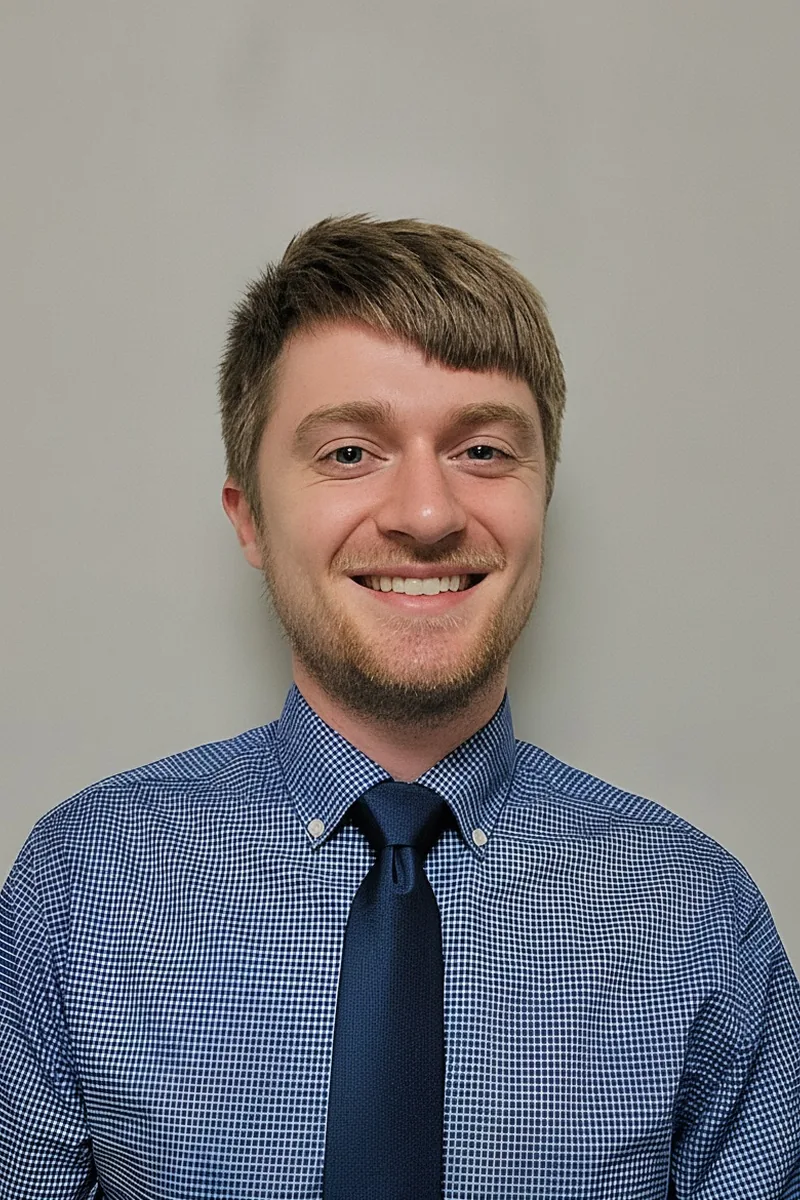
Gauss's law, Ampère's law, Faraday's law — E&M asks students to visualize invisible fields and then describe them with surface and line integrals. Bryan breaks each problem into two stages: building geometric intuition about what the field looks like, then choosing the right mathematical tool to exploit symmetry. His physics degree and 5.0 student rating back up that structured approach.
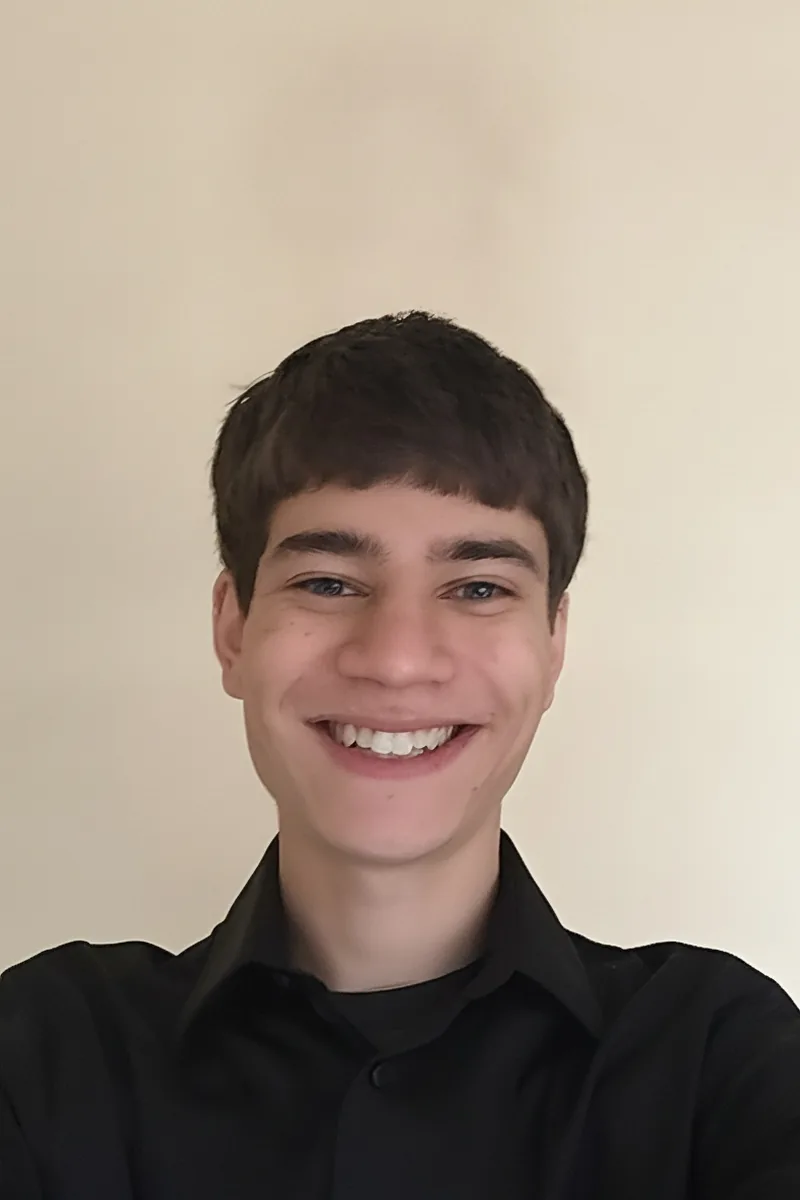
Gauss's law, Ampère's law, RC circuits, electromagnetic induction — E&M demands that students think in vector fields and apply calculus to invisible phenomena. As a Stony Brook physics major who also codes simulations, Kiran unpacks these abstractions by walking through the physical setup before touching an integral, which turns intimidating problems into a sequence of logical steps.
Gauss's law, Ampère's law, RC circuits — AP Physics C: E&M demands comfort with vector calculus applied to invisible fields, which is a steep jump for most students. David's engineering coursework at UCLA keeps him immersed in this material, and he excels at translating abstract field equations into concrete, visual reasoning.
AP Physics C: E&M is where calculus and electromagnetism collide — Gauss's law integrals, Ampère's law, RC and RL circuit transients — and Nathan tackles each of these by tying the math directly to the physical intuition behind it. As a computer science and engineering student at UCF who passed 15 AP exams, he knows how to break down vector calculus applications so they feel methodical rather than overwhelming.
Gauss's law, Ampère's law, Faraday's law — AP Physics C: E&M asks students to wield vector calculus in contexts that feel nothing like their math class. Cory breaks each problem into two layers: the physical picture (what are the charges and fields actually doing?) and the mathematical machinery (which symmetry makes the integral tractable?). That dual-track approach keeps students from drowning in formalism while still earning top scores.
AP Physics C: E&M is where calculus and electromagnetism collide, and most of the difficulty lives in translating physical setups — Gaussian surfaces, Amperian loops, RC circuits — into the right integral or differential equation. Megan's applied mathematics degree gives her deep comfort with the vector calculus and differential equations that make this course so demanding. She breaks down Gauss's law and Faraday's law problems step by step, connecting the math to the physical intuition behind each result.
Gauss's law, Ampère's law, Faraday's law — AP Physics C: E&M asks students to think in three dimensions about invisible fields, which is a fundamentally different challenge than Mechanics. Charles breaks down each law by connecting the integral expressions to physical setups students can visualize, like charged shells and solenoid cross-sections. His 5.0 rating speaks to how clearly he makes these abstractions click.
Gauss's law, Ampère's law, Faraday's law — AP Physics C: E&M throws a wall of abstract vector calculus at students who were just getting comfortable with mechanics. Lillian tackles each law by grounding it in a concrete physical scenario first, then layering in the math. Her systematic approach to problem-solving, sharpened through years of STEM coursework, translates well to navigating complex circuit and field problems.
Electromagnetism was the centerpiece of Michael's teaching at the University of Michigan, where he designed and led undergraduate lab courses on circuits, fields, and waves. AP Physics C: E&M demands comfort with Gauss's law, Ampère's law, Faraday's law, and RC/RL circuit analysis — all topics he's taught extensively at the college level. He knows exactly where the conceptual gaps tend to open up, especially around flux integrals and the superposition of electric fields.
During his physics PhD, Jonathan taught E&M at the university level — not just the conceptual overview, but the full calculus-heavy treatment of Maxwell's equations, dielectric materials, and magnetic induction that AP Physics C demands. He walks students through the reasoning behind each problem setup, showing how to identify symmetry, choose the right integration path, and connect the math back to what the fields are actually doing. Rated 5.0 by students.
AP Physics C: E&M is widely considered the hardest AP science exam, and it's also the subject closest to Sabrina's daily life as a Princeton electrical engineering student with an applied physics focus. She digs into Gauss's law, Ampère's law, RC circuits, and Faraday's law with the fluency of someone who uses Maxwell's equations in her own research and coursework. Her physics research at a Max Planck Institute adds another layer of depth to her explanations.
This is Michael's home turf. As an electrical and computer engineering major at Northwestern specializing in robotics and control systems, he lives in the world of Gauss's law, Faraday's law, and RC/RL circuits every semester. He unpacks Maxwell's equations and circuit analysis in ways that connect the abstract math to real systems — like the power electronics he builds for Northwestern's solar car.
Gauss's law, Ampère's law, Faraday's law — AP Physics C: E&M asks students to think in three dimensions with vector calculus tools they've barely learned. Taha breaks down each Maxwell equation into physical intuition first, then builds up the mathematical formalism around it. His deep background in both calculus and physics lets him bridge the gap between what students see in their math classes and what the E&M exam actually demands.
Testimonials
Because the right AP Physics C: Electricity and Magnetism tutor makes all the difference.
Average Session Rating – Based on 3.4M Learner Ratings
Practice AP Physics C: Electricity and Magnetism
Free practice tests, flashcards, and AI tutoring for AP Physics C: Electricity and Magnetism
Nearby AP Physics C: Electricity and Magnetism Tutors
Other Virginia Beach Tutors
Related Science Tutors in Virginia Beach
Frequently Asked Questions
AP Physics C: Electricity and Magnetism covers electrostatics (electric fields, potential, and Gauss's law), conductors and dielectrics, electric circuits, magnetic fields, and electromagnetic induction. The course emphasizes calculus-based problem solving and typically requires strong foundational knowledge of vectors, derivatives, and integrals. For students in Virginia Beach, understanding these interconnected topics deeply is essential since the exam tests both conceptual understanding and mathematical application.
Students often struggle most with Gauss's law applications, understanding magnetic force on moving charges, and Faraday's law of induction—topics that require visualizing three-dimensional fields and applying calculus simultaneously. The shift from thinking about forces to thinking about fields conceptually trips up many students, and the mathematical complexity of line integrals and flux calculations adds another layer. Personalized 1-on-1 instruction can help clarify these abstract concepts through targeted problem-solving and real-world examples tailored to your learning style.
Score improvement depends on your starting point and effort level, but students who work consistently with a tutor typically see gains of 2-4 points on the 1-5 AP scale over several months. The biggest improvements come from identifying specific weak areas (like circuit analysis or field visualization), mastering problem-solving strategies, and building confidence through practice tests under timed conditions. Varsity Tutors connects you with expert tutors who can create a customized study plan based on your current understanding and target score.
The exam gives you 45 minutes for 35 multiple-choice questions and 45 minutes for 3 free-response problems—pacing is critical. A strong strategy is spending about 1 minute per multiple-choice question (leaving buffer time for harder ones), and roughly 15 minutes per free-response problem. Practice tests under timed conditions are essential; they help you identify which question types slow you down and where you can build speed without sacrificing accuracy. Tutors can help you develop personalized timing strategies based on your strengths and practice test performance.
The College Board's official AP Physics C exam questions and released free-response problems are your best resource—they show exactly what to expect. Supplement these with full-length practice tests from reputable sources and problem sets focused on your weaker topics. Many students benefit from working through problems by concept (all Gauss's law problems, then all induction problems) before mixing topics together. A tutor can help you prioritize which practice materials match your current level and guide you through solutions when you get stuck.
Your first session is about understanding where you stand and what you need. Expect to discuss your current knowledge level, specific topics that confuse you, your target score, and your timeline for the exam. You might work through a sample problem together to see how you approach physics problems and where gaps appear. This gives your tutor a clear picture of your learning style and helps them design a personalized study plan focused on your biggest challenges.
Look for tutors with strong physics backgrounds—ideally those who have taught AP Physics C, scored well on the exam themselves, or have degrees in physics or engineering. They should understand both the content deeply and the specific challenges students face with calculus-based physics. Experience with test-taking strategy and familiarity with the College Board's question formats matters too. Varsity Tutors connects you with expert tutors who meet these qualifications and can tailor their teaching to your learning needs.
With Virginia Beach's average student-teacher ratio of about 14:1, getting individualized attention in class can be challenging, especially in a demanding course like AP Physics C. Personalized 1-on-1 tutoring fills that gap by giving you dedicated time to work through difficult concepts, ask questions without time pressure, and get immediate feedback on problem-solving approaches. A tutor can also align their instruction with your school's curriculum and help you prepare specifically for your teacher's exam style while building the deep understanding the AP exam requires.
Let’s find your perfect tutor
Answer a few quick questions. We’ll recommend the right plan and match you with a top 5% tutor.