Award-Winning Middle School Math Tutors
serving Virginia Beach, VA
Middle School Math
Tutors in Virginia Beach
Private 1-on-1 tutoring, weekly live classes for academic support, test prep & enrichment, practice tests and diagnostics, and more to elevate grades and test scores.
Based on 3.4M Learner Ratings
UniversitiesSchools & Universities
DeliveredHours Delivered
ProficiencyGrowth in Proficiency
Who needs tutoring?
No obligation. Takes ~1 minute.
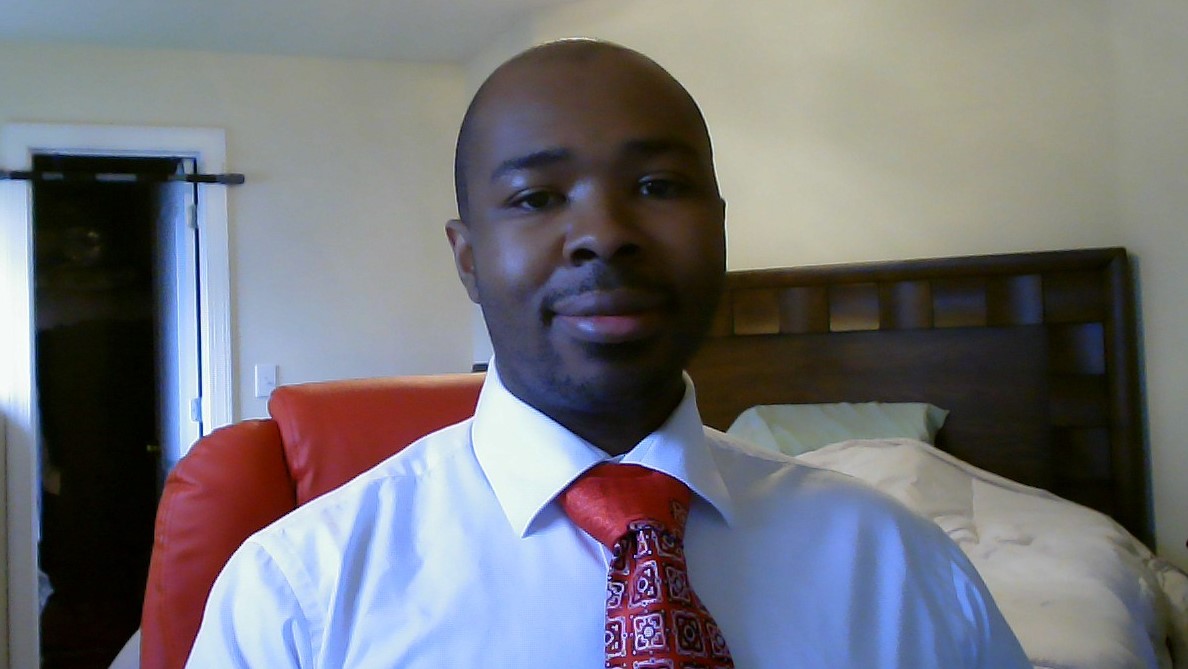
I have been coaching students to their best performance in math for seven years. I am fluent in all levels of math, primary, secondary, and freshman/sophomore university level. I am also fluent with the mathematics which one may find on the ACT, SAT, GRE, ASVAB, CLEP test and most standardized test. My background in Engineering also gives me a level of confidence with computer science and general sciences such as physics and chemistry. I have over a year of study in each myself. Overall, I have had much success working with students in various languages and levels of computer programming.
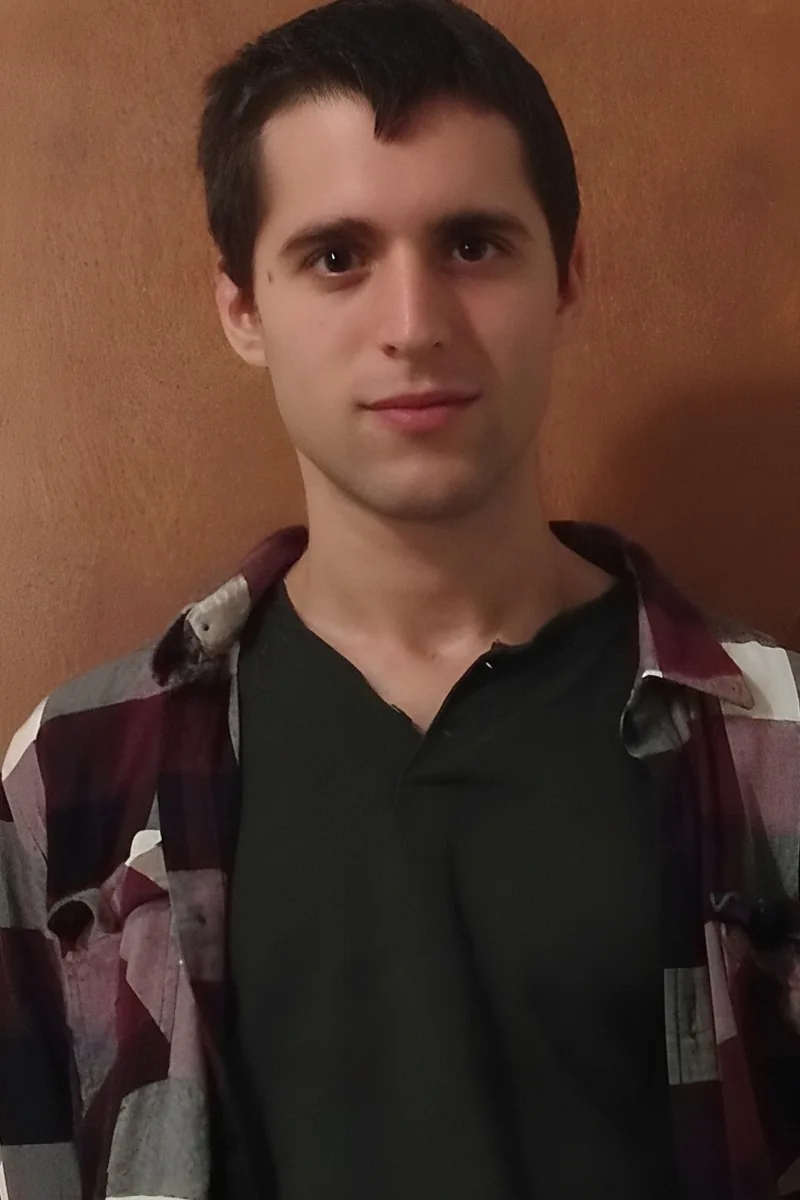
Growing up as one of seven kids, Austin started explaining fractions, decimals, and proportional reasoning to younger siblings around the kitchen table — years before earning his applied mathematics degree. That early experience gave him a knack for finding the analogy or example that makes a concept land for a younger learner. He's especially good at building number sense and comfort with multi-step word problems.
Ratios, proportional relationships, and integer operations tend to click faster when students see them applied to something tangible — and Linleyi builds mini real-world scenarios around each concept so the math feels purposeful. Her graduate training at Georgetown in a data-heavy STEM policy program means she's fluent in advanced math but also experienced at breaking ideas down to plain language for middle schoolers.
The jump from arithmetic to algebraic thinking trips up a lot of middle schoolers, especially around proportional reasoning and negative numbers. Christianna breaks these transitions into concrete steps, often using visual and spatial examples drawn from her architecture background to make abstract concepts feel intuitive.
Being in a BS/MD program at VCU means Roshni is constantly using the math foundations — ratios, proportions, data interpretation — that middle schoolers are just starting to formalize, so she teaches these topics with a clear sense of where they're actually heading. Her experience teaching kids as young as five through high school gave her a feel for adjusting explanations on the fly, especially when a student's gap turns out to be two grade levels back rather than in today's lesson. Rated 4.9 by families.
Getting fractions, ratios, and basic geometry right in middle school determines how smoothly everything from algebra to calculus goes later. Kyle is actively preparing for a high school teaching career, which means he thinks constantly about what foundational skills students need before they walk into an Algebra 1 classroom. He turns abstract concepts like proportional reasoning into concrete, step-by-step problem-solving.
From ratios and proportions to introductory geometry and basic statistics, middle school math covers a surprisingly wide range of topics in a short time. Sanam breaks each concept down using real-world examples from science and engineering — a natural fit given her biomedical engineering background — so students see the purpose behind the math they're learning.
Ratios, proportional reasoning, and early equation-solving are the skills that either set a student up for high school math success or leave them scrambling to catch up. Logan's Master's in Teaching focused specifically on secondary math education, so he understands not just the content but how to present it at the right level for middle schoolers who are building mathematical thinking for the first time.
Fractions, decimals, ratios, and early geometry can feel disconnected to a middle schooler unless someone ties them together into a bigger picture. Ying spent two years volunteering as a math tutor in high school and discovered she's especially good at slowing down, finding the exact step where confusion starts, and rebuilding understanding from there.
Fractions, ratios, and proportions click differently when a student sees *why* the math works instead of just following steps. Megan's cognitive science background at UVA gives her a toolkit for diagnosing exactly where a concept breaks down and rebuilding it using visuals, real-world examples, or whatever approach fits the learner. Rated 5.0 by students.
I am currently a lead preschool teacher. I received my Bachelor's in Psychology from VCU and am looking to return to school to further my education. While in college, I worked as a Supplemental Instruction leader, teaching general biology and anatomy. I have also worked in an after school program with elementary age children, but I have my fondest memories volunteering as a counselor for Camp Kesem. In my own experience, I loved school and now I love teaching even more at all age levels! I especially enjoy the challenge of getting creative to discover what approach and mediums work best for each student. I am available for in person as well as online tutoring.
Hi, I'm Sahnnee! I currently live in Virginia, and I am pursuing my Bachelor's in Computer Science at Vanderbilt. I have been tutoring for over sevens years, specifically in mathematics. I have the most experience with tutoring younger children, but I also started tutoring other college students in some coding languages like Java and C++ in my first year of university. I have always enjoyed tutoring, and I hope I can help you on your journey to reach your goals!
I'm passionate about helping others succeed and that is why I engaged in tutoring. With a Bachelor of Science degree in Computer Engineering from the University of Virginia and an MBA degree from Chicago Booth, I believe I bring a unique blend of perspectives and strategic thinking to the realm of tutoring. My journey as a tutor began during my own pursuit of excellence, as I prepared for standardized tests. I realized the pivotal role that skilled and passionate tutors can play in shaping students' academic success, and that is why I'm committed to paying forward the impact that tutoring had on my own educational journey by providing the best guidance I can provide to others. Having helped both high school students preparing for the SAT and adults tackling the GMAT, I've observed the transformational power of targeted instruction. What stands out for me is the engagement and focus that adult learners bring to their preparation. As a result, I find immense satisfaction in assisting them on their GMAT journey. I believe that understanding the individual needs of each student is paramount to tailoring effective teaching methods. I strive to imparting not just subject knowledge, but also study skills and problem-solving techniques that will serve students beyond the classroom. Subjects I tutor encompass a spectrum from mathematics, finance, business management and test-taking strategies. I'm excited to be a part of the Varsity Tutors community, and I look forward to working with you, students, to contribute my expertise and passion to guide you towards your goals.
The middle school math years pile on topics fast: fractions, decimals, ratios, basic geometry, and early equation-solving all compete for attention in the same semester. Samantha keeps things organized by showing how each topic links to the next, so students build momentum instead of feeling buried. Her structured approach to problem-solving turns scattered skills into real confidence.
The jump from arithmetic to early algebra trips up a lot of middle schoolers, especially when variables, ratios, and coordinate graphing all show up at once. Zeke keeps things concrete — using real examples and visual models — before moving into abstract notation. His 5.0 rating comes from making students feel capable rather than overwhelmed.
The jump from elementary arithmetic to middle school math — ratios, proportions, negative numbers, basic equation solving — trips up a lot of students who were doing fine before. Yashwant tackles each of these transitions by building on what a student already understands, using concrete examples before introducing notation. His approach keeps the material from feeling like a sudden leap.
Fractions, ratios, and proportions stop being confusing once a student sees how they connect to each other — and that's exactly how Shahad teaches middle school math. Her science-heavy coursework at VCU means she uses real examples from biology and data analysis to make abstract concepts feel concrete. Rated 4.9 by students.
The jump from arithmetic to middle school math trips up a lot of students, especially when fractions, decimals, and negative numbers all collide in the same problem. Shona's experience as a Teaching Assistant for College Algebra means she understands exactly which gaps in middle school concepts cause trouble later — and she addresses them now, before they compound.
Ratios, proportions, and early equation-solving are the building blocks for every math class that follows, so getting them right matters. Monika connects these middle school topics to tangible problems — like unit conversions in science or calculating percentages — so the material feels purposeful rather than arbitrary.
Fractions, decimals, ratios, and early equation-solving are the building blocks that determine how confident a student feels in every future math class. Palak explains these ideas with patience and multiple approaches, finding the angle that clicks for each learner. Her science background gives her a library of real-world examples — unit conversions, proportions in recipes, basic data interpretation — that make abstract math tangible.
The jump from elementary arithmetic to middle school math — ratios, proportional reasoning, negative numbers, early geometry — can shake a student's confidence fast. Ankitha creates space for questions and mistakes, walking through each problem type step by step until the logic behind it becomes second nature.
Fractions, ratios, and integer operations are the specific skills that either launch or stall a student's confidence in math for the rest of middle school. Jason has tutored these topics in both formal and informal settings since his own math-competition days, and his Stony Brook math training means he spots gaps in number sense quickly and addresses them directly.
Biology majors live in a world of ratios, unit conversions, and data tables — so Elderen's science training maps directly onto the quantitative skills middle schoolers are building when they work with fractions, proportions, and basic graphing. He's particularly effective at teaching students to slow down and organize multi-step problems on paper before jumping to a solution, a habit that pays off long before high school algebra arrives.
Hi there! I recently graduated from the University of Notre Dame with my Masters of Engineering in civil and environmental engineering. Before that, I got a B.S. in environmental science and a minor in music. I have tutored peers in the past in math and science, and have taught music lessons to kids of all ages. I understand how challenging STEM courses can be and will always try to tutor in a way that suits your learning style best!
The jump from elementary arithmetic to middle school math — ratios, proportions, negative numbers, basic geometry — is bigger than most people realize. Julian approaches each topic by building intuition first, then layering in the formal steps, so students understand *why* a procedure works before drilling it. His patience and engineering mindset make abstract ideas feel concrete.
Fractions, decimals, ratios, and proportional reasoning are the concepts that either click in middle school or quietly become obstacles for years. Andrew tackles these topics by tying them to tangible problems — scaling a recipe, calculating speed, splitting costs — so the math feels like a tool rather than an exercise. His 4.8 rating speaks to how well that practical approach lands with younger students.
The jump from elementary to middle school math often catches students off guard when fractions, decimals, and ratios suddenly appear in multi-step problems. Liza tailors her approach to each student's learning style, whether that means drawing visual models for proportional reasoning or building step-by-step problem-solving habits for expressions and equations. She's been tutoring K–8 math since 2018 and understands exactly where the common stumbling blocks are.
I am a student at the University of Virginia pursuing a degree in computer science through the college of engineering. I have been tutoring since my 10th grade of high school through volunteering as well self employed tutoring. I mainly tutor in math, specifically subjects from algebra to calculus. I am passionate about helping students grasp concepts in mathematics and excel in their courses. In my free time I enjoy playing sports, reading, and spending time with friends.
Jessica's economics minor means she spent college translating real-world scenarios into mathematical models — a skill that maps directly onto the kind of thinking middle schoolers are doing when they first encounter variables, expressions, and proportional relationships. Her 33 ACT composite speaks to across-the-board quantitative fluency, and she uses that comfort with numbers to demystify the transition from straightforward arithmetic into the more layered, multi-step reasoning that catches many students off guard in sixth and seventh grade.
Hi, I'm Jackson! I tutor Math, Reading, History, and Science and specialize in turning confusion into confidence. Whether you're catching up or aiming for the top, I'll build a strategy that works for you. Let's get to work book a session today!
Fractions, ratios, and proportional reasoning trip up a lot of middle schoolers because the problems start requiring multi-step thinking for the first time. Katherine breaks those problems into smaller logical pieces so students can see how each step connects to the next. Her public health background at UT Austin means she's comfortable pulling in real-world data examples that make math feel less abstract.
Hello, I currently work in an experimental quantum optics lab and will be enrolled in a quantum computing Ph.D. program at Rice University Fall 2026. I have been an employed tutor at my college (William and Mary) and during my high school career at the Governor's School at Innovation Park for 4 years. I struggled in my first physics class at George Mason University through my Governor's school as a junior in high school, but spent hours restructuring how I learned and approached problems to reach success! Physics and math are my true passions and I cannot wait to use the valuable lessons and strategies I learned to help and support you in your academic journey. William and Mary GPA - 3.95 B.S. in Physics (honors) - 4.0 770 on math SAT 5 on AP Calculus BC exam Experience with Pearson Physics textbook and Griffiths
Fractions, decimals, ratios, and early equation-solving are where a lot of middle schoolers start to decide whether they're "math people" or not. Katie has spent over three years tutoring kids ages 6–16 and knows how to keep that confidence alive — she mixes in interactive games and visual tools so concepts like proportional reasoning feel intuitive rather than intimidating.
The jump from arithmetic to pre-algebra is where a lot of middle schoolers start feeling lost — variables show up, fractions get more complex, and word problems demand new problem-solving strategies. Allen makes that transition smoother by building each new idea off what a student already knows, whether they're tackling proportional reasoning, integer operations, or their first taste of linear equations.
The jump from elementary arithmetic to middle school math introduces ratios, proportional reasoning, and basic equation-solving that can intimidate students if the logic isn't made visible. Ingrid uses concrete examples and real-world scenarios to demystify concepts like fractions-to-decimals conversion and simple inequalities. Her experience leading hands-on workshops for undergraduates translates naturally into clear, patient explanations for younger learners.
The jump from arithmetic to algebraic thinking is where middle school math gets genuinely hard — variables, proportional reasoning, and negative numbers all arrive at once. Talia has spent three years tutoring middle schoolers through exactly this transition, and she's skilled at spotting the specific conceptual gap that's causing a student to struggle rather than just re-explaining the procedure.
Ratios, proportions, and pre-algebraic thinking click faster when students can see them — and Mimi's background in visual and object-based learning means she naturally turns abstract middle school math concepts into something concrete. Her Harvard Ed.M. trained her to design lessons around how each learner actually thinks, not just how the textbook is organized.
Running a tutoring program at a charter middle school in Boston gave Liz a front-row seat to every common math struggle sixth through eighth graders face — from proportional reasoning to coordinate graphing to early work with expressions and equations. She pairs that classroom experience with a Master's in Special Education, which means she's practiced at adapting explanations on the fly for different learning styles. Rated 4.7 by students and families.
Until about age 16, Viktor thought math was a boring exercise in memorizing formulas — which means he understands exactly how a middle schooler feels staring down fractions, ratios, or integer operations. What changed his mind was a teacher who showed him why the rules work, and that's the approach he brings to every session. He unpacks each concept so students carry understanding forward instead of forgetting everything after the test.
Fractions, decimals, and proportional reasoning are the concepts that either build a student's confidence in math or quietly undermine it for years. Valerie's background spans subjects from classics to emergency medicine, and she channels that range into finding the analogy or explanation that makes a tricky middle school concept land for each learner.
Testimonials
Because the right Middle School Math tutor makes all the difference.
Average Session Rating – Based on 3.4M Learner Ratings
Other Virginia Beach Tutors
Related Math Tutors in Virginia Beach
Frequently Asked Questions
Middle school math programs in Virginia Beach use various textbooks and approaches, and tutors understand these different frameworks. When you connect with a tutor, they'll review your student's specific curriculum and teaching style to ensure personalized instruction builds on what's being taught in class—whether that's emphasizing procedural fluency, conceptual understanding, or both.
Middle school is when students transition from "how do I solve this?" to "why does this work?" This conceptual foundation is critical for success in algebra, geometry, and beyond. Tutors help students see the patterns and connections behind the procedures, so they're not just memorizing steps but truly understanding mathematical relationships—which leads to better problem-solving and retention.
Word problems and multi-step equations are common pain points because they require students to translate real-world scenarios into math and manage multiple operations. Tutors break down problem-solving strategies—like identifying what's being asked, organizing information, and checking work—so students build confidence tackling complex problems independently.
Showing work isn't just about getting the right answer—it reveals your student's thinking process and helps tutors identify where misconceptions happen. When tutors see the steps, they can address gaps in understanding rather than just correcting final answers, which builds stronger problem-solving skills and helps students prepare for standardized assessments.
Yes. Math anxiety is real and common, but personalized 1-on-1 instruction in a low-pressure environment helps students rebuild confidence. Tutors work at your student's pace, celebrate progress, and help them see that struggling with a concept doesn't mean they're "bad at math"—it just means they need a different explanation or approach.
Graphing and proofs require both procedural skill and conceptual reasoning. Tutors use visual strategies, real-world examples, and step-by-step guidance to help students understand coordinate planes, transformations, and logical reasoning—turning abstract concepts into concrete understanding that sticks.
The first session is an assessment and connection. Tutors will learn about your student's current level, specific challenges, learning style, and goals. They'll also explain their teaching approach and start building rapport so your student feels comfortable asking questions and making mistakes—both essential for learning.
Virginia Beach has two school districts serving over 65,000 students with varying classroom sizes and teaching approaches. Tutors work with students from both districts and understand the local curriculum standards, so they can provide targeted support whether your student needs help keeping up, getting ahead, or building foundational skills for high school math.
Let’s find your perfect tutor
Answer a few quick questions. We’ll recommend the right plan and match you with a top 5% tutor.