Award-Winning Physical Chemistry Tutors
serving Virginia Beach, VA
Physical Chemistry
Tutors in Virginia Beach
Private 1-on-1 tutoring, weekly live classes for academic support, test prep & enrichment, practice tests and diagnostics, and more to elevate grades and test scores.
Based on 3.4M Learner Ratings
UniversitiesSchools & Universities
DeliveredHours Delivered
ProficiencyGrowth in Proficiency
Who needs tutoring?
No obligation. Takes ~1 minute.
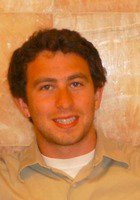
Pre-med coursework at Rutgers — graduating summa cum laude with a 4.0 — put Sam through the gauntlet of thermodynamics, kinetics, and quantum chemistry that p-chem demands, all while building the calculus fluency needed to survive dense derivations. He approaches topics like enthalpy, entropy, and rate laws by stripping each equation back to the physical scenario it models, making the leap from math to molecular meaning less painful.
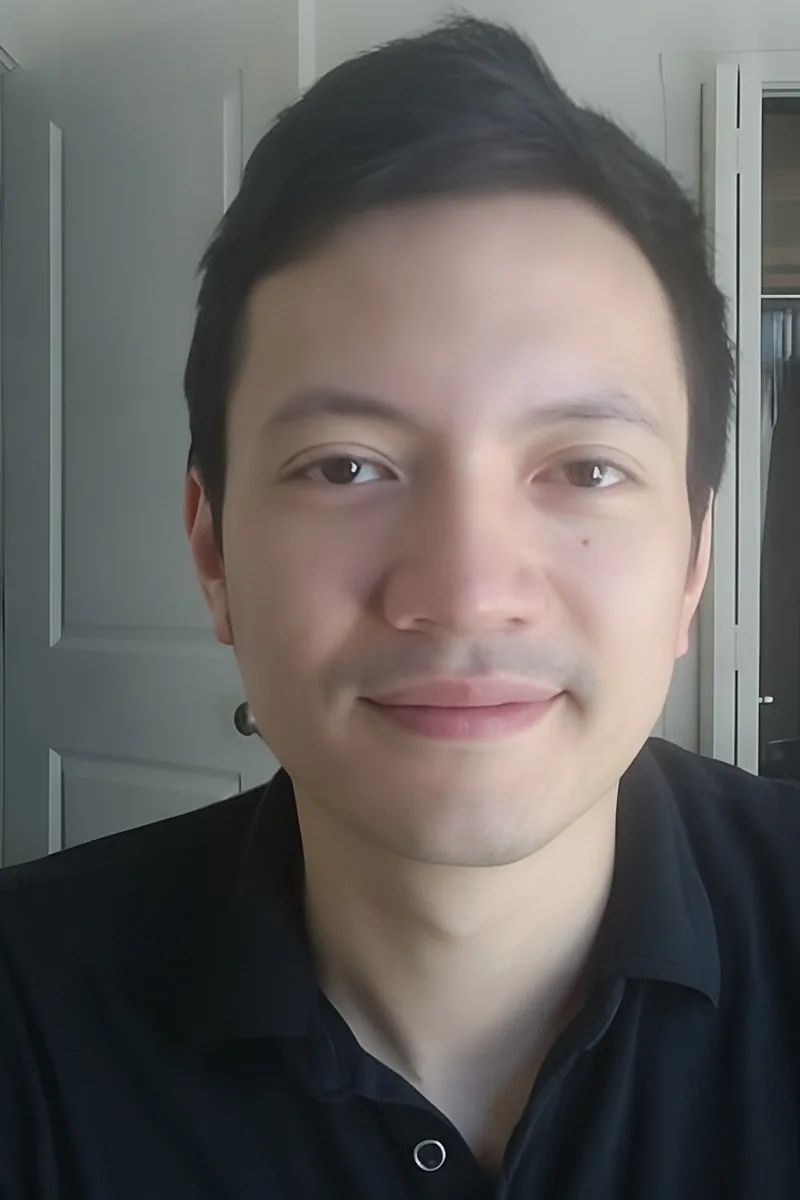
A physics degree gives Cory something many p-chem tutors lack — native comfort with the quantum mechanics and statistical mechanics that chemistry students often encounter for the first time in this course. He treats topics like wave functions, partition functions, and thermodynamic state variables as extensions of the physics he already thinks in, then builds the chemical context around them. Rated 4.9 by students.
Biology research through the American Museum of Natural History and pre-med coursework at Cornell gave Krishna hands-on exposure to the thermodynamic and kinetic principles that p-chem formalizes — energy changes in biological systems, reaction rates, equilibrium behavior. She uses that life-science grounding to make topics like Gibbs free energy and rate laws feel like descriptions of real molecular events rather than pure derivation exercises.
Mechanical engineering at Rice means Aleksey has been solving thermodynamic cycles, heat transfer problems, and differential equations for years — the exact mathematical toolkit that p-chem throws at students in a chemistry wrapper. He breaks down topics like entropy, enthalpy, and phase equilibria by treating them as engineering problems first, then layering in the molecular-level chemistry that gives each variable its meaning. Rated 5.0 by students.
Enric holds a PhD in Chemistry, which means p-chem wasn't just a course requirement — it was the foundation his entire research career was built on, from quantum mechanical modeling to thermodynamic analysis at the graduate level. He teaches the subject by slowing down at the exact calculus step where a derivation goes from followable to opaque, rebuilding the physical reasoning behind each manipulation before moving forward. Rated 5.0 by students.
Medical school at the Medical College of Wisconsin means Abrahim encounters p-chem's core concepts daily — reaction kinetics in pharmacology, thermodynamic energy balances in physiology, and the quantum mechanical principles behind spectroscopic diagnostics. His UCLA biology degree and 34 ACT demonstrate the mathematical fluency needed to work through derivations involving state functions, equilibrium constants, and entropy calculations without losing sight of what the chemistry actually describes. Rated 5.0 by students.
Pursuing a PhD in Analytical Chemistry at UIUC means Whitney spends her days immersed in the quantitative rigor that makes p-chem so demanding — thermodynamic derivations, kinetic modeling, and the statistical mechanics underlying instrumental techniques. She's currently TAing college-level chemistry courses, which keeps her sharp on exactly where students lose the thread in topics like Gibbs free energy, phase diagrams, and partition functions. That combination of active research and daily teaching gives her a practical read on which derivations need more physical intuition and which just need cleaner math.
Teaching high school chemistry daily means Kathleen regularly translates thermodynamic concepts like enthalpy, entropy, and equilibrium into language that clicks — a skill that carries directly into the more calculus-heavy treatment those same ideas get in a p-chem course. Her M.S.Ed from Penn and chemistry degree give her both the content depth and the instinct for spotting exactly where a derivation stops making sense to a student. Rated 5.0 by students.
A PhD in biophysical chemistry means Tom didn't just survive p-chem — he built a research career on it, working at the intersection of thermodynamics, quantum mechanics, and molecular behavior where the math has to be airtight. He treats the subject like a language students need to actively speak: drilling derivations and problem sets until manipulating a Maxwell relation or setting up a partition function becomes fluent rather than formulaic.
Environmental statistics at Rice required Alex to work extensively with the same calculus-heavy quantitative methods — differential equations, statistical modeling, multivariable analysis — that students encounter in thermodynamics and kinetics derivations throughout a p-chem sequence. His geography background adds a surprising edge: understanding energy balances and phase transitions in Earth systems translates directly to making sense of state functions and equilibrium in a chemistry context.
A PhD in chemistry means Justin didn't just pass p-chem — he lived in its formalism for years, from quantum mechanical models to statistical thermodynamics, and then kept using it through doctoral research. That depth shows when he teaches: he can trace a concept like chemical potential or a Maxwell relation back to the physical picture driving the math, catching the exact step where a student's understanding breaks down. Rated 5.0 by students.
Cornell's chemical engineering curriculum puts you through p-chem at an intense pace — Rahul graduated magna cum laude, which means he didn't just survive thermodynamics, quantum mechanics, and kinetics but internalized the reasoning behind each derivation. He pushes past rote symbol manipulation to make sure students can articulate why a particular state function applies or what a phase boundary physically represents. Rated 4.9 by students.
Testimonials
Because the right Physical Chemistry tutor makes all the difference.
Average Session Rating – Based on 3.4M Learner Ratings
Other Virginia Beach Tutors
Related Science Tutors in Virginia Beach
Frequently Asked Questions
Physical Chemistry combines abstract theoretical concepts with complex mathematical problem-solving, making it one of the most challenging chemistry courses. Students often struggle with visualizing molecular behavior at the quantum level, mastering thermodynamics and kinetics equations, and understanding how to apply these concepts to real laboratory experiments. Balancing the conceptual understanding with the mathematical rigor required is where most students hit a wall.
Your first session focuses on understanding your specific challenges—whether that's quantum mechanics, thermodynamics, kinetics, or exam preparation. Tutors will assess your current understanding of key concepts and identify gaps in foundational knowledge that might be holding you back. This helps create a personalized learning plan tailored to your course goals and learning style.
Expert tutors help you see how abstract concepts like entropy, enthalpy, and reaction rates directly apply to real chemical processes—from battery chemistry to drug metabolism to industrial catalysis. By working through practical examples and lab-based problems, you develop the scientific reasoning skills needed to move beyond memorization and truly understand why reactions behave the way they do. This deeper understanding makes both coursework and standardized exams more manageable.
Yes—tutors can help you interpret experimental results, understand the scientific method as it applies to physical chemistry, and connect your lab observations to the theoretical concepts you're learning in class. Whether you're struggling with data analysis, graphing results, or explaining why an experiment didn't produce expected outcomes, personalized instruction helps bridge the gap between theory and hands-on work.
Mathematics is fundamental to Physical Chemistry—you'll need calculus, algebra, and unit conversions throughout the course. Tutors work with you on both the mathematical techniques and the conceptual understanding behind them, so you're not just plugging numbers into formulas. This dual approach helps you solve complex problems confidently and understand what your answers actually mean.
Varsity Tutors connects you with expert tutors for students in Virginia Beach who specialize in Physical Chemistry and understand the specific curriculum and challenges you're facing. The matching process considers your learning style, schedule, and specific topics you need help with—whether that's exam prep, concept review, or ongoing course support throughout the semester.
Tutors help you identify which concepts you've mastered and which need more focus, then create targeted practice sessions using past exams, problem sets, and concept reviews. They teach you how to approach multi-step problems strategically, manage your time during exams, and recognize which equations and concepts apply to different problem types. This systematic preparation builds both confidence and competence.
Understanding concepts is far more important—memorizing formulas without understanding when and why to use them will limit you, especially on cumulative exams and in advanced courses. Tutors emphasize building conceptual understanding so you can derive or apply formulas appropriately, rather than simply memorizing them. This approach actually makes studying easier because you're learning fewer things deeply rather than many things superficially.
Let’s find your perfect tutor
Answer a few quick questions. We’ll recommend the right plan and match you with a top 5% tutor.