Award-Winning History Tutors
serving Fort Worth, TX
History
Tutors in Fort Worth
Private 1-on-1 tutoring, weekly live classes for academic support, test prep & enrichment, practice tests and diagnostics, and more to elevate grades and test scores.
Based on 3.4M Learner Ratings
UniversitiesSchools & Universities
DeliveredHours Delivered
ProficiencyGrowth in Proficiency
Who needs tutoring?
No obligation. Takes ~1 minute.
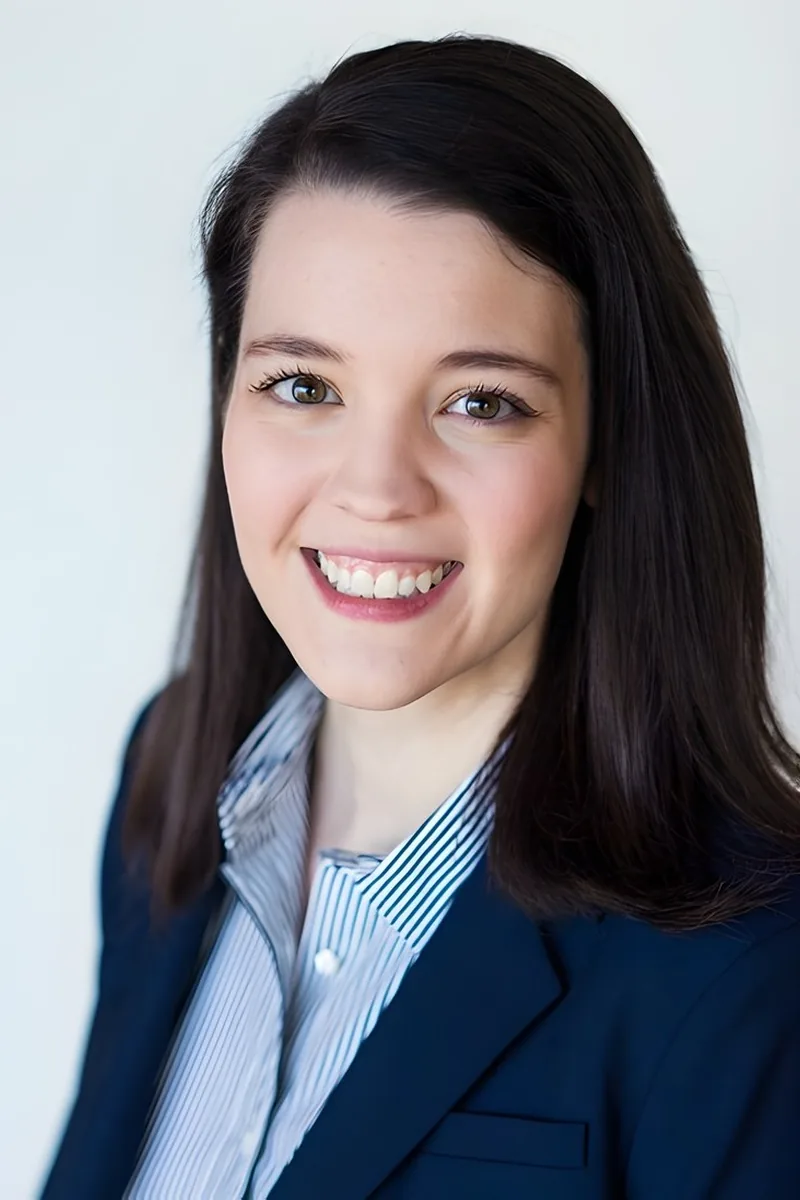
Chloe's Master's in Global Policy Studies at UT Austin's LBJ School required deep engagement with political history, international institutions, and the economic forces behind major world events. That policy lens means she teaches history as interconnected cause-and-effect chains rather than isolated dates and names. Students learn to read primary sources critically and build document-based arguments that hold up under scrutiny.

Studying history at Rice means Nathan spends his days doing exactly what a good history tutor should — reading primary sources, constructing arguments from evidence, and questioning the narratives textbooks present as settled. He teaches students to think like historians rather than memorizers, whether that means dissecting a political cartoon or building a thesis for a document-based essay.
Nadja's corporate work in organizational development gives her an unusual lens on history: she reads political and economic shifts the way a strategist reads a market. She teaches students to analyze primary sources, trace cause-and-effect chains, and write document-based essays that argue rather than summarize.
Petra's self-described passion for history is grounded in firsthand experience: she grew up in the Czech Republic during the post-Communist era and later lived in Italy, giving her a lived understanding of European political and cultural shifts. She teaches students to analyze primary sources and connect events across regions rather than treating history as a list of dates to memorize.
While history isn't Nate's primary field, his analytical training as an engineer translates well to evaluating cause-and-effect relationships and constructing evidence-based arguments from source material. He's particularly useful for students who struggle with essay-based history assignments and need a structured way to organize their thinking.
I am qualified to tutor many subjects, my favorite subject by far is math, specifically calculus. Math is a subject almost universally hated, and I believe that is mainly due to the narrow way in which it is taught. I have ADHD, and I often don't understand things the first time they are explained to me, meaning over the years I have had to figure out different ways of looking at information. Oftentimes, all a student needs is for something to be explained in a different way, and I love watching people finally understand a concept. Everyone learns differently, but everyone can learn.
Rudy's graduate work in education gives him a front-row seat to how historical thinking is actually taught and assessed in secondary classrooms — what teachers expect in a DBQ thesis, how rubrics weigh analysis versus recall, and where students most often lose points. His math background adds an unexpected edge: he treats historical arguments like proofs, insisting on clear logical structure where every claim connects back to specific evidence.
Teaching in Dallas ISD means Adam works with real students navigating real history curricula every day — he knows exactly where students get stuck on document-based questions and how to turn a vague essay response into a sharp, thesis-driven argument. His communication degree sharpened his ability to break down how rhetoric and persuasion function in historical contexts, from wartime speeches to political pamphlets. Rated 4.9 by students.
Reading history well means evaluating competing narratives, not just memorizing dates and treaties. Nathania approaches historical topics by teaching students to interrogate primary sources and identify bias — skills her psychology training sharpened. Whether it's analyzing the causes of a revolution or writing a document-based essay, she emphasizes building arguments from evidence.
Though Adam's degrees are in English and Creative Writing, his doctoral research in American Literature sits squarely at the intersection of literature and history — examining how cultural movements, political events, and social forces shape the texts of a given era. He teaches students to build evidence-based historical arguments with the same analytical rigor he applies to literary scholarship.
Pathology training is essentially applied history — tracing how a disease progressed, what conditions allowed it to spread, and which interventions changed the outcome. Salman brings that same diagnostic reasoning to historical analysis, teaching students to work backward from major events to uncover the political, economic, and social conditions that made them inevitable. Rated 4.8 by students.
Alexis approaches history the way her Georgetown Government program demands: by treating every event as an argument with evidence, context, and competing interpretations. She teaches students to move past memorizing dates and instead analyze primary sources, identify causation, and build thesis-driven responses that hold up under scrutiny.
Too many students treat history as a list of dates and names to memorize, then struggle when an essay prompt asks them to argue a thesis. Samuel approaches history as a discipline built on evidence and interpretation, teaching students to read primary sources critically and construct arguments that hold up. His political science background means he's especially sharp on questions of governance, revolution, and institutional change.
Public health coursework is essentially applied history — Richa's undergraduate studies required tracing how epidemics, sanitation policy, and healthcare access evolved across decades and continents, which means she reads historical events through the lens of their real-world consequences for communities. That background makes her especially effective at teaching students to connect social, political, and economic causes rather than treating each event as an isolated fact to memorize.
Nathan treats history as a discipline built on evidence and interpretation, not memorization of dates. His chemistry background at TCU sharpened his ability to read sources critically and build logical arguments — skills he applies when teaching students to analyze primary documents, trace cause-and-effect chains, and write persuasive historical essays.
Reading history well means learning to question sources — who wrote this, why, and what's missing. Tanner's certificate in International Studies from TCU gave him practice analyzing political and cultural contexts across regions, and he teaches students to build document-based arguments rather than just memorize dates and events.
Too many students think history is a list of dates to memorize, and Sara's job is to change that. She teaches cause-and-effect reasoning — why the fall of one empire created conditions for the next, or how economic pressures drove social movements — so students can actually explain historical change instead of just reciting it. Her experience earning top scores across multiple AP social studies exams means she knows how to turn raw content knowledge into analytical thinking.
Hi y'all! I hold my Master of Science in Psychology of Sport and my Bachelor of Science in both Psychology and Applied Human and Sport Physiology. I have many years of tutoring under my belt, working with people of all levels from elementary school through college in hard science subjects (Biology, Chemistry, and Mathematics), a few social sciences (History, Psychology, Economics), and language arts. When not tutoring, I love playing soccer and I even coach a youth team. I love encouraging students to learn, grow, and think critically for themselves.
Medical school at Baylor means Michelle spends her days parsing case studies — weighing evidence, identifying what led to what, and building an argument for a diagnosis. That same diagnostic thinking applies directly to history essays and DBQs, where she teaches students to trace causal chains through primary sources rather than summarize events in order. Her biochemistry background at Rice also built the kind of close-reading stamina that dense historical texts demand.
Serving on admissions committees at both Rice and Baylor College of Medicine trained Sugi to evaluate how people construct narratives from evidence — the same skill that separates strong history students from ones who just recite facts. Her cognitive science background adds a layer most history tutors lack: she teaches students to recognize how memory, perception, and bias shaped the way historical actors interpreted their own moments. Rated 5.0 by students.
While history isn't Bidyut's primary discipline, his analytical training in engineering translates well to evaluating cause-and-effect chains and constructing evidence-based arguments from primary sources. He treats historical questions the way he treats technical problems: define the variables, weigh the evidence, and build a clear narrative from the data.
Memorizing dates and names only gets a student so far; the real challenge in history is constructing cause-and-effect arguments from messy, contradictory evidence. Maggie's economics training sharpened her ability to analyze systems and incentives, which translates directly into teaching students how to explain historical change rather than just describe it.
Pre-med coursework at Cornell meant Jonathan spent years reading dense scientific literature and distilling it into clear arguments — a habit that translates directly to analyzing primary sources and writing thesis-driven history essays. His human biology and human development training also gives him a useful lens for topics like public health movements, demographic shifts, and the social forces behind major historical turning points. Rated 4.9 by students.
Studying game theory and health policy at Stanford gave Jake a framework for understanding history as a series of strategic decisions made under constraints — not just a list of names and battles. He teaches students to analyze cause and effect, evaluate competing perspectives, and write arguments grounded in evidence rather than generalizations.
Mackenzie approaches history as a discipline built on argument and evidence, not just dates and names. Her economics background at Northwestern trained her to analyze cause-and-effect chains — the same skill that makes sense of everything from colonial trade networks to Cold War policy decisions. Rated 4.8 by students, she's particularly strong at teaching how to write thesis-driven historical essays.
Elena treats history as an exercise in evidence-based reasoning, not a list of names and dates to memorize. Her training at Washington University and SMU — spanning ancient archaeology through modern political history — means she can move fluidly between eras while teaching students to ask the questions real historians ask: who created this source, why, and what does it leave out?
Studying economics gave Paul a lens most history tutors don't have — he can explain why the Panic of 1893 reshaped American politics or how postwar monetary policy fueled the Cold War, connecting cause and effect across decades. He teaches students to read historical events as arguments with stakes, evidence, and competing interpretations rather than as a list of dates to memorize.
As a Mathematical Economic Analysis and Computer Science major at Rice, Rishi is trained to model systems where multiple variables interact — which is exactly what's happening when students need to explain how economic conditions, political tensions, and social movements converged to produce a historical turning point. He teaches essay and DBQ writing as structured problem-solving: identify the driving forces, rank them by significance, and build an argument that connects causes to outcomes. His 35 ACT reflects the kind of analytical reading that history coursework rewards.
Pre-med coursework at Rice means Tegan spends most of her time in the sciences, but that training sharpened a skill history courses quietly demand: reading large volumes of dense material and distilling it into a coherent argument under pressure. She brings that same disciplined approach to teaching students how to tackle DBQs and essay prompts, walking them through how to select evidence and build a thesis rather than retell a story. Rated 4.9 by students.
College essays taught William something applicable to history: how to build a compelling argument from specific, well-chosen evidence under tight constraints. As a CS and math student at Rice, he brings a programmer's instinct for logical structure to historical writing — outlining causal chains and organizing document-based responses the way he'd architect clean code. He's best suited for students who need help turning what they know into clearly structured essays and exam answers.
A biophysics major at Rice, Aadith isn't the obvious pick for history — but his science training translates surprisingly well when it comes to structuring an argument and weighing evidence critically. He teaches students to break down essay prompts and build responses that tie specific events to larger themes, rather than listing everything they remember. His 1590 SAT score speaks to the kind of close reading and reasoning that history coursework demands.
Jessy approaches history as a discipline built on reading and argumentation rather than memorization of dates. She teaches students to evaluate primary sources, identify cause-and-effect relationships, and write document-based responses that demonstrate genuine historical thinking. Her broad background in both sciences and humanities at Rice gives her a knack for making connections across time periods.
Treating history as an argument rather than a list of dates changes how students engage with the material. Vy teaches students to evaluate primary sources, identify bias, and build document-based essays that demonstrate genuine historical reasoning. Her experience tutoring in under-resourced schools gave her a knack for making dense material accessible without dumbing it down.
Cognitive science at Rice trained Adam to ask how people think, perceive, and make decisions — questions that turn out to be the interesting ones in history, too, especially when analyzing why movements gained traction or why leaders miscalculated. He brings that framework to document analysis and essay writing, pushing students to ground their arguments in how ideas actually spread through populations rather than just narrating a sequence of events.
Sajel studies social policy analysis at Rice, which means she spends most of her coursework examining how historical forces — migration, public health crises, political movements — shape the policies we live under today. That background makes her especially effective at teaching students to analyze cause and effect, evaluate primary sources, and write document-based essays. She treats history as an argument to be constructed, not a list of dates to memorize.
Patricia's environmental science background actually pairs well with history — understanding how societies interact with landscapes, resources, and ecological change is central to topics like colonialism, industrialization, and westward expansion. She teaches students to trace those connections in their writing, turning broad historical events into tightly argued essays grounded in specific evidence.
Applied mathematics at Rice trains you to model complex systems by isolating the variables that actually matter — a habit Alexander carries into history, where he teaches students to cut through surface-level narratives and build causal arguments about why events unfolded the way they did. His mathematical economics coursework, heavy on political economy and institutional analysis, gives him concrete frameworks for topics like industrialization, trade conflicts, and policy-driven social change that go well beyond memorizing dates.
As a premed psychology student at Rice, Aditi constantly encounters the historical roots of modern science — how eugenics shaped public policy, how wartime funding redirected medical research, how cultural attitudes toward mental illness evolved across centuries. She brings that science-and-society perspective into history tutoring, teaching students to build cause-and-effect arguments that connect social conditions to political outcomes on essays and DBQs. Rated 4.8 by students.
An English major at Carleton College, Meagen reads historical texts the way she reads literature — closely, looking for how authors construct arguments and what assumptions sit beneath the surface. That close-reading instinct is exactly what document-based questions and history essays reward, since the real task is interpreting sources and building a thesis, not recalling dates. Rated 5.0 by students.
Carter approaches history as a discipline built on argument and evidence, not memorization of dates — a perspective sharpened by studying economics and philosophy at Brown, where primary-source analysis was central to coursework. He teaches students to evaluate competing interpretations, contextualize events within broader economic and political systems, and write thesis-driven essays that hold up under scrutiny.
Testimonials
Because the right History tutor makes all the difference.
Average Session Rating – Based on 3.4M Learner Ratings
Nearby History Tutors
Other Fort Worth Tutors
Related Social Studies Tutors in Fort Worth
Frequently Asked Questions
Many students struggle with memorizing dates and names without understanding the broader context and cause-and-effect relationships between events. Others find it difficult to analyze primary sources, construct arguments based on evidence, or connect historical concepts to modern issues. Personalized tutoring helps students move beyond memorization by building critical thinking skills and creating meaningful connections between historical events and themes.
In a typical Fort Worth classroom with a 15:1 student-teacher ratio, teachers must pace lessons for the whole group, which can leave some students behind or unchallenged. Personalized 1-on-1 instruction allows tutors to adapt pacing, focus on your specific gaps, and use teaching methods that match your learning style—whether that's through document analysis, discussion, timelines, or visual connections. This targeted approach helps students develop deeper understanding and stronger analytical skills in less time.
Tutors are familiar with Texas Essential Knowledge and Skills (TEKS) standards and the specific history curriculum used across Fort Worth's 12 school districts. Whether you're studying state history, U.S. history, world history, or AP/IB courses, tutors can align lessons with your school's pacing and learning objectives. They can also help you prepare for state assessments and standardized tests that measure historical thinking and content knowledge.
During an initial session, a tutor will assess your current understanding of history concepts, identify specific areas where you need support, and learn about your learning preferences and goals. Whether you're struggling with essay writing, primary source analysis, chronological thinking, or specific time periods, the tutor will create a personalized plan. Subsequent sessions build on this foundation with targeted instruction and practice.
Tutors work with students across all grade levels, from elementary social studies through advanced high school courses like AP U.S. History, AP European History, AP World History, and IB History. They also support middle school Texas History and U.S. History courses. Whether you need help with foundational concepts or advanced historical analysis and argumentation, Varsity Tutors connects you with tutors who specialize in your specific course and grade level.
Beyond content knowledge, personalized History tutoring develops critical thinking, document analysis, essay writing, and argumentation skills. Students learn to evaluate sources for bias and reliability, construct evidence-based arguments, recognize historical patterns and causation, and communicate complex ideas clearly. These skills transfer to other subjects and are essential for college readiness and success in history-related fields.
Yes. Tutors help students prepare for unit tests, state assessments, AP exams, IB exams, SAT History Subject Tests, and other standardized assessments. They focus on test-taking strategies, identifying key concepts likely to appear, practicing with released exam questions, and strengthening weak areas. Personalized preparation means focusing on the specific content and question types that challenge you most.
Connect with Varsity Tutors by sharing your grade level, specific History course, and what you'd like to improve—whether that's essay writing, exam preparation, or understanding difficult concepts. You'll get matched with a tutor who fits your needs and schedule. Most students see noticeable improvement in understanding and confidence within a few sessions of personalized instruction.
Let’s find your perfect tutor
Answer a few quick questions. We’ll recommend the right plan and match you with a top 5% tutor.