Award-Winning SAT Tutors
serving Fort Worth, TX
SAT
Tutors in Fort Worth
Private 1-on-1 tutoring, weekly live classes for academic support, test prep & enrichment, practice tests and diagnostics, and more to elevate grades and test scores.
Based on 3.4M Learner Ratings
UniversitiesSchools & Universities
DeliveredHours Delivered
ProficiencyGrowth in Proficiency
Who will be getting tutoring?
No obligation. Takes ~1 minute.
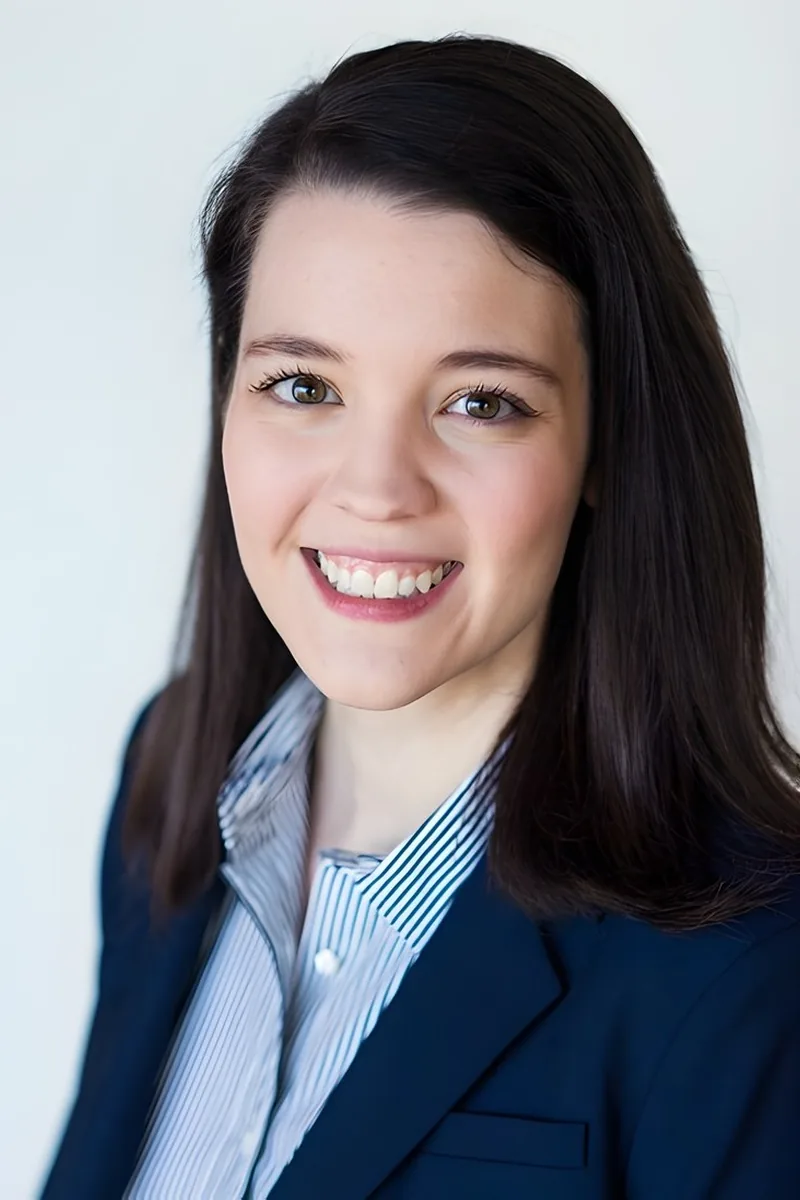
Comparative literature trains you to read closely and argue precisely — two skills that map directly onto the SAT's evidence-based reading and writing sections, where Chloe (1540 SAT, rated 5.0) is especially strong. Her linguistics minor adds a structural understanding of grammar that turns the Writing and Language questions into pattern-matching rather than guesswork. She also covers the math side, drawing on the quantitative reasoning she sharpened during her policy studies at UT Austin.

Teaching full-time in Dallas ISD means Adam sees firsthand which skills students actually struggle to transfer to test day — especially translating classroom algebra into SAT math under time pressure and applying grammar rules to the Writing and Language section's rapid-fire editing format. He scored a 1500 on the SAT himself and uses that experience to build section-specific pacing strategies rather than generic practice. Rated 4.9 by students.
As a working engineer who scored a 1490 on the SAT, Nate knows exactly how the math section's algebra, data analysis, and word-problem questions are built — and he teaches students to spot the fastest path to each answer rather than grinding through every calculation. His engineering sciences training also sharpened the kind of precise, evidence-based reading that pays off on the verbal sections. Rated 5.0 by students.
Having the oldest-sibling instinct for breaking things down simply, Nathan pairs that with a 1530 SAT score and a historian's knack for close reading — particularly useful on the evidence-based questions where students need to trace an author's argument across multiple paragraphs. He treats the Writing and Language section like editing a research paper, teaching the grammar and rhetoric rules as logical patterns rather than arbitrary conventions. Rated 5.0 by students.
Psychology majors learn to read dense, argument-driven research papers — exactly the skill that makes SAT evidence-based reading questions click. Nathania pairs that analytical reading habit with a 1440 SAT score and deep experience in grammar and essay writing, giving her strong command of both the Reading and Writing sections. She teaches students to trace an author's reasoning through a passage and match it to the right supporting evidence under time pressure.
Scoring a 1430 on the SAT herself, Anna knows the test's quirks — like how the no-calculator math section rewards algebraic reasoning over brute-force computation, and how evidence-based reading questions always have one answer defensible by the text. Her business background gives her a practical, strategic angle on time management and question triage that keeps students from burning minutes on low-value problems. Rated 4.8 by students.
Scoring a 1410 on the SAT while balancing a double major in Government and English at Georgetown, Alexis knows how to break down both sides of the exam — the evidence-based reading passages and the grammar and rhetoric questions that trip up even strong writers. She teaches specific strategies for pacing, eliminating answer choices, and decoding the SAT's particular style of asking about passage structure and author purpose.
Nathan scored a 1410 on the SAT and brings a chemistry major's precision to breaking down both the math and evidence-based reading sections. He zeroes in on the specific question types that trip students up most — like command-of-evidence pairs and no-calculator data analysis — and builds repeatable strategies for each one.
Scoring a 1410 on the SAT gave Richa more than a strong result — it gave her a repeatable system for tackling reading passages by argument structure and eliminating math answer choices through back-solving and estimation. Now a grad student in biomedical sciences, she breaks the test into learnable patterns so students stop second-guessing themselves on test day. Rated 4.6 by students.
What makes John effective for SAT prep is that he teaches both halves of the exam with equal fluency — his English and drama training sharpens his approach to passage analysis and evidence-based reading, while his math and physics background means he handles the algebra, data interpretation, and problem-solving sections without switching gears. He scored a 1420 on the SAT himself and holds a perfect 36 ACT composite, so he knows how standardized tests are constructed and where they try to trip students up. Rated 4.9 by students, he builds pacing and elimination strategies tailored to each section's specific traps.
Second-year medical school at Baylor means Michelle lives in the world of high-stakes, timed exams — and she applies that same strategic discipline to SAT prep, where she scored a 1570. Her biochemistry training at Rice sharpens the data-interpretation and graph-reading questions on the Math section, while her science-heavy reading background translates into efficient passage analysis on the Evidence-Based Reading side.
Stanford med student with a perfect 1600 SAT, Maggie knows the test inside out — but what sets her apart is a dual background in economics and molecular biology that gives her genuine fluency on both sides of the exam, from data-heavy math questions to dense science passages in the Reading section. She pinpoints where each student is leaking points and builds targeted drills around those specific question types rather than grinding through full-length practice tests. Rated 5.0 by students.
Cornell's Human Biology program forced Jonathan to master the same skill the SAT rewards most — pulling precise conclusions from dense, data-heavy passages under time pressure. He scored a 1550 and now teaches students to apply that same analytical discipline across both sections, from untangling no-calculator algebra to spotting the rhetorical shifts that drive evidence-based reading questions. Rated 4.9 by students.
Most SAT points are lost not on hard questions but on avoidable mistakes — misread word problems in math, rushing through evidence-based reading pairs, or second-guessing grammar corrections that were right the first time. Daniel scored a 1570 and built his approach around identifying those leak points, using the systematic thinking from his mechanical engineering training to turn each section into a repeatable process. His strength across both math and verbal means students get a single, consistent strategy for the full exam.
Public health coursework at UT Austin means Eisha spends her days interpreting research data and dissecting dense scientific passages — exactly the skills that show up across SAT Reading evidence questions and Math data analysis problems. She scored a 1550 on the SAT herself and uses that experience to teach students specific timing strategies and answer-elimination techniques section by section. Rated 5.0 by students.
Rice's premed neuroscience track demands the same blend of analytical reading and quantitative precision that the SAT rewards — Aditi lives in both worlds daily. She scored a 1570 and uses that experience to teach students how to spot the grammar logic behind Writing and Language traps and how to translate dense word problems into clean algebra. Rated 4.8 by students.
Teaching game theory to advanced middle schoolers in Hong Kong gave Carter a knack for making structured, logical thinking feel intuitive — exactly what the SAT rewards across both its math and evidence-based reading sections. His economics training at Brown sharpened his ability to interpret data, spot patterns in arguments, and work efficiently under constraints, all skills he now applies to building section-specific strategies. He scored a 1570 on the SAT and holds a 5.0 tutoring rating.
Having worked as a teaching assistant in calculus and tutored peers through differential equations, Kavitya knows exactly where math-heavy SAT questions try to trip students up — especially on multi-step algebra and data analysis problems that reward efficiency over brute force. She scored a 1550 and built her own set of time-saving techniques for both sections, which she now teaches alongside targeted gap-filling for students whose fundamentals need shoring up. Rated 5.0 by students.
What sets Mingee apart for SAT prep is genuine fluency across both halves of the exam — her biological and physical sciences degree sharpens the data interpretation and algebra-heavy math questions, while her experience teaching literature, essay editing, and grammar gives her real command of the Evidence-Based Reading and Writing sections. She scored a 1570, and that near-perfect composite came from treating each section as its own skill set rather than relying on one strength to carry the other. Rated 5.0 by students.
What makes Miguel effective for SAT prep is that he thinks in both languages the test speaks — his dual Computer Science and English degree means the math-to-verbal gear shift that trips up most students is something he navigates naturally. He scored a 1550 and teaches students to spot the structural patterns behind both the algebra-heavy math questions and the evidence-based reading pairs. Rated 4.9 by students.
Most SAT prep treats math and verbal as two separate worlds, but Alexander's applied mathematics training at Rice taught him that problem-solving and careful reading are the same skill — translating messy information into clean structure. He scored a 1580 and applies that unified approach to both sections, teaching students to decode word problems and evidence-based reading questions using the same logical framework. His double major in Mathematical Economics means the data interpretation and graph-analysis questions are especially in his wheelhouse.
Pure math PhD students don't usually tutor the SAT, but Jacob's graduate-level training means the entire math section feels almost trivially structured to him — he can show students exactly why each algebra, data analysis, or passport-to-advanced-math question works the way it does. His 1550 SAT score and 5.0 tutoring rating back that up, and his writing and literature background lets him coach the Reading and Writing sections with the same rigor he brings to the quantitative side.
Before starting medical school, Hanna spent a year teaching fourth grade in Houston ISD — an experience that sharpened her ability to explain concepts from scratch, which she now applies to SAT prep across both the math and verbal sections. Her 1550 SAT score and NYU finance degree give her particular fluency with the algebra, data analysis, and word-problem translation that dominate the Math section, while her premed reading load built the close-reading stamina the Evidence-Based Reading questions demand.
Rakhi's applied math degree means the SAT's algebra, advanced math, and data analysis questions are her home turf — she teaches students to spot the fastest solution path rather than grinding through every calculation. Her 1550 SAT score backs up a full-test approach that extends to the verbal side, where she applies the same structured, elimination-based reasoning to evidence and grammar questions. Rated 4.8 by students.
As a BS/MD student balancing neuroscience and English coursework at Texas A&M, Meghana lives in both halves of the SAT daily — the analytical reasoning that drives the Math section and the close-reading precision that unlocks Evidence-Based Reading and Writing questions. She scored a 1570 and uses that experience to teach students how to spot the grammar traps and algebraic shortcuts that separate good scores from great ones. Rated 4.8 by students.
What separates a good SAT score from a great one is often the ability to move fluidly between reading comprehension and quantitative reasoning within the same testing window — and Rosemarie's IT background paired with her strength in literature and essay writing gives her natural command of both sides. She scored a 1550 and teaches students the specific pacing and elimination techniques that work across all sections, from grammar traps in Writing and Language to data-heavy word problems in Math. Rated 4.9 by students.
Rice University's biophysics and biochemistry curriculum demands the same kind of precise, timed problem-solving that the SAT rewards — and Aadith scored a 1590 to prove it translates. He teaches the math sections by connecting algebraic and data-analysis questions back to the quantitative reasoning he uses daily in his coursework, while his science-heavy reading load sharpens his approach to evidence-based passage questions where students need to move quickly without sacrificing accuracy.
Students who dread the SAT Math section tend to overthink multi-step problems — Howard teaches them to spot the underlying algebra or geometry pattern quickly, a skill he sharpened through his chemical engineering coursework at UT Austin. He scored a 1550 on the SAT and knows exactly which shortcuts work under time pressure and which ones backfire. His experience reviewing college application essays also means he can coach the Reading and Writing sections with an editor's eye for argument structure and grammar traps.
Scoring 1510 on the SAT while carrying a demanding pre-med course load at Texas A&M, Enoch knows how to study strategically — breaking down reading passages by argument structure and tackling math sections with process-of-elimination techniques that save time on test day. His science-heavy background is especially useful for the data-interpretation questions that trip up many students. Rated 4.9 by students.
Having navigated the IB program's rigorous exams in high school and then a biology degree at Texas A&M, Kinjal knows what it takes to perform under timed, high-stakes testing conditions — and she applies that experience directly to SAT prep. She teaches students to spot the recurring algebra and data-analysis patterns in the Math section while building a systematic approach to evidence-based reading questions. Her 1550 SAT score and 5.0 tutoring rating back up the strategies she brings to test day.
Scoring a 1510 on the SAT while balancing a rigorous Northwestern science curriculum, Mackenzie knows how to study strategically under pressure — and she teaches that same efficiency to her students. She breaks the exam into manageable patterns, from evidence-based reading questions to no-calculator math traps, so test day feels like familiar territory. Rated 4.8 by students.
Karen scored a 1550 on the SAT and teaches across both sides of the exam — she covers the algebra and data analysis on the Math section and the grammar and evidence-based reasoning on the Reading and Writing side, drawing on her broad background in health sciences, literature, and writing. Her approach emphasizes recognizing the repeatable question structures the SAT relies on, so students walk into test day with a clear plan for each section rather than hoping for the best.
Biology majors don't always make obvious SAT tutors, but Harsh's 1520 score came from the same disciplined, methodical approach he applies to science — treating each section like a system to decode rather than a test to survive. He teaches students to spot the SAT's recurring math patterns and to read evidence-based passages the way a scientist reads a study: claim first, then supporting data. His spot in UT Austin's Health Science Scholars Honors program reflects the kind of analytical rigor that translates well to test strategy.
Patricia's 1580 SAT score came from the same cross-disciplinary strengths she now brings to prep sessions — environmental science training that sharpened her data interpretation and graph-reading skills for the Math section, plus deep reading and essay-writing experience that carries directly into Evidence-Based Reading and Writing. She teaches students to spot the grammar and rhetoric patterns the Writing section recycles and to translate word problems into equations quickly under time pressure.
Socratic questioning is Sarah's go-to method for SAT prep — instead of handing students a formula, she asks the questions that lead them to spot the pattern themselves, whether it's an algebra trap in the Math section or a misread evidence pair in Reading. Her 1580 SAT score and biochemistry training at Trinity University mean she's equally comfortable coaching the quantitative and verbal sides of the exam without switching gears.
What sets Sandra apart for SAT prep is genuine full-exam fluency — her computer science degree sharpens the algorithmic thinking behind the Math section, while her extensive work in writing and essay editing gives her real command of the Reading and Writing portions. She scored a perfect 1600 and teaches students the specific decision-making shortcuts that eliminate wasted time on each question type. Rated 5.0 by students.
Rice University's neuroscience curriculum trains students to digest dense research papers and extract data under pressure — exactly the skills Brett applies to SAT prep, where he teaches students to attack evidence-based reading questions and interpret graphs on the math section with the same systematic approach. He scored a 1550 on the SAT and holds a 5.0 tutoring rating, backing up his strategies with results.
Rice University's Texas Academy of Mathematics and Science admits students who finish high school early through college-level coursework — Michael was one of them, completing two years of university credits before most students take the SAT. That accelerated math and science background, paired with a 1560 SAT score, means he teaches the exam's trickier algebra and data-analysis problems from genuine fluency rather than memorized shortcuts. He also brings strong verbal section strategy, drawing on his writing and literature experience to unpack evidence-based reading questions.
Test anxiety on timed exams is real, and Kendall — who scored a 1580 on the SAT — developed specific pacing and elimination strategies to manage it, techniques she now passes on to students dealing with the same pressure. She covers both sides of the exam, using her strong English and writing background to unpack evidence-based reading questions and her math fluency to tackle algebra and data analysis. Rated 4.9 by students.
Marc's 1590 SAT sits in the 99th percentile, but what makes him useful as a prep tutor is the combination behind it — he's a biomedical engineering and computer science double major at UT Austin, so the math section is second nature, and his college essay and literature tutoring shows he's equally comfortable on the verbal side. He teaches students to spot the structural patterns in both Reading passages and no-calculator algebra problems that make hard questions feel routine.
Testimonials
Because the right SAT tutor makes all the difference.
Average Session Rating – Based on 3.4M Learner Ratings
Practice SAT
Free practice tests, flashcards, and AI tutoring for SAT
Nearby SAT Tutors
Other Fort Worth Tutors
Related Test Prep Tutors in Fort Worth
Frequently Asked Questions
UT Austin's middle 50% of admitted students score between 1300-1480, so aiming for 1350+ gives you a competitive edge. However, the top 6% auto-admit rule means Texas students in the top 6% of their class are guaranteed admission regardless of test scores—though your SAT score still matters significantly for major placement and merit scholarships. If you're not in the top 6%, a score of 1350+ positions you well for admission to most majors, while scores below 1200 may limit your options for competitive programs like engineering or business.
For Texas A&M, aim for 1200-1390 to be in the middle range of admitted students. SMU is more selective with a 1340-1490 range, while Baylor typically sees 1210-1380. Most Fort Worth students applying to in-state schools should target at least 1200 to be competitive, though scores of 1350+ open doors to honors programs and merit aid at these institutions. Regional universities in the Dallas-Fort Worth area generally accept students in the 1000-1200 range.
Both tests are equally accepted by Texas universities, but many Fort Worth students take both to maximize their college options—your highest score is what matters. The SAT emphasizes reading comprehension and data analysis, while the ACT tests faster pacing and science reasoning. If you excel at detailed reading and have strong time-management skills, the SAT may be your better fit; if you prefer straightforward questions and quick problem-solving, the ACT might suit you better. Many students find one test plays to their strengths, so consider taking a practice test for each to see which aligns with your skills.
With focused, personalized prep most students improve 100-200 points over 3-6 months of consistent work—some see even larger gains if they start from a lower baseline. The key is identifying your specific weaknesses (whether that's Reading comprehension, Math problem-solving, or time management) and targeting those areas with targeted strategies. Fort Worth students working with tutors typically see the biggest improvements in their first 2-3 months, then gains plateau as you approach your ceiling score. The amount of improvement depends on your starting score, how much time you invest, and how effectively you apply feedback.
Most Fort Worth juniors benefit from starting SAT prep in the fall or early spring, giving 4-6 months before taking the test in March, May, or June. This timeline allows you to learn test strategies, complete practice problems, and take full-length practice tests before test day. If you're a senior planning to take the SAT in fall or early winter, start prep over the summer. Many Fort Worth students take the SAT twice—once junior year to get a baseline and identify weak areas, then again senior year after targeted prep—so starting earlier gives you more flexibility.
The SAT Reading section (65 minutes for 52 questions) is notoriously time-tight, but strategic approaches help: preview questions before reading, identify what each question asks, and prioritize high-confidence passages. Many Fort Worth students struggle with vocabulary-in-context questions and evidence-based reasoning—skills that improve with targeted practice and understanding common question patterns. Working with a tutor on passage annotation techniques and timed practice tests helps you find your optimal pace without sacrificing accuracy. Most students improve their Reading score by 50-100 points through focused strategy work and consistent practice.
SAT Math rewards strategic thinking over pure calculation—many Fort Worth students miss questions because they rush through setup rather than struggle with the math itself. Focus on understanding what the question asks, eliminating wrong answers, and using the calculator strategically (it's allowed on 55 of 58 questions). Common problem areas include data analysis and graph interpretation, which require careful reading of axes and labels, and multi-step algebra problems that test your ability to set up equations correctly. Personalized tutoring helps you identify whether you're making careless errors, misunderstanding concepts, or running out of time—then target that specific weakness.
Most Fort Worth students take the SAT 1-2 times; taking it more than twice rarely yields significant score improvements and shows diminishing returns. A strategic approach is taking it once junior year to identify weak areas, then retaking senior fall or winter after targeted prep on those specific sections. Colleges see all your scores, but most use your highest single score for admission decisions, so there's no penalty for retaking. If you score 1350+ on your first attempt, retaking is usually unnecessary unless you're targeting elite schools or specific merit scholarships that require higher scores.
Let’s find your perfect tutor
Answer a few quick questions. We’ll recommend the right plan and match you with a top 5% tutor.