Award-Winning High School Chemistry Tutors
serving Fort Worth, TX
High School Chemistry
Tutors in Fort Worth
Private 1-on-1 tutoring, weekly live classes for academic support, test prep & enrichment, practice tests and diagnostics, and more to elevate grades and test scores.
Based on 3.4M Learner Ratings
UniversitiesSchools & Universities
DeliveredHours Delivered
ProficiencyGrowth in Proficiency
Who needs tutoring?
No obligation. Takes ~1 minute.

The jump from memorizing element names to actually balancing redox reactions or predicting molecular geometry trips up a lot of high school students. Salman approaches chemistry through its logic — electron configurations explain bonding, bonding explains polarity, polarity explains solubility — so each new topic builds naturally on the last. His molecular biology and pathology background means he can show where chemistry meets real-world science.
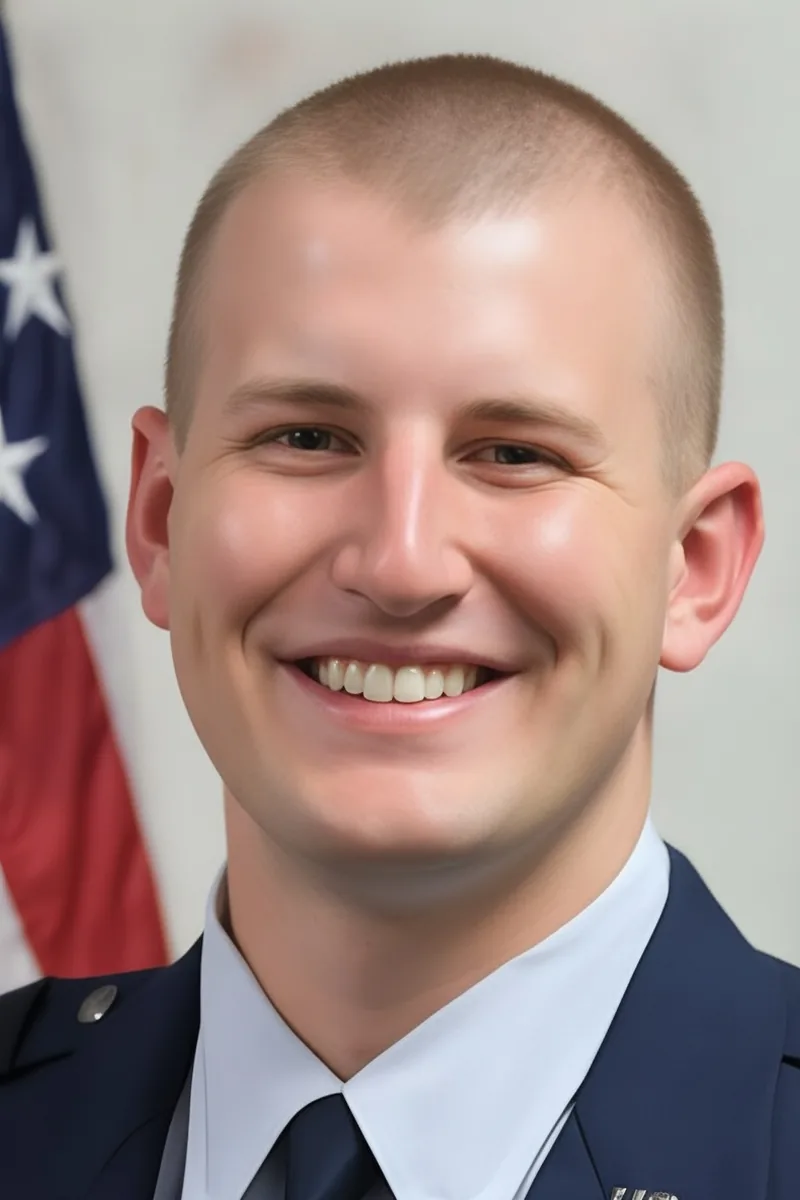
That first encounter with mole conversions and balancing equations can feel like learning a new language, and Nathan remembers exactly what made it confusing before it became second nature. As a chemistry major nearing graduation, he walks students through topics like gas laws, acid-base reactions, and periodic trends with clear, no-nonsense explanations. He's especially effective at connecting classroom chemistry to tangible examples students can visualize.
Stoichiometry, electron configurations, and balancing redox reactions all follow logical patterns once someone lays them out clearly. Tanner breaks these down step by step, linking each concept to the next so students see chemistry as a connected system rather than a pile of unrelated rules. Rated 5.0 by students.
Stoichiometry and equilibrium take on a different dimension when your tutor uses them every day — Michelle's biochemistry degree from Rice and her current medical coursework at Baylor mean she's constantly translating between chemical equations on paper and what's actually happening at the molecular level. She teaches gas laws and reaction energetics by anchoring the math to the biological chemistry she's immersed in, which gives students a concrete handle on topics that otherwise feel purely abstract.
Three-plus years of classroom instruction in advanced chemistry means Sugi has seen exactly where high school students get stuck — balancing redox equations, applying Le Chatelier's principle, or connecting molecular geometry to polarity. She teaches the underlying logic of each topic so students build real problem-solving skills, and her biochemistry training at Rice keeps the material grounded in real-world applications.
Stoichiometry, equilibrium, and acid-base reactions make more sense when a student can see where they lead. Bidyut ties high school chemistry concepts to biomedical applications he's encountered at Johns Hopkins, turning mole calculations and reaction balancing into something more tangible than textbook exercises.
Balancing redox equations, predicting products, and navigating stoichiometry all become more manageable when a student understands the 'why' behind each reaction type. Maggie's molecular and cellular biology degree gave her deep fluency in chemical principles, and she applies that knowledge to demystify everything from periodic trends to equilibrium calculations. She holds a 5.0 rating from students.
Premed neuroscience coursework at Rice put Aditi through rigorous chemistry sequences where concepts like equilibrium, stoichiometry, and thermodynamics weren't electives — they were prerequisites for everything that followed. She zeroes in on the periodic table as a predictive tool, teaching students to use trends in electronegativity and atomic radius to reason through bonding and reactivity questions rather than memorize isolated facts. Rated 4.8 by students.
Cognitive studies at Vanderbilt might not scream chemistry, but Vy's science coursework and her 35 ACT mean she's no stranger to reasoning through problems involving moles, gas laws, or balancing equations. She's especially effective at teaching students how to read what a chemistry problem is really asking — a skill she honed tutoring algebra and science in under-resourced schools where clear, patient explanation wasn't optional.
When stoichiometry or electron configurations start feeling like arbitrary rules, Steven connects them back to why atoms and molecules actually behave that way. His career as a PhD chemical engineer means he's applied high school chemistry concepts — mole calculations, acid-base reactions, gas laws — thousands of times in real contexts. That practical grounding turns memorization into understanding.
I am most passionate about biology and chemistry. I am a firm proponent of education, believing it to be absolutely necessary for an improved quality of life, and I try to impart this appreciation to all of my students.
Stoichiometry clicks once a student truly understands the mole concept, and that's where Kinjal usually starts — building the logic behind unit conversions and balanced equations before moving into reaction types and periodicity. Her biology degree required extensive chemistry coursework, so she moves fluidly between topics like equilibrium, acid-base reactions, and thermochemistry.
Stoichiometry and balancing equations trip up most high school chemistry students because the math feels disconnected from what's actually happening at the molecular level. Kendall bridges that gap by walking through each reaction step visually before touching the calculations, so the numbers start to make intuitive sense.
Stoichiometry, equilibrium, acid-base reactions — high school chemistry is where students first encounter the logic that governs how matter behaves. Emily grounds these concepts in her biochemistry background, explaining not just how to balance equations but why reaction conditions matter in real experimental settings.
Balancing redox reactions, predicting molecular geometry, and navigating stoichiometry all require a kind of systematic thinking that doesn't always come naturally. Malcolm approaches each of these as a puzzle with clear rules, drawing on the deep chemistry foundation he built as a biochemistry and cell biology major at Rice University.
Stoichiometry is usually the first place high school chemistry students feel lost, because it demands comfort with mole conversions, balanced equations, and limiting reagents all at once. John unpacks each step individually and then connects them into a logical chain so the full problem makes sense rather than feeling like guesswork. His science and math teaching background means he's equally comfortable explaining the quantitative side and the conceptual reasoning behind periodic trends or bonding.
Stoichiometry is where most high school chemistry students first feel lost — the jump from balancing equations on paper to predicting actual quantities in a reaction requires a different kind of thinking. Michael's quantitative training at Rice means he can walk through mole conversions and limiting reagent problems in a way that builds real numerical confidence, not just memorized steps.
The jump from memorizing the periodic table to actually using it — predicting reactivity, balancing redox equations, understanding why certain compounds form — is where most high school chemistry students get stuck. Casey digs into the "why" behind each concept, connecting electron configurations to chemical behavior so that trends and reactions start to feel predictable instead of random.
Balancing equations, stoichiometry, and electron configurations click faster when the tutor explaining them uses chemistry every day — Pauline is a PhD student at UT Southwestern Medical Center with a biochemistry degree from SMU. She's taught high school chemistry extensively and treats it as her favorite subject to break down, connecting abstract concepts like mole ratios and periodic trends to tangible lab scenarios.
With both a bachelor's and master's degree in chemistry, Manpinder has taught and tutored multiple chemistry courses as a university TA — meaning topics like electron configurations, gas laws, and equilibrium aren't abstract ideas but concepts she's explained dozens of different ways to dozens of different learners. She zeroes in on the quantitative backbone of high school chemistry, especially stoichiometry and dimensional analysis, teaching students to trace the logic of each calculation rather than memorize setups.
Growing up in a family of educators and now in her third year of a Family Medicine residency, Jordan still uses chemistry concepts — drug interactions, metabolic pathways, electrolyte balance — in clinical practice every day. She teaches topics like moles, gas laws, and chemical equations by deconstructing each problem into small, concrete steps, making the abstract feel manageable. Rated 5.0 by students.
The jump into high school chemistry often feels overwhelming once mole conversions and balancing redox reactions enter the picture. Anna teaches these topics by slowing down the logic — showing, for instance, exactly why coefficients change in a balanced equation and what that means at the atomic level — so the math and the chemistry reinforce each other.
Stoichiometry and gas laws tend to click faster when the tutor explaining them uses those same concepts in medical-level coursework every week — Enoch is finishing his biomedical science degree at Texas A&M with an acceptance to their medical school, so general chemistry never left his daily routine. He walks through dimensional analysis and reaction balancing by anchoring the math in the molecular logic underneath, which keeps students from blanking when a problem looks slightly different from the textbook example. Rated 4.9 by students.
Hello! My name is Connor, and I am a Bioengineering student at Rice University with a strong background in physics, mathematics, chemistry, and standardized test preparation. I scored a 1550 on the SAT and earned a 7 in IB Higher Level Physics. I enjoy helping students build a deep understanding of concepts rather than simply memorizing formulas. My goal is to make challenging topics approachable, improve problem-solving skills, and help students gain confidence in their academic abilities. Whether you're preparing for an exam, improving class performance, or tackling difficult homework assignments, I will tailor lessons to your specific goals and learning style.
Completing premed coursework at NYU on top of a finance degree means Hanna didn't just take chemistry — she needed it to stick, particularly topics like stoichiometry, equilibrium, and acid-base chemistry that show up again in every upper-level science course. She teaches gas laws and reaction predictions by anchoring them to the quantitative thinking her finance and science backgrounds share, so the problem-solving approach feels structured rather than chaotic.
Mechanical engineering coursework forced Daniel to internalize chemistry concepts like thermodynamics, gas behavior, and energy transfer as practical tools for solving real design problems — not just exam material to forget afterward. He teaches topics like stoichiometry and chemical equations by emphasizing the underlying logic of conservation and proportional reasoning, which clicks especially well for students who think quantitatively but struggle with chemistry's vocabulary-heavy presentation.
Andrew earned his PhD in Inorganic Chemistry, which means he doesn't just know the high school curriculum — he knows where it leads. Whether a student is struggling with stoichiometry, electron configurations, or equilibrium, he connects each topic to the bigger picture of how atoms and molecules actually behave.
I am a graduate of UC San Diego with a Bachelors in Neuroscience through the Psychology department. After graduating, I went to Michigan Technological University and did some graduate work, before moving to Texas to be closer to my parents. I did my alternative certification program through Texas Teachers and am highly qualified to teach Science for grades 7-12. I have been a teacher in public and charter schools for the last four years, and have tutoring experience extending over ten years behind me as well.
Peyton earned her B.S. in Chemistry, which means she didn't just pass through topics like equilibrium, electrochemistry, and gas laws — she built her entire degree around them. That depth shows when she teaches nomenclature or stoichiometry, because she can trace each rule back to the underlying atomic behavior that makes it make sense. Rated 5.0 by students.
Before starting his computer science degree at UT Dallas, Luu spent nearly four years as a medical student in Vietnam — which means he's worked through chemistry at the university level, from stoichiometry and gas laws to equilibrium and reaction energetics. That medical science background gives him a practical handle on how high school chemistry concepts like mole calculations and chemical bonding actually function in larger scientific contexts, and he explains the quantitative reasoning behind each topic rather than just walking through formulas.
Rice University's chemistry program is notoriously rigorous, and Asad didn't just survive it — he's graduating this spring and heading to medical school at UT Houston, which means topics like stoichiometry, gas laws, and equilibrium are still sharp from recent coursework and lab work. He teaches the quantitative side of chemistry by slowing down on the dimensional analysis and unit reasoning that most high school students rush past, building the kind of setup habits that make even unfamiliar problems approachable.
Mole conversions, electron configurations, periodic trends — high school chemistry is full of concepts that seem unrelated until someone shows you the thread connecting them. Nathaniel ties each new topic back to atomic structure so students build intuition instead of relying on formula sheets they don't understand.
A strong biochemistry background means Natalie thinks about chemistry at the molecular level — electron behavior, bond polarity, reaction energetics. She's especially effective at walking through stoichiometry and equilibrium problems step by step, showing students the reasoning behind each calculation instead of handing them a formula to memorize.
Stoichiometry trips up most high school chemistry students not because the math is hard, but because they lose track of what the numbers actually represent. Whitney teaches dimensional analysis and mole conversions as a logical story — reactants in, products out — which makes balancing equations and limiting reagent problems feel intuitive. Her biomedical engineering background means she also connects chemistry to real-world applications in medicine and materials science.
The jump into high school chemistry trips up a lot of students right around mole conversions and balancing equations, when the math suddenly matters as much as the science. Huan is a chemistry major at UT Austin who recently navigated these same concepts and remembers exactly where the confusion tends to hit. He walks through each problem type systematically, connecting the math to what's actually happening at the molecular level.
Stoichiometry and gas laws tend to click faster when a student can see how they connect to something bigger — and Phoebe's biomedical sciences master's gives her a deep well of real examples, from drug dosing calculations to metabolic reaction pathways, that make the math feel purposeful. She walks through dimensional analysis and mole relationships by building each step from the previous one, so students develop confidence in setting up problems rather than freezing at the first unfamiliar formula. Rated 5.0 by students.
A biochemistry degree means Gabriel didn't just take chemistry — he lived in it, from stoichiometry and equilibrium through organic reaction mechanisms and thermodynamics. He approaches high school chemistry by anchoring abstract ideas like mole conversions or electron configurations to concrete, visual examples that make the logic behind each concept stick. When a student struggles with one explanation, he draws on the multiple ways he learned the same material across AP and college courses.
Tutoring organic chemistry at UT Austin for over a year sharpened Felipe's ability to trace ideas back to their roots — so when he teaches high school chemistry topics like electron configuration or periodic trends, he's drawing on a deep understanding of how those basics cascade into college-level reaction mechanisms. His biomedical engineering coursework ties chemistry to tangible problems like drug delivery and biomaterial design, giving students concrete reasons why concepts like bonding and molecular polarity actually matter.
Biology majors often have a sharper handle on chemistry than they get credit for — Amy's coursework covered the biochemical foundations where concepts like bonding, pH, and reaction energetics aren't abstract but essential to understanding living systems. She uses that biology-rooted perspective to make topics like chemical equations and solution chemistry feel purposeful, tying the math back to processes students can picture. Rated 4.9 by students.
I am currently a senior at Emory University studying chemistry and applied math with a focus on inorganic chemistry. I will be available to tutor algebra, trigonometry, algebra 2, biology, chemistry, calculus, geometry, pre- calculus, and ACT prep. I started tutoring in high school and continued tutoring at Emory where I tutored general chemistry, introductory biology, and calculus for two years. Apart from academic tutoring, I am also involved in Project SHINE which teaches English to recent Atlanta immigrants. I believe that education (no matter what kind) is crucial in life, but I also strive to emphasize why something is important. In my experience, most students struggle with something because they don't understand exactly why it is important or simply do not care. I am heavily involved in academic research at Emory so I am able to help a student understand exactly why a specific subject area is important and how it is continuously applied both in the lab and in the real world to improve our lives. It's always easier to see the physical and practical applications of a subject than try to visualize its importance on paper. In my spare time I enjoy chemistry, ancient Roman history, jam bands, running, cycling, and scuba diving.
Testimonials
Because the right High School Chemistry tutor makes all the difference.
Average Session Rating – Based on 3.4M Learner Ratings
Nearby High School Chemistry Tutors
Other Fort Worth Tutors
Related Science Tutors in Fort Worth
Frequently Asked Questions
High school chemistry requires balancing abstract thinking with practical problem-solving. Students often struggle with visualizing molecular structures and bonding, mastering stoichiometry and unit conversions, and understanding why reactions occur rather than just memorizing equations. Many also find the transition from concrete biology concepts to chemistry's invisible atomic world challenging. Personalized tutoring helps students build a solid foundation in these core concepts so they can tackle more complex topics with confidence.
Rather than treating equation balancing as a memorization task, tutors help you understand the principle behind it—that atoms are conserved in reactions. Tutors break down the process step-by-step, show you patterns to recognize, and give you targeted practice with immediate feedback. This conceptual approach means you'll be able to tackle unfamiliar equations on tests, not just ones you've seen before.
Yes. Tutors help you understand the scientific method, interpret lab results, and connect experimental observations to theoretical concepts you're learning in class. Whether you're preparing for a lab, troubleshooting unexpected results, or writing up findings, personalized instruction helps you develop stronger scientific reasoning skills and get more from hands-on learning.
Varsity Tutors connects you with expert tutors who understand Fort Worth's high school chemistry curriculum and can work with your schedule. You'll be matched with someone whose teaching style fits your learning needs, whether you need help with specific topics like thermodynamics or broader support throughout the course. The matching process considers your goals, availability, and learning preferences.
Tutors use multiple strategies to make invisible concepts visible—drawing molecular structures, using physical models, working through energy diagrams, and connecting abstract ideas to real-world examples. For instance, understanding ionic bonding becomes clearer when you see how electrons transfer between atoms, or how covalent bonding relates to the stability atoms are seeking. This multi-sensory approach helps the concepts stick in ways that lectures alone often don't.
Unit conversions and stoichiometry require both conceptual understanding and procedural fluency—you need to know *why* you're converting units and *what* the mole concept means, not just follow a formula. Many students memorize steps without grasping the underlying logic, which causes confusion when problems look different. Tutors help you build genuine understanding of proportional relationships and the mole so conversions become logical problem-solving rather than guesswork.
Your first session is about building a foundation for success. The tutor will assess your current understanding, identify specific areas where you're struggling, and learn about your learning style and goals. You'll likely work through a few problems or concepts together to see how the tutor explains things and get a sense of how personalized instruction can help. This session helps create a tailored plan for your chemistry progress.
Personalized tutoring has been shown to significantly improve student outcomes, especially in challenging subjects like chemistry where conceptual understanding is critical. By addressing your specific gaps, building confidence with difficult topics, and developing strong problem-solving strategies, tutoring helps you perform better on quizzes, tests, and the overall course. Many students see grade improvements within a few weeks of consistent, focused instruction.
Let’s find your perfect tutor
Answer a few quick questions. We’ll recommend the right plan and match you with a top 5% tutor.