Award-Winning Math Tutors
serving Atlanta, GA
Award-Winning
Math
Tutors in Atlanta
Private 1-on-1 tutoring, weekly live classes for academic support, test prep & enrichment, practice tests and diagnostics, and more to elevate grades and test scores.
Based on 3.4M Learner Ratings
UniversitiesSchools & Universities
DeliveredHours Delivered
ProficiencyGrowth in Proficiency
Who needs tutoring?
No obligation. Takes ~1 minute.
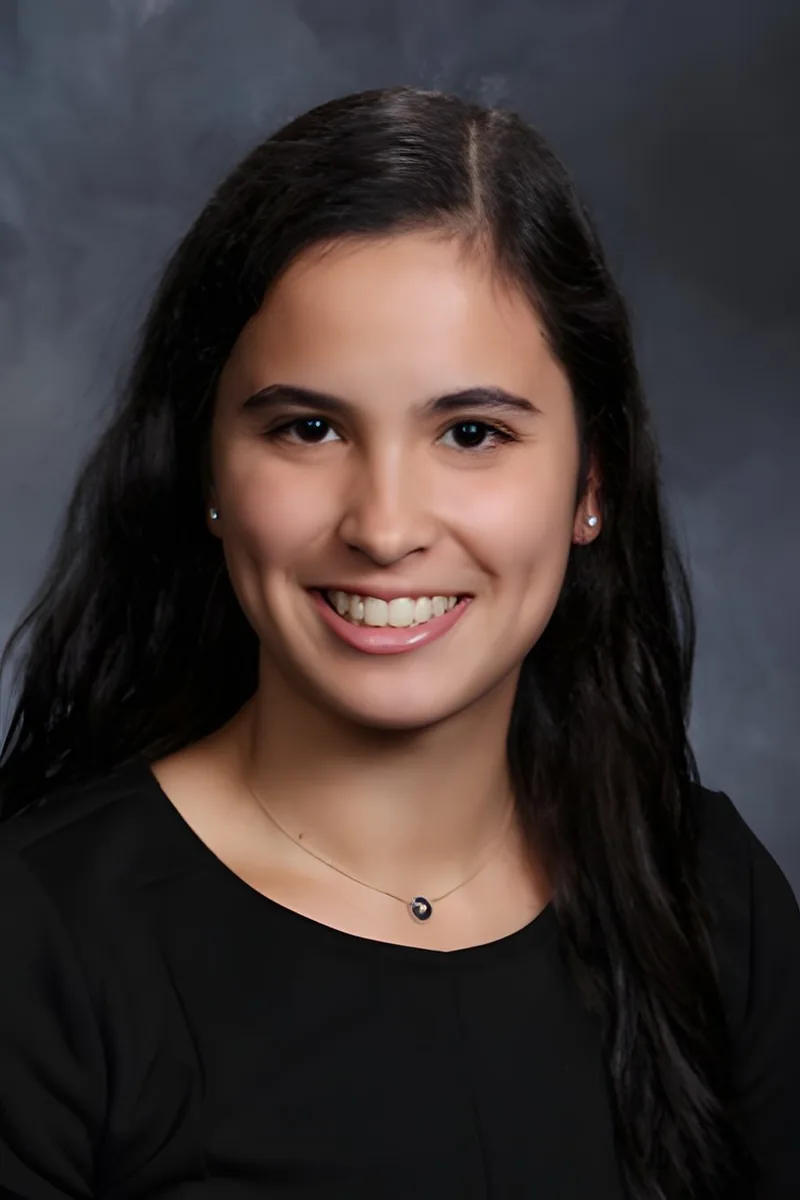
An MIT math graduate now pursuing a PhD in Operations Research at Georgia Tech, Isabella has spent years inside the subject from every angle — teaching it, studying it, and applying it. Whether a student is wrestling with fraction operations in sixth grade or limits in early calculus, she connects each concept to the bigger mathematical picture so the next topic feels like a natural extension, not a surprise.

Not every math tutor comes from an engineering background, and that can actually be an advantage. Jean approaches math the way a student who had to work at it would — breaking word problems into smaller logical steps, connecting arithmetic and algebraic concepts to practical reasoning, and building the kind of structured thinking her history and legal training demanded daily.
From fraction operations to polynomial expressions, the students who get stuck in math usually have one or two foundational gaps that snowball into confusion across every new topic. Marion diagnoses exactly where that breakdown happened and rebuilds the reasoning from there. Her 34 ACT and 1540 SAT confirm she has the quantitative chops to back up her teaching instincts.
From fraction operations in elementary school to function notation in high school, Alice has seen the full spectrum of where math concepts break down — her time as a K-12 math center instructor gave her that range. She's especially good at reframing a problem so it connects to something a student already understands, turning abstract steps into reasoning that actually sticks.
From fraction operations in pre-algebra to integration techniques in calculus, Ilesh covers the full math pipeline and knows exactly where each concept feeds into the next. His Industrial Engineering degree from Georgia Tech required heavy coursework in linear algebra, probability, and applied calculus, so he explains not just the how but the why behind each method. He's rated 5.0 by students.
Robert's strengths sit squarely in reading, writing, and test prep — but his 1560 SAT required serious math performance, and that score doesn't happen without genuine command of algebra, data analysis, and problem-solving under pressure. As a Stanford-trained writer, he's particularly sharp at untangling word problems, teaching students to strip away the narrative and isolate the math underneath. Rated 5.0 by students.
Juliana's subject range spans pre-algebra through calculus, which means she understands how each math concept scaffolds onto the last — and where gaps from earlier years quietly cause problems later. She's especially skilled at translating word problems into equations, a stumbling block that trips up students who otherwise understand the mechanics just fine. Rated 5.0 by students.
Arithmetic operations, fractions, and early algebraic thinking can feel like a foreign language to students who never got a clear explanation the first time around. Ominira approaches math by connecting abstract procedures to concrete reasoning — showing why you flip and multiply when dividing fractions, for instance, instead of just drilling the rule. Her experience as a paraprofessional educator means she's spent real classroom time identifying exactly where students get stuck.
Award-winning performance in her math coursework at UGA isn't an accident — Hailey is a double major in mathematics and psychology, which means she understands both the content and how students actually learn it. Whether the challenge is fractions and proportions or polynomial equations, she breaks problems into reasoning steps that make the next problem easier to tackle on your own. Rated 5.0 by students.
A biochemistry degree requires serious math chops — Christopher spent years applying algebra, calculus, and statistical reasoning to problems in kinetics, thermodynamics, and data analysis at Rice. That background lets him explain not just how to solve a math problem but why a particular method works, which tends to stick better than memorized procedures. He's tutored students from elementary through college level, so he adjusts his explanations to match exactly where a student is in their math progression.
Maddie taught geometry, algebra, and pre-calculus as an assistant teacher in her high school's math department, which means she's used to diagnosing exactly where a concept stops making sense. Whether a student is struggling with fractions or working through word problems, she breaks each step down until the logic clicks rather than just demonstrating a procedure.
From arithmetic through calculus, Bettina's engineering training means she's used every branch of math in practice — solving real systems, not just textbook exercises. She zeroes in on the specific concept a student is stuck on, whether that's fraction operations, linear equations, or function behavior, and explains the reasoning behind each step. Students walk away understanding the logic, not just the procedure.
Years of actuarial work after earning a math degree from Vanderbilt gave David an unusual vantage point: he's used algebra, statistics, probability, and calculus to solve real problems with real stakes. That experience shapes how he teaches math at any level — connecting abstract procedures to concrete reasoning so students understand the why behind every step. Rated 5.0 by students.
Though law is James's primary field, his quantitative chops are real — he scored a 720 on the math portion of the SAT and teaches algebra and calculus alongside his other subjects. He's particularly effective at walking through word problems and applied math, where his analytical training as an attorney sharpens the way he breaks down multi-step reasoning.
Every day Alexandra writes equations to model spectroscopic data from forming planetary systems, so math for her isn't abstract — it's a tool for answering real questions. She covers everything from pre-algebra fundamentals through calculus, connecting each concept to why it matters rather than just drilling procedures. Her 4.9 rating speaks to how well that approach clicks with students.
While Anna's primary expertise is in literature and writing, she also tutors math and brings the same patient, step-by-step approach she uses when unpacking a complex text. She's particularly good at helping students who struggle with word problems translate verbal information into mathematical setups — a skill that sits right at the intersection of reading comprehension and quantitative reasoning.
Two engineering degrees mean Michael has worked through math at every level — from foundational arithmetic and fractions up through calculus and differential equations. He zeroes in on the specific concept a student is struggling with, whether that's long division, proportional reasoning, or interpreting word problems, and explains it using concrete examples that make the logic click.
From fraction operations in elementary school to derivatives in calculus, Matthew covers the full math spectrum with the structured thinking his chemical engineering training demands. He's especially sharp at identifying the specific conceptual gap — whether it's number sense, proportional reasoning, or algebraic thinking — that's creating a bottleneck in a student's progress.
From basic fraction operations to polynomial long division, Aditya breaks math problems into smaller pieces that actually make sense instead of feeling like arbitrary steps. His biochemistry coursework at UGA keeps him fluent in everything from algebra through calculus, so he can connect earlier concepts to where they're headed next.
A finance major works with numbers constantly — from compound interest calculations to statistical modeling — and Victor brings that applied math fluency to topics like fractions, proportions, and linear equations. He's particularly effective at showing students why a formula works, which makes it far easier to remember than rote drilling.
Eugene's doctoral work in biomedical science keeps him immersed in quantitative reasoning daily, from statistical modeling to algebraic problem-solving in research contexts. He breaks down math concepts — whether it's manipulating fractions, solving systems of equations, or interpreting word problems — by connecting abstract steps to logical reasoning students can follow. His dual background in English and science also means he's unusually good at translating math language into plain language.
Georgia Tech's biochemistry program doesn't let you dodge math — Adel's coursework demanded everything from calculus to quantitative analysis of reaction kinetics, building the kind of fluency that lets him explain a concept like rate of change through both its mathematical definition and its real-world behavior. He teaches across the full K-12 spectrum, from elementary arithmetic through competition math, and his 34 ACT score backs up the depth of that range. Rated 5.0 by students.
I'm always up for the challenge of changing my methods of instruction and breaking down topics to foster a deeper understanding of a subject. On a different note, I generally spend my spare time playing lacrosse or running outdoors when possible. I also play the violin with a school quartet, and teach lessons to beginning students working through the Suzuki program.
From fraction operations in middle school to logarithmic functions in Algebra 2, Yilin covers a wide range of math levels and knows where the common stumbling blocks sit at each stage. Her 34 ACT composite reflects the kind of quantitative fluency that lets her explain the same concept three different ways until one clicks.
Jordan approaches math by slowing down at the exact moment most students want to rush — the transition from understanding a concept to applying it independently. She breaks problems into smaller logical steps so students can see where their reasoning goes off track, rather than just checking final answers. Her patient, structured style is especially effective for students who feel overwhelmed by word problems or multi-step equations.
A biology major heading to Columbia for medical school, Tyler has spent years translating math into something that actually clicks — whether that's working through proportional reasoning, tackling word problems, or building fluency with fractions and decimals. He zeroes in on the specific step where a concept breaks down and reworks it from that point forward.
While Matt's primary expertise is in the humanities and social sciences, he also tutors math and brings a structured, step-by-step approach to problem-solving that comes from his legal training. He's particularly useful for students who need someone patient enough to walk through algebraic reasoning and word problems without skipping steps.
I'm a 25 year old recent J.D. graduate of Georgia State College of Law. I attended Emory University for my undergraduate studies where I was awarded a double major in Political Science and History. Currently I am interning with CAIR as I prepare for the February Georgia Bar Exam.
Having completed Calculus 1, 2, Multivariable Calculus, Differential Equations, and Linear Algebra, Travis sees the full arc of how math concepts build on each other — which means he can explain why a technique matters, not just how to execute it. He's especially effective at identifying the specific gap that's causing a student to struggle, whether it's number sense, algebraic manipulation, or logical reasoning.
Jennifer's strongest suits are English and writing, but her 32 ACT composite means she handled the Math section at a high level — and her six years of tutoring experience include middle school math, algebra, and calculus. She's especially good at translating word problems into equations, a skill that comes naturally from someone who spent her degree learning to dissect language. Rated 5.0 by students.
Emily's strongest subjects are English and writing, but her 33 ACT composite required solid command of algebra, geometry, and data interpretation under timed pressure. She brings that test-driven math fluency to tutoring sessions, breaking problems into clear steps and showing students how to check their reasoning before moving on.
I am working as a program manager at a local non-profit organization in Miami. Outside of academia and work my interests are singing karaoke with friends, swimming, watching movies, and reading about environmental and social justice issues. In the past I have tutored public health topics (including epidemiology) online, taught environmental science and history courses, and tutored students in-person on ACT prep, biology, voice lessons, and Spanish language. My clients have been middle school, high school, university, and graduate students. My favorite subjects to tutor are those that I myself had to work the hardest to conquer (ACT, Spanish fluency, epidemiology and chemistry)! I love teaching these subjects because through my own struggle to achievement I have developed especially effective methods for my clients to succeed as well. My teaching style is based upon working with clients to develop individualized study methods. I am a tutor who is patient, caring, and committed to seeing you exceed your goals. Don't hesitate to contact me if you are searching for a tutor with these qualities.
While Arin's primary expertise lives in the humanities, she teaches math with the same structured, step-by-step clarity she brings to building an argument in an essay. She's particularly effective with students who feel alienated by math, breaking down algebraic concepts and problem-solving logic in plain language that makes the reasoning visible.
Between his economics coursework and his teaching degree, Chandler has spent years breaking quantitative problems into manageable steps — whether that's setting up proportions, interpreting graphs, or working through multi-step word problems. He scored a 1560 on the SAT, and that comfort with numbers carries into every math session.
From arithmetic fundamentals through calculus, Corey's engineering background means he's used every level of math as a working tool, not just a classroom exercise. He connects abstract concepts like proportional reasoning or variable manipulation to tangible problems so students see why the math matters before drilling the how.
Georgia Tech's Co-op and Honors programs don't let you skate by on math — Jen's management degree required quantitative coursework in statistics, operations, and financial modeling that built real fluency with algebraic and calculus concepts. Law school then sharpened her ability to break complex problems into sequential, logical steps, a habit she carries directly into tutoring multi-step equations and applied word problems. She scored a 1500 on the SAT.
Audrey's teaching spans elementary through high school math, which means she understands how early concepts like place value and fractions lay the groundwork for algebra and beyond. She pinpoints exactly where a gap formed — whether it's long division or order of operations — and rebuilds confidence from that specific point forward.
A math and computer science degree means Jade doesn't just know the procedures — she understands the underlying logic connecting arithmetic, algebra, and beyond. She breaks down intimidating problems into smaller, concrete steps so that concepts like proportional reasoning or integer operations actually click instead of feeling like arbitrary rules.
From fraction operations in middle school to limits and series in advanced courses, Xihao treats math as a connected chain — each concept building logically on the last. His BS and MS in mathematics give him the depth to spot exactly where a gap in understanding formed and address it before moving forward.
Whether a student is struggling with fraction operations in sixth grade or tackling polynomial division in high school, Darien identifies the specific conceptual gap holding them back rather than just re-explaining the procedure. His teaching spans elementary arithmetic through calculus, so he understands how each skill builds on the last — and where the common breakdowns happen. That range, paired with a 5.0 rating, makes him effective across a wide spectrum of math levels.
Testimonials
Because the right Math tutor makes all the difference.
Average Session Rating – Based on 3.4M Learner Ratings
Practice Math
Free practice tests, flashcards, and AI tutoring for Math
Nearby Math Tutors
Other Atlanta Tutors
Related Math Tutors in Atlanta
Frequently Asked Questions
During the first session, a tutor will assess your current math level, understand your specific challenges (whether that's word problems, graphing, or multi-step equations), and learn about your learning style. They'll also discuss your goals—whether you're working toward a specific grade, preparing for a standardized test, or building foundational skills. This personalized approach helps tutors create a plan tailored to you, rather than following a one-size-fits-all curriculum.
Many students can follow steps but struggle to understand *why* those steps work—this gap often shows up in word problems and proofs. Tutors help bridge this by asking guiding questions that reveal the reasoning behind each step, showing you how different concepts connect, and using visual or real-world examples. When you understand the underlying patterns, you're better equipped to tackle unfamiliar problems and retain what you've learned long-term.
Showing work isn't just about getting points—it helps tutors see exactly where your thinking breaks down so they can target the right concept. It also builds your problem-solving skills by forcing you to organize your thoughts and check your reasoning at each step. Many students find that writing out their work actually helps them catch their own mistakes before they finish.
Math anxiety often stems from feeling lost or embarrassed about asking questions in a classroom setting. Personalized tutoring creates a judgment-free space where you can ask as many questions as you need and work at your own pace. When tutors break concepts into smaller, manageable pieces and celebrate small wins, students often find their confidence growing—and anxiety decreasing—as they start to see real progress.
Yes. Atlanta's 19 school districts use different approaches and materials, and tutors are experienced working across various curricula—whether your school uses traditional textbooks, Singapore Math, or other frameworks. When you connect with a tutor, let them know which curriculum your school uses, and they'll align their instruction to match your class materials and teaching style, making it easier to apply what you learn directly in the classroom.
Word problems require both math skills and reading comprehension, which is why many students struggle with them. Tutors teach problem-solving strategies like identifying what you know, what you're solving for, and which operations make sense—before jumping into calculations. With practice and feedback on your approach, you'll develop the confidence to break down complex problems into manageable steps rather than feeling overwhelmed by the text.
Graphing and proofs are visual and logical skills that often need more hands-on practice than a classroom allows. Tutors can slow down and work through multiple examples with you, helping you see the connection between equations and graphs, or guiding you through the logic of each step in a proof. With personalized feedback and repetition in a low-pressure setting, these challenging topics become much more manageable.
Varsity Tutors connects you with tutors who have expertise in the specific math topics you need help with and experience working with students at your level. When you describe your challenges and goals, you'll be matched with someone whose teaching style aligns with how you learn best. If it's not the right fit, you can always connect with a different tutor—the goal is to find someone who helps you actually understand math, not just get through homework.
Let’s find your perfect tutor
Answer a few quick questions. We’ll recommend the right plan and match you with a top 5% tutor.