Award-Winning Writing Tutors
serving Dayton, OH
Writing
Tutors in Dayton
Private 1-on-1 tutoring, weekly live classes for academic support, test prep & enrichment, practice tests and diagnostics, and more to elevate grades and test scores.
Based on 3.4M Learner Ratings
UniversitiesSchools & Universities
DeliveredHours Delivered
ProficiencyGrowth in Proficiency
Who needs tutoring?
No obligation. Takes ~1 minute.

Whether the assignment is a persuasive essay, a research paper, or a reflective narrative, Emily teaches students to build an argument from the ground up: claim, evidence, analysis, structure. Her Yale training spanned lab reports in cellular biology and literary essays in French, so she's comfortable coaching writing across genres and disciplines. Rated 5.0 by students.
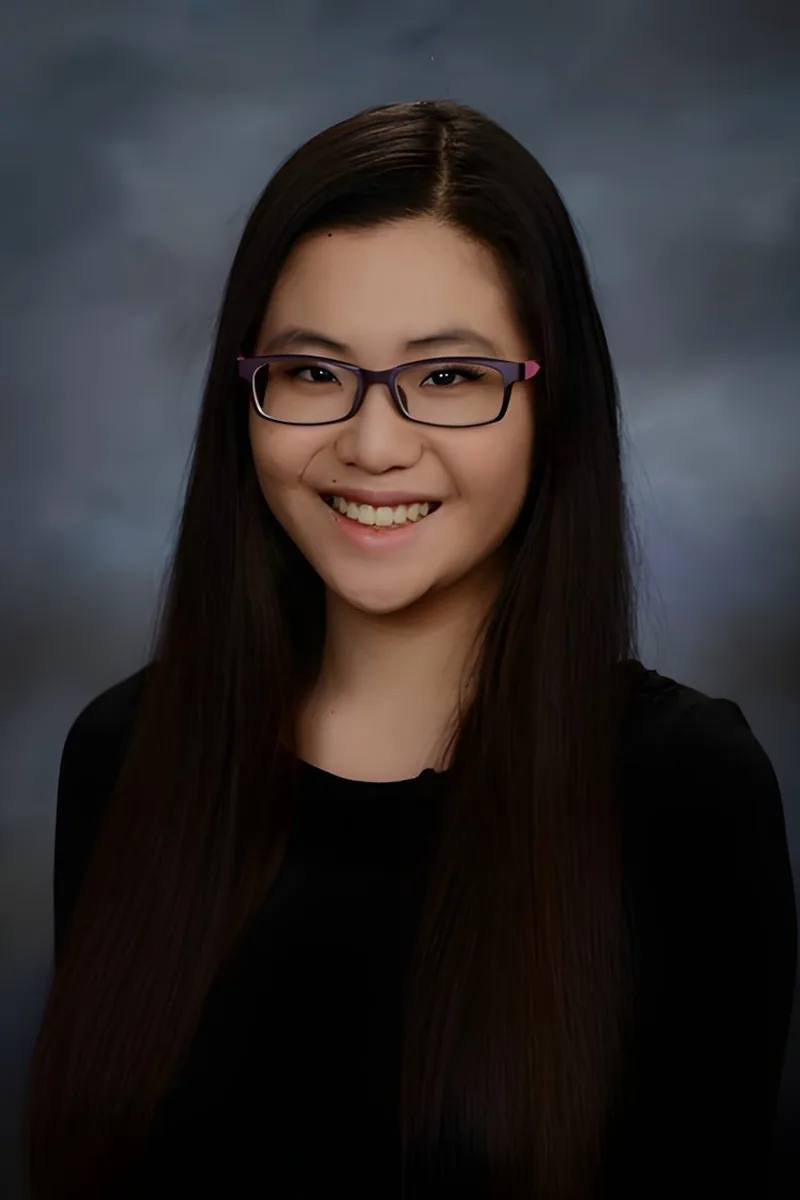
Strong writing starts with having something specific to say, then organizing it so a reader can follow. Cynthia's public policy training at Vanderbilt requires constant analytical writing — constructing evidence-based arguments under tight deadlines — and she brings that same clarity-first approach to students working on essays, research papers, or creative pieces. She's especially effective at helping writers who know what they want to argue but struggle to structure it on the page.
Every piece of writing has a structural logic — thesis placement, paragraph transitions, evidence integration — and Zoe teaches students to see that architecture before they start drafting. Her Master's in Curriculum & Instruction and years teaching ELA across grade levels mean she can diagnose exactly where a draft loses its reader and show how to fix it. Rated 4.7 by students.
Strong writing starts with learning to organize ideas before worrying about word choice. Emily breaks the drafting process into concrete steps — brainstorming, outlining, writing topic sentences that actually control a paragraph — so students stop staring at blank pages. Her 5.0 rating speaks to an approach that builds real confidence in everything from persuasive essays to research papers.
Sery treats writing tutoring as a conversation — asking targeted questions about structure, argument, and word choice until the student spots the weak points in their own draft. This discussion-driven method builds real revision instincts instead of dependence on someone else's red pen. A calligrapher outside the classroom, she brings genuine care for language at every level, from sentence rhythm to thesis clarity.
I am usually someone they ask. I love reading and writing. I am a big believer in the importance of critical thought and creative problem solving. I am excited to work with you.
I am currently working towards my degree in mechanical engineering at the University of Dayton. In high school, I tutored students around my age frequently with my school's chapter of Mu Alpha Theta (math national honor society). Since I arrived at college, I have been tutoring my peers in calculus, biology, and chemistry. I'm an engineering major, so of course my favorite subjects are science and math. I love to teach students any type of math or science; in fact, I find it fun. Although, I do find things other than school fun (I'm not that lame). I'm involved in a considerable amount of extracurricular activities at UD. I play trombone my school's jazz band (which recently travelled to New Orleans) and for my school's pep band (which supports the best basketball team in the A10 \[go Flyers!\]). I'm also on the club racquetball team for my school and I am a hockey fanatic. Despite the fact that most engineering majors are introverts, I am quite the talker. I will enjoy sitting down with you and talking through any issues you may have with your subject. I tend to make my students work on their own up to the point where they get stuck in a problem and explain their thought process as they go through. That way, I can understand what my students understand and what they don't. I hope you choose me as your tutor and I am looking forward to helping you succeed!
I am given the opportunity to work with and assist the students.
Most writing instruction tells students what good writing looks like without explaining how to actually produce it. Elena breaks the process into concrete, repeatable steps — building an argument from a single claim, structuring paragraphs around evidence, and revising for voice and clarity. Named Scotland's International Young Thinker of the Year for her ability to communicate complex ideas accessibly, she brings that same skill to teaching students how to get their thinking onto the page.
Most writing problems aren't really about grammar; they're about a writer not yet knowing what they're trying to say. Lauren starts by untangling the idea — asking students to articulate their argument out loud before committing it to paper — then teaches them to organize paragraphs around claims and evidence. It's an approach rooted in her own graduate-level research writing.
Between her English major, journalism minor, and work on college-level writing at Penn, Amy has logged serious hours producing and revising prose across genres — analytical essays, creative nonfiction, reported pieces. She teaches writing as a process of iterative drafting, showing students how to move from a messy first attempt to a polished argument with a clear thesis and purposeful evidence.
Getting ideas onto the page is one challenge; organizing them into something compelling is another entirely. Sarah breaks the writing process into concrete steps — brainstorming, outlining, drafting, revising — so students stop staring at blank screens and start building arguments with real structure. Her dual background in the arts and biomedical sciences means she's equally comfortable coaching a personal narrative or a research paper.
From thesis-driven academic essays to creative pieces, Emma approaches writing as a craft with learnable techniques — not a mysterious talent some students have and others don't. Her experience at Cornell developing curricula and studying education theory sharpened her ability to teach the specific moves that make writing persuasive, vivid, or clear depending on the assignment. She holds a 5.0 rating.
Clear writing starts with clear thinking, which is why Emma spends time on outlining and argument structure before students ever draft a full paragraph. Her Duke coursework spanned lab reports in biology and analytical essays in Classical Studies, so she's coached writing across genres — persuasive, expository, narrative, and research-based. That range lets her tailor each session to whatever assignment a student is actually facing.
Most writing problems aren't about grammar — they're about a writer not knowing what they're actually trying to say. Peter starts every session by identifying the core argument or story, then builds outward into structure, evidence, and style. His dual background in journalism and English education means he can teach both creative and analytical writing with equal precision.
Clear writing is structured thinking made visible, and Vishank's analytical training in Data Analytics at Ohio State gives him a sharp eye for logical flow. He teaches students to outline arguments before drafting, craft topic sentences that actually preview the paragraph, and revise for precision rather than just length.
Good writing is really about clear thinking, and Lilian approaches each assignment by first untangling what a student actually wants to say before tackling how to say it. Her marketing and design training at WashU sharpened her instinct for audience awareness, persuasive structure, and concise language — skills that transfer directly to academic essays, personal narratives, and research papers.
The hardest part of writing isn't grammar — it's figuring out what you actually want to say and organizing it so a reader follows. Amanda breaks the writing process into manageable stages: claim development, evidence selection, drafting, and revision. Her psychology training also gives her a sharp eye for how audience and purpose shape tone.
Getting words on the page is one challenge; organizing them into something clear and persuasive is another entirely. Michelle taught writing across multiple grade levels and understands the progression from basic paragraph structure to multi-page essays with thesis statements and supporting evidence. She tackles the planning stage — outlines, topic sentences, logical flow — so students stop staring at a blank screen and start building an argument piece by piece.
Most writing struggles aren't about grammar — they're about a writer not knowing what they're actually trying to say yet. Emma tackles that pre-writing fog by teaching students to generate and organize ideas before drafting, then revise with a clear sense of audience and purpose. Her arts and cognitive science background means she approaches writing as both a creative and an analytical process.
Strong writing starts with knowing what you actually want to argue, and Josh spends real time on that discovery phase before a student types a single sentence. From there, he teaches outlining, paragraph architecture, and how to integrate evidence without letting quotes do all the talking. His own writing practice spans academic research, creative fiction, and poetry.
Next year Alastair moves into Columbia's Writers House, a selective residential community for students pursuing careers in writing — so crafting clear, persuasive prose is something he lives with daily. He breaks down the revision process into concrete steps: tightening thesis statements, cutting filler, and structuring paragraphs so each one drives an argument forward.
Karen treats writing as a process of thinking on paper, starting with messy brainstorming and shaping it into a clear, well-supported argument. Her background in English Literature means she can teach everything from crafting a compelling hook to structuring body paragraphs that actually prove a claim. She's particularly effective at helping students find their own voice rather than writing in stiff, formulaic prose.
From brainstorming to final draft, Crystal approaches writing as a process that looks different for every student. Some need structure — outlines, topic sentences, paragraph mapping — while others need permission to write messily first and organize later. Her background in English Education and ESL gives her a toolkit for both, whether the assignment is a personal narrative or an argumentative research paper.
Years of competitive Speech and Debate sharpened Adam's ability to construct arguments that actually persuade — a skill he now brings to teaching thesis development, evidence integration, and revision strategy. He treats every draft as a chance to clarify thinking, not just fix commas, and walks students through how to restructure paragraphs so their ideas land with real impact.
History majors write constantly — argumentative essays, source analyses, research papers — and Katherine has refined her process through four years of exactly that work at Denison. She teaches students how to move from a messy brainstorm to a structured outline to a polished draft, with particular attention to building claims that evidence actually supports.
Most students know what they want to say but struggle to organize it on the page. William tackles the full writing process — brainstorming a workable thesis, building body paragraphs around specific evidence, and revising for clarity and flow. His approach treats each draft as a thinking tool, not just a product to hand in.
Strong writing starts with having something specific to say and knowing how to organize it — thesis construction, paragraph architecture, evidence integration. As a linguistics researcher at the University of Vermont, Alyssa spends her own days writing academic papers and understands the difference between a draft that wanders and one that builds a clear argument. She teaches students to outline before they write and revise with purpose rather than just adding words.
From five-paragraph essays to research papers, Sunay breaks the writing process into concrete stages: brainstorming a defensible thesis, organizing evidence, drafting topic sentences that actually drive an argument forward. His experience tutoring peers at Emory and volunteering with underprivileged students means he's adapted his approach for writers at very different starting points.
Emily was trained as a writing tutor at Hiram College, where she learned to diagnose what's actually going wrong in a piece of writing — whether it's a weak thesis, tangled paragraph transitions, or vague evidence. She tackles everything from argumentative essays to research papers, breaking the writing process into concrete, repeatable steps.
The hardest part of writing is usually the thinking underneath it — figuring out what you're actually trying to argue before you can say it clearly. Samuel breaks the writing process into manageable stages, from brainstorming a defensible thesis to organizing evidence to revising for clarity and voice. His 5.0 rating speaks to how well that structured approach clicks with students.
Getting ideas onto the page is often the hardest part, especially for younger students who know what they want to say but freeze when faced with a blank document. Diana tackles that block by teaching pre-writing strategies — graphic organizers, free-writes, and outlining — that give students a roadmap before they draft. Five years of classroom teaching across multiple grade levels means she adapts those strategies to any age.
Strong writing starts with a clear claim and evidence that actually supports it — but most students get stuck somewhere between having an idea and getting it onto the page in an organized way. Christopher breaks the writing process into concrete steps: outlining an argument, building topic sentences that drive paragraphs forward, and revising for precision rather than word count. His experience spans persuasive essays, analytical papers, and creative pieces across middle school through college levels.
Strong writing starts with having something specific to say and knowing how to organize it — thesis construction, paragraph architecture, and evidence integration are the skills Amos tackles first. As someone who has earned multiple degrees requiring substantial written work, he understands the revision process from the inside. He's rated 5.0 by the students he's worked with.
Between art history research papers, music program applications, and SAT prep, Elana writes across a wide range of formats — and she brings that versatility to her teaching. She digs into the specific stage where a student gets stuck, whether that's generating a thesis from a vague prompt, organizing body paragraphs with clear topic sentences, or revising for voice and precision. Rated 5.0 by students.
Clear writing is structured thinking made visible — and Samuel's training in computer science, where logical precision matters in every line of code, translates directly into how he teaches thesis development, paragraph organization, and evidence integration. He's also a dedicated reader and hobbyist writer, so he brings genuine enthusiasm to the craft of putting ideas on the page.
Clear writing is a trainable skill, not a talent — and Camille treats it that way, breaking the process into concrete steps from outlining an argument to choosing evidence to revising for clarity. Her own writing spans research abstracts, medical case reports, and college essays, so she adapts her coaching to whatever genre a student is tackling. She's particularly sharp at teaching students how to move from a vague idea to a specific, defensible claim.
Strong writing comes from learning to revise with purpose, not just from getting the first draft down. Christine teaches students to outline an argument before drafting, then walks through revision techniques like reading sentences aloud for rhythm and testing each paragraph against a single controlling idea. Rated 4.9 by students, she covers everything from middle school paragraphs to college-level analytical essays.
Kelsey treats writing as a craft built through practice, not a talent you either have or don't. Coming from a journalism program, she teaches concrete skills — constructing a thesis that actually argues something, organizing evidence so it builds momentum, and revising with fresh eyes instead of just spell-checking.
Lauren treats writing as a process with movable parts — brainstorming, outlining, drafting, revising — and teaches each stage as its own skill rather than rushing to a finished product. Her English Literature background means she can work across genres, whether a student is tackling a persuasive essay, a personal narrative, or a research paper. She's especially good at helping writers who know what they want to say but can't get it onto the page.
Testimonials
Because the right Writing tutor makes all the difference.
Average Session Rating – Based on 3.4M Learner Ratings
Other Dayton Tutors
Related English Tutors in Dayton
Frequently Asked Questions
During your first session, a tutor will get to know your writing goals, current skill level, and specific challenges—whether that's essay structure, grammar, or developing your voice. They'll review samples of your work and create a personalized plan to address your needs. This foundation helps ensure every session builds on your progress and targets the areas that matter most to you.
Many students struggle with turning ideas into a clear, logical structure. A tutor can teach you frameworks for organizing your thoughts—from crafting a strong thesis statement to building supporting paragraphs with evidence. They'll work with you on outlining strategies and show you how to revise for flow and coherence, so your essays are easier for readers to follow.
Generic comments on papers don't always help you grow. Varsity Tutors connects you with tutors who provide targeted, actionable feedback on your specific writing—whether it's strengthening your argument, varying sentence structure, or refining your voice. This one-on-one dialogue helps you understand *why* changes matter and builds skills you can apply to future assignments.
Yes. Citation formatting confuses many students, but it's learnable with clear guidance. Tutors can teach you the rules for your specific format, help you practice citing different source types, and show you how to integrate citations smoothly into your writing. Once you understand the logic behind the format, it becomes much easier to apply correctly.
Writer's block is common, and tutors have strategies to help you move past it. They can guide you through brainstorming techniques, help you break large assignments into manageable steps, and work with you on generating and organizing ideas before you even start drafting. Having someone to talk through your thoughts with often makes the blank page feel less intimidating.
Both matter, but they're different skills. Grammar is the foundation—correct punctuation and sentence construction make your writing clear. Style is how you use language to create voice and engage readers. A tutor can help you strengthen grammar where needed while also teaching you stylistic techniques like varying sentence length, choosing precise words, and developing an authentic voice that makes your writing stand out.
Strong writing about literature starts with deep reading. Tutors can teach you how to annotate texts, identify themes and literary devices, and develop interpretations supported by evidence from the text. They'll help you move beyond plot summary to analytical thinking, which strengthens both your comprehension and your ability to write persuasive literary essays.
Look for tutors with strong writing backgrounds—whether that's degrees in English, journalism, or related fields, or professional writing experience. They should be able to explain *why* certain approaches work and adapt their teaching to your learning style. Varsity Tutors connects you with experienced tutors in the Dayton area who understand the writing skills your school expects and can provide the personalized feedback that drives real improvement.
Let’s find your perfect tutor
Answer a few quick questions. We’ll recommend the right plan and match you with a top 5% tutor.